 As America’s farmers harvest the crops that feed, clothe, and fuel our world, let’s fill the Farmers.gov social media feed with their stories about this year’s harvest season. Share your #Harvest2023 photos with us this season!
As in years past, we’d like to showcase the harvest season stories of farmers and ranchers across America. To share yours, make a post on Facebook, Instagram or Twitter with photos or video and tag @FarmersGov. Be sure to include where you are and what you’re working on in your post. You can also direct message us through any of our @FarmersGov social media accounts.
Alternatively, email us at SM.FP.Social@usda.gov with your name or the name of your operation, your location (city/county and state), and information about what’s happening in your photos or videos.
Dairy Margin Coverage - The margin for August is $6.46 per cwt, triggering payments at the $6.50 - $9.50 coverage levels. Sequestration applies, 5.7%.
2023 COC Election - Ballots for eligible voters in LAA 3 (western Carroll County - Taneytown, Union Bridge, New Windsor areas) will be mailed on November 6 and must be returned/postmarked by December 4. The candidate on this year's ballot to represent LAA 3 for a three-year term is Evan Staley from New Windsor.
October Payments - All eligible October payments have been issued, please allow three business days for it to post to your bank account. No payments were triggered for 2022 ARC-CO and/or PLC elections. If you haven't received your CRP/CREP annual rental payment(s) by Friday, you need to complete an eligibility requirement before we can release your payment.
USDA Reminds Direct Loan Borrowers of Cash Flow-Based and Extraordinary Measures Assistance Options: Requests for Assistance Must Be Received by December 31, 2023
USDA Launches Program to Support Agricultural Employers and Farmworkers, Aiming to Increase Economic and Supply Chain Resilience as Part of President Biden’s Investing in America Agenda
Register for a Free Oct. 20 Webinar on Tax Planning for Forestry Operations
Crop Insurance for Specialty and Organic Crops Grow as Options Improve and Expand
Important Dates/Deadlines...
October 31 - Application deadline for Organic Certification Cost-Share Program
November 3 - Deadline to request FSA records for Discrimination Financial Assistance Program application (optional)
November 6 - 2023 COC Election Ballots mailed to eligible voters in LAA 3
November 10 - Office Closed (Veteran's Day Holiday)
November 20 - NAP Application for 2024 Coverage deadline for apples, peaches, cherries, berries, plums, and grapes
November 23 - Office Closed (Thanksgiving Day Holiday)
December 4 - Deadline to return/postmark 2023 COC Election Ballots
Check with NRCS concerning their program deadlines.
Check with RMA concerning their deadlines for insurance coverage.
Coming soon - Emergency Relief Program for 2022 Natural Disaster Events
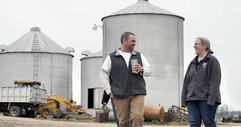
USDA announced loan interest rates for October 2023, which are effective Oct. 2, 2023. USDA’s Farm Service Agency (FSA) loans provide important access to capital to help agricultural producers start or expand their farming operation, purchase equipment and storage structures or meet cash flow needs.
Operating, Ownership and Emergency Loans
FSA offers farm ownership and operating loans with favorable interest rates and terms to help eligible agricultural producers, whether multi-generational, long-time, or new to the industry, obtain financing needed to start, expand or maintain a family agricultural operation. FSA also offers emergency loans to help producers recover from production and physical losses due to drought, flooding, other natural disasters or quarantine. For many loan options, FSA sets aside funding for underserved producers, including, beginning, women, American Indian or Alaskan Native, Asian, Black or African American, Native Hawaiian or Pacific Islander, and Hispanic farmers and ranchers.
Interest rates for Operating and Ownership loans for October 2023 are as follows:
· Farm Operating Loans (Direct): 5.250%
· Farm Ownership Loans (Direct): 5.250%
· Farm Ownership Loans (Direct, Joint Financing): 3.250%
· Farm Ownership Loans (Down Payment): 1.500%
· Emergency Loan (Amount of Actual Loss): 3.750%
FSA also offers guaranteed loans through commercial lenders at rates set by those lenders.
To access an interactive online, step-by-step guide through the farm loan process, visit the Loan Assistance Tool on farmers.gov.
Commodity and Storage Facility Loans
Additionally, FSA provides low-interest financing to producers to build or upgrade on-farm storage facilities and purchase handling equipment and loans that provide interim financing to help producers meet cash flow needs without having to sell their commodities when market prices are low. Funds for these loans are provided through the Commodity Credit Corporation (CCC) and are administered by FSA.
· Commodity Loans (less than one year disbursed): 6.375%
· Farm Storage Facility Loans:
o Three-year loan terms: 4.625%
o Five-year loan terms: 4.375%
o Seven-year loan terms: 4.375%
o Ten-year loan terms: 4.125%
o Twelve-year loan terms: 4.125%
Simplified Direct Loan Application
FSA developed a new, simplified direct loan application for producers seeking a direct farm loan. The new application, reduced from 29 to 13 pages, provides improved customer experience for producers applying for loans and enables them to complete a more streamlined application. Producers now also have the option to complete an electronic fillable form or a traditional paper application for submission to their local FSA service center.
|

As part of USDA’s broader effort to support organic producers and in response to stakeholder feedback, this year the Farm Service Agency increased the cost share amount under the Organic Certification Cost Share Program (OCCSP), which helps organic producers cover organic certification costs, to the maximum amount allowed by statute. Specifically, FSA will cover up to 75% of costs associated with organic certification, up to $750 for crops, wild crops, livestock, processing/handling and state organic program fees (California only). OCCSP will cover costs incurred from Oct. 1, 2022, through Sept. 30, 2023.
FSA began accepting applications for OCCSP Monday, May 15. Applications are due Oct. 31, 2023. To apply, producers and handlers should contact the FSA at their local USDA Service Center. As part of completing the OCCSP application, producers and handlers will need to provide documentation of their organic certification and eligible expenses. Organic producers and handlers may also apply for OCCSP through participating state departments of agriculture.
FSA is also accepting applications from state departments of agriculture to administer OCCSP. FSA will post a synopsis of the funding opportunity on grants.gov and will send more information to all eligible state departments of agriculture. Additional details can be found on the OCCSP webpage. More information about these initiatives and more can be found at farmers.gov/your-business/organic/organic-transition-initiative.
|
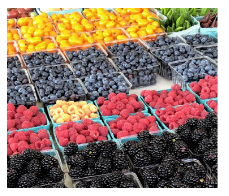
Farmers and ranchers rely on crop insurance to protect themselves from disasters and unforeseen events, but not all crops are insurable through the USDA’s Risk Management Agency. The Farm Service Agency’s (FSA) Noninsured Crop Disaster Assistance Program (NAP) provides producers another option to obtain coverage against disaster for these crops. NAP provides financial assistance to producers of non-insurable crops impacted by natural disasters that result in lower yields, crop losses, or prevents crop planting.
Commercially produced crops and agricultural commodities for which crop insurance is not available are generally eligible for NAP. Eligible crops include those grown specifically for food, fiber, livestock consumption, biofuel or biobased products, or value loss crops such as aquaculture, Christmas trees, ornamental nursery, and others. Contact your local FSA office to see which crops are eligible in your state and county.
Eligible causes of loss include drought, freeze, hail, excessive moisture, excessive wind or hurricanes, earthquake and flood. These events must occur during the NAP policy coverage period, before or during harvest, and the disaster must directly affect the eligible crop. For guidance on causes of loss not listed, contact your local FSA county office.
Interested producers apply for NAP coverage using FSA form CCC-471, “Application for Coverage,” and pay the applicable service fee at the FSA office where their farm records are maintained. These must be filed by the application closing date, which varies by crop. Contact your local FSA office to verify application closing dates and ensure coverage for eligible NAP crops.
At the time of application, each producer acknowledges they have received the NAP Basic Provisions, which describes NAP requirements for coverage. NAP participants must report crop acreage shortly after planting and provide verifiable or reliable crop production records when required by FSA.
Producers are required to pay service fees which vary depending on the number of crops and number of counties your operation is located in. The NAP service fee is the lesser of $325 per crop or $825 per producer per administrative county, not to exceed a total of $1,950 for a producer with farming interests in multiple counties. Premiums also apply when producers elect higher levels of coverage with a maximum premium of $15,750 per person or legal entity.
A producer’s certification on Form CCC-860 Socially Disadvantaged, Limited Resource, Beginning and Veteran Farmer or Rancher Certification may serve as an application for basic NAP coverage for all eligible crops beginning with crop year 2022. These producers will have all NAP-related service fees for basic coverage waived, in addition to a 50 percent premium reduction if higher levels of coverage are elected.
For more detailed information on NAP, download the NAP Fact Sheet. To get started with NAP, we recommend you contact your local USDA service center.
|
|
The application period is now open for a new financial assistance program under Section 22007 of the Inflation Reduction Act (IRA), for farmers, ranchers, and forest landowners who experienced discrimination in USDA farm lending programs prior to January 2021. The application process will close on January 13, 2024. Borrowers will have the option to apply for assistance online via 22007apply.gov or through a paper-based form. (The deadline to request FSA records has also been extended - the new deadline is Friday, November 3, 2023.)
Details about the program, including an application and e-filing portal, are available at 22007apply.gov. The website includes an English and Spanish language application that applicants can download or submit via an e-filing portal, information on how to obtain technical assistance in-person or virtually, and additional resources and details about the program. Applicants can also call the free call center at 1-800-721-0970 or visit one of several dozen brick-and-mortar offices the program has set up around the country. Locations are provided on the program website and vendors will update the local events schedule with more information as it becomes available. It is important to note that filing an application is FREE and does not require a lawyer.
If you want to get weekly updates on the program’s events and progress, you can go to Sign Up for this Weekly E-Newsletter and subscribe.
USDA is making more than $3 billion in funding available for agricultural producers and forest landowners nationwide to participate in voluntary conservation programs and adopt climate-smart practices in fiscal year 2024 as part of President Biden’s Investing in America agenda.
These funds are provided by President Biden’s Inflation Reduction Act – the largest climate and conservation investment in history. This law invests an additional $19.5 billion for USDA’s popular conservation programs. These programs also advance the President’s Justice40 Initiative, which aims to ensure 40 percent of the overall benefits of certain climate, clean energy, and other federal investments reach disadvantaged communities that have been marginalized by underinvestment and overburdened by pollution. On the heels of last month’s announcement that USDA’s Natural Resources Conservation Service (NRCS) saw record producer interest in these resources in fiscal year 2023, the agency is now accepting applications from producers interested in this additional conservation assistance for fiscal year 2024.
These additional investments are estimated to help hundreds of thousands of farmers and ranchers apply conservation to millions of acres of land. These funds provide direct climate mitigation benefits, advance a host of other environmental co-benefits, and expand access to financial and technical assistance for producers to advance conservation on their farm, ranch or forest land through practices like cover cropping, conservation tillage, wetland restoration, prescribed grazing, nutrient management, tree planting and more.
USDA is opening up the application period for fiscal year 2024 conservation assistance giving producers the opportunity to apply for this historic funding.
What’s New
Expansion of Climate-Smart Agriculture and Forestry Activities supported by the Inflation Reduction Act
NRCS is increasing Climate-Smart Agricultural and Forestry Mitigation Activities eligible for Inflation Reduction Act funding for fiscal year 2024 through the Environmental Quality Incentives Program (EQIP) and Conservation Stewardship Program (CSP). These in-demand activities are expected to deliver reductions in greenhouse gas emissions or increases in carbon sequestration as well as significant other benefits to natural resources like soil health, water quality, pollinator and wildlife habitat and air quality.
In response to feedback received from conservation partners, producers and NRCS staff across the country, NRCS considered and evaluated activities based on scientific literature demonstrating expected climate change mitigation benefits. To learn more, download the list of practices and a fact sheet.
When applied through this framework, these activities are expected to deliver reductions in greenhouse gas emissions or increases in carbon sequestration. NRCS will continue to evaluate additional practices as science progresses and will evaluate and identify quantification methodologies during the fiscal year.
Expansion of priorities for the ACEP investments through the Inflation Reduction Act
Additionally, NRCS is expanding the national priority areas eligible for Inflation Reduction Act funding for Agricultural Conservation Easements Program (ACEP) easements in fiscal year 2024.
For ACEP Agricultural Land Easements (ALE), NRCS is prioritizing securing:
- Grasslands in areas of highest risk for conversion to non-grassland uses to prevent the release of soil carbon stores.
- Agricultural lands under threat of conversion to non-agricultural uses.
- State-specific priorities including rice cultivation on subsiding highly organic soils.
For ACEP Wetland Reserve Easements (WRE), NRCS is prioritizing:
- Land with soils high in organic carbon.
- Eligible lands that will be restored to and managed as forests like bottomland hardwood forests.
- Eligible lands in existing forest cover that will be managed as forests.
- Several geographically specific priorities (i.e., former cranberry bogs, wet meadows, and ephemeral wetlands in grassland ecosystems).
Background
The Inflation Reduction Act provides funds to the EQIP, CSP, ACEP and Regional Conservation Partnership Program (RCPP). For fiscal year 2024, which begins Oct. 1, 2023, the Inflation Reduction Act provides an additional $1.65 billion for EQIP, $472 million for CSP, and $189 million for ACEP, and $754 million for RCPP.
How to Apply
NRCS accepts producer applications for its conservation programs year-round, but producers interested in this cycle of Inflation Reduction Act funding should apply as soon as possible. Producers interested in EQIP or CSP should apply by their state’s ranking dates for consideration this year. Funding is provided through a competitive process and will include an opportunity to address the unmet demand from producers who have previously sought funding for climate-smart conservation activities.
Similarly, NRCS accepts applications year-round for ACEP Agricultural Land Easements (ACEP-ALE) and Wetland Reserve Easements (ACEP-WRE), producers interested in this funding cycle must apply by Nov. 13, 2023. NRCS will also consider previously unfunded applications in this round.
NRCS plans to roll out the next RCPP funding opportunity in late January 2024.
NRCS will announce other opportunities for agreements and partnerships at the state level for fiscal year 2024 in the coming months. The Inflation Reduction Act provides funding to support those strategic partnerships with local, regional and national organizations. This will include outreach to underserved producers to ensure Inflation Reduction Act climate funding is reaching those who have been previously unable to access conservation assistance.
Interested producers should contact the NRCS at their local USDA Service Center.
|
 |
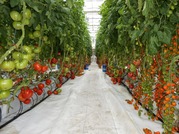
The U.S. Department of Agriculture (USDA) is announcing a new crop insurance program designed for agricultural producers who use controlled environments in their operations. The new Controlled Environment program from USDA’s Risk Management Agency (RMA) is specifically for plants grown in fully enclosed controlled environments and provides coverage against plant diseases subject to destruction orders. Available beginning in the 2024 crop year, the Controlled Environment program provides a risk management resource for urban, specialty crop, and organic producers who often use controlled environments as a major part of their operations.
“We are always looking to improve and expand the crop insurance resources we offer to agricultural producers, and the new Controlled Environment program will greatly benefit urban, specialty crop, organic and other producers who grow in controlled environments,” said RMA Administrator Marcia Bunger. “Controlled environment agriculture is a quickly growing sector in the Nation’s food production, and this new option is part of USDA’s broader effort to support urban agriculture and new and better markets for American producers.”
The Controlled Environment program is a dollar plan of insurance, which bases the insured’s guarantee on inventory values reported by the producer and provides coverage against plant diseases when the plants must be destroyed under a federal or state destruction order.
The Controlled Environment program adds to two other federal insurance products available to nursery and innovative agricultural producers by providing benefits that are not available under the other programs, such as:
- Offer coverage for all Controlled Environment plants, including cuttings, seedlings, and tissue culture.
- Offer crop insurance coverage through a streamlined application and policy renewal process.
- Offer new crop insurance coverage specific to the disease risk to plants in Controlled Environment operations.
- Offer insurance for producer-selected plant categories for Controlled Environment that are not in other nursery insurance program.
-
Allow Controlled Environment operations to have single peril Controlled Environment insurance to be purchased as a standalone policy or in conjunction with other nursery insurance.
The first sales closing date is Dec. 1, 2023.
The Controlled Environment program will be available in select counties in Alabama, California, Colorado, Delaware, Florida, Hawaii, Iowa, Kentucky, Maine, Maryland, Michigan, Minnesota, New York, New Jersey, North Carolina, Ohio, Oregon, Pennsylvania, Tennessee, Texas, Utah, Virginia, Washington, West Virginia and Wisconsin.
More Information
RMA is holding virtual and in-person informational sessions this month. Learn more.
Crop insurance is sold and delivered solely through private crop insurance agents. A list of crop insurance agents is available at all USDA Service Centers and online at the RMA Agent Locator. Learn more about crop insurance and the modern farm safety net at rma.usda.gov or by contacting your RMA Regional Office.
|
|








