In This Issue:

As part of USDA’s broader effort to support organic producers and in response to stakeholder feedback, this year the Farm Service Agency increased the cost share amount under the Organic Certification Cost Share Program (OCCSP), which helps organic producers cover organic certification costs, to the maximum amount allowed by statute. Specifically, FSA will cover up to 75% of costs associated with organic certification, up to $750 for crops, wild crops, livestock, processing/handling and state organic program fees (California only). OCCSP will cover costs incurred from Oct. 1, 2022, through Sept. 30, 2023.
FSA begins accepting applications for OCCSP Monday, May 15. Applications are due Oct. 31, 2023. To apply, producers and handlers should contact the FSA at their local USDA Service Center. As part of completing the OCCSP application, producers and handlers will need to provide documentation of their organic certification and eligible expenses. Organic producers and handlers may also apply for OCCSP through participating state departments of agriculture.
FSA is also accepting applications from state departments of agriculture to administer OCCSP. FSA will post a synopsis of the funding opportunity on grants.gov and will send more information to all eligible state departments of agriculture. Additional details can be found on the OCCSP webpage. More information about these initiatives and more can be found at farmers.gov/organic-transition-initiative.
|
USDA’s recent expansion of its hurricane crop insurance policy to cover tropical storms this year has already provided farmers with $85.4 million to help them recover from Hurricane Idalia. USDA’s Risk Management Agency (RMA) rolled out the new Tropical Storm Option for its Hurricane Insurance Protection-Wind Index (HIP-WI) Endorsement earlier this year after working directly with farmers to improve coverage. Additionally, through HIP-WI, producers have received $84.8 million in indemnities for hurricane-related losses for a total of over $170 million in crop insurance payments that will directly help farmers and rural communities recover from Hurricane Idalia. This coverage was unavailable this time last year.
So far, indemnities by state include:
- Georgia: $72.7 million for hurricanes, and $5.7 million for tropical storms;
- Florida: $12.1 million for hurricanes;
- North Carolina: $40.1 million for tropical storms; and
- South Carolina: $39.6 million for tropical storms.
Earlier this year, RMA added the Tropical Storm Option to this endorsement to cover named tropical storms, as reported by the National Oceanic and Atmospheric Administration (NOAA), with maximum sustained winds exceeding 34 knots and precipitation exceeding six inches over a four-day period.
Farmers do not need to file a claim to receive payment. If a county is triggered, then the Approved Insurance Provider will issue a payment in the coming weeks. Producers can find a list of triggered counties on RMA’s Product Management Bulletins webpage. This is in addition to coverage provided under a farmer’s crop policy. The standard notice of loss and claims process applies to these policies, and Approved Insurance Providers are working to process these claims.
HIP-WI was first available for purchase for the 2020 hurricane season and covers a portion of the deductible of the underlying crop insurance policy when the county, or an adjacent one, is hit with sustained hurricane-force winds from a named hurricane based on data from the National Hurricane Center at NOAA.
The HIP-WI endorsement, including the new Tropical Storm Option, is available in select counties in Alabama, Arkansas, Connecticut, Delaware, Florida, Georgia, Louisiana, Maine, Maryland, Massachusetts, Mississippi, New Hampshire, New Jersey, New York, North Carolina, Pennsylvania, Rhode Island, South Carolina, Texas, Vermont, and Virginia.
During the past three years, HIP-WI has been a successful risk management tool for many in effected areas, with nearly $736 million paid in indemnities to date.
Crop insurance is sold and delivered solely through private crop insurance agents, and producers interested in HIP-WI or the Tropical Storm Option should contact an agent. A list of crop insurance agents is available at all USDA Service Centers and online at the RMA Agent Locator. Learn more about crop insurance and the modern farm safety net at rma.usda.gov or by contacting your RMA Regional Office.
 |
|
North South Institute (NSI) is one of FL FSA's partners and is available to assist farmers and ranchers with their various needs. Every Wednesday at 12:00pm est, NSI hosts their Noon Time Zoom Time to offer free help to farmers and ranchers. They provide assistance with but not limited to the following:
- completing USDA forms
- applying for farm loans
- farm plans
- applying for farm insurance
- applying for disaster assistance
Weekly Wednesday Zoom Link: https://us02web.zoom.us/j/88978525815
By Phone: +1 312 626 6799
Meeting ID: 889 7852 5815 // Passcode: 222315
For more information please call 954-434-8220 or visit their website: www.nsied.org
|
FSA Partner, North South Institiute, is hosting a webinar about what farmers need to know about taxes.
Tuesday, November 14, 2023 at 12:00pm-1:30pm est
Join by Zoom: https://us02web.zoom.us/j/86927285523
By Phone: +1 312 626 6799
Meeting ID: 869 2728 5523 // Passcode: 061336
If you have any questions please email: Agvet@nsied.org or call 954-434-8220
For more information about North South Institute please click here: www.nsied.org

The 2023 Farm Service Agency County Committee Elections will begin on Nov. 6, 2023, when ballots are mailed to eligible voters. The deadline to return ballots to local FSA offices, or to be postmarked, is Dec. 4, 2023.
County committee members are an important component of the operations of FSA and provide a link between the agricultural community and USDA. Farmers and ranchers elected to county committees help deliver FSA programs at the local level, applying their knowledge and judgment to make decisions on commodity price support programs; conservation programs; incentive, indemnity and disaster programs for some commodities; emergency programs and eligibility. FSA committees operate within official regulations designed to carry out federal laws.
To be an eligible voter, farmers and ranchers must:
- Be of legal voting age or, if not of legal voting age, supervise and conduct the farming operation of an entire farm.
- Have an interest in a farm or ranch as either:
- An individual who meets one or more of the following:
- Is eligible and capable to vote in one’s own right.
- Is a partner of a general partnership.
- Is a member of a joint venture.
- Participates or cooperates in any FSA program that is provided by law. A cooperating producer is someone who has provided information to FSA about their farming or ranching operation(s) but may not have applied or received program benefits.
Eligible voters in Local Administrative Areas who do not receive a ballot can obtain one from their local FSA county office. Customers can identify which LAA they or their farming operation is in by using our new GIS locator tool available at fsa.usda.gov/elections.
Newly elected committee members will take office Jan. 1, 2024.
More information on county committees can be found at fsa.usda.gov/elections or by contacting your local County FSA office.
|
The application period is now open for a new financial assistance program under Section 22007 of the Inflation Reduction Act (IRA), for farmers, ranchers, and forest landowners who experienced discrimination in USDA farm lending programs prior to January 2021. The application process will close on January 13, 2024. Borrowers will have the option to apply for assistance online via 22007apply.gov or through a paper-based form.
Details about the program, including an application and e-filing portal, are available at 22007apply.gov. The website includes an English and Spanish language application that applicants can download or submit via an e-filing portal, information on how to obtain technical assistance in-person or virtually, and additional resources and details about the program. Applicants can also call the free call center at 1-800-721-0970, or visit one of several dozen brick-and-mortar offices the program has set up around the country. Locations are provided on the program website and vendors will update the local events schedule with more information as it becomes available. It is important to note that filing an application is FREE and does not require a lawyer.
If you want to get weekly updates on the program’s events and progress, you can go to https://22007apply.gov, and subscribe to a weekly newsletter.
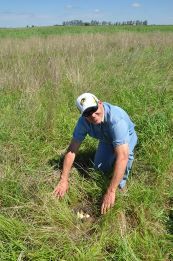
The Farm Service Agency (FSA) is accepting offers for specific conservation practices under the Conservation Reserve Program (CRP) Continuous Signup.
In exchange for a yearly rental payment, farmers enrolled in the program agree to remove environmentally sensitive land from agricultural production and to plant species that will improve environmental health and quality. The program’s long-term goal is to re-establish valuable land cover to improve water quality, prevent soil erosion, and reduce loss of wildlife habitat. Contracts for land enrolled in CRP are 10-15 years in length.
Under continuous CRP signup, environmentally sensitive land devoted to certain conservation practices can be enrolled in CRP at any time. Offers for continuous enrollment are not subject to competitive bidding during specific periods. Instead they are automatically accepted provided the land and producer meet certain eligibility requirements and the enrollment levels do not exceed the statutory cap.
For more information, including a list of acceptable practices, contact your local County USDA Service Center or visit fsa.usda.gov/crp.
|
The Small Business Administration (SBA) is offering disaster loans for business and non-profit organizations.
Benefits of an SBA disaster loan:
- Low fixed interest rate with terms up to 30 years
- Automatic no payments and no interest for 12 months from the date of the first disbursement
- Apply before insurance is settled
- Unsecured up to $25,000
- Up to $2 million to cover physical damage and financial losses
- Funds available for mitigation measures to build back better, more resilient
What small businesses and non-profits need to apply for an SBA disaster loan:
- Cell phone and contact information for all applicants
- Social Security numbers and Employer Identification Numbers (EIN) for all applicants/owners
- Financial information (e.g., income, account balances, monthly expenses etc.)
- Complete copy of the most recent Federal income tax return
- Insurance information, if available
To apply please visit DisasterLoanAssistance.SBA.gov or call (800) 659-2955 to locate a Recovery Center. If you have any questions, call (800) 659-2955 (dial 7-1-1 to access telecommunications relay services) or visit sba.gov/disaster.
Nov 1 - FSA Organic Certification Cost Share Program (OCCSP)
Nov 13 - NRCS Agricultural Conservation Easement Program (ACEP)
Dec 31 - Inflation Reduction Act Assistance for Distressed Borrowers
Jan 13 - Discrimination Financial Assistance Program
Jan 31 - Food Safety Certification for Specialty Crops Program (FSCSC)
| Farm Operating - Direct |
5.250% |
| Farm Operating - Microloan |
5.250% |
| Farm Ownership - Direct |
5.250% |
| Farm Ownership - Microloan |
5.250% |
| Farm Ownership - Direct, Joint Financing |
3.250% |
| Farm Ownership - Down Payment |
1.500% |
| Emergency Loan - Amount of Actual Loss |
3.750% |
|