In This Issue:
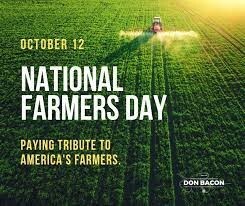
In case you missed it, October 12th was National Farmer’s Day… a day to pay tribute to the hardworking people who rise with the sun and labor to put food on our tables. Thank YOU for all you do!
As a reminder, the Discrimination Financial Assistance Program (DFAP) is authorized by Section 22007(e) of the Inflation Reduction Act, which provides financial assistance to farmers, ranchers and forest landowners who experienced discrimination in USDA farm lending programs prior to 2021. Details about the program, including an application and e-filing portal, are available at https://22007apply.gov/. Applicants can also call the free call center at 1-800-721-0970. Filing an application is FREE and does not require a lawyer. The application period is open and runs through January 13, 2024.
For additional information, two virtual “lunch and learn” webinars are being held for anyone interested. Please using the following links to join:
DFAP Lunch and Learn Webinar Oct 18, 12-1pm
DFAP Lunch and Learn Webinar Oct 25, 12-1pm
Due to the ongoing extensive rain and moisture a disaster designation for the entire state has been received. If you have experienced a weather related loss, please contact your local FSA office as soon as possible.
As always, I would be honored to participate in any upcoming events or visit you at your farm. Please contact me if you would like to schedule a visit or an FSA presentation.
|
 Sherry Hamel, SED
The application period is now extended for the financial assistance program under Section 22007 of the Inflation Reduction Act (IRA), for farmers, ranchers, and forest landowners who experienced discrimination in USDA farm lending programs prior to January 2021. The application process will close on January 13, 2024. Borrowers will have the option to apply for assistance online via 22007apply.gov or through a paper-based form.
Details about the program, including an application and e-filing portal, are available at 22007apply.gov. The website includes an English and Spanish language application that applicants can download or submit via an e-filing portal, information on how to obtain technical assistance in-person or virtually, and additional resources and details about the program. Applicants can also call the free call center at 1-800-721-0970, or visit one of several dozen brick-and-mortar offices the program has set up around the country. Locations are provided on the program website and vendors will update the local events schedule with more information as it becomes available. It is important to note that filing an application is FREE and does not require a lawyer.
If you want to get weekly updates on the program’s events and progress, you can go to https://22007apply.gov, and subscribe to a weekly newsletter.

The application period is now extended for the financial assistance program under Section 22007 of the Inflation Reduction Act (IRA), for farmers, ranchers, and forest landowners who experienced discrimination in USDA farm lending programs prior to January 2021. The application process will close on January 13, 2024. Borrowers will have the option to apply for assistance online via 22007apply.gov or through a paper-based form.
Details about the program, including an application and e-filing portal, are available at 22007apply.gov. The website includes an English and Spanish language application that applicants can download or submit via an e-filing portal, information on how to obtain technical assistance in-person or virtually, and additional resources and details about the program. Applicants can also call the free call center at 1-800-721-0970, or visit one of several dozen brick-and-mortar offices the program has set up around the country. Locations are provided on the program website and vendors will update the local events schedule with more information as it becomes available. It is important to note that filing an application is FREE and does not require a lawyer.
If you want to get weekly updates on the program’s events and progress, you can go to https://22007apply.gov, and subscribe to a weekly newsletter.
|
The Farm Loan teams in Maine are already working on operating loans for spring 2024 and asks potential borrowers to submit their requests early so they can be timely processed. The farm loan team can help determine which loan programs are best for applicants.
FSA offers a wide range of low-interest loans that can meet the financial needs of any farm operation for just about any purpose. The traditional farm operating and farm ownership loans can help large and small farm operations take advantage of early purchasing discounts for spring inputs as well expenses throughout the year.
Microloans are a simplified loan program that will provide up to $50,000 for both Farm Ownership and Operating Microloans to eligible applicants. These loans, targeted for smaller and non-traditional operations, can be used for operating expenses, starting a new operation, purchasing equipment, and other needs associated with a farming operation. Loans to beginning farmers and members of underserved groups are a priority.
Other types of loans available include:
Marketing Assistance Loans allow producers to use eligible commodities as loan collateral and obtain a 9-month loan while the crop is in storage. These loans provide cash flow to the producer and allow them to market the crop when prices may be more advantageous.
Farm Storage Facility Loans can be used to build permanent structures used to store eligible commodities, for storage and handling trucks, or portable or permanent handling equipment. A variety of structures are eligible under this loan, including bunker silos, grain bins, hay storage structures, and refrigerated structures for vegetables and fruit. A producer may borrow up to $500,000 per loan.
|
The Farm Service Agency’s (FSA) Farm Storage Facility Loan (FSFL) program provides low-interest financing to help you build or upgrade storage facilities and to purchase portable (new or used) structures, equipment and storage and handling trucks.
Eligible commodities include corn, grain sorghum, rice, soybeans, oats, peanuts, wheat, barley, minor oilseeds harvested as whole grain, pulse crops (lentils, chickpeas and dry peas), hay, honey, renewable biomass, fruits, nuts and vegetables for cold storage facilities, floriculture, hops, maple sap, rye, milk, cheese, butter, yogurt, meat and poultry (unprocessed), eggs, and aquaculture (excluding systems that maintain live animals through uptake and discharge of water). Qualified facilities include grain bins, hay barns and cold storage facilities for eligible commodities.
Loans up to $50,000 can be secured by a promissory note/security agreement, loans between $50,000 and $100,000 may require additional security, and loans exceeding $100,000 require additional security.
You do not need to demonstrate the lack of commercial credit availability to apply. The loans are designed to assist a diverse range of farming operations, including small and mid-sized businesses, new farmers, operations supplying local food and farmers markets, non-traditional farm products, and underserved producers.
For more information, contact your local County USDA Service Center or visit fsa.usda.gov/pricesupport.
Farm Service Agency (FSA) farm loans are considered progression lending. Unlike loans from a commercial lender, FSA loans are intended to be temporary in nature. Our goal is to help you graduate to commercial credit, and our farm loan staff is available to help borrowers through training and credit counseling.
The FSA team will help borrowers identify their goals to ensure financial success. FSA staff will advise borrowers on developing strategies and a plan to meet your goals and graduate to commercial credit. FSA borrowers are responsible for the success of their farming operation, but FSA staff will help in an advisory role, providing the tools necessary to help you achieve your operational goals and manage your finances.
For more information on FSA farm loan programs, contact your local County USDA Service Center or visit fsa.usda.gov.
A multi-agency guide for USDA assistance for underserved farmers and ranchers is now available. If you are a farmer or rancher and are a minority, woman, veteran, beginning, or limited resource producer, you can use this booklet to learn about assistance and targeted opportunities available to you. This includes programs offered through the Farm Service Agency, Natural Resources Conservation Service, and Risk Management Agency. Download the guide here. The guide is also available in Spanish, Hmong, Korean, Vietnamese, Thai and Chinese on farmers.gov/translations.

The Farm Service Agency (FSA) assists beginning farmers to finance agricultural enterprises. Under these designated farm loan programs, FSA can provide financing to eligible applicants through either direct or guaranteed loans. FSA defines a beginning farmer as a person who:
- Has operated a farm for not more than 10 years
- Will materially and substantially participate in the operation of the farm
- Agrees to participate in a loan assessment, borrower training and financial management program sponsored by FSA
- Does not own a farm in excess of 30 percent of the county’s average size farm.
For more information contact, contact your County USDA Service Center or visit fsa.usda.gov.
|
Farmers.gov gives you one place to do business with USDA’s Farm Service Agency (FSA) and the Natural Resources Conservation Service (NRCS), including accessing your farm records, maps, and common land units. You can create a farmers.gov account for the farmers.gov authenticated site, where you can access self-service features through a secure login.
In addition to the self-service features farmers.gov website also has information on USDA programs, farm loans, disaster assistance, conservation programs and crop insurance.
What can you do with your farmers.gov account?
- View FSA Farm loans including loan information, interest payments, loan advance and payment history, paid-in-full restructured loans, and account alerts.
- View NRCS Disbursements and Farm Loans financial activity from the past 180 days.
- View, print and export detailed farm records and farm/tract maps.
- Export common land unit (field) boundaries as ESRI and GeoJSON file types.
- Import precision agriculture planting boundaries, create labels containing crop information, and print both on farm tract maps.
- Use the draw tools to determine acres in an area of interest that can be printed on a map and provided to a third party or exported as a feature file for use in other geospatial applications.
- View, upload, download and e-sign NRCS documents.
- Request conservation and financial assistance, including submitting a program application.
- Access information on current and past conservation practices, report practice completion and request practice certification
- View detailed information on previous and ongoing contracts, including the amount of cost- share assistance received and request contract modifications.
How to create a farmers.gov account?
To create a farmers.gov account you will need:
- A USDA individual customer record - A customer record contains information you have given to USDA to do business with them, like your name, address, phone number, and any legal representative authority relationships.
- A login.gov account – Login.gov is a sign-in service that gives people secure online access to participating government programs.
Persons with disabilities who require accommodations to attend or participate in any meeting/event/function should contact Mary Anne Coffin at 207-990-9140 or Federal Relay Service at 1-800-877-8339.
|








