
As the fields begin to change in color, it is becoming a reality that harvest is right around the corner. Some of you have already been in the fields, and hopefully you are surprised by the yields you’re finding.
Farm Program Payments - October can be a busy month issuing various farm program payments. If you have changed bank accounts, please contact the office to update your information to make sure any direct deposit activity is not held up.
CRP Contract Reminders - We want to remind you to keep your CRP in compliance. It is highly recommended to take some time to walk through your CRP contract acres to ensure that no volunteer trees or noxious weeds are becoming a potential problem. Undetected, these issues could become costly for a participant as a noncompliance issue that could result in possible contract termination.
Some of you may have established a new CRP practice or completed Mid Contract Management (clipping or burning). Whether or not you want to be reimbursed for cost share, once you are done, be sure to submit the necessary paperwork (seed tags, invoices for work, etc.) to our office to certify completion.
Dairy Producers: If you had to dump or remove milk, without compensation, from the commercial milk market due to qualifying weather events, you may be eligible for Milk Loss Assistance Program (MLP). Please contact the office if you think you could be eligible.
Fall Acreage Reporting Deadline Fall Acreage Reporting Deadline for Fall-Seeded Small Grains is November 15, 2023.
Have a Safe Harvest!
Please contact the office at 507-237-2948, regarding any questions pertaining to the information within this bulletin, or any other concerns you may have.
Thank you,
Jennifer King
County Executive Director
|
Important Dates and Deadlines
September 30 - NAP Minnesota closing deadline for crop year 2024
October 9 - FSA offices are closed in observance of Columbus Day
October 31 - the OCCSP deadline for application expenses paid in fiscal year 2023
Farm Loan Program Interest Rates
5.125% - Farm Operating Loans, Direct
5.000% - Farm Ownership Loans, Direct
3.000% - Farm Ownership, Joint Financing
1.500% - Farm Ownership Loans, Beginning Farmer Down Payment
Farm Storage Facility Loan Program Interest Rates
4.500% - Farm Storage Facility Loans, 3-Year
4.250% - Farm Storage Facility Loans, 5-Year
4.125% - Farm Storage Facility Loans, 7-Year
4.125% - Farm Storage Facility Loans, 10-Year
4.125% - Farm Storage Facility Loans, 12-Year
September 2023 Commodity Loan Interest Rate
6.375% - Commodity Loans

FSA is updating the Livestock Indemnity Program (LIP) payment rate to support livestock producers in the Midwest who have lost cattle to the extreme heat and humidity experienced this summer. To help indemnify ranchers to reflect a trend towards higher cattle weights in feedlots, the 2023 LIP payment rate for beef calves over 800 pounds will increase from $1244 per head to $1618, an increase of $374.
LIP provides benefits to livestock owners and some contract growers for livestock deaths exceeding normal mortality from eligible adverse weather events, certain predation losses and reduced sales prices due to injury from an eligible loss. Indemnity payments are made at a rate of 75% of the prior year’s average fair market value of the livestock.
The updated LIP payment rate is effective immediately and will be applied retroactively starting Jan.1, 2023, for all eligible causes of loss including excessive heat, tornado, winter storms, and other qualifying adverse weather. Producers who have already received LIP payments for 2023 losses will receive an additional payment, if applicable, commensurate with this updated rate. For details on eligibility and payment rates, review the LIP fact sheet.
FSA recognizes that an annual update of LIP payment rates does not account for the volatile nature of livestock markets and is further exploring flexibilities to establish more current payment rates.
More Information
On farmers.gov, the Disaster Assistance Discovery Tool, Disaster Assistance-at-a-Glance fact sheet, and Loan Assistance Tool can help producers and landowners determine program or loan options. For assistance with a crop insurance claim, producers and landowners should contact their crop insurance agent. For FSA and NRCS programs, they should contact their local USDA Service Center.
|
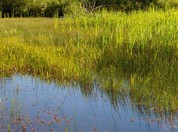
The term “sodbusting” is used to identify the conversion of land from native vegetation to commodity crop production after December 23, 1985. As part of the conservation provisions of the Food Security Act of 1985, if you’re proposing to produce agricultural commodities (crops that require annual tillage including one pass planting operations and sugar cane) on land that has been determined highly erodible and that has no crop history prior to December 23, 1985, that land must be farmed in accordance with a conservation plan or system that ensures no substantial increase in soil erosion.
Eligibility for many USDA programs requires compliance with a conservation plan or system on highly erodible land (HEL) used for the production of agricultural commodities. This includes Farm Service Agency (FSA) loan, disaster assistance, safety net, price support, and conservation programs; Natural Resources Conservation Service (NRCS) conservation programs; and Risk Management Agency (RMA) Federal crop insurance.
Before you clear or prepare areas not presently under production for crops that require annual tillage, you are required to file Form AD-1026 “Highly Erodible Land Conservation and Wetland Conservation Certification,” with FSA indicating the area to be brought into production. The notification will be referred to NRCS to determine if the field is considered highly erodible land. If the field is considered HEL, you are required to implement a conservation plan or system that limits the erosion to the tolerable soil loss (T) for the predominant HEL soil on those fields.
In addition, prior to removing trees or conducting any other land manipulations that may affect wetlands, remember to update form AD-1026, to ensure you remain in compliance with the wetland conservation provisions.
Prior to purchasing or renting new cropland acres, it is recommended that you check with your local USDA Service Center to ensure your activities will be in compliance with the highly erodible land and wetland conservation provisions.
For additional information on highly erodible land conservation and wetland conservation compliance, contact your local USDA Service Center.
|
USDA’s Natural Resources Conservation Service can help you conserve water and build resilience to drought, through conservation practices that improve irrigation efficiency, boost soil health, and manage grazing lands.
Irrigation Efficiency
USDA helps you improve your irrigation efficiency to ensure each drop of water is used wisely. Saving water on your farm can help during drought and can offset rising water costs; reduce expenditures for energy, chemicals, and labor; and enhance revenues through higher crop yields and improved crop quality. Funded conservation practices include conversion to more efficient irrigation systems, such as micro-irrigation or subsurface drip irrigation, installation of irrigation pipeline, irrigation water management, structures for water control, and flow meters. Tools like drip irrigation, which provides water precisely where and when it’s needed, can achieve greater precision with flow meters and soil moisture sensors.
Soil Health
In addition, soil health conservation practices, such as reduced- or no-till, cover crops, mulching and residue management can help to make your soil, and the plants you grow or animals you raise, healthier. Healthier soil can absorb and retain more water for longer periods of time, making your farm or ranch more resilient to drought. Using soil health practices, you can conserve water by increasing your soil’s water-holding capacity and use conservation tillage to keep the ground covered, reducing water loss through transpiration and evaporation.
And soil health practices increase organic matter, and each pound of organic matter can hold up to 20 pounds of water. Every 1% increase in organic matter results in as much as 25,000 gallons of soil water per acre. Each 1% increase in organic matter can also provide up to 30 pounds of more available nitrogen per acre. That means less money and time spent on inputs like water and fertilizer, which make your operation more profitable.
Rotational/Prescribed Grazing, Water Sources for Livestock
Drought also impacts grazing lands, and NRCS works with you to increase the resilience of your livestock operation. Ranchers can adapt to dry conditions in two main ways: increasing the availability and suitability of forage and ensuring that cattle have an adequate and reliable source of water. For forage, rotational or prescribed grazing (rotating cattle among pastures) can relieve pressure on stressed vegetation and ensure a more consistent supply of forage for animals. NRCS conservationists can also work with you to plant more drought-tolerant forage species, plants best suited to local soils and conditions. For reliable sources of water, NRCS can help you with installing watering facilities, water wells, or water pipeline for livestock. Having available forage and water for livestock can make a big difference in difficult drought conditions.
USDA and NRCS are here for you, helping you recover from drought and prepare for the next one. For more information on drought recovery assistance at farmers.gov/protection-recovery/drought#recovery. For more information on conservation practices to make your operation more resilient to drought in future years, go to www.nrcs.usda.gov.
|
Farm Service Agency (FSA) farm loans are considered progression lending. Unlike loans from a commercial lender, FSA loans are intended to be temporary in nature. Our goal is to help you graduate to commercial credit, and our farm loan staff is available to help borrowers through training and credit counseling.
The FSA team will help borrowers identify their goals to ensure financial success. FSA staff will advise borrowers on developing strategies and a plan to meet your goals and graduate to commercial credit. FSA borrowers are responsible for the success of their farming operation, but FSA staff will help in an advisory role, providing the tools necessary to help you achieve your operational goals and manage your finances.
For more information on FSA farm loan programs, contact your Sibley County USDA Service Center at 507-237-2948 or visit fsa.usda.gov.
|
Marketing Assistance Loans (MALs) and Loan Deficiency Payments (LDPs) provide financing and marketing assistance for wheat, feed grains, soybeans, and other oilseeds, pulse crops, rice, peanuts, cotton, wool and honey. MALs provide you with interim financing after harvest to help you meet cash flow needs without having to sell your commodities when market prices are typically at harvest-time lows. A producer who is eligible to obtain a loan, but agrees to forgo the loan, may obtain an LDP if such a payment is available. Marketing loan provisions and LDPs are not available for sugar and extra-long staple cotton.
FSA is now accepting requests for 2023 MALs and LDPs for all eligible commodities after harvest. Requests for loans and LDPs shall be made on or before the final availability date for the respective commodities.
Commodity certificates are available to loan holders who have outstanding nonrecourse loans for wheat, upland cotton, rice, feed grains, pulse crops (dry peas, lentils, large and small chickpeas), peanuts, wool, soybeans and designated minor oilseeds. These certificates can be purchased at the posted county price (or adjusted world price or national posted price) for the quantity of commodity under loan, and must be immediately exchanged for the collateral, satisfying the loan. MALs redeemed with commodity certificates are not subject to Adjusted Gross Income provisions.
To be considered eligible for an LDP, you must have form CCC-633EZ, Page 1 on file at your local FSA Office before losing beneficial interest in the crop. Pages 2, 3 or 4 of the form must be submitted when payment is requested.
Marketing loan gains (MLGs) and loan deficiency payments (LDPs) are no longer subject to payment limitations, actively engaged in farming and cash-rent tenant rules.
Adjusted Gross Income (AGI) provisions state that if your total applicable three-year average AGI exceeds $900,000, then you’re not eligible to receive an MLG or LDP. You must have a valid CCC-941 on file to earn a market gain of LDP. The AGI does not apply to MALs redeemed with commodity certificate exchange.
For more information and additional eligibility requirements, contact your Sibley County USDA Service Center at 507-237-2948 or visit fsa.usda.gov.
|