|
DEADLINE: JANUARY 30TH, 2024!!!!!!!!!!!!!!!!!!!!!!!!!!!!
Freestone: You have triggered for a 3-month payment today. However, the software will be up and running by Monday September 11th if all goes well. Please contact the office for an appointment. We are accepting appointments now!
Dates for cattle numbers: Highest # of livestock grazing between July 9, 2023 and September 7, 2023.
Limestone: You have triggered for a 4-month payment last week.
1) If you have an application on file from the original trigger date of February 25, 2023 you do not need another appointment. You should have received your 2 additional months payments last week.
2) If you have not filed an application for 2023, please contact the office for an appointment. Dates for cattle numbers: Highest # of livestock grazing between December 27, 2022 and February 25, 2023.
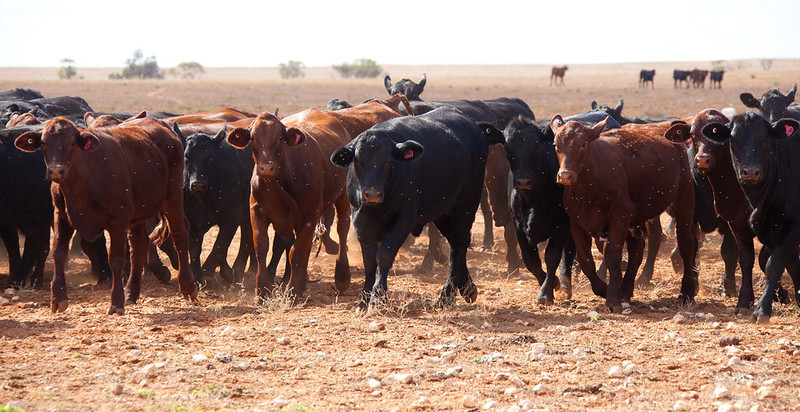 Producers in Limestone and Freestone County is eligible to apply for 2023 Livestock Forage Disaster Program (LFP) benefits on small grain, native pasture, improved pasture, annual ryegrass, forage sorghum.
LFP provides compensation if you suffer grazing losses for covered livestock due to drought on privately owned or cash leased land or fire on federally managed land.
County committees can only accept LFP applications after notification is received by the National Office of qualifying drought or if a federal agency prohibits producers from grazing normal permitted livestock on federally managed lands due to qualifying fire. You must complete a CCC-853 and the required supporting documentation no later than January 30, 2024, for 2023 losses.
For additional information about LFP, including eligible livestock and fire criteria, contact the Limestone/Freestone County USDA Service Center at (254) 729-2310 or visit fsa.usda.gov.
Producers in Limestone and Freestone County are eligible to apply for 2023 Emergency Assistance for Livestock, Honeybees, and Farm-Raised Fish Program (ELAP), ELAP provides financial assistance for:
- the transportation of water to livestock;
- the above normal cost of mileage for transporting feed to livestock; and
- the above normal cost of transporting livestock to forage/grazing acres.*
*No payment for “empty miles.”
Eligible livestock include cattle, bison, goats and sheep, among others, that are maintained for commercial use and located in a county where qualifying drought conditions occur. Producers must have risk in both eligible livestock and eligible grazing land in an eligible county to qualify for ELAP assistance.
For ELAP water transportation assistance, producers must be transporting water to eligible livestock on eligible grazing land where adequate livestock watering systems or facilities were in place before the drought occurred and where water transportation is not normally required. ELAP covers costs associated with personal labor, equipment, hired labor, and contracted water transportation fees. Cost of the water itself is not covered. The ELAP payment formula uses a national average price per gallon.
ELAP also provides financial assistance to livestock producers who incur above normal expenses for transporting feed to livestock and who are hauling livestock to a new location for feed resources due to insufficient feed or grazing in drought-impacted areas. For transporting feed or hauling livestock, the payment formula excludes the first 25 miles and any mileage over 1,000 miles.
Producers must submit a notice of loss to their local FSA office within 30 calendar days of when the loss is apparent. Producers should contact FSA as soon as the loss of water or feed resources are known.
For ELAP eligibility, documentation of expenses is critical. Producers should maintain records and receipts associated with the costs of transporting water to eligible livestock, the costs of transporting feed to eligible livestock, the costs of additional feed purchases, and the costs of transporting eligible livestock to forage or other grazing acres.
The deadline to apply for 2023 ELAP is Jan. 30, 2024.
USDA Name County Farm Service Agency (FSA) reminds producers of approaching application deadlines for purchasing risk coverage for some crops through the Noninsured Crop Disaster Assistance Program (NAP). NAP provides financial assistance to producers of non-insurable crops impacted by natural disasters that result in lower yields, crop losses, or prevented crop planting.
NAP covers losses from natural disasters on crops for which no permanent federal crop insurance program is available, including forage and grazing crops, fruits, vegetables, floriculture, ornamental nursery, aquaculture, turf grass and more.
Upcoming application deadlines for NAP coverage in Name County for the 2024 production season include:
· Crop: December 1st
Caneberries, Dates, Figs, Grass, Pears, Peas, Pecans, Persimmons, Plums, Pomegranates, Potatoes, Vetch
NAP basic coverage is available at 55% of the average market price for crop losses that exceed 50% of expected production. Buy-up coverage is available in some cases. NAP offers higher levels of coverage, ranging from 50% to 65% of expected production in 5% increments, at 100% of the average market price. Producers of organic crops and crops marketed directly to consumers also may exercise the “buy-up” option to obtain NAP coverage of 100% of the average market price at coverage levels ranging between 50% and 65% of expected production. Buy-up coverage is not available for crops intended for grazing.
For all coverage levels, the NAP service fee is the lesser of $325 per crop or $825 per producer per county, not to exceed a total of $1,950 for a producer with farming interests in multiple counties. Premiums apply for buy-up coverage.
If a producer has a Socially Disadvantaged, Limited Resource, Beginning and Veteran Farmer or Rancher Certification (form CCC-860) on file with FSA, it may serve as an application for basic coverage for all eligible crops beginning with crop year 2022. These producers will have all NAP-related service fees for basic coverage waived. These producers may also receive a 50% premium reduction if higher levels of coverage are elected on form CCC-471, prior to the application closing date for each crop.
To learn more about NAP visit fsa.usda.gov/nap or contact your local USDA Service Center at 254-729-2310.
Farmers can use USDA farm ownership microloans to buy and improve property. These microloans are especially helpful to beginning or underserved farmers, U.S. veterans looking for a career in farming, and those who have small and mid-sized farming operations. Microloans have helped farmers and ranchers with operating costs, such as feed, fertilizer, tools, fencing, equipment, and living expenses since 2013.
Microloans can also help with farmland and building purchases and soil and water conservation improvements. FSA designed the expanded program to simplify the application process, expand eligibility requirements and expedite smaller real estate loans to help farmers strengthen their operations. Microloans provide up to $50,000 to qualified producers and can be issued to the applicant directly from the USDA Farm Service Agency (FSA).
To learn more about the FSA microloan program, contact your Robertson County USDA Service Center at 979-828-3338 or visit fsa.usda.gov/microloans.
 Producers are encouraged to call their local NRCS office to schedule an appointment to ensure maximum use of their time and to make sure NRCS staff is available to tend to their important business needs. Please call your local NRCS office ahead to set an appointment and to discuss any records or documentation that might be needed during your appointment. To find your local NRCS office, visit: farmers.gov/service-center-locator.
|