
Margin Protection Insurance Plan:
September 30, 2023: Margin Protection Insurance Plan Deadline
Continuous CRP Signup:
Producers and landowners can enroll in CRP throughout the year.
Noninsured Crop Disaster Assistance Program (NAP):
September 30, 2023: 2024 NAP Coverage Application Deadline for Small Grains and Perennial Forage
Organic Certification Cost Share Program (OCCSP):
October 31, 2023: 2023 OCCSP Application Deadline
More Information
The above information is for general awareness. Program deadlines may change or vary by county. Be sure to verify program deadlines for your land or operation by contacting your local USDA Service Center.
|

Ag census data inform decisions about policy, farm and conservation programs, infrastructure, rural development, and more. This data will have a real impact on producers and all who serve U.S. agriculture.
NASS wants to extend our thanks to the producers who responded to the 2022 Census of Agriculture and spread the word to all stakeholders that data will be available February 2024.
Visit nass.usda.gov/AgCensus for the latest information, including Frequently Asked Questions
|

NASS conducts its biannual Agricultural Labor Survey in October. More than 18,000 farmers and ranchers across the nation will have the opportunity to participate in the survey online at agcounts.usda.gov or by mail.
Taking part in the survey helps show the value and importance of farm labor to U.S. agriculture. The data can be used to measure the availability of farm workers across the nation and help determine if there is a shortage of farm laborers. The survey is an opportunity to provide accurate information for hired farm labor.
Survey recipients who do not respond by Oct. 18 may be contacted by NASS to arrange an interview or sent a reminder email. NASS will publish the data at nass.usda.gov on Nov. 22 in the Farm Labor report. For more information, visit nass.usda.gov/go/labor/.
|

NASS unveiled a new geospatial product called Crop Sequence Boundaries (CSB) that offers public access to national-scale visual crop rotation data for the first time.
CSB is a cutting-edge map of agricultural fields that provides crop acreage estimates and historical planting decisions across the contiguous United States. The open-source product uses satellite imagery and other public data to allow users to analyze planted U.S. commodities, enhancing not only agricultural science and research, but providing producers an innovative resource to help make farming decisions.
For NASS data and access to CSB and other geospatial resources, visit nass.usda.gov.
|

The Farm Service Agency (FSA) is accepting offers for specific conservation practices under the Conservation Reserve Program (CRP) Continuous Signup.
In exchange for a yearly rental payment, farmers enrolled in the program agree to remove environmentally sensitive land from agricultural production and to plant species that will improve environmental health and quality. The program’s long-term goal is to re-establish valuable land cover to improve water quality, prevent soil erosion, and reduce loss of wildlife habitat. Contracts for land enrolled in CRP are 10-15 years in length.
Under continuous CRP signup, environmentally sensitive land devoted to certain conservation practices can be enrolled in CRP at any time. Offers for continuous enrollment are not subject to competitive bidding during specific periods. Instead they are automatically accepted provided the land and producer meet certain eligibility requirements and the enrollment levels do not exceed the statutory cap.
For more information, including a list of acceptable practices, please contact your local USDA Service Center.
|
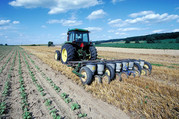
The term “sodbusting” is used to identify the conversion of land from native vegetation to commodity crop production after December 23, 1985. As part of the conservation provisions of the Food Security Act of 1985, if you’re proposing to produce agricultural commodities (crops that require annual tillage including one pass planting operations and sugar cane) on land that has been determined highly erodible and that has no crop history prior to December 23, 1985, that land must be farmed in accordance with a conservation plan or system that ensures no substantial increase in soil erosion.
Eligibility for many USDA programs requires compliance with a conservation plan or system on highly erodible land (HEL) used for the production of agricultural commodities. This includes Farm Service Agency (FSA) loan, disaster assistance, safety net, price support, and conservation programs; Natural Resources Conservation Service (NRCS) conservation programs; and Risk Management Agency (RMA) Federal crop insurance.
Before you clear or prepare areas not presently under production for crops that require annual tillage, you are required to file Form AD-1026 “Highly Erodible Land Conservation and Wetland Conservation Certification,” with FSA indicating the area to be brought into production. The notification will be referred to NRCS to determine if the field is considered highly erodible land. If the field is considered HEL, you are required to implement a conservation plan or system that limits the erosion to the tolerable soil loss (T) for the predominant HEL soil on those fields.
In addition, prior to removing trees or conducting any other land manipulations that may affect wetlands, remember to update form AD-1026, to ensure you remain in compliance with the wetland conservation provisions.
Prior to purchasing or renting new cropland acres, it is recommended that you check with your local USDA Service Center to ensure your activities will be in compliance with the highly erodible land and wetland conservation provisions.
For additional information on highly erodible land conservation and wetland conservation compliance, contact your local USDA Service Center.
|

Farmers and ranchers rely on crop insurance to protect themselves from disasters and unforeseen events, but not all crops are insurable through the USDA’s Risk Management Agency. The Farm Service Agency’s (FSA) Noninsured Crop Disaster Assistance Program (NAP) provides producers another option to obtain coverage against disaster for these crops. NAP provides financial assistance to producers of non-insurable crops impacted by natural disasters that result in lower yields, crop losses, or prevents crop planting.
Commercially produced crops and agricultural commodities for which crop insurance is not available are generally eligible for NAP. Eligible crops include those grown specifically for food, fiber, livestock consumption, biofuel or biobased products, or value loss crops such as aquaculture, Christmas trees, ornamental nursery, and others. Contact your local FSA office to see which crops are eligible in your state and county.
Eligible causes of loss include drought, freeze, hail, excessive moisture, excessive wind or hurricanes, earthquake and flood. These events must occur during the NAP policy coverage period, before or during harvest, and the disaster must directly affect the eligible crop. For guidance on causes of loss not listed, contact your local FSA county office.
Interested producers apply for NAP coverage using FSA form CCC-471, “Application for Coverage,” and pay the applicable service fee at the FSA office where their farm records are maintained. These must be filed by the application closing date, which varies by crop. Contact your local FSA office to verify application closing dates and ensure coverage for eligible NAP crops.
At the time of application, each producer acknowledges they have received the NAP Basic Provisions, which describes NAP requirements for coverage. NAP participants must report crop acreage shortly after planting and provide verifiable or reliable crop production records when required by FSA.
Producers are required to pay service fees which vary depending on the number of crops and number of counties your operation is located in. The NAP service fee is the lesser of $325 per crop or $825 per producer per administrative county, not to exceed a total of $1,950 for a producer with farming interests in multiple counties. Premiums also apply when producers elect higher levels of coverage with a maximum premium of $15,750 per person or legal entity.
A producer’s certification on Form CCC-860 Socially Disadvantaged, Limited Resource, Beginning and Veteran Farmer or Rancher Certification may serve as an application for basic NAP coverage for all eligible crops beginning with crop year 2022. These producers will have all NAP-related service fees for basic coverage waived, in addition to a 50 percent premium reduction if higher levels of coverage are elected.
For more detailed information on NAP, download the NAP Fact Sheet. To get started with NAP, we recommend you contact your local USDA service center.
|

If you’re enrolled in the Agriculture Risk Coverage (ARC) or Price Loss Coverage (PLC) programs, you must protect all cropland and noncropland acres on the farm from wind and water erosion and noxious weeds. By signing ARC county or individual contracts and PLC contracts, you agree to effectively control noxious weeds on the farm according to sound agricultural practices. If you fail to take necessary actions to correct a maintenance problem on your farm that is enrolled in ARC or PLC, the County Committee may elect to terminate your contract for the program year.
|
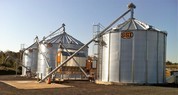
In this Ask the Expert, Toni Williams answers questions about how Farm Storage Facility Loans (FSFLs) provide low-interest financing to help producers build or upgrade commodity storage facilities. Toni is the Agricultural Program Manager for FSFLs at the Farm Service Agency (FSA).
Toni has worked for FSA for more than 32 years and is responsible for providing national policy and guidance for Farm Storage Facility Loans.
What are Farm Storage Facility Loans?
Farm Storage Facility Loans provide low-interest financing for eligible producers to build or upgrade facilities to store commodities.
The FSFL program was created in May 2000 to address an existing grain shortage. Historically, FSFLs benefitted grain farmers, but a change in the 2008 Farm Bill extended the program to fruit and vegetable producers for cold storage. An additional change extended the program to washing and packing sheds, where fresh produce is washed, sorted, graded, labeled, boxed up, and stored before it heads to market. Since May 2000, FSA has made more than 40,000 loans for on-farm storage.
Eligible facility types include grain bins, hay barns, bulk tanks, and facilities for cold storage. Drying and handling and storage equipment including storage and handling trucks are also eligible. Eligible facilities and equipment may be new or used, permanently affixed or portable.
To read the full blog visit farmers.gov/blog/ask-the-expert-qa-on-farm-storage-facility-loans-with-toni-williams.
|

Farm Service Agency (FSA) program payments are issued electronically into your bank account. In order to receive timely payments, you need to notify your FSA servicing office if you close your account or if your bank information is changed for any reason (such as your financial institution merging or being purchased). Payments can be delayed if FSA is not notified of changes to account and bank routing numbers.
For some programs, payments are not made until the following year. For example, payments for crop year 2019 through the Agriculture Risk Coverage and Price Loss Coverage program aren’t paid until 2020. If the bank account was closed due to the death of an individual or dissolution of an entity or partnership before the payment was issued, please notify your local FSA office as soon as possible to claim your payment.
|
The USDA announced it will begin providing additional, automatic financial assistance for qualifying guaranteed Farm Loan Programs (FLP) borrowers who are facing financial risk. The announcement is part of the $3.1 billion to help certain distressed farm loan borrowers that was provided through Section 22006 of the Inflation Reduction Act.
Since the Inflation Reduction Act was signed into law by President Biden in August 2022, USDA has provided approximately $1.15 billion in assistance to more than 20,000 distressed borrowers as a part of an ongoing effort to keep borrowers farming, remove obstacles that currently prevent many borrowers from returning to their land, and improve the way that USDA approaches borrowing and loan servicing in the long-term. The financial assistance announced today will provide qualifying distressed guaranteed loan borrowers with financial assistance similar to what was already provided to distressed direct loan borrowers. Based on current analysis, the financial assistance announced today will assist an estimated approximately 3,500 eligible borrowers, subject to change as payments are finalized.
An FLP guaranteed loan borrower is distressed if they qualify under one of the options below. FLP guaranteed borrowers who qualify under multiple options will receive a payment based on the option that provides the greatest payment amount:
Payment of any outstanding delinquency on all qualifying FLP guaranteed loans as of Oct. 18, 2022. This includes any guaranteed loan borrowers who did not receive an automatic payment in 2022 on that loan because they were not yet 60 days delinquent as of Sept. 30, 2022, as well as guaranteed borrowers that became delinquent on a qualifying FLP guaranteed loan between September 30, 2022, and Oct.18, 2022.
Payment on a qualifying FLP guaranteed loan for which a guaranteed loan borrower received a loan restructure, which modified the guaranteed loan maturity date, between March 1, 2020, and Aug. 11, 2023. The payment amount will be the lesser of the post-restructure annual installment or the amount required to pay the loan in full. The guaranteed loan must not have been paid in full prior to Aug. 11, 2023.
Payments on certain deferred amounts on qualifying FLP guaranteed loans, not to exceed $100,000, for guaranteed borrowers who received a deferral or another type of payment extension, for at least 45 days, between March 1, 2020, and Sept. 30, 2022, from their guaranteed lender on that qualifying guaranteed loan in response to COVID-19, disasters, or other revenue shortfalls. The Inflation Reduction Act payment amount will be the lesser of the most recent deferral or extension amount on the qualifying FLP guaranteed loan, or the amount required to pay that loan in full. The guaranteed loan must not have been paid in full prior to Aug. 11, 2023.
This assistance is only available for FLP guaranteed loan borrowers who did not or will not receive an initial payment on the same FLP guaranteed loan under Inflation Reduction Act assistance announced in October 2022.
Distressed guaranteed borrowers qualifying for this assistance will receive a United States Department of the Treasury check that is jointly payable to the borrower and the lender. These borrowers will also receive a letter from FSA informing them of Inflation Reduction Act assistance they will receive as well as instructions to make an appointment with their lender to process the payment and apply it to their qualifying guaranteed loan accounts. Guaranteed lenders will receive an email in the coming days informing them of this assistance and any next steps. Lenders will also receive letters informing them which borrowers will receive assistance and the amount of assistance they will receive.
Any distressed guaranteed borrowers who qualify for these forms of assistance and are currently in bankruptcy will be addressed using the same case-by-case review process announced in October 2022 for complex cases.
FSA will also provide relief to qualifying FLP guaranteed loan borrowers determined to be distressed borrowers based on liability for remaining federal debt subject to debt collection and garnishment after the liquidation of their guaranteed loan account as of July 31, 2023. This will allow some borrowers to potentially return to farming. Guaranteed borrowers who qualify for this assistance will have their federal debt paid automatically by FSA and will receive a letter informing them of the payment made on their federal debt.
All letters to qualifying guaranteed loan borrowers will contain instructions for opting out of assistance if a borrower chooses to do so.
Important Tax Information
Similar to other USDA Inflation Reduction Act assistance, payments provided to borrowers and payments to be applied to FSA farm loan accounts will be reported to the Internal Revenue Service (IRS). Borrowers receiving this assistance will receive a 1099 form from FSA. Please note that payments over $600 are subject to Federal and State Income Taxes and will be reflected on your annual 1099 form. Borrowers are encouraged to consult a tax professional with all tax-related questions regarding any Inflation Reduction Act assistance received. USDA also has tax-related resources at farmers.gov/taxes.
Individual Requests for Farmers Seeking Assistance
In addition to the automatic payments announced today for distressed guaranteed loan borrowers, FSA continues to accept and review individual distressed borrower assistance requests from direct loan borrowers who missed a recent installment or are unable to make their next scheduled installment on a qualifying direct FLP loan. All FSA direct borrowers should have received a letter detailing the eligibility criteria and process for seeking this type of assistance, which is available even before they become delinquent. As the letter details, borrowers who are within two months of their next installment may seek a cash flow analysis from FSA using a recent balance sheet and operating plan to determine their eligibility.
FSA direct borrowers also received a letter detailing an opportunity to receive assistance if they took certain extraordinary measures to avoid delinquency on their qualifying direct FLP loans, such as taking on or refinancing more debt, selling property, or cashing out retirement or college savings accounts.
Borrowers can submit requests for extraordinary measures or cash flow-based assistance in person at their local FSA office or by sending in a direct request using the farmers.gov 22006 assistance request portals at farmers.gov/loans/inflation-reduction-investments/assistance. All requests for assistance must be received by Dec. 31, 2023.
|
USDA announced the opening of the financial assistance application process for eligible farmers, ranchers, and forest landowners who experienced discrimination in USDA farm lending programs prior to January 2021. Section 22007 of the Inflation Reduction Act (IRA) directs USDA to provide this assistance. Since the law’s passage, USDA has worked diligently to design the program in accordance with significant stakeholder input.
The program website, 22007apply.gov, is now open. The website includes an English- and Spanish-language application that applicants can download or submit via an e-filing portal, information on how to obtain technical assistance in-person or virtually, and additional resources and details about the program.
Farmers, ranchers, and forest landowners who experienced discrimination by USDA in its farm loan programs prior to January 1, 2021 and/or are currently debtors with assigned or assumed USDA farm loan debt that was the subject of USDA discrimination that occurred prior to January 1, 2021, are eligible for this program.
To apply, borrowers have the option to apply via the e-filing portal at 22007apply.gov or submit paper-based forms via mail or in-person delivery to the program’s local offices. The application process closes October 31, 2023. Under the planned timeline, applications will be reviewed in November and December, with payments reaching recipients soon thereafter. Importantly, applicants should know that the application process is not on a first come, first served, basis. All applications received or postmarked before the October 31 deadline will be considered.
To support producers throughout the application process, USDA is ensuring that organizations with extensive experience conducting outreach to farm organizations are able to support individuals who may be eligible for the program. These groups include AgrAbility, Farmer Veteran Coalition, Farmers’ Legal Action Group, Federation of Southern Cooperatives, Intertribal Agriculture Council, Land Loss Prevention Program, National Young Farmers Coalition, and Rural Coalition.
Vendors operating four regional hubs are also providing technical assistance and working closely with these and other community-based organizations to conduct outreach using digital and grassroots strategies, to ensure potential applicants are informed about the program and have the opportunity to apply. These hubs are operating a network of brick-and-mortar program offices and will conduct extensive outreach about the program. Windsor Group serves farmers in the eastern regions of the U.S. and Analytic Acquisitions serves the western regions. A national administrator, Midtown Group, is responsible for program oversight and integrity, and will lead a national call-center, operate the application website - 22007apply.gov, which is now open – and review and process applications and payments. All vendors have experience in professional services, supporting government contracts, and complex program operations.
In standing up this program, USDA has become aware of some lawyers and groups spreading misleading information about the discrimination assistance process, pressuring people to sign retainer agreements, and asking people to fill out forms with private and sensitive information. As of today, the official application process has begun and filling out an application is free.
No attorneys’ fees will be paid to applicants or their counsel by USDA or by any other agency or department of the United States. The amount of financial assistance will not be increased for those claimants who are represented by an attorney. Applicants are not required to retain an attorney. USDA, the national administrator, and the regional hub vendors will neither recommend that any applicant retain counsel or retain a specific attorney or law firm, nor discourage an applicant from obtaining counsel or using a specific attorney or law firm. For more information, read our fact sheet about the program timeline and ways to protect against possible scams.
|

Agriculture brings so much value to our communities, including food production, open space, and economic prosperity. This is true no matter where an agricultural operation is located – whether rural or urban. USDA is committed to working with farms of all sizes and in all locations, including those in urban areas.
Our commitment includes opening new offices and providing staff expertise in urban communities to increase access to services designed to meet the unique operational needs of urban producers. Last month, Agriculture Secretary Tom Vilsack announced a series of investments in urban agriculture and food and market access, including $40 million for initiatives supporting urban and suburban producers. As part of that announcement, we are proud to highlight several new services and opportunities that our urban agricultural customers can look forward to and access in 2023 and beyond.
Visiting a New Urban Service Center
USDA works with agricultural producers through a network of more than 2,300 Service Centers nationwide. These Service Centers are where producers can meet face-to-face with Farm Service Agency (FSA) and Natural Resources Conservation Service (NRCS) employees to discuss their vision, goals, and ways USDA can help.
We’re excited to announce that FSA and NRCS collaborated to open 17 new Urban Service Centers, which will offer personalized assistance with farm loans, conservation, disaster assistance, and risk management programs to producers in and near urban areas and communities. These new Urban Service Centers are located in: Albuquerque, NM; Atlanta, GA; Chicago, IL; Cleveland, OH; Dallas, TX; Detroit, MI; Grand Rapids, MI; Los Angeles, CA; Oakland, CA; Minneapolis-St. Paul, MN; New Orleans, LA; New York, NY; Philadelphia, PA; Phoenix, AZ; Portland, OR; Richmond, VA; and St. Louis, MO.
If you farm in one of these locations, we encourage you to reach out to your local Urban Service Center staff. If not, you can find the Service Center nearest you on our Service Center Locator.
If you’re new to working with us, don’t worry, we have a checklist on how to prepare for your visit and what to expect.
Serving on an Urban County Committee
Serving on an urban county committee is an important opportunity for urban producers to affect USDA priorities and funding. Urban county committee members make decisions that impact local urban growers, and share information with USDA staff to provide urban producers better and more efficient access to USDA programs and services. Urban county committee members serve as spokespeople on USDA’s available resources and encourage and promote urban, indoor, innovative and other emerging agricultural production practices.
This year, USDA is adding 10 new urban county committees to the 17 that currently exist nationwide. The cities with new urban county committees will be Boston, MA; Columbia, SC; Denver, CO; Houston, TX; Jackson, MS; Kansas City, MO; Las Vegas, NV; Little Rock, AR; Memphis, TN; and Pittsburgh, PA.
To learn more about county committees, including urban county committees, visit the county committees webpage.
Taking Advantage of Training and Professional Development Opportunities
To make sure that the Urban Service Centers and urban county committees will be as effective as they can be, USDA is partnering with local and national organizations to train USDA staff about how best to serve urban producers. These organizations will also provide outreach, training, and technical assistance for producers and interested community members in urban areas. More information about professional development opportunities from our partners will be coming shortly.
Currently, USDA offers live and on-demand webinars on topics that are of interest to urban producers, including the People’s Garden webinar series, farm record tutorials, and tax assistance videos.
Learning More about Future Funding and Other Opportunities
USDA’s Office of Urban Agriculture and Innovative Production publishes a monthly newsletter with resources for urban and innovative producers, including lists of grant and technical assistance programs that are accepting applications. To receive the newsletter, subscribe to USDA emails on farmers.gov by selecting “Urban Agriculture and Innovative Production” from the list of topics.
The zip code or size of a community should not determine whether families can purchase healthy, locally grown food. Through programs like these, USDA is investing in America’s urban and suburban communities and strengthening local food systems. We look forward to building on this great work with future expansions to support our urban customer base.
|

The first 10 years of a farming or ranching operation are tough. USDA recognizes you need dedicated support to help make sense of all the information coming your way. Now each state has a Beginning Farmer and Rancher team headed up by a state coordinator. The coordinator helps producers who have operated a farm or ranch for less than 10 years navigate USDA and partner resources.
To find your State coordinator, visit farmers.gov/newfarmers/coordinators/. For more beginning farmer and rancher information, visit farmers.gov/newfarmers.
|

USDA announced that it is improving crop insurance options for small and diversified farmers through improvements to the Whole-Farm Revenue Protection (WRFP) and Micro Farm insurance plans. These updates are part of USDA’s Risk Management Agency (RMA) efforts to increase participation and access to crop insurance.
Improvements to WFRP for the 2024 policy year include:
- Allowing all eligible producers to qualify for 80% and 85% coverage levels.
- Allowing producers to purchase catastrophic coverage level policies for individual crops with WFRP.
- Expanding yield history to a 10-year maximum (from 4 years) for all crops not covered by another federal crop insurance policy.
- Making the policy more affordable for single commodity producers.
- Allowing producers to customize their coverage by choosing whether WFRP will consider other federal crop insurance policies as primary insurance when calculating premium and revenue to count during claim time.
Improvements to Micro Farm for the 2024 policy year include:
- Moving the sales closing date to a less busy time of year to help agents dedicate time to marketing the program. This is important specifically for producers that are purchasing Micro Farm for the first time as it provides additional time for agents to assist growers with important risk management decisions.
- Allowing producers to purchase other Federal crop insurance with Micro Farm.
- Allowing vertically integrated entities to be eligible for Micro Farm.
- Making the Expanding Operations feature available with Micro Farm.
About WFRP and Micro Farm:
WFRP and Micro Farm policies provide a risk management safety net for all commodities grown on a farm under one policy. Both policy options were designed to meet the needs of specialty, organic (both crops and livestock), or those marketing to local, regional, farm-identity preserved, specialty, or direct markets. The Micro Farm insurance plan is tailored for any farm with up to $350,000 in approved revenue, and WFRP covers any farm with up to $17 million in insured revenue. RMA introduced Micro Farm in 2021.
Currently, producers hold 1,784 WFRP policies covering $2.17 billion in liabilities, and they hold 93 Micro Farm policies covering $6.15 million in liabilities.
More Information
Crop insurance is sold and delivered solely through private crop insurance agents. A list of crop insurance agents is available at all USDA Service Centers and online at the RMA Agent Locator. Learn more about crop insurance and the modern farm safety net at rma.usda.gov or by contacting your RMA Regional Office.
|

USDA announced that it is expanding crop insurance options with a new Grapevine insurance program, which will provide coverage for loss of grafted vines caused by natural perils such as freeze or fire. The new program also will complement the Grape crop insurance program that covers the fruit growing on the vine.
The Grapevine insurance program is based on the Tree Based Dollar Amount of Insurance (TDO) Plan and includes an Occurrence Loss Option that provides coverage for smaller losses, at an additional premium, for producers with buy-up coverage.
It is classified as a “mortality policy,” paying losses when the vine is dead or so badly damaged it will not recover in the following 12 months. The program covers freeze, fire, hail, flood, and failure of the irrigation water supply caused by an unavoidable, naturally occurring event. Producers using Freeze Protection practices in their operation that are recognized by industry experts can also benefit from lower premium costs under the program.
The program will be available in select counties in California, Idaho, Michigan, New York, Ohio, Oregon, Pennsylvania, Texas, and Washington for the 2024 crop year. The deadline for signing up for insurance is Nov. 1, 2023.
More Information
Crop insurance is sold and delivered solely through private crop insurance agents. A list of crop insurance agents is available at all USDA Service Centers and online at the RMA Agent Locator. Learn more about crop insurance and the modern farm safety net at rma.usda.gov or by contacting your RMA Regional Office.
|
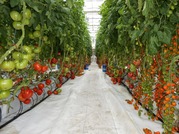
Is the new Controlled Environment crop insurance right for you?
Find out with USDA’s Risk Management Agency
The USDA is introducing a new Federal Crop Insurance program designed to provide greenhouse growers an opportunity to insure against losses due to destruction orders based on detection of plant disease vectors. USDA is hosting an in-person public session on OCT. 12 in HUDSONVILLE, MICH., to introduce the program and answer any questions you may have. Learn more and see the schedule of the session’s exact time and location. Learn More
|
USDA’s Farm Service Agency (FSA) loans provide important access to capital to help agricultural producers start or expand their farming operation, purchase equipment and storage structures or meet cash flow needs.
|
|