|
Table Of Contents
Check out this short video of Local Colorado Producer Emily Brown. It's nice to see that we have support from many different organizations.
KP

The Farm Service Agency is accepting applications for the following positions. Interested individuals may apply using the below links to USAJOBS
PERMANENT POSITIONS:
-
Loan Specialist
-
Temporary Program Technician (Possible Permanent conversion)
-
Dolores County, Opens 09/15-09/29 - this vacancy may be converted to a permanent appointment
Upcoming Positions:
Be on the lookout for the following positions that will be opening soon:
-
County Executive Director
-
Program Technician
- Washington County
- Moffat County
- Weld County
- Yuma County
- Baca County
- Prowers County
- Otero County
- Logan County
If you are interested or know of someone who might be interested, please share this information with them. Contact Claudia Drechsel at claudia.drechsel@usda.gov or 720-544-2878 if you have specific questions regarding the positions.
|
If you want to use the Noninsured Crop Disaster Assistance Program (NAP) organic price and you select the "organic" option on your NAP application, you must report your crops as organic.
When certifying organic acres, the buffer zone acreage must be included in the organic acreage.
You must also provide a current organic plan, organic certificate or documentation from a certifying agent indicating an organic plan is in effect. Documentation must include:
- name of certified individuals
- address
- telephone number
- effective date of certification
- certificate number
- list of commodities certified
- name and address of certifying agent
- a map showing the specific location of each field of certified organic, including the buffer zone acreage
Certification exemptions are available for producers whose annual gross agricultural income from organic sales totals $5,000 or less. Although exempt growers are not required to provide a written certificate, they are still required to provide a map showing the specific location of each field of certified organic, transitional and buffer zone acreage.
For more detailed information on NAP, download the NAP Fact Sheet. To get started with NAP, we recommend you contact your local USDA service center.
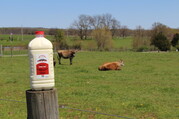
Program Signup Begins Sept. 11, 2023
USDA announced Milk Loss Program (MLP) assistance for eligible dairy operations for milk that was dumped or removed, without compensation, from the commercial milk market due to qualifying weather events and the consequences of those weather events that inhibited delivery or storage of milk (e.g., power outages, impassable roads, infrastructure losses, etc.) during calendar years 2020, 2021 and 2022. Administered by the Farm Service Agency (FSA), signup for MLP begins Sept. 11 and runs through Oct. 16, 2023.
Background
On Dec. 29, 2022, President Biden signed into law the Extending Government Funding and Delivering Emergency Assistance Act (P.L. 117-43), providing $10 billion for crop losses, including milk losses due to qualifying disaster events that occurred in calendar years 2020 and 2021. Additionally, the Disaster Relief Supplemental Appropriations Act, 2023 (Pub. L. 117-328) provides approximately $3 billion for disaster assistance for similar losses that occurred in calendar year 2022.
Eligibility
MLP compensates dairy operations for milk dumped or removed without compensation from the commercial milk market due to qualifying disaster events, including droughts, wildfires, hurricanes, floods, derechos, excessive heat, winter storms, freeze (including a polar vortex), and smoke exposure that occurred in the 2020, 2021 and 2022 calendar years. Tornadoes are considered a qualifying disaster event for calendar year 2022 only.
The milk loss claim period is each calendar month that milk was dumped or removed from the commercial market. Each MLP application covers the loss in a single calendar month. Milk loss that occurs in more than one calendar month due to the same qualifying weather event requires a separate application for each month.
The days that are eligible for assistance begin on the date the milk was removed or dumped and for concurrent days milk was removed or dumped. Once the dairy operation restarts milk marketing, the dairy operation is ineligible for assistance unless after restarting commercial milk marketing, additional milk is dumped due to the same qualifying disaster event. The duration of yearly claims is limited to 30 days per year for 2020, 2021 and 2022.
How to Apply
To apply for MLP, producers must submit:
- FSA-376, Milk Loss Program Application
- Milk marketing statement from the:
- Month prior to the month milk was removed or dumped.
- Affected month.
- Detailed written statement of milk removal circumstances, including the weather event type and geographic scope, what transportation limitations occurred and any information on what was done with the removed milk.
- Any other information required by the regulation.
If not previously filed with FSA, applicants must also submit all the following items within 60 days of the MLP application deadline:
- Form AD-2047, Customer Data Worksheet.
- Form CCC-902, Farm Operating Plan for an individual or legal entity.
- Form CCC-901, Member Information for Legal Entities (if applicable).
- Form FSA-510, Request for an Exception to the $125,000 Payment Limitation for Certain Programs (if applicable).
- Form CCC-860, Socially Disadvantaged, Limited Resource, Beginning and Veteran Farmer or Rancher Certification, (if applicable).
- A highly erodible land conservation (sometimes referred to as HELC) and wetland conservation certification (Form AD-1026 Highly Erodible Land Conservation (HELC) and Wetland Conservation (WC) Certification) for the MLP producer and applicable affiliates.
Most producers, especially those who have previously participated in FSA programs, will likely have these required forms already on file. However, those who are uncertain or want to confirm the status of their forms can contact their local FSA county office.
MLP Payment Calculation
The final MLP payment is determined by factoring the MLP payment calculation by the applicable MLP payment percentage.
The calculation for determining MLP payment is:
- ((Base period per cow average daily milk production x the number of milking cows in a claim period x the number of days milk was removed or dumped in a claim period) ÷ 100) x pay price per hundredweight (cwt.).
For MLP payment calculations, the milk loss base period is the first full month of production before the dumping or removal occurred.
The MLP payment percentage will be 90% for underserved producers, including socially disadvantaged, beginning, limited resource, and veteran farmers and ranchers and 75% for all other producers.
To qualify for the higher payment percentage, eligible producers must have a CCC-860, Socially Disadvantaged, Limited Resource, Beginning and Veteran Farmer or Rancher Certification, form on file with FSA for the 2022 program year.
Adjusted Gross Income (AGI) limitations do not apply to MLP, however the payment limitation for MLP is determined by the person’s or legal entity’s average adjusted gross farm income (income derived from farming, ranching and forestry operations). Specifically, a person or legal entity, other than a joint venture or general partnership, cannot receive, directly or indirectly, more than $125,000 in payments under MLP if their average adjusted gross farm income is less than 75% of their average AGI or more than $250,000 if their adjusted gross farm income is at least 75% of their average AGI.
More Information
In other FSA dairy safety-net support, Dairy Margin Coverage (DMC) program payments have triggered every month, January through July, for producers who obtained coverage for the 2023 program year. July 2023’s income over feed margin of $3.52 per hundredweight (cwt.) is the lowest margin since DMC program benefits to dairy producers started in 2019. To date, FSA has paid more than $1 billion in DMC benefits to covered dairy producers for the 2023 program year.
Additionally, FSA closed the Organic Dairy Marketing Assistance Program (ODMAP) application period on Aug. 11.
On farmers.gov, the Disaster Assistance Discovery Tool, Disaster Assistance-at-a-Glance fact sheet and Loan Assistance Tool can help producers and landowners determine program or loan options. For assistance with a crop insurance claim, producers and landowners should contact their crop insurance agent. For FSA and NRCS programs, they should contact their local USDA Service Center.
|
The USDA is introducing a new Federal Crop Insurance program designed to provide greenhouse growers an opportunity to insure against losses due to destruction orders based on detection of plant disease vectors. USDA is hosting an in-person public session on OCT. 3 in LAKEWOOD, COLO., to introduce the program and answer any questions you may have.
There will also be multiple virtual training sessions and those dates are:
-
September 26, 2023 at 10:30 AM CDT
-
October 5, 2023 at 11:30 AM CDT
-
October 10, 2023 at 2:30 PM CDT
Learn more and see the schedule of the session’s exact time and locations on our Controlled Environment Insurance Program Informational Sessions webpage.
The term “sodbusting” is used to identify the conversion of land from native vegetation to commodity crop production after December 23, 1985. As part of the conservation provisions of the Food Security Act of 1985, if you’re proposing to produce agricultural commodities (crops that require annual tillage including one pass planting operations and sugar cane) on land that has been determined highly erodible and that has no crop history prior to December 23, 1985, that land must be farmed in accordance with a conservation plan or system that ensures no substantial increase in soil erosion.
Eligibility for many USDA programs requires compliance with a conservation plan or system on highly erodible land (HEL) used for the production of agricultural commodities. This includes Farm Service Agency (FSA) loan, disaster assistance, safety net, price support, and conservation programs; Natural Resources Conservation Service (NRCS) conservation programs; and Risk Management Agency (RMA) Federal crop insurance.
Before you clear or prepare areas not presently under production for crops that require annual tillage, you are required to file Form AD-1026 “Highly Erodible Land Conservation and Wetland Conservation Certification,” with FSA indicating the area to be brought into production. The notification will be referred to NRCS to determine if the field is considered highly erodible land. If the field is considered HEL, you are required to implement a conservation plan or system that limits the erosion to the tolerable soil loss (T) for the predominant HEL soil on those fields.
In addition, prior to removing trees or conducting any other land manipulations that may affect wetlands, remember to update form AD-1026, to ensure you remain in compliance with the wetland conservation provisions.
Prior to purchasing or renting new cropland acres, it is recommended that you check with your local USDA Service Center to ensure your activities will be in compliance with the highly erodible land and wetland conservation provisions.
For additional information on highly erodible land conservation and wetland conservation compliance, contact your local USDA Service Center.
In this Ask the Expert, Jack Carlile, Farm Loan Manager for the USDA Farm Service Agency (FSA), answers questions about farm operating loans and when producers should apply in order to secure funds for the current crop year.
As the Farm Loan Manager for the Cherokee County Service Center, Jack is responsible for managing the loan making and loan servicing activities for five counties in northeast Oklahoma. His office provides services for over 650 farm loan customers. Jack was raised on a cross bred cow/calf operation that his grandparents started. Over the years, each generation has added to the operation by purchasing additional pasture. The operation also grows and bales their own hay. Jack’s agriculture background and degree in agriculture economics from Oklahoma State University help him better understand the financing needs of his producers.
Who can apply for FSA Farm Loans?
Anyone can apply for FSA’s loan programs. Applications will be considered on basic eligibility requirements. To apply for a loan, you must meet the following general eligibility requirements including:
- Be a U.S. citizen or qualified alien.
- Operator of a family farm or ranch.
- Have a satisfactory credit history.
- Unable to obtain credit elsewhere at reasonable rates and terms to meet actual needs.
- Not be delinquent on any federal debts.
To read the full blog visit farmers.gov/blog/ask-the-expert-farm-operating-loan-qa-with-jack-carlile.
USDA NASS conducts its biannual Agricultural Labor Survey in October. More than 18,000 farmers and ranchers across the nation will have the opportunity to participate in the survey online at agcounts.usda.gov or by mail.
Taking part in the survey helps show the value and importance of farm labor to U.S. agriculture. The data can be used to measure the availability of farm workers across the nation and help determine if there is a shortage of farm laborers. The survey is an opportunity to provide accurate information for hired farm labor.
Survey recipients who do not respond by Oct. 18 may be contacted by NASS to arrange an interview or sent a reminder email. NASS will publish the data at nass.usda.gov on Nov. 22 in the Farm Labor report. For more information, visit nass.usda.gov/go/labor/.
With harvest approaching and football season kicking off, it's a great time for producers to work on their own field goals. For the next several weeks, we'll be looking at conservation practices through the lens of football.
In some ways, being a farmer or rancher is like being a coach. You assess the landscape, develop a strategy, cultivate a team, and refine your tactics each season as you find the plays that work. All the while, your fans here at Natural Resources Conservation Service (NRCS) are proud to support and cheer you on, winning season after winning season.
First Quarter
One of the first and most important steps is to develop a game plan. Ask yourself: What's working well? What could be improved? How can you best navigate your opportunities and challenges to reach your goals?
Our conservation experts can help you answer all those questions. We'll meet with you, walk your land with you, and help develop a conservation plan customized to match your field goals. This tailored gameplan will help you develop a playbook for many successful seasons.
Second Quarter
No successful farmer goes it alone; you're going to need to recruit a winning team. But if you create the right conditions, you'll attract the most talented players nature can provide. Practice makes perfect, and we'll discuss some tried and true practices that will attract a deep bench of soil microbes, pollinators, beneficial insects, and other key players. With the right team, you'll grow like never before.
Halftime Report
Stay tuned while we check in with experts to provide play-by-play commentary of key moments, identify the most valuable players and offer advice for avoiding unforced errors and fumbles. Then it is time to take what you’ve learned, make mid-game adjustments and lead your team to victory in the second half.
Third Quarter
You've found your stride and things are growing well, but there's always room for a bit more optimization and improvement. We'll highlight practices that will elevate your team to the next level, help you thrive with fewer inputs and less waste, and grow more by doing less.
Fourth Quarter
By following your conservation gameplan, adopting soil health practices, optimizing your inputs, and reducing your waste, you'll enjoy a strong home field advantage for many seasons to come. Unlike in football, your team will always stick around and grow stronger with each passing season. You will bank the benefits of conservation and enjoy the resiliency and productivity of healthy soil.
No matter which of these goals you are looking to accomplish on your farm, experts from USDA’s Natural Resources Conservation Service (NRCS), Farm Service Agency (FSA) and Risk Management Agency (RMA) are available to help you accomplish them. For more information on how NRCS, FSA and RMA can help you kick this next growing season through the uprights, contact your local service enter by visiting farmers.gov/service-locator.
|