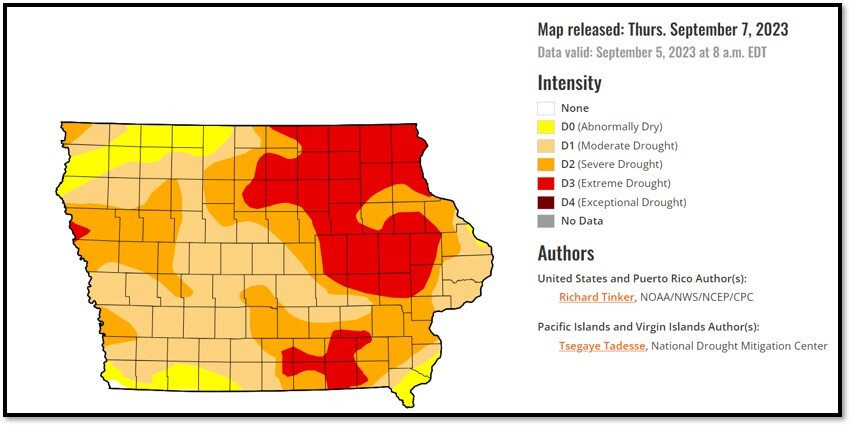
 Several Iowa Counties have now progressed to D3 Extreme Drought Status and are eligible for disaster assistance. Visit the U.S. Drought Monitor website for more detailed information for each county.
D3 drought status triggers various disaster assistance programs provided by the USDA through the Farm Service Agency. Information on some of these programs can be found below.
* Photo credit: U.S. Drought Monitor 9/5/2023

Benton County FSA is now accepting applications for the Livestock Forage Disaster Program (LFP) for grazing losses due to drought. The deadline to apply for 2023 LFP assistance is Jan. 30, 2024.
LFP provides compensation to eligible livestock producers who suffered grazing losses for covered livestock due to drought on privately owned or cash leased land or fire on federally managed land. For LFP, qualifying drought intensity levels are determined using the U.S. Drought Monitor. Producers in Benton County are eligible to apply for 2023 LFP benefits for grazing losses on native pasture, improved pasture mixed forage, annual ryegrass, or forage sorghum. Visit the FSA LFP webpage for a full list of eligible counties and pasture types.
Producers shall apply for all eligible counties in their administrative county, regardless of physical location.
Livestock eligible for LFP include alpacas, beef cattle, bison, buffalo, beefalo, dairy cattle, deer, elk, emus, equine, goats, llamas, ostriches, reindeer, or sheep that have been or would have been grazing the eligible grazing land or pastureland. Recently, FSA updated LFP policy to expand program eligibility to include additional income producing grazing animals, like horses and ostrich, that contribute to the commercial viability of an agricultural operation.
Livestock used for hunting and consumption by the owner and horses and other animals that are used or intended to be used for racing and wagering remain ineligible.
As a reminder, producers who want to participate in many USDA programs including disaster assistance programs like LFP, must file timely acreage reports by filling out the FSA-578 form to remain eligible for program benefits. Livestock producers interested in applying LFP should contact Benton County FSA at 319-472-5274, option 2 with any questions about the eligibility of specific livestock and forage crops.
More information on USDA disaster assistance is available at farmers.gov/recover.
The deadline to apply for LFP benefits is January 20, 2024.
|
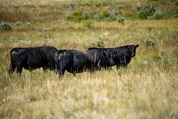
Livestock Indemnity Program (LIP) to provide benefits to eligible livestock owners or contract growers for livestock deaths in excess of normal mortality caused by eligible loss conditions, including eligible adverse weather, eligible disease and attacks by animals reintroduced into the wild by the federal government or protected by federal law, including wolves and avian predators. In addition, LIP provides assistance to eligible livestock owners that must sell livestock at a reduced price because of an injury from an eligible loss condition.
LIP is administered by the U.S. Department of Agriculture (USDA) Farm Service Agency (FSA). The occurrence of an eligible loss condition in and by itself - does not determine eligibility for eligible livestock losses. The livestock owner or contract grower must provide evidence acceptable to FSA that the eligible cause of loss not only occurred but directly caused loss or death.
LIP payments for owners are based on national payment rates that are 75 percent of the market value of the applicable livestock as determined by the USDA’s Secretary of Agriculture. Rates for contract growers of poultry or swine will not exceed the rates for owners but are based on 75 percent of national average input costs for the applicable livestock.
Producers will need to file a Notice of Loss for livestock within 30 days of the loss. Applications will be processed in the physical county where the loss occurred.
View the following fact sheet for more information:
Disaster Assistance: Livestock Indemnity Program (usda.gov)
|
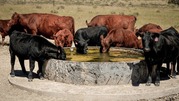
If you’ve suffered above normal expenses for hauling feed or water to livestock or hauling livestock to forage/grazing acres due to the impacts of drought, you may be eligible for financial assistance through the Emergency Assistance for Livestock, Honey Bees, and Farm-Raised Fish Program (ELAP).
For eligible producers in qualifying counties, ELAP provides financial assistance for:
- the transportation of water to livestock;
- the above normal cost of mileage for transporting feed to livestock,
- the above normal cost of transporting livestock to forage/grazing acres.*
*Hauling livestock one-way, one haul per animal reimbursement and no payment for “empty miles.”
Eligible livestock include cattle, buffalo, goats and sheep, among others, that are maintained for commercial use and located in a county where the qualifying drought conditions occur. A county must have had D2 severe drought intensity on the U.S. Drought Monitor for eight consecutive weeks during the normal grazing period, or D3 or D4 drought intensity at any time during the normal grazing period. Producers must have risk in both eligible livestock and eligible grazing land in an eligible county to qualify for ELAP assistance.
WATER TRANSPORTATION
For ELAP water transportation assistance, a producer must be transporting water to eligible livestock on eligible grazing land where the producer had adequate livestock watering systems or facilities in place before the drought occurred and where they do not normally require the transportation of water. Payments are for costs associated with personal labor, equipment, hired labor, equipment, and/or contracted water transportation fees. Cost of the water itself is not covered. The ELAP payment formula uses a national average price per gallon.
ABOVE NORMAL COSTS OF TRANSPORTING FEED
ELAP provides financial assistance to livestock producers who incur above normal expenses for transporting feed to livestock during drought. The payment formula excludes the first 25 miles and any mileage over 1,000 miles. The reimbursement rate is 60% of the costs above what would normally have been incurred during the same time period in a normal (non-drought) year.
ABOVE NORMAL COSTS OF TRANSPORTING LIVESTOCK TO FORAGE/GRAZING ACRES
ELAP provides financial assistance to livestock producers who are hauling livestock to a new location for feed resources due to insufficient feed and/or grazing in drought-impacted areas. Assistance for Livestock transportation is retroactive to 2021 and available for 2022 and subsequent years. Please contact your county FSA office for additional details.
For calendar year 2022 forward, producers must submit a notice of loss to your local FSA office within 30 calendar days of when the loss is apparent; producers should contact their county FSA office as soon as the loss of water resources or feed resources are known. For ELAP eligibility, documentation of expenses is critical. Producers should maintain records and receipts associated with the costs of transporting water to eligible livestock, the costs of transporting feed to eligible livestock, and the costs of transporting eligible livestock to forage/grazing acres.
ELAP also offers assistance to producers impacted by wildfire. In addition, beekeepers also can benefit from ELAP provisions and should contact their county FSA office within 15 calendar days of when a loss occurs or from when the loss is apparent. For more information regarding ELAP, contact your Benton County USDA Service Center at 319-472-5274, option 2 or visit fsa.usda.gov/disaster.
|
A Secretarial Disaster Designation has been issued for six (6) counties in Iowa as primary disaster area for drought. Additionally, eleven (11) Iowa counties are contiguous to the disaster area. This determination will allow the Farm Service Agency’s Emergency Loans to be made available to eligible family farmers with qualifying production and physical losses in the primary and the contiguous counties to the declared disaster area.
Primary Disaster Counties: Black Hawk, Bremer, Butler, Chickasaw, Floyd, Grundy
Contiguous Disaster Counties: Benton, Buchanan, Cerro Gordo, Fayette, Franklin, Hardin, Howard, Marshall, Mitchell, Tama, Winneshiek
The U.S. Department of Agriculture’s Farm Service Agency (FSA) provides emergency loans to help producers recover from production and physical losses due to drought, flooding, other natural disasters, or quarantine.
Please contact your FSA Farm Loan Officer for more information.
|