
The application period is now open for a new financial assistance program under Section 22007 of the Inflation Reduction Act (IRA), for farmers, ranchers, and forest landowners who experienced discrimination in USDA farm lending programs prior to January 2021. The application process will close on October 31. Borrowers will have the option to apply for assistance online via 22007apply.gov or through a paper-based form.
Details about the program, including an application and e-filing portal, are available at 22007apply.gov. The website includes an English and Spanish language application that applicants can download or submit via an e-filing portal, information on how to obtain technical assistance in-person or virtually, and additional resources and details about the program. Applicants can also call the free call center at 1-800-721-0970 or visit one of several dozen brick-and-mortar offices the program has set up around the country. Locations are provided on the program website and vendors will update the local events schedule with more information as it becomes available. It is important to note that filing an application is FREE and does not require a lawyer.
If you want to get weekly updates on the program’s events and progress, you can go to https://22007apply.gov, and subscribe to a weekly newsletter.
|

Hurricane season is officially underway, and it lasts until November 30. The National Oceanic and Atmospheric Administration (NOAA) predicts that the 2023 hurricane season will be near normal in the Atlantic and produce 12 to 17 named storms, of which five to nine could become hurricanes, including one to four major hurricanes.
USDA is encouraging producers to take precautions to prepare and protect their family and agricultural operations.
-
Develop an Emergency Plan - Ensure your household and employees know your hurricane plan, including meeting points, emergency contact lists, and alternate evacuation routes in case infrastructure is damaged.
-
Remove Debris and Secure Large Objects - Clean out culverts, ditches, and other drainage areas, especially before and during peak hurricane season to reduce water damage. Most injuries to animals, people, or structures during a hurricane are caused by flying objects. To lessen the risk, minimize the presence of equipment, supplies, and debris that may become airborne during high winds or encountered in floodwaters.
-
Secure Important Records and Documents- Pre- and post-hurricane documentation is extremely important for insurance compensation and recovery assistance. You’ll want to have thorough records of damages and losses sustained on your farm as well as documentation of your cleanup and recovery efforts.
- It is critical to document inventory of farm buildings, vehicles, equipment, and livestock before a disaster occurs. Take photos, videos, or make written lists with descriptions. Keep copies of this inventory in multiple places: computer, off-site in a safe location, and on a cloud-based server where information is transmitted and saved weekly.
-
Know Your Insurance Options- Regularly review your insurance policies with your agent to be sure you have adequate coverage, including flood insurance, for your facilities, vehicles, farm buildings, crops and livestock. Note, there are limitations on how soon insurance coverage will take effect. Generally, insurance policies will not cover damage if the policy was not in place before a disaster.
-
Gather Supplies - Have drinking water, canned food, a generator, batteries, a flashlight, and fuel available in case you lose power. For widespread outages, credit and debit cards may not work, so have cash handy.
-
Access Real-time Emergency Information- Download the FEMA app for free on the App Store and Google Play for safety tips on what to do before, during, and after disasters. Subscribe to our text message and email service to receive real-time, local operational and recovery information from the Farm Service Agency, Natural Resources Conservation Service and Risk Management Agency.
On farmers.gov, the Hurricane Webpage, Disaster Assistance Discovery Tool, Disaster-at-a-Glance fact sheet, and Loan Assistance Tool can help producers and landowners determine program or loan options. For assistance with a crop insurance claim, producers and landowners should contact their crop insurance agent. For FSA and NRCS programs, they should contact their local USDA Service Center.
|
USDA Farm Service Agency (FSA) reminds you to report prevented planted and failed acres in order to establish or retain FSA program eligibility for some programs.
You should report crop acreage you intended to plant, but due to natural disaster, were prevented from planting. Prevented planting acreage must be reported on form CCC-576, Notice of Loss, no later than 15 calendar days after the final planting date as established by FSA and the Risk Management Agency (RMA).
If you’re unable to report the prevented planting acreage within the 15 calendar days following the final planting date, a late-filed report can be submitted. Late-filed reports will only be accepted if FSA conducts a farm visit to assess the eligible disaster condition that prevented the crop from being planted. A measurement service fee will be charged.
Additionally, if you have failed acres, you should also use form CCC-576, Notice of Loss, to report failed acres.
For hand-harvested crops and certain perishables, you must notify FSA of damage or loss through the administrative county office within 72 hours of the date of damage or loss first becomes apparent. This notification can be provided by filing a CCC-576, email, fax or phone. If you notify the County Office by any method other than by filing the CCC-576, you are still required to file a CCC-576, Notice of Loss, within the required 15 calendar days.
For losses on crops covered by the Noninsured Crop Disaster Assistance Program (NAP), you must file a Notice of Loss within 15 days of the occurrence of the disaster or when losses become apparent. You must timely file a Notice of Loss for failed acres on all crops including grasses.
To file a Notice of Loss, contact your local County USDA Service Center or visit www.fsa.usda.gov.
The U.S. Department of Agriculture (USDA) launched a new online tool to help farmers and ranchers better navigate the farm loan application process. This uniform application process will help to ensure all farm loan applicants receive equal support and have a consistent customer experience with USDA’s Farm Service Agency (FSA) regardless of their individual circumstances.
USDA experiences a high rate of incomplete or withdrawn applications, particularly among underserved customers, due in part to a challenging and lengthy paper-based application process. The Loan Assistance Tool is available 24/7 and gives customers an online step-by-step guide that supplements the support they receive when working in person with a USDA employee, providing materials that may help an applicant prepare their loan application in one tool.
Farmers can access the Loan Assistance Tool by visiting farmers.gov/farm-loan-assistance-tool and clicking the ‘Get Started’ button. From here they can follow the prompts to complete the Eligibility Self-Assessment and start the farm loan journey. The tool is built to run on any modern browser like Chrome, Edge, Firefox, or the Safari browser, and is fully functional on mobile devices. It does not work in Internet Explorer.
The Loan Assistance Tool is the first of multiple farm loan process improvements that will be available to USDA customers on farmers.gov in the future. Other improvements and tools that are anticipated to launch in 2023 include:
- A streamlined and simplified direct loan application, reduced from 29 pages to 13 pages.
- An interactive online direct loan application that gives customers a paperless and electronic signature option, along with the ability to attach supporting documents such as tax returns.
- An online direct loan repayment feature that relieves borrowers from the necessity of calling, mailing, or visiting a local Service Center to pay a loan installment.
Background
USDA provides access to credit to approximately 115,000 producers who cannot obtain sufficient commercial credit through direct and guaranteed farm loans. With the funds and direction Congress provided in Section 22006 of the Inflation Reduction Act, USDA is taking action to immediately provide relief to qualifying distressed borrowers whose operations are at financial risk while working on making transformational changes to loan servicing so that borrowers are provided the flexibility and opportunities needed to address the inherent risks and unpredictability associated with agricultural operations.
USDA will provide approximately $123 million in additional, automatic financial assistance for qualifying farm loan program borrowers who are facing financial risk, as part of the $3.1 billion to help distressed farm loan borrowers that was provided through Section 22006 of the Inflation Reduction Act (IRA). The announcement builds on financial assistance offered to borrowers through the same program in October 2022.
The IRA directed USDA to expedite assistance to distressed borrowers of direct or guaranteed loans administered by USDA’s Farm Service Agency (FSA) whose operations face financial risk. For example, in the October payments, farmers that were 60 days delinquent due to challenges like natural disasters, the pandemic or other unexpected situations were brought current and had their next installment paid to give them breathing room.
In October 2022, USDA provided approximately $800 million in initial IRA assistance to more than 11,000 delinquent direct and guaranteed borrowers and approximately 2,100 borrowers who had their farms liquidated and still had remaining debt. USDA shared that it would conduct case-by-case reviews of about 1,600 complex cases for potential initial relief payments, including cases of borrowers in foreclosure or bankruptcy. These case-by-case reviews are underway
At the same time in October 2022, USDA announced that it anticipated payments using separate pandemic relief funding totaling roughly $66 million on over 7,000 direct loans to borrowers who used the USDA Farm Service Agency’s disaster-set-aside option during the COVID-19 pandemic. The majority of these payments have been processed and USDA anticipates it will complete all such payments in April 2023.
New Assistance for Distressed Borrowers
FSA intends to provide the new round of relief starting in April to additional distressed borrowers. This will include approximately $123 million in automatic financial assistance for qualifying Farm Loan Program (FLP) direct loan borrowers who meet certain criteria. Similar to the automatic payments announced in October 2022, qualifying borrowers will receive an individual letter detailing the assistance as payments are made. Distressed borrowers’ eligibility for these new categories of automatic payments will be determined based on their circumstances as of today. More information about the new categories that make up the $123 million in assistance announced today and the specific amount of assistance a distressed borrower receives can be found described in this fact sheet, IRA Section 22006: Additional Automatic Payments, Improved Procedures, and Policy Recommendations.
To continue to make sure producers are aware of relief potentially available to them, all producers with open FLP loans will receive a letter detailing a new opportunity to receive assistance if they took certain extraordinary measures to avoid delinquency on their FLP loans, such as taking on more debt, selling property or cashing out retirement accounts. The letter will provide details on eligibility, the specific types of actions that may qualify for assistance, and the process for applying for and providing the documentation to seek that assistance.
These steps are part of a process USDA announced along with the October payments that is focused on assisting borrowers unable to make their next scheduled installment. Earlier this year, all borrowers should have received a letter detailing the process for seeking this type of assistance even before they become delinquent. Borrowers who are within two months of their next installment may seek a cashflow analysis from FSA using a recent balance sheet and operating plan to determine their eligibility.
Tax Resources
USDA will continue to work with the Department of Treasury to help borrowers understand the potential tax implications from the receipt of an IRA payment, including that options may be available to potentially avoid or alleviate any tax burden incurred as a result of receiving this financial assistance.
In early April, USDA set a specific set of revised tax documents, educational materials and resources to borrowers that received assistance in 2022, including a link to a webinar hosted by a group of farm tax experts to provide education on the options available. USDA cannot provide tax advice and encourages borrowers to consult their own tax professional, but FSA is providing educational materials for borrowers to be aware of the options. USDA has tax-related resources available at farmers.gov/taxes.
Improved Procedures and Policy Recommendations
FSA is finalizing changes to its policy handbooks to remove unnecessary hurdles, improve loan making and loan servicing and provide more flexibility on how loans are structured to maximize the opportunities for borrowers. Additional details on those changes can be found in the linked fact sheet and are the start of a broader set of process enhancements. The fact sheet also provides information on the eight, no-cost legislative proposals included in the Fiscal Year 2024 President’s Budget that are designed to improve the borrower experience.
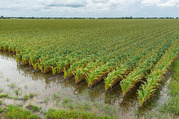
Farmers and ranchers rely on crop insurance to protect themselves from disasters and unforeseen events, but not all crops are insurable through the USDA’s Risk Management Agency. The Farm Service Agency’s (FSA) Noninsured Crop Disaster Assistance Program (NAP) provides producers another option to obtain coverage against disaster for these crops. NAP provides financial assistance to producers of non-insurable crops impacted by natural disasters that result in lower yields, crop losses, or prevents crop planting.
Commercially produced crops and agricultural commodities for which crop insurance is not available are generally eligible for NAP. Eligible crops include those grown specifically for food, fiber, livestock consumption, biofuel or biobased products, or value loss crops such as aquaculture, Christmas trees, ornamental nursery, and others. Contact your local FSA office to see which crops are eligible in your state and county.
Eligible causes of loss include drought, freeze, hail, excessive moisture, excessive wind or hurricanes, earthquake and flood. These events must occur during the NAP policy coverage period, before or during harvest, and the disaster must directly affect the eligible crop. For guidance on causes of loss not listed, contact your local FSA county office.
Interested producers apply for NAP coverage using FSA form CCC-471, “Application for Coverage,” and pay the applicable service fee at the FSA office where their farm records are maintained. These must be filed by the application closing date, which varies by crop. Contact your local FSA office to verify application closing dates and ensure coverage for eligible NAP crops.
At the time of application, each producer acknowledges they have received the NAP Basic Provisions, which describes NAP requirements for coverage. NAP participants must report crop acreage shortly after planting and provide verifiable or reliable crop production records when required by FSA.
Producers are required to pay service fees which vary depending on the number of crops and number of counties your operation is located in. The NAP service fee is the lesser of $325 per crop or $825 per producer per administrative county, not to exceed a total of $1,950 for a producer with farming interests in multiple counties. Premiums also apply when producers elect higher levels of coverage with a maximum premium of $15,750 per person or legal entity.
A producer’s certification on Form CCC-860 Socially Disadvantaged, Limited Resource, Beginning and Veteran Farmer or Rancher Certification may serve as an application for basic NAP coverage for all eligible crops beginning with crop year 2022. These producers will have all NAP-related service fees for basic coverage waived, in addition to a 50 percent premium reduction if higher levels of coverage are elected.
For more detailed information on NAP, download the NAP Fact Sheet. To get started with NAP, we recommend you contact your local USDA service center.
|

The USDA Farm Service Agency (FSA) recently made several policy updates for acreage reporting for cover crops, revising intended use, late-filed provisions, grazing allotments as well as updated the definitions of “idle” and “fallow.”
Reporting Cover Crops:
Cover crop types can be chosen from the following four categories:
- Cereals and other grasses
- Legumes
- Brassicas and other broadleaves
- Mixtures
If the cover crop is harvested for any use other than forage or grazing and is not terminated according to policy guidelines, then that crop will no longer be considered a cover crop and the acreage report must be revised to reflect the actual crop.
Permitted Revision of Intended use After Acreage Reporting Date:
New operators or owners who pick up a farm after the acreage reporting deadline has passed and the crop has already been reported on the farm, have 30 calendar days from the date when the new operator or owner acquired the lease on land, control of the land or ownership and new producer crop share interest in the previously reported crop acreage. Under this policy, appropriate documentation must be provided to the County Committee’s satisfaction to determine that a legitimate operator or ownership and producer crop share interest change occurred to permit the revision.
Acreage Reports:
In order to maintain program eligibility and benefits, you must timely file acreage reports. Failure to file an acreage report by the crop acreage reporting deadline may result in ineligibility for future program benefits. FSA will not accept acreage reports provided more than a year after the acreage reporting deadline.
Reporting Grazing Allotments:
FSA offices can now accept acreage reports for grazing allotments. You will use form “FSA-578” to report grazing allotments as animal unit months (AUMs) using the “Reporting Unit” field. Your local FSA office will need the grazing period start and end date and the percent of public land.
Definitions of Terms
FSA defines “idle” as cropland or a balance of cropland within a Common Land Unit (CLU) (field/subfield) which is not planted or considered not planted and does not meet the definition of fallow or skip row.
Fallow is considered unplanted cropland acres which are part of a crop/fallow rotation where cultivated land that is normally planted is purposely kept out of production during a regular growing season.
For more information, contact your local County USDA Service Center or visit fsa.usda.gov.
|
|