|
|
Alabama USDA Newsletter - August 2023
|
|
|
|
Farm Service Agency | Natural Resources Conservation Service | Risk Management Agency
|
In This Issue:
The application period is now open for a new financial assistance program under Section 22007 of the Inflation Reduction Act (IRA), for farmers, ranchers, and forest landowners who experienced discrimination in USDA farm lending programs prior to January 2021. The application process will close on October 31. Borrowers will have the option to apply for assistance online via 22007apply.gov or through a paper-based form.
Details about the program, including an application and e-filing portal, are available at 22007apply.gov. The website includes an English and Spanish language application that applicants can download or submit via an e-filing portal, information on how to obtain technical assistance in-person or virtually, and additional resources and details about the program. Applicants can also call the free call center at 1-800-721-0970, or visit one of several dozen brick-and-mortar offices the program has set up around the country. Locations are provided on the program website and vendors will update the local events schedule with more information as it becomes available. It is important to note that filing an application is FREE and does not require a lawyer.
If you want to get weekly updates on the program’s events and progress, you can go to https://22007apply.gov, and subscribe to a weekly newsletter.
|
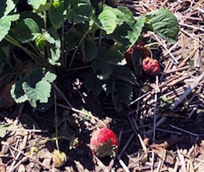
The Farm Service Agency encourages you to examine available USDA crop risk protection options, including federal crop insurance and Noninsured Crop Disaster Assistance Program (NAP) coverage, before the applicable crop sales deadline.
Federal crop insurance covers crop losses from natural adversities such as drought, hail and excessive moisture. NAP covers losses from natural disasters on crops for which no permanent federal crop insurance program is available. You can determine if crops are eligible for federal crop insurance or NAP by visiting the RMA website.
NAP offers higher levels of coverage, from 50 to 65 percent of expected production in 5 percent increments, at 100 percent of the average market price. Producers of organics and crops marketed directly to consumers also may exercise the “buy-up” option to obtain NAP coverage of 100 percent of the average market price at the coverage levels of between 50 and 65 percent of expected production. Buy-up levels of NAP coverage are available if the producer can show at least one year of previously successfully growing the crop for which coverage is being requested. NAP basic coverage is available at 55 percent of the average market price for crop losses that exceed 50 percent of expected production.
For all coverage levels, the NAP service fee is the lesser of $325 per crop or $825 per producer per county, not to exceed a total of $1,950 for a producer with farming interests in multiple counties.
Beginning, underserved, veterans and limited resource farmers are now eligible for free catastrophic level coverage.
Deadlines for coverage vary by state and crop. contact your County USDA Service Center by visiting fsa.usda.gov.
Federal crop insurance coverage is sold and delivered solely through private insurance agents. Agent lists are available at all USDA Service Centers or at USDA’s online Agent Locator. You can use the USDA Cost Estimator to predict insurance premium costs.
|
The U.S. Department of Agriculture (USDA) is now a
The Inflation Reduction Act of 2022 represents the single largest investment in climate and clean energy solutions in American history. It provides $19.5 billion from fiscal years 2023 to 2027 for climate smart agriculture through several of the conservation programs that USDA’s Natural Resources Conservation Service (NRCS) implements. Last February, NRCS announced it was making $850 million of those funds available in fiscal year 2023 for its oversubscribed conservation programs – the Environmental Quality Incentives Program (EQIP), Conservation Stewardship Program (CSP), Regional Conservation Partnership Program (RCPP), and Agricultural Conservation Easement Program (ACEP).
NRCS is well on its way to implementing IRA in fiscal year 2023, and we’re planning for 2024 and beyond. In past years, producer demand for conservation assistance through these programs has outpaced available funding. We’re excited that many producers can now benefit from this additional funding, and we’re preparing for the additional help they will need to implement these climate change mitigation practices.
Locally, we’re getting funding out to individual producers, and we’re improving and streamlining programs to make it easier to sign up.
- So far in fiscal year (FY) 2023, NRCS is ahead of historical rates in obligating financial assistance for conservation programs and has obligated more than 19,500 contracts, compared to an average of just over 12,000 at this same time over the last 4 years.
- Since announcing the availability of FY 2023 IRA funds in February, we have had over 10,000 applications for IRA in EQIP and CSP—and that number is growing every day. We’re currently receiving an average of 29 IRA applications per hour for CSP and EQIP combined.
Producers need to know that NRCS accepts applications for our conservation programs year-round. And, no matter when they apply, their application will automatically carry over for consideration in future funding cycles. We encourage producers to apply now so that they can take advantage of this opportunity for additional funding over the next few years. To receive consideration for the current funding cycle in FY23, producers should apply by their state’s program ranking dates.
We expect to announce funding recommendations for ACEP soon. The national ranking date for ACEP closed on March 17, 2023, and we received over $174 million in request for the $65 million of available funding. And, as part of the ongoing effort to streamline our conservation programs, ensure that they are more convenient to utilize, and to help strengthen IRA implementation, we announced improvements to ACEP on May 9.
We’re getting funding out to partners.
We are also getting funding out to partners through the Regional Conservation Partnership Program, a partner-driven program that leverages partner resources to advance innovative projects that address issues such as climate change. On May 19, we announced that applications were being accepted through August 18, 2023, for RCPP Classic and RCPP Alternative Funding Arrangements (AFA). Projects selected under this funding opportunity may be awarded through either Farm Bill 2018 or IRA funding, however applications for RCPP climate-related projects will receive priority consideration for IRA funding.
These and many other efforts are continuing in 2023 and beyond. NRCS will continue to keep partners and producers informed about new funding opportunities, recruitment efforts, partnerships available, and plans for IRA implementation in the years ahead.
|
A multi-agency guide for USDA assistance for underserved farmers and ranchers is now available. If you are a farmer or rancher and are a minority, woman, veteran, beginning, or limited resource producer, you can use this booklet to learn about assistance and targeted opportunities available to you. This includes programs offered through the Farm Service Agency, Natural Resources Conservation Service, and Risk Management Agency. Download the guide here. The guide is also available in Spanish, Hmong, Korean, Vietnamese, Thai and Chinese on farmers.gov/translations.
|
|
|
Alabama USDA
|
Farm Service Agency (FSA)
4121 Carmichael Road, Ste 600
Montgomery, AL 36106
Phone: (334) 279-3500
Fax: (855) 747-0599
FSA State Director
Clifton Warren, Jr
|
Natural Resource Conservation Service (NRCS)
3381 Skyway Dr.
Auburn, AL 36830
Phone: (334) 887-4500
Fax: (855)292-1671
NRCS State Conservationist
Ben Malone
|
|
FSA State Committee
Donald Means, Chairperson
Marvin Datcher
Gary Terry
William Townsend Kyser III
Danny Ellison
|
Risk Management
106 S. Patterson Street, Suite 250
Valdosta, GA 31601-5673
Phone: 229-242-7235
Fax: (229) 242-3566
RMA Regional Director
Davina Lee
|
|
|
|
|
|
USDA is an equal opportunity provider, employer and lender. To file a complaint of discrimination, write: USDA, Office of the Assistant Secretary for Civil Rights, Office of Adjudication, 1400 Independence Ave., SW, Washington, DC 20250-9410 or call (866) 632-9992 (Toll-free Customer Service), (800) 877-8339 (Local or Federal relay), (866) 377-8642 (Relay voice users).
|
|