|
Table Of Contents
We know agriculture in Colorado is a small family. We all know each other or can connect in a conversation quickly. Being part of a small family requires its member to have many responsibilities. Many of you feel like you are “board” to death. School board, ditch board, county committee and on and on.
Last week I attended a listening session sponsored by the USDA Risk Management Agency. They are soliciting comments on the prevented planting portion of RMA coverage. The session was not attended very well but we still have some time to let our voices be heard.
I urge those of you who utilize RMA’s tools to please take a little time and comment on the prevented planting as well as any other thoughts you have on your RMA insurance coverage.
It does not matter if you are a producer, an agent, or an employee, your opinion is important, and it counts more than you probably think it does.
Comments must be submitted by September 1, 2023; To comment, go to:
https://www.regulations.gov/
Docket ID FCIC-23-0001
I know I am asking you to wear one more hat, but insurance is a big part of our world these days and they cannot fix it if they don’t know about it!
Hopefully you have a little free time and can enjoy the nice summer. Be safe!
KP

The Farm Service Agency is accepting applications for the following positions. Interested individuals may apply using the below links to USAJOBS
PERMANENT POSITIONS:
-
County Executive Director
-
Weld County, Open 07/21-08/17 - this vacancy offers a 25% relocation bonus
If you are interested or know of someone who might be interested, please share this information with them. Contact Claudia Drechsel at claudia.drechsel@usda.gov or 720-544-2878 if you have specific questions regarding the positions.
|
The NRCS in Colorado is currently accepting applications for Soil Conservation Technicians. In this position you will:
- work with landowners to apply and maintain conservation practices and reviews financial assistance requests under federal, state and possibly local agriculture programs,
- gather and compile planning data on rural and/or urban sites, including physical features such as soil limitations, erosion, surface drainage, sedimentation, and other natural resource data,
- prepare basic natural resources conservation plans where soil survey information is available,
- schedule follow up with landowners or operators to check progress of conservation practices that are under construction, and so much more.
Locations will be Negotiable: Akron, Alamosa, Brighton, Burlington, Cortez, Durango, Greeley, Gunnison, Holyoke, Longmont, Simla, Steamboat Springs, Sterling, Walsenburg, Kremmling, and Glenwood Springs. Applicants interested in locations not specifically listed on the announcement are encouraged to communicate/negotiate location availability during the interview stage. To apply or for more information, please visit: USAJOBS - Job Announcement: https://www.usajobs.gov/job/740407800#
The U.S. government provides employees with careers that have competitive pay, comprehensive benefits packages, flexible work schedules and environments, and more. A career with USDA's Natural Resources Conservation Service (NRCS) offers employees the opportunity to work with others who are helping people help the land.
Grant funds for up to 50% of the total project costs are currently available for installation of Renewable Energy Systems and Energy Efficiency Improvements for Agricultural Producers and Rural Small Businesses. The Rural Energy for America Program (REAP) has additional grant funding available for Fiscal Years 2023 and 2024. Applications are accepted anytime, with quarterly funding competition deadlines through September 30, 2024. Those deadlines are:
- September 30, 2023
- December 31, 2023
- March 31, 2024
- June 30, 2024
Agricultural producers with at least 50% of their gross income coming from agricultural operations can apply for REAP; they can be located in rural or nonrural areas. Small businesses that are located in an eligible rural area are also eligible to apply.
The REAP program reduces demand for energy through energy efficiency improvement and increases American energy independence by increasing the private sector supply of renewable energy. Over time these investments will help lower the operational costs for business and production operations.
REAP Renewable Energy System (RES) funds can be used for systems such as:
- Small and large solar or wind generation
- Geothermal for electric generation or direct use
- Hydropower below 30 megawatts
- Biomass (for example: biodiesel and ethanol, anaerobic digesters, and solid fuels)
REAP Energy Efficiency Improvement (EEI) funds can be used to buy, build and install EEI such as:
- Electric, solar, or gravity pumps for sprinkler pivots
- Switching from a diesel to an electric irrigation motor
- Lighting, Insulation, Doors, Windows, Cooling or Refrigeration units
- High-efficiency heating, ventilation, and air conditioning systems (HVAC)
Please contact SM.CO.REAP@usda.gov for more information on this program in Colorado.
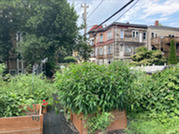
The U.S. Department of Agriculture (USDA) is establishing a new urban county committee in Denver, joining 26 other cities with a committee focused on delivery of USDA Farm Service Agency (FSA) programs to urban producers. County committee members make important decisions on how federal farm programs are administered locally, and this new urban county committee in Denver is part of USDA’s broad support for urban and innovative agriculture.
Urban agricultural producers who participate in USDA programs in these cities or cooperate with USDA programs by providing information about their farming operation are encouraged to participate by nominating and voting in their local urban county committee elections. FSA will share more information on the nomination process and elections for this new urban county committee.
This urban county committee in Denver was announced last week by Agriculture Secretary Tom Vilsack and Deputy Secretary Xochitl Torres Small as part of a significant investment in urban agriculture. The announcement included a total of 10 new urban county committees and 17 new Urban Service Centers. Other cities with new urban county committees include:
- Boston, Mass.
- Columbia, S.C.
- Houston, TX
- Jackson, MS
- Kansas City, MO
- Las Vegas, NV
- Little Rock, AR
- Memphis, TN
- Pittsburgh, PA
Support for Urban Agriculture To help strengthen urban county committees and other urban agriculture investments, USDA is investing $40 million, made possible by President Biden’s American Rescue Plan, into partnerships with community-based organizations. Two of those partnerships include:
- Virginia State University’s Small Farm Outreach Program and Cornell University’s Small Farm Center, which will support local partner organizations and urban county committee members across the country by providing guidance and training on the practices and assistance most needed by urban agricultural producers, holding regular meetings to assess successes and barriers in each location, and gathering data to analyze the effectiveness of programs and provide recommendations to increase future participation.
- To Improve Mississippi Economics, Inc. (TIME, Inc.), whose mission is to provide outreach, training, and technical assistance to urban agricultural producers and organizations that provide access to healthy food in impoverished communities. TIME, Inc. will work in collaboration with FSA and local leaders across the nation to fund partnerships with organizations in the 10 cities where USDA will create new urban county committees in 2024.
More Information
To learn more about county committees, including urban county committees, visit our County Committees webpage. Visit farmers.gov/urban for more information on programs and services for urban producers.
Signup for Email and Text Alerts for the New Urban COC
Did you know you can subscribe to receive free email and text message updates from USDA related to the new urban county committee in Denver, CO?
Whether you’re scrolling through emails on your break or checking a text message between tasks, USDA wants to keep you posted on the latest news related to the new urban county committee and how it can help your farm. Information will include updates about nominations, elections and the work being done by the committee to help farmers like you in your local areas. Subscribe now to receive emails and text messages about important program information related to the new urban county committee in Denver, CO.
You can sign up for email alerts by visiting farmers.gov/subscribe, select “CO - Denver - Urban Agriculture and Innovative Production” or text alerts by texting USDAFARMERS_4142. Urban agriculture is one of the many topics available to producers. If you subscribe online, you can also sign up for information on other topics, including disaster assistance, conservation programs, crop insurance and farm loans. Participants may unsubscribe at any time.
|
USDA is accepting offers for nearly 2.7 million acres from agricultural producers and private landowners through this year’s Grassland Conservation Reserve Program(CRP) signup, which received a record setting sign-up of 4.6 million acres in offers. This working lands program allows producers and landowners to continue grazing and haying practices while protecting grasslands and further the CRP’s impacts. Grassland CRP is part of the Biden-Harris administration’s broader effort to address climate change and conserve natural resources.
Grassland CRP leverages working lands practices to improve biodiversity and conserve environmentally sensitive land. To target conservation in key geographies, USDA prioritizes land within two National Priority Zones: the Greater Yellowstone Ecosystem and the Dust Bowl area. Building upon the nearly 2.4 million acres already in the Priority Zones, this year’s more than 900,000 acres continues to robustly demonstrate that producers in these areas recognize the keen conservation value of Grassland CRP. Land enrolled in these zones will contribute to broader USDA conservation efforts through Working Lands for Wildlife by conserving working grasslands and other lands that underpin iconic big game migrations.
Grasslands enrolled in CRP help sequester carbon in vegetation and soil, while enhancing resilience to drought and wildfire. Meanwhile, producers can still conduct common grazing practices, such as haying, mowing or harvesting seed from the enrolled land, which supports agricultural production.
In addition to the Grassland signup, FSA also has accepted more than 1 million acres through the General signup, and more than 465,800 acres have been submitted through the Continuous CRP signup so far this year, on pace to be similar to last year’s nearly 900,000-acre enrollment.
As part of USDA’s Justice40 efforts, producers and landowners who are underserved, including beginning farmers, limited-resource producers and military veterans, received 20 additional ranking points to enhance their offers. USDA accepted 1.8 million acres from underserved producers, about 74% of the total acres submitted by the 6,400 underserved producers who submitted offers.
Additionally, USDA is working to broaden the scope and reach of Grassland CRP by leveraging CREP to engage underserved communities. CREP is a partnership program that enables states, Tribal governments, and non-profit entities to partner with FSA to implement CRP practices and address high priority conservation and environmental objectives. Interested entities are encouraged to contact FSA.
Producers can still make an offer to participate in CRP through the Continuous CRP signup, which is ongoing, by contacting FSA at their local USDA Service Center.
USDA is modifying the Annual Forage Insurance Program to make it more sustainable and to allow producers more flexibility. This includes allowing producers to choose the areas which they insure, rather than being required to insure all eligible acres. The changes will take effect for the 2024 crop year.
The Annual Forage insurance program is a rainfall index area-based plan that provides coverage to acreage planted each year and used as feed and fodder by livestock. The rainfall index does not directly measure an individual producer’s annual forage production or loss. Rather, it measures the normal precipitation deviation that occurs in and around the insured area, which is correlated with forage production. The Annual Forage insurance program include all counties in Colorado, Kansas, Nebraska, New Mexico, North Dakota, Oklahoma, South Dakota and Texas.
The modifications to the Annual Forage pilot program include:
- Allowing producers to ensure the acres they choose – no longer requiring all eligible acres to be insured.
- Modifying the program design from four growing seasons to 12 growing seasons.
- Moving the Acreage Reporting Date to the fifth day of the month after the month of planting, which creates 12 acreage reporting dates.
- Adding planting dates to designate the planting month and corresponding acreage reporting date.
- Allowing producers in Kansas and Nebraska to have coverage in growing season 10 through 12 and a corresponding growing season at the start of the next crop year, which is consistent with other states where the insurance is offered.
- Updating the Rainfall Index Basic Provisions to incorporate existing guidance on the record requirements in double cropping situations when one of the crops follow a different plan of insurance.
The application period is now open for a new financial assistance program under Section 22007 of the Inflation Reduction Act (IRA), for farmers, ranchers, and forest landowners who experienced discrimination in USDA farm lending programs prior to January 2021. The application process will close on October 31. Borrowers will have the option to apply for assistance online via 22007apply.gov or through a paper-based form.
Details about the program, including an application and e-filing portal, are available at 22007apply.gov. The website includes an English and Spanish language application that applicants can download or submit via an e-filing portal, information on how to obtain technical assistance in-person or virtually, and additional resources and details about the program. Applicants can also call the free call center at 1-800-721-0970, or visit one of several dozen brick-and-mortar offices the program has set up around the country. Locations are provided on the program website and vendors will update the local events schedule with more information as it becomes available. It is important to note that filing an application is FREE and does not require a lawyer.
If you want to get weekly updates on the program’s events and progress, you can go to https://22007apply.gov, and subscribe to a weekly newsletter.
The U.S. Department of Agriculture (USDA) is investing $10 million in a new initiative to sample, measure, and monitor soil carbon on Conservation Reserve Program (CRP) acres to better quantify the climate outcomes of the program. CRP is an important tool in the Nation’s fight to reduce the worst impacts of climate change facing our farmers, ranchers, and foresters. This initiative will begin implementation in fall 2021 with three partners. Today’s announcement is part of a broader, long-term soil carbon monitoring effort across agricultural lands that supports USDA’s commitment to deliver climate solutions to agricultural producers and rural America through voluntary, incentive-based solutions.
These models include the Daily Century Model, or DayCent, which simulates the movement of carbon and nitrogen through agricultural systems and informs the National Greenhouse Gas Inventory. Data will also be used to strengthen the COMET-Farm and COMET-Planner tools, which enable producers to evaluate potential carbon sequestration and greenhouse gas emission reductions based on specific management scenarios.
USDA partners will conduct soil carbon sampling on three categories of CRP practice types: perennial grass, trees, and wetlands.
Perennial grasses: In consultation with USDA, Michigan State University will sample and measure soil carbon and bulk density of CRP grasslands (including native grass plantings, rangelands, and pollinator habitat plantings) at an estimated 600 sites across the U.S. with a focus in the central states during this five-year project. This information will be used to model and compare the climate benefits of CRP. Partners include the University of Wisconsin-Madison, the University of Arkansas at Pine Bluff, Deveron, an agriculture technology company, and Woods End Laboratories.
Trees: Mississippi State University will partner with Alabama A&M University to collect above and below ground data at 162 sites across seven states documenting CRP-related benefits to soil and atmospheric carbon levels. Information will help further calibrate the DayCent model. This five-year project will focus within the Mississippi Delta and Southeast states.
Wetlands: Ducks Unlimited and its partners will collect data on carbon stocks in wetland soils as well as vegetation carbon levels at 250 wetland sites across a 15-state area in the central U.S. Data will support the DayCent and additional modeling. Partners for this five-year project include: Migratory Bird Joint Venture, Intertribal Research and Resource Center at United Tribes Technical College, Clemson University, Kenyon College, Lincoln University, Pennsylvania State University, the University of Missouri, and the University of Texas at Austin.
CRP Monitoring, Assessment, and Evaluation Projects
These three Climate Change Mitigation Assessment Initiative projects are funded through FSA’s program to work with partners to identify Monitoring, Assessment and Evaluation (MAE) projects to quantify CRP environmental benefits to water quality and quantity, wildlife, and rural economies.
Applications for projects were welcome from all organizations, including public, private, nonprofit institutions, and educational institutions including historically Black colleges and universities, Tribal colleges and universities and Hispanic-serving institutions or organizations.
For more details on the all the awarded MAE projects, visit the FSA Monitoring Assessment & Evaluation webpage. For more information on CRP, visit our Conservation Reserve Program webpage.
Payments for Ecosystem Services Programs and Climate Change Adaptation in Agriculture
Thursday, August 17, 2023, 2:00 to 3:00 pm Eastern Time
Presenter: Youngho Kim, University of Maryland - College Park
Registration
CRP Outcomes Webinars - USDA Farm Service Agency (FSA) in conjunction with our partners, hosts a series of webinars introducing important questions about how Conservation Reserve Program (CRP) and CRP practices effect environmental benefits and providing the results of studies monitoring and assessing the CRP and CRP practices.
August 2023 CRP Outcomes Webinar Project Abstract - Payments for ecosystem services (PES) programs can enhance long-term crop resilience to extreme weather events in agriculture by establishing nature-based infrastructure, such as forests and wetlands. This paper empirically examines whether and to what extent the introduction of the Conservation Reserve Enhancement Program (CREP) in the United States mitigated flooded crop loss through restoration of riparian buffers and wetlands. Synthetic control estimates indicate that, on average, CREP reduced the number of flooded crop acres by 39 percent and mitigated the extent of losses on flooded acres by 27 percent during the first 11 years of program implementation. A back-of-the-envelope calculation suggests that the conservation investments made through CREP protected an estimated total of 900,000 crop acres from flooding and generated financial spillover effects on the federal crop insurance program, saving $73 million in indemnity payouts that would have been paid to insured farmers in the absence of CREP during the same period. The loss mitigation benefits vary spatially and temporally depending on the duration of program availability, the extent of program participation, and the adoption of alternative loss mitigation strategies. Overall, these findings provide empirical evidence supporting the efficacy of nature-based solutions for climate change adaptation.
Register Here
*After registering, you will receive a confirmation email containing information about joining the meeting.
For questions about CRP Outcomes webinars, please contact fsaoutreach@usda.gov.
|