In This Issue:
Don't Always have Time to Read Our Newsletters, but Don't Want to Miss Important News and Deadlines? Sign up for SMS Texting!
Farmers, ranchers, partners and stakeholders can now subscribe to receive free text message communications directly from us and your local USDA Service Center for information related to loans, farm disaster assistance, conservation programs, crop insurance and other USDA programs.
USDA will send news and updates through text message subscription through govDelivery, a communication technology service for government agencies. The digital communications platform is secure and subscriber contact information will not be shared.
How to Subscribe
Subscribe to text alerts from your local USDA Service Center by visiting https://public.govdelivery.com/accounts/USDAFARMERS/subscriber/new, choosing the subscription type to "SMS/Text Messaging" and entering your phone number or text NJYOURCOUNTY (for example, NJMERCER) to 372-669. Standard text messaging rates apply. Contact your wireless carrier for details associated with your particular data plan. Participants may unsubscribe at any time.
For more information visit farmers.gov/working-with-us/stay-connected or for subscription assistance contact your local USDA Service Center

The United States Department of Agriculture's (USDA) Natural Resources Conservation Service (NRCS) in New Jersey is now accepting FY2024 applications for the Environmental Quality Incentives Program (EQIP), climate-smart practices through EQIP funded by the Inflation Reduction Act (IRA), the Agricultural Management Assistance (AMA) program, and the Regional Conservation Partnership Program (RCPP).
While NRCS accepts applications year-round, New Jersey producers and landowners should apply by October 20, 2023 to be considered for funding in the current cycle.
Learn more....
|
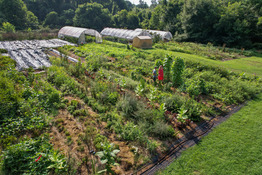
Did you know that the U.S. Department of Agriculture (USDA) has an insurance option specifically for agricultural producers with small farms who sell locally? The new Micro Farm policy simplifies record keeping and covers post-production costs like washing and value-added products.
The new policy is offered through Whole-Farm Revenue Protection (WFRP) and it has distinct provisions that can provide more access to the program, including:
- No expense or individual commodity reporting needed, simplifying the recordkeeping requirements for producers
- Revenue from post-production costs, such as washing and packaging commodities and value-added products, are considered allowable revenue
The Micro Farm policy is available to producers who have a farm operation that earns an average allowable revenue of $100,000 or less, or for carryover insureds, an average allowable revenue of $125,000 or less. RMA’s research showed that 85% of producers who sell locally reported they made less than $75,000 in gross sales. See the full report.
The Micro Farm policy builds on other RMA efforts to better serve specialty and organic crop growers. This includes WFRP, which provides coverage for producers with larger operations that may not be eligible for Micro Farm. RMA recently made improvements to WFRP as part of a broader set of new policies and expanded policies to assist specialty crop and organic producers.
Click here for the Micro Farm Policy Fact Sheet: https://www.rma.usda.gov/en/Fact-Sheets/National-Fact-Sheets/Micro-Farm-Program
More Information Crop insurance is sold and delivered solely through private crop insurance agents. A list of crop insurance agents is available at all USDA Service Centers and online at the RMA Agent Locator. Learn more about crop insurance and the modern farm safety net at rma.usda.gov.
|

The application period is now open for a new financial assistance program under Section 22007 of the Inflation Reduction Act (IRA), for farmers, ranchers, and forest landowners who experienced discrimination in USDA farm lending programs prior to January 2021. The application process will close on October 31. Borrowers will have the option to apply for assistance online via 22007apply.gov or through a paper-based form.
Details about the program, including an application and e-filing portal, are available at 22007apply.gov. The website includes an English and Spanish language application that applicants can download or submit via an e-filing portal, information on how to obtain technical assistance in-person or virtually, and additional resources and details about the program. Applicants can also call the free call center at 1-800-721-0970, or visit one of several dozen brick-and-mortar offices the program has set up around the country. Locations are provided on the program website and vendors will update the local events schedule with more information as it becomes available. It is important to note that filing an application is FREE and does not require a lawyer.
If you want to get weekly updates on the program’s events and progress, you can go to https://22007apply.gov, and subscribe to a weekly newsletter.
|
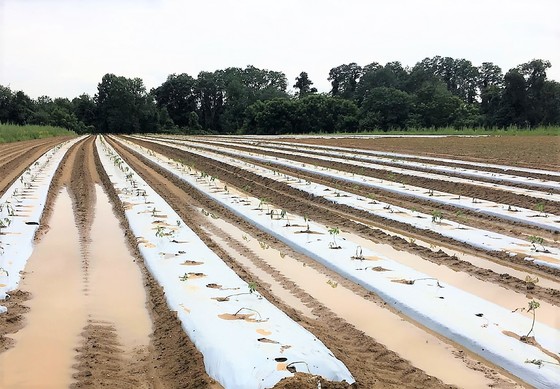 The Farm Service Agency’s (FSA) Noninsured Crop Disaster Assistance Program (NAP) helps you manage risk through coverage for both crop losses and crop planting that was prevented due to natural disasters. The eligible or “noninsured” crops include agricultural commodities not covered by federal crop insurance.
You must be enrolled in the program and have purchased coverage for the eligible crop in the crop year and county in which the loss incurred to receive program benefits following a qualifying natural disaster.
The next closing deadline for New Jersey is September 30th for Aquaculture, Christmas Trees, Flowers, Grass (SOD), Garlic, Grass (Hay), Mixed Forage, Rye, Teff. New Jersey coverage deadlines: by closing date or by crop .
NAP Buy-Up Coverage Option
NAP offers higher levels of coverage, from 50 to 65 percent of expected production in 5 percent increments, at 100 percent of the average market price. Buy-up levels of NAP coverage are available if the producer can show at least one year of previously successfully growing the crop for which coverage is being requested.
Producers of organics and crops marketed directly to consumers also may exercise the “buy-up” option to obtain NAP coverage of 100 percent of the average market price at the coverage levels of between 50 and 65 percent of expected production.
NAP basic coverage is available at 55 percent of the average market price for crop losses that exceed 50 percent of expected production.
Buy-up coverage is not available for crops intended for grazing.
NAP Service Fees
For all coverage levels, the NAP service fee is the lesser of $325 per crop or $825 per producer per county, not to exceed a total of $1,950 for a producer with farming interests in multiple counties.
NAP Enhancements for Qualified Military Veterans
Qualified veteran farmers or ranchers are eligible for a service fee waiver and premium reduction, if the NAP applicant meets certain eligibility criteria.
Beginning, limited resource and targeted underserved farmers or ranchers remain eligible for a waiver of NAP service fees and premium reduction when they file form CCC-860, “Socially Disadvantaged, Limited Resource and Beginning Farmer or Rancher Certification.”
For NAP application, eligibility and related program information, contact your USDA Service Center or visit fsa.usda.gov/nap
The U.S. Department of Agriculture (USDA) will cover up to 75% of the costs associated with organic certification, up to $750 per category, through the Organic Certification Cost Share Program (OCCSP). USDA’s Farm Service Agency (FSA) encourages agricultural producers and handlers to apply for OCCSP by Oct. 31, 2023, for expenses incurred from Oct. 1, 2022, through Sept. 30, 2023.
As part of USDA’s broader effort to support organic producers and in response to stakeholder feedback, this year FSA increased the cost share to the maximum amount allowed by statute.
Cost Share for 2023
The cost share provides financial assistance for organic certification, and producers and handlers are eligible to receive 75% of the costs, up to $750, for crops, wild crops, livestock, processing/handling and state organic program fees (California only).
Producers have until Oct. 31, 2023, to file applications, and FSA will make payments as applications are received.
How to Apply
To apply, organic producers and handlers should contact their local USDA Service Center. As part of completing the OCCSP application, producers and handlers will need to provide documentation of their organic certification and eligible expenses.
Organic producers and handlers may also apply for OCCSP through department of agriculture. Additional details can be found on the OCCSP webpage.
|
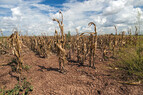
The Counties listed below were declared a disaster due to drought that began in August 2022. Under this designation, if you have operations in any primary or contiguous county, you are eligible to apply for low interest emergency loans and the Disaster Set-Aside Program.
Primary Disaster Counties: Atlantic, Burlington, Camden, Cape May, Cumberland, Gloucester, Hunterdon, Mercer, Middlesex, Monmouth, Morris, Ocean, Salem, Somerset, Sussex, Warren.
Contiguous Disaster Counties: Bergen, Essex, Passaic, Union
Emergency loans help you recover from production and physical losses due to drought, flooding and other natural disasters or quarantine.
You have eight months from the date of the declaration to apply for emergency loan assistance. FSA will consider each loan application on its own merits, taking into account the extent of losses, security available and repayment ability. You can borrow up to 100 percent of actual production or physical losses, to a maximum amount of $500,000.
The current Emergency Loan rate is 3.750%
The deadline to apply for drought related disasters in the counties listed above is August 21, 2023
Additional information, deadlines, and disaster declarations are available on the New Jersey FSA website at https://www.fsa.usda.gov/state-offices/New-Jersey/index#disaster_declaration
Click here for more information about emergency loans: https://www.fsa.usda.gov/programs-and-services/farm-loan-programs/emergency-farm-loans/index or contact your local USDA Service Center. Visit farmers.gov/service-locator to find your local USDA Service Center
Disaster Set-Aside Program for Farm Loan Borrowers
Farm Service Agency (FSA) borrowers with farms located in designated primary or contiguous disaster areas who are unable to make their scheduled FSA loan payments should consider the Disaster Set-Aside (DSA) program.
DSA is available to producers who suffered losses as a result of a natural disaster and relieves immediate and temporary financial stress. FSA is authorized to consider setting aside the portion of a payment/s needed for the operation to continue on a viable scale.
Borrowers must have at least two years left on the term of their loan in order to qualify.
Borrowers have eight months from the date of the disaster designation to submit a complete application. The application must include a written request for DSA signed by all parties liable for the debt along with production records and financial history for the operating year in which the disaster occurred. FSA may request additional information from the borrower in order to determine eligibility.
All farm loans must be current or less than 90 days past due at the time the DSA application is complete. Borrowers may not set aside more than one installment on each loan.
The amount set-aside, including interest accrued on the principal portion of the set-aside, is due on or before the final due date of the loan.
|

The U.S. Department of Agriculture (USDA) has accepted offers for nearly 2.7 million acres from agricultural producers and private landowners through this year’s Conservation Reserve Program (CRP) Grassland signup, including 565 acres in New Jersey. This program allows producers and landowners to continue grazing and haying practices while protecting grasslands and further CRP conservation efforts. Grassland CRP is part of the Biden-Harris administration’s broader effort to address climate change and conserve natural resources.
Additionally, USDA has accepted more than 1 million acres through the General CRP signup, and more than 465,800 acres have been submitted through the Continuous CRP signup so far this year.
Top states include:
- Colorado, 430,899 acres;
- Nebraska, 417,865 acres; and
- South Dakota, 325,443 acres.
Grassland CRP leverages working lands practices to improve biodiversity and conserve environmentally sensitive land. To target conservation in key geographies, USDA prioritizes land within two National Priority Zones: the Greater Yellowstone Ecosystem, and the Dust Bowl area. FSA accepted more than 911,000 acres in these two zones. Land enrolled in these zones will contribute to broader USDA conservation efforts through Working Lands for Wildlife by conserving working grasslands and other lands that underpin iconic big game migrations.
Grasslands enrolled in CRP help sequester carbon in vegetation and soil, while enhancing resilience to drought and wildfire. Meanwhile, producers can still conduct common grazing practices, such as haying, mowing or harvesting seed from the enrolled land, which supports agricultural production.
Broadening Reach of Program As part of the Agency’s Justice40 efforts, producers and landowners who are historically underserved, including beginning farmers, limited-resource producers, and military veterans, received 20 additional ranking points to enhance their offers. From more than 6,400 underserved producers, USDA accepted offers of more than 1.8 million acres, about 74% of those who submitted applications. Additionally, USDA is working to broaden the scope and reach of Grassland CRP by leveraging the Conservation Reserve Enhancement Program (CREP) to engage underserved communities. CREP is a partnership program that enables states, Tribal governments, and non-profit entities to partner with FSA to implement CRP practices and address high priority conservation and environmental objectives. Interested entities are encouraged to contact FSA.
More Information
Producers can still make an offer to participate in CRP through the Continuous CRP signup, which is ongoing, by contacting FSA at their local USDA Service Center.
|
|