|
The U.S. Department of Agriculture (USDA) is updating its farm loan programs to better support current borrowers, including historically underserved producers. These improvements are part of USDA’s commitment to increase equity in all programs, including farm loans that provide important access to capital for covering operating expenses and purchasing land and equipment.
The 2018 Farm Bill authorized FSA to provide equitable relief to certain direct loan borrowers, who are non-compliant with program requirements due to good faith reliance on a material action of, advice of, or non-action from an FSA official. Previously, borrowers may have been required to immediately repay the loan or convert it to a non-program loan with higher interest rates, less favorable terms, and limited loan servicing.
Now, FSA has additional flexibilities to assist borrowers in such situations. If the agency provided incorrect guidance to an existing direct loan borrower, the agency may provide equitable relief to that borrower. FSA may assist the borrower by allowing the borrower to keep their loans at current rates or other terms received in association with the loan which was determined to be noncompliant or the borrower may receive other equitable relief for the loan as the Agency determines to be appropriate.
USDA encourages producers to reach out to their local loan officials to ensure they fully understand the wide range of loan and servicing options available that can assist them in starting, expanding or maintaining their operation.
Additional Updates
Equitable relief is one of several changes authorized by the 2018 Farm Bill that USDA has made to the direct and guaranteed loan programs. Other changes that were previously implemented include:
- Modifying the existing three-year farming experience requirement for Direct Farm Ownership loans to include additional items as acceptable experience.
- Allowing socially disadvantaged and beginning farmer applicants to receive a guarantee equal to 95%, rather than the otherwise applicable 90% guarantee.
- Expanding the definition of and providing additional benefits to veteran farmers.
- Allowing borrowers who received restructuring with a write down to maintain eligibility for an Emergency loan.
- Expanding the scope of eligible issues and persons covered under the agricultural Certified Mediation Program.
Additional information on these changes is available in the March 8, 2022 rule on the Federal Register.
More Background
FSA has taken other recent steps to increase equity in its programs. Last summer, USDA announced it was providing $67 million in competitive loans through its new Heirs’ Property Relending Program to help agricultural producers and landowners resolve heirs’ land ownership and succession issues. FSA also invested $4.7 million to establish partnerships with organizations to provide outreach and technical assistance to historically underserved farmers and ranchers, which contributed to a fourfold increase in participation by historically underserved producers in the Coronavirus Food Assistance Program 2 (CFAP 2), a key pandemic assistance program, since April 2021.
Additionally, in January 2021, Secretary Vilsack announced a temporary suspension of past-due debt collection and foreclosures for distressed direct loan borrowers due to the economic hardship imposed by the COVID-19 pandemic.
Producers can explore available loan options using the Farm Loan Discovery Tool on farmers.gov (also available in Spanish) or by contacting their local USDA Service Center. Service Center staff continue to work with agricultural producers via phone, email, and other digital tools. Due to the pandemic, some USDA Service Centers are open to limited visitors. Producers can contact their local Service Center to set up an in-person or phone appointment to discuss loan options.
|
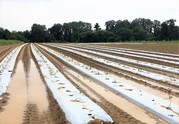
Earlier this year, Farm Service Agency (FSA) made several updates to disaster assistance programs to give more farmers, ranchers, and Tribes equitable access to recovery programs. Specifically, we made changes to the Noninsured Crop Disaster Assistance Program (NAP) and simplified the application process for underserved producers.
This important policy change opens the door to risk management options for producers who may not have previously known about or been able to obtain coverage to protect their crops.
NAP provides financial assistance to producers of noninsurable crops when natural disaster events cause low yields, loss of inventory, or prevented planting.
Our policy improvements mean that, beginning with the 2022 crop year, having a CCC-860 form, Socially Disadvantaged, Limited Resource, Beginning and Veteran Farmer or Rancher Certification, on file with FSA will provide producers with basic NAP coverage for all eligible crops. Specifically, FSA is waiving all NAP-related service fees for basic coverage for producers with a CCC-860 on file prior to the application closing date for each crop. These producers are also eligible to receive a 50% premium reduction if they elect higher levels of coverage before the application closing date for each crop.
At the end of January, FSA notified producers who already have the CCC-860 certification form on file regarding their eligibility for NAP basic coverage for 2022. If you suffered losses from natural disasters in 2022, you will need to contact your local FSA county office to file an acreage report, as well as a notice of loss, and an application for a NAP payment.
If you are interested in NAP coverage for 2023 and future years, your local FSA county office staff will be more than happy to provide information on eligibility, coverage options, and how to apply for additional coverage.
While these recent policy changes are intended to remove barriers to available benefits and help underserved producers manage risk, any producer of noninsurable crops can apply for NAP coverage by completing FSA form CCC-471, Application for Coverage, and paying a service fee. Your local FSA office can verify application closing dates and ensure coverage for your crops is available.
FSA is committed to revisiting program policies and finding ways, within our authorities, to remove obstacles that prevent participation. Expanding NAP to ensure all producers of noninsured crops have access to risk coverage is the result of proactive input from producers and the willingness of FSA employees to think outside of the box for the benefit of the producers we serve.
Please contact your local USDA Service Center for more information on NAP coverage options.
|
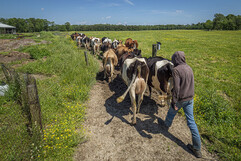
USDA announced assistance for dairy producers with the new Organic Dairy Marketing Assistance Program (ODMAP). ODMAP is established to help mitigate market volatility, higher input and transportation costs, and unstable feed supply and prices that have created unique hardships in the organic dairy industry. Specifically, under the ODMAP, USDA’s Farm Service Agency (FSA) is making $104 million available to organic dairy operations to assist with projected marketing costs in 2023, calculated using their marketing costs in 2022. FSA began accepting applications for ODMAP on May 24, 2023. Eligible producers include certified organic dairy operations that produce milk from cows, goats and sheep.
How ODMAP Works
FSA is providing financial assistance for a producer’s projected marketing costs in 2023 based on their 2022 costs. ODMAP provides a one-time cost-share payment based on marketing costs on pounds of organic milk marketed in the 2022 calendar year. ODMAP provides financial assistance that will immediately support certified organic dairy operations during 2023 keeping organic dairy operations sustainable until markets return to more normal conditions.
How to Apply
FSA is accepting applications from May 24 to July 26, 2023. To apply, producers should contact FSA at their local USDA Service Center. To complete the ODMAP application, producers must certify to pounds of 2022 milk production, show documentation of their organic certification, and submit a completed application form.
Organic dairy operations are required to provide their USDA certification of organic status confirming operation as an organic dairy in 2023 and 2022 along with the certification of 2022 milk production in hundredweight.
ODMAP complements other assistance available to dairy producers, including Dairy Margin Coverage (DMC) and Supplemental DMC, with more than $300 million in benefits paid for the 2023 program year to date. Learn more on the FSA Dairy Programs webpage.
|
The Inflation Reduction Act provides $2.2 billion in financial assistance for farmers, ranchers, and forest landowners who experienced discrimination in USDA’s farm lending programs prior to January 1, 2021.
USDA has become aware of some lawyers and groups spreading misleading information about this process, pressuring people to sign retainer agreements, and asking people to fill out forms with private and sensitive information.
Application forms for this program are not yet available and the application filing period has not started. Before the application process opens, USDA will publish a list of trusted community organizations located across the country that will provide FREE help completing applications.
Please beware of organizations seeking to file your application for a fee. Filing an application for the program will be FREE. You will not need a lawyer to file an application for this program. If you feel the need for legal advice, seek the assistance of a trusted, licensed attorney.
Beware of solicitations by mail, email, or phone calls from individuals claiming to be connected to USDA. USDA will not solicit you for information.
The most up-to-date information on this program will be posted at www.farmers.gov/22007, a USDA website. Please check there for any concerns or reach out to your local FSA office. To find your local office, visit farmers.gov/service-locator.
If you believe there is an organization conducting a scam related to this process, please contact the USDA Office of the Inspector General (OIG) or any other appropriate authorities. The USDA OIG hotline can be accessed online at https://usdaoig.oversight.gov/hotline and by phone at (800) 424-9121.
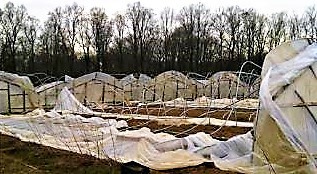
FSA plans to roll out $3.7 billion in Emergency Relief Program (ERP) and Emergency Livestock Relief Program (ELRP) assistance to crop and livestock producers who sustained losses due to a qualifying natural disaster event in calendar year 2022. USDA is sharing early information to allow producers time to gather documents in advance of program delivery. Through distribution of remaining funds, USDA is also concluding the 2021 ELRP program by sending payments in the amount of 20% of the initial ELRP payment to all existing recipients.
On December 29, 2022, President Biden signed into law the Disaster Relief Supplemental Appropriations Act, 2023 (P.L. 117-328) that provides about $3.7 billion in financial assistance for agricultural producers impacted by wildfires, droughts, hurricanes, winter storms and other eligible disasters occurring in calendar year 2022.
Additionally, the Act specifically targets up to about $500 million to livestock producers for losses incurred due to drought or wildfire in calendar year 2022.
ERP 2022 for Crop Producers
FSA intends to deploy the lessons learned from the development and implementation of ERP and ELRP for previous years’ losses to ensure expedited assistance for 2022 losses.
Based on positive feedback from producers, stakeholder groups and FSA county office staff, USDA intends to provide an ERP track for producers who had coverage through Risk Management Agency’s federal crop insurance or FSA’s Noninsured Crop Disaster Assistance Program (NAP). Through a streamlined application process, USDA intends to be in a position to send pre-filled applications directly to eligible producers in early summer.
For producers who have not been able to avail themselves of risk management coverage or whose losses were not covered, USDA intends to offer a program track to access ERP assistance with assistance provided to producers who suffered a decrease in allowable gross revenue in 2022 due to necessary expenses related to losses of eligible crops from a qualifying natural disaster event.
Instead of implementing these program tracks as two separate phases on different timelines, FSA intends to make both tracks available to producers at the same time, noting that the first track will follow a streamlined process with less paperwork burden, based on existing, available risk management data. The second ERP track would require that producers provide FSA with certain information related to revenue.
ELRP 2022 for Livestock Producers and Close Out of ELRP for 2021
For impacted ranchers, USDA intends to leverage FSA’s Livestock Forage Disaster Program (LFP) data to deliver ELRP assistance for increases in supplemental feed costs in 2022.
To be eligible for an ELRP payment for 2022 losses, livestock producers will need to have suffered grazing losses from wildfire or in a county rated by the U.S. Drought Monitor as having a D2 (severe drought) for eight consecutive weeks or a D3 (extreme drought) or higher level of drought intensity during the 2022 calendar year and have applied and been approved for 2022 LFP. Additionally, otherwise eligible producers whose permitted grazing on federally managed lands was disallowed due to wildfire will also be eligible for ELRP payments if they applied and were approved for 2022 LFP.
In a continued effort to streamline and simplify the delivery of ELRP benefits, eligible producers will not be required to apply for payment.
Meanwhile, FSA also intends to provide additional assistance to ranchers for qualifying livestock losses from drought and wildfire in 2021. More information will be announced in the coming months.
How Producers Can Prepare
To participate in ERP and ELRP for 2022 losses, both crop and livestock producers should have or be prepared to have the following forms on file with FSA:
- Form AD-2047, Customer Data Worksheet (as applicable to the program participant);
- Form CCC-902, Farm Operating Plan for an individual or legal entity;
- Form CCC-901, Member Information for Legal Entities (if applicable); and
- Form AD-1026 Highly Erodible Land Conservation (HELC) and Wetland Conservation (WC) Certification.
Most producers, especially those who have previously participated in FSA programs, will likely have these required forms on file. However, those who are uncertain or want to confirm should contact FSA at their local USDA Service Center.
In addition to the forms listed above, underserved producers are encouraged to register their status with FSA, using Form CCC-860, Socially Disadvantaged, Limited Resource, Beginning and Veteran Farmer or Rancher Certification, as certain existing permanent and ad-hoc disaster programs provide increased benefits or reduced fees and premiums.
Producers with eligible crop losses who did not have federal crop insurance or NAP risk management coverage for 2022 and intend to apply for ERP assistance will need to pull together revenue information that is readily available from most tax records. FSA encourages producers to have their tax documents from the past few years and supporting materials ready including Schedule F (Form 1040) and Profit or Loss from Farming or similar tax documents. FSA will not require these forms to be submitted with the ERP application, but will require a certification, similar to Adjusted Gross Income certification that has been used for many years for Farm Bill programs. Applicants simply report and certify to the information required for the program.
Crop producers who have federal crop insurance coverage should ensure that information on file with their insurance agent is accurate and that any pending activities needed to file loss claims for 2022 losses are addressed as soon as possible. Producers who received ERP assistance last year or who will receive assistance for 2022 losses are required to purchase crop insurance or NAP for the next two crop years.
In the coming months, USDA intends to provide additional information on how to apply for assistance through ERP and ELRP for 2022 losses. Through proactive communications and outreach, USDA will keep producers and stakeholders informed as program eligibility, application and implementation details unfold.
|
Producers are encouraged to call their local FSA office to schedule an appointment to ensure maximum use of their time and to make sure FSA staff is available to tend to their important business needs. Please call your local FSA office ahead to set an appointment and to discuss any records or documentation that might be needed during your appointment. To find your local FSA office, visit farmers.gov/working-with-us/service-center-locator.
Bins are ideally designed to hold a level volume of grain. When bins are overfilled and grain is heaped up, airflow is hindered and the chance of spoilage increases.
Producers using farm-stored grain as collateral for their marketing assistance loan should remember that they are responsible for maintaining the quality of the grain through the term of the loan.
The Farm Service Agency (FSA) provides a receipt to customers who request or receive assistance or information on FSA programs.
The 2014 Farm Bill requires a customer receipt to be issued for any agricultural program assistance requested from FSA, the Natural Resources Conservation Service (NRCS) and Rural Development (RD). Receipts include the date, summary of the visit and any agricultural information, program and/or loan assistance provided to an individual or entity. Electronic receipts for acreage reports began on Aug. 1, 2016.
A service is any information, program, or loan assistance provided whether through an office visit, email, fax, or letter.
USDA announced that nearly $130 million in additional, automatic financial assistance has been obligated for qualifying farm loan program borrowers who are facing financial risk. The announcement is part of the $3.1 billion to help distressed farm loan borrowers that was provided through Section 22006 of the Inflation Reduction Act (IRA).
Since the IRA was signed by President Biden in August 2022, including the payments announced today, USDA is providing approximately $1.1 billion in immediate assistance to more than 20,000 distressed borrowers.
Borrowers who received these automatic payments include Farm Service Agency (FSA) direct loan borrowers whose interest exceeded principle owed on outstanding debts; borrowers who had a balance up to 60 days past due as of Sept. 30, 2022 and remained delinquent; and borrowers with a recent restructure between Feb. 28, 2020, through March 27, 2023, or who had accepted an offer to restructure on or before March 27, 2023, but had not yet closed that restructure.
Individual Applications for Farmers Seeking Assistance
In May, FSA will begin accepting and reviewing individual distressed borrower assistance requests from direct loan borrowers who missed a recent installment or are unable to make their next scheduled installment. All FSA borrowers should have received a letter detailing the process for seeking this type of assistance even before they become delinquent. As the letter details, borrowers who are within two months of their next installment may seek a cashflow analysis from FSA using a recent balance sheet and operating plan to determine their eligibility. Also in May, FSA borrowers will receive a letter detailing a new opportunity to receive assistance if they took certain extraordinary measures to avoid delinquency on their loans, such as taking on or refinancing more debt, selling property, or cashing out retirement or college savings accounts. FSA also plans to begin working through these types of cases in May.
|

Recipients include project in Louisiana.
USDA is investing $7.4 million in 25 selected grants that support urban agriculture and innovative production. Selected grant recipients, including community gardens and nonprofit farms, will increase food production and access in economically distressed communities, provide job training and education, and allow partners to develop business plans and zoning proposals. These grants build on $40 million in projects funded since 2020 and are part of USDA’s broad support for urban agriculture through its Office of Urban Agriculture and Innovative Production (OUAIP). Funding limits only allowed USDA to select the top scoring 10% of the applications reviewed. This year, USDA received more than 300 applications, which is twice last year’s applications. Urban Agriculture and Innovative Production Grants | USDA.
|
Jul 26th: Organic Dairy Marketing Assistance Program (ODMAP)
Jul 31st: CLEAR30 for Producers with Expiring CRP Acres
Aug. 1st: Last day to request a Farm Reconstitution
Aug. 1st: County Committee Nomination Period
Sep. 30th, Sales Closing Date for NAP Grazing
Oct 31st, Organic Certification Cost Share Program (OCCSP)
Jan. 31, 2024 Food Safety Certification for Specialty Crops Program
FSA now offers SMS texting; receive text message alerts on your cell phone regarding important deadlines, reporting requirements and updates. Call your local Service Center to schedule an appointment. You can find contact information at farmers.gov/service-locator.
Interest rates for Operating and Ownership loans for July 2023 are as follows:
FSA also offers guaranteed loans through commercial lenders at rates set by those lenders.
To access an interactive online, step-by-step guide through the farm loan process, visit the Loan Assistance Tool on farmers.gov.
|