In This Issue:
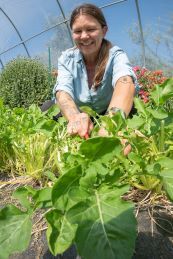
USDA is now accepting nominations for county committee members for elections that will occur later this year. Additionally, USDA’s Farm Service Agency (FSA) is unveiling a new GIS tool to make it easier for producers to participate in the nomination and election processes for county committee members, who make important decisions on how federal farm programs are administered locally. All nomination forms for the 2023 election must be postmarked or received in the local FSA office by Aug. 1, 2023.
Elections will occur in certain Local Administrative Areas (LAA) for members. LAAs are elective areas for FSA committees in a single county or multi-county jurisdiction and they may include LAAs that are focused on an urban or suburban area. Customers can locate their LAA through a new GIS locator tool available at fsa.usda.gov/elections.
Agricultural producers may be nominated for candidacy for the county committee if they:
- Participate or cooperate in a USDA program; and
- Reside in the LAA that is up for election this year.
A cooperating producer is someone who has provided information about their farming or ranching operation to FSA, even if they have not applied or received program benefits. Individuals may nominate themselves or others and qualifying organizations may also nominate candidates. USDA encourages minority producers, women and beginning farmers or ranchers to nominate, vote and hold office.
Nationwide, more than 7,700 dedicated members of the agricultural community serve on FSA county committees. The committees are made up of three to 11 members who serve three-year terms. Committee members are vital to how FSA carries out disaster programs, as well as conservation, commodity and price support programs, county office employment and other agricultural issues.
More Information
Producers should contact their local FSA office today to register and find out how to get involved in their county’s election, including if their LAA is up for election this year. To be considered, a producer must be registered and sign an FSA-669A nomination form.
Nomination forms and other information about FSA county committee elections are available at fsa.usda.gov/elections. Election ballots will be mailed to eligible voters beginning Nov. 6, 2023.
|
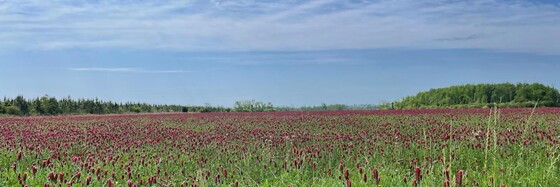 The United States Department of Agriculture (USDA) Natural Resources Conservation Service in Florida reminds Conservation Innovation Grants (CIG) applicants the deadline to submit a proposal for its current CIG grant funding opportunity is July 14, 2023, before 11:59 pm, EST.
Through CIG, the USDA will invest up to $1,000,000 for urban agriculture, water conservation, carbon sequestration, and soil health. Grants between $50,000 to $250,000 will be awarded to applicants matching those funds on a dollar-for-dollar basis from non-federal sources that can include cash or in-kind contributions. U.S. based, non-federal entities and individuals are eligible to apply for projects carried out in Florida. Up to 10 percent of the funds are for proposals from historically underserved producers, veteran farmers or ranchers, or community-based organizations representing these entities.
Conservation Innovation Grants are competitive grants that drive public and private sector innovation in resource conservation. CIG projects inspire creative problem solving that boosts production on farms, ranches, and private forests that improve water quality, soil health, and wildlife habitat. Under the state CIG, public and private grantees develop the tools, technologies, and strategies to support next-generation conservation efforts on working lands and develop market-based solutions to resource challenges.
The funding announcement seeking proposals is published on grants.gov and Conservation Innovation Grants - Florida | Natural Resources Conservation Service (usda.gov), and it details CIG requirements and the information required from applicants. Florida NRCS held a webinar on how to apply for Florida’s CIG competition on May 17. View it online at: https://www.youtube.com/watch?v=iurqhqTHlhQ
Florida CIG Overview
- Notice of Funding Opportunity Number: USDA‐NRCS‐FL‐CIG‐23‐NOFO0001302
- Deadline: 11:59 p.m. (EST), July 14, 2023
- State CIG Priorities: Urban Agriculture, Water Conservation, Soil Health, and Carbon Sequestration
- Total available: $1,000,000
- Individual Award floor: $50,000
- Individual Award ceiling: $250,000
- Cost-share: Applicants contribute 1:1 match. Historically Underserved (HU) applicants may provide 25% of total project costs. Project can be between 1-3 years in duration
Grants.gov Support
For technical issues with Grants.gov, contact Grants.gov Applicant Support at 1-800-518-4726 or support@grants.gov. Awarding agency staff cannot support applicants regarding Grants.gov accounts.
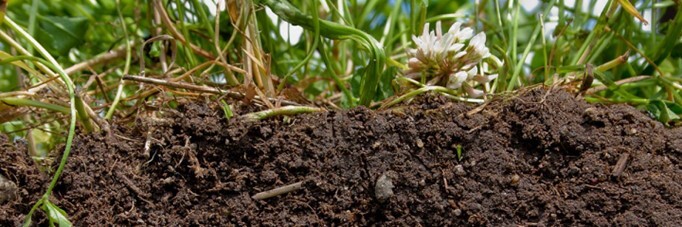 The U.S. Department of Agriculture (USDA) reminds collaborators that proposals from institutions of higher education in the Cooperative Ecosystem Studies Unit (CESU) network should be submitted to USDA’s Natural Resources Conservation Service (NRCS) by July 22, 2023.
The USDA plans to invest $3 million in partnerships to promote research that informs and improves soil surveys at the regional level, which is part of an ongoing effort to continue to provide critical data to the country.
“For more than 120 years, scientists have been conducting soil surveys, investigations and research,” NRCS Chief Terry Cosby said. “We are mandated to keep soil information relevant and available in useful forms to assist our customers—from community planners, to engineers, to farmers and ranchers—so they can make the most informed land use decisions. Collaboration is key as we continue to move the needle on advancing soil surveys.”
Each proposal must include significant collaboration with soil survey personnel, such as the NRCS National Soil Survey Center (NSSC) research staff or Major Land Resource Area (MLRA) soil survey or regional offices. The proposals’ deliverables and their connection to soil surveys must be clearly explained.
These priorities were developed through iterative meetings and feedback gathered in conjunction with the 2022 regional conferences of the National Cooperative Soil Survey (NCSS). NRCS expects to select at least one proposal for funding from each of the four NCSS regions (North Central, Northeast, Southern and Western). The work should have regional application and fill gaps in soil survey knowledge and databases. Work could extend up to three years. Individual proposals must have a total cost between $50,000 and $500,000.
Within the NCSS region where the work occurs, proposal topics should:
- Address emerging issues such as urban soils, ecosystem services, wetlands/hydric soils, climate, wildfire and/or soil biodiversity and how those topics intersect with ecological sites and soil surveys.
- Enhance collaborative efforts between soil survey staff and cooperative research projects with emphasis on practical tools for MLRA staff and use of long-term monitoring and experiment locations.
More Information
Extra consideration will be given to proposals that include Dynamic Soil Survey Research Support (targeted towards close collaboration with NSSC researchers).
All proposals must include a data management plan and all data and deliverables must be made publicly available per USDA regulations. Additional information is available in the notice of funding.
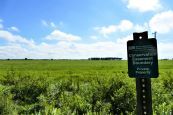
The USDA is streamlining its Agricultural Conservation Easement Program (ACEP) to ultimately better help agricultural producers and private landowners conserve wetlands, productive farmlands and at-risk grasslands. USDA’s Natural Resources Conservation Service (NRCS) is rolling out several improvements to this important program, which has more than 5 million acres of land enrolled, in response to feedback from producers, landowners and conservation partners.
Specifically, NRCS is updating its processes around appraisals, land surveys, as well as certifying eligible entities who help NRCS and producers enroll land into easements. These changes are for ACEP Agricultural Land Easements (ALE) as well as Wetland Reserve Easements (WRE).
Key program changes include:
-
Appraisals for ALE:The threshold for national review of ALE appraisals is now $3 million, raised from $1 million. NRCS raised the threshold to align program requirements with increased land values, enabling the agency to better target staff resources and speed up implementation. Appraisals help ensure cost-effective and appropriate use of federal funds that are contributed to a conservation partner for their purchase of the ALE from the farmer or rancher.
-
Land Surveys for WRE:NRCS plans to encourage procurement of land surveys earlier in the acquisition timeline, such as when an application has been tentatively selected for a WRE. These surveys help with locating land boundaries, which is needed to purchase and manage the easement. NRCS is also increasing its use of partnerships to assist with acquiring the land surveys and has simplified the review process for producer-acquired land surveys. This will speed up the time it takes producers and landowners to enroll.
-
Certification of Entities for ALE:For ALE, NRCS works with eligible entities, such as American Indian tribes, state and local governments and non-governmental organizations, to conserve prime farmland and at-risk grasslands. NRCS is working to expand the number of entities by launching a certification initiative to proactively notify potentially eligible entities that they qualify for administrative flexibilities. Certified entities have greater independence and less oversight in their purchase of easements funded under ALE. Information for entities on how to get certified is available on the ALE webpage.
These improvements are the first step in an ongoing effort to streamline ACEP as well as other NRCS conservation programs to ensure that they are easier and more convenient to utilize, and it will strengthen implementation of the Inflation Reduction Act (IRA), which included $1.4 billion in additional funding for ACEP over five years.
ACEP is administered by NRCS and aids landowners and eligible entities with conserving, restoring, and protecting wetlands, productive agricultural lands, and grasslands at risk to conversion to non-grassland uses. Healthy wetlands, grasslands and farmlands sequester carbon and provide many other natural resource benefits.
NRCS accepts producer applications for its conservation programs – including ACEP – year-round. Producers interested in easements should contact their local Service Center or view their state application ranking dates.
|
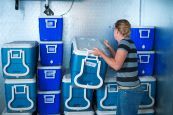
The Farm Service Agency’s (FSA) Farm Storage Facility Loan (FSFL) program provides low-interest financing to help you build or upgrade storage facilities and to purchase portable (new or used) structures, equipment and storage and handling trucks.
Eligible commodities include corn, grain sorghum, rice, soybeans, oats, peanuts, wheat, barley, minor oilseeds harvested as whole grain, pulse crops (lentils, chickpeas and dry peas), hay, honey, renewable biomass, fruits, nuts and vegetables for cold storage facilities, floriculture, hops, maple sap, rye, milk, cheese, butter, yogurt, meat and poultry (unprocessed), eggs, and aquaculture (excluding systems that maintain live animals through uptake and discharge of water). Qualified facilities include grain bins, hay barns and cold storage facilities for eligible commodities.
Loans up to $50,000 can be secured by a promissory note/security agreement, loans between $50,000 and $100,000 may require additional security, and loans exceeding $100,000 require additional security.
You do not need to demonstrate the lack of commercial credit availability to apply. The loans are designed to assist a diverse range of farming operations, including small and mid-sized businesses, new farmers, operations supplying local food and farmers markets, non-traditional farm products, and underserved producers.
For more information, contact your local USDA Service Center or visit fsa.usda.gov/pricesupport.
|

CRP contract holders are encouraged to transition their Conservation Reserve Program (CRP) acres to beginning, veteran or socially disadvantaged farmers or ranchers through the Transition Incentives Program (TIP). TIP provides annual rental payments to the landowner or operator for up to two additional years after the CRP contract expires.
CRP contract holders no longer need to be a retired or retiring owner or operator to transition their land. TIP participants must agree to sell, have a contract to sell, or agree to lease long term (at least five years) land enrolled in an expiring CRP contract to a beginning, veteran, or socially disadvantaged farmer or rancher who is not a family member.
Beginning, veteran or social disadvantaged farmers and ranchers and CRP participants may enroll in TIP beginning two years before the expiration date of the CRP contract. The TIP application must be submitted prior to completing the lease or sale of the affected lands. New landowners or renters that return the land to production must use sustainable grazing or farming methods.
For more information, contact your local USDA Service Center or visit fsa.usda.gov.
|

The U.S. Department of Agriculture (USDA) has developed a simplified direct loan application to provide improved customer experience for producers applying for loans from the Farm Service Agency (FSA). The simplified direct loan application enables producers to complete a more streamlined application, reduced from 29 to 13 pages. Producers will also have the option to complete an electronic fillable form or prepare a traditional, paper application for submission to their local FSA farm loan office. The paper and electronic versions of the form will be available starting March 1, 2023.
Approximately 26,000 producers submit a direct loan application to the FSA annually, but there is a high rate of incomplete or withdrawn applications, due in part to a challenging and lengthy paper-based application process. Coupled with the Loan Assistance Tool released in October 2022, the simplified application will provide all loan applicants access to information regarding the application process and assist them with gathering the correct documents before they begin the process. This new application will help farmers and ranchers submit complete loan applications and reduce the number of incomplete, rejected, or withdrawn applications.
In October 2022, USDA launched the Loan Assistance Tool, an online step-by-step guide that provides materials to help an applicant prepare their farm loan application in one tool. Farmers can access the Loan Assistance Tool by visiting farmers.gov/farm-loan-assistance-tool and clicking the ‘Get Started’ button. The tool is built to run on any modern browser like Chrome, Edge, Firefox, or the Safari browser. A version compatible with mobile devices is expected to be available by the summer. It does not work in Internet Explorer.
The simplified direct loan application and Loan Assistance Tool are the first of multiple farm loan process improvements that will be available to USDA customers on farmers.gov in the future. Other improvements that are anticipated to launch in 2023 include:
- An interactive online direct loan application that gives customers a paperless and electronic signature option, along with the ability to attach supporting documents such as tax returns.
- An online direct loan repayment feature that relieves borrowers from the necessity of calling, mailing, or visiting a local Service Center to pay a loan installment.
USDA provides access to credit to approximately 115,000 producers who cannot obtain sufficient commercial credit through direct and guaranteed farm loans. With the funds and direction Congress provided in Section 22006 of the Inflation Reduction Act, USDA took action in October 2022 to provide relief to qualifying distressed borrowers while working on making transformational changes to loan servicing so that borrowers are provided the flexibility and opportunities needed to address the inherent risks and unpredictability associated with agricultural operations.
Soon, all direct loan borrowers will receive a letter from USDA describing the circumstances under which additional payments will be made to distressed borrowers and how they can work with their FSA local office to discuss these options. Producers can explore all available options on all FSA loan options at fsa.usda.gov or by contacting their local USDA Service Center.
|

The USDA is taking additional steps as part of its commitment to strengthen the market for domestically grown organic goods, and to support producers seeking organic certification. These funding opportunities are part of the U.S. Department of Agriculture’s (USDA) Organic Transition Initiative, launched in fall 2022, which is a suite of offerings to help existing organic farmers and those transitioning to organic production and processing.
Consumer demand for organically produced goods surpassed $67 billion in 2022, and multi-year trends of strong growth in the sector provide market incentives for U.S. farmers across a broad range of products. However, through public comment and listening sessions USDA has heard that producers may be less willing to commit to the three-year transition to organic certification because of risks related to inadequate organic processing, storage, and handling capacity, cost barriers due to limited markets for rotational crops, a lack of certainty about market access, and insufficient supply of certain organic ingredients. The organic livestock and processed product markets depend heavily on imported agricultural products for feed grains and key ingredients. These are longstanding market issues that were brought into sharp focus due to the impacts of the pandemic and international conflicts in critical overseas organic supply regions, resulting in limitations on certain domestic organic products in the face of rising demand.
Cost Share for Organic Certification
As part of USDA’s broader effort to support organic producers and in response to stakeholder feedback, this year the Farm Service Agency increased the cost share amount under the Organic Certification Cost Share Program (OCCSP), which helps organic producers cover organic certification costs, to the maximum amount allowed by statute.
Specifically, FSA will cover up to 75% of costs associated with organic certification, up to $750 for crops, wild crops, livestock, processing/handling and state organic program fees (California only). OCCSP will cover costs incurred from Oct. 1, 2022, through Sept. 30, 2023.
FSA begins accepting applications for OCCSP Monday, May 15. Applications are due Oct. 31, 2023. To apply, producers and handlers should contact the FSA at their local USDA Service Center. As part of completing the OCCSP application, producers and handlers will need to provide documentation of their organic certification and eligible expenses. Organic producers and handlers may also apply for OCCSP through participating state departments of agriculture.
FSA is also accepting applications from state departments of agriculture to administer OCCSP. FSA will post a synopsis of the funding opportunity on grants.gov and will send more information to all eligible state departments of agriculture. Additional details can be found on the OCCSP webpage. More information about these initiatives and more can be found at farmers.gov/organic-transition-initiative.
|
The USDA’s Risk Management Agency (RMA) reminds Florida fresh market sweet corn, fresh market tomato, and pepper growers that the final date to apply for crop insurance coverage for the 2024 crop year is July 31.
Current policyholders who wish to make changes to their existing coverage also have until the July 31 sales closing date to do so. Federal crop insurance is critical to the farm safety net. It helps producers and owners manage revenue risks and strengthens the rural economy.
Coverage is available for fresh market sweet corn in Broward, De Soto, Glades, Hendry, Indian River, Lake, Martin, Miami-Dade, Orange, Palm Beach, and Suwannee counties. Coverage is also available for fresh market tomatoes in Broward, Charlotte, Collier, De Soto, Glades, Hardee, Hendry, Hillsborough, Lee, Manatee, Martin, Miami-Dade, Palm Beach, Polk, Sarasota, and St. Lucie counties. Coverage is available for peppers in Broward, Charlotte, Collier, Glades, Hamilton, Hardee, Hendry, Hillsborough, Lee, Manatee, Martin, Palm Beach, Sarasota, and St. Lucie counties.
Growers are encouraged to visit their crop insurance agent soon to learn specific details for the 2024 crop year. Crop insurance is sold and delivered solely through private crop insurance agents. A list of crop insurance agents is available at all USDA Service Centers and online at the RMA Agent Locator.
Learn more about crop insurance and the modern farm safety net at www.rma.usda.gov.
July 24 - EXTENDED ECP application deadline for Brevard, Broward, Charlotte, Clay, Collier, DeSoto, Flagler, Glades, Hardee, Hendry, Highlands, Hillsborough, Indian River, Lake, Lee, Manatee, Martin, Okeechobee, Orange, Osceola, Palm Beach, Polk, Putnam, Sarasota, Seminole, St. Johns, St. Lucie, and Volusia.
July 26 - Organic Dairy Marketing Assistance Program (ODMAP)
July 31 - CLEAR30 for Producers with Expiring CRP Acres
Aug 1 - County Committee Nomination Period Ends
| Farm Operating - Direct |
4.500% |
| Farm Operating - Microloan |
4.500% |
| Farm Ownership - Direct |
4.875% |
| Farm Ownership - Microloan |
4.875% |
| Farm Ownership - Direct, Joint Financing |
2.875% |
| Farm Ownership - Down Payment |
1.500% |
| Emergency Loan - Amount of Actual Loss |
3.750% |
|