In This Issue:
USDA is now accepting nominations for county committee members for elections that will occur later this year. Additionally, USDA’s Farm Service Agency (FSA) is unveiling a new GIS tool to make it easier for producers to participate in the nomination and election processes for county committee members, who make important decisions on how federal farm programs are administered locally. All nomination forms for the 2023 election must be postmarked or received in the local FSA office by Aug. 1, 2023.
Elections will occur in certain Local Administrative Areas (LAA) for members. LAAs are elective areas for FSA committees in a single county or multi-county jurisdiction and they may include LAAs that are focused on an urban or suburban area. Customers can locate their LAA through a new GIS locator tool available at fsa.usda.gov/elections.
Agricultural producers may be nominated for candidacy for the county committee if they:
• Participate or cooperate in a USDA program; and
• Reside in the LAA that is up for election this year.
A cooperating producer is someone who has provided information about their farming or ranching operation to FSA, even if they have not applied or received program benefits. Individuals may nominate themselves or others and qualifying organizations may also nominate candidates. USDA encourages minority producers, women and beginning farmers or ranchers to nominate, vote and hold office.
Nationwide, more than 7,700 dedicated members of the agricultural community serve on FSA county committees. The committees are made up of three to 11 members who serve three-year terms. Committee members are vital to how FSA carries out disaster programs, as well as conservation, commodity and price support programs, county office employment and other agricultural issues.
More Information
Producers should contact their local FSA office today to register and find out how to get involved in their county’s election, including if their LAA is up for election this year. To be considered, a producer must be registered and sign an FSA-669A nomination form.
Nomination forms and other information about FSA county committee elections are available at fsa.usda.gov/elections. Election ballots will be mailed to eligible voters beginning Nov. 6, 2023.
The U.S. Department of Agriculture (USDA) in Hawaii and the Pacific Basin announce the opening of enrollment for the Reimbursement Transportation Cost Payment Program (RTCP) for fiscal year 2023. The enrollment period began July 10 and will run through Sept. 8. The deadline for producers to provide supporting documentation is Nov. 3, 2023.
The Consolidated Appropriations Act, 2023 authorized $4 million for RTCP and allows farmers and livestock producers in Alaska, Hawaii and insular areas including the Commonwealth of Puerto Rico, Guam, American Samoa, Commonwealth of Northern Mariana Islands, Virgin Islands of the United States, Federated States of Micronesia, Republic of the Marshall Islands and Republic of Palau, to recover costs to transport agricultural commodities or inputs used to produce an agricultural commodity. Nearly $3 million was issued to almost 1,100 producers through the 2022 Reimbursement Transportation Cost Payment program.
RTCP payments are calculated based on the costs incurred for transportation of agricultural commodities or inputs during a 12-month period, subject to an $8,000 per producer cap per fiscal year. If claims for payments exceed the funds available from the program for a fiscal year, payments will be reduced on a pro-rata basis.
Farmers and livestock producers interested in participating in RTCP can obtain applications and other documents by calling toll-free 1-866-794-1079.
To find their local FSA county office, producers can visit farmers.gov/service-center-locator.
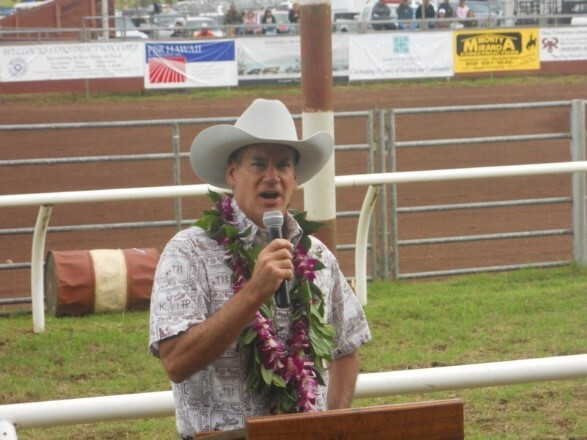 Courtesy Photo: Alan Gottlieb at the Parker Ranch 4th of July Rodeo on Hawaii Island

The state committee is appointed by USDA Agriculture Secretary Tom Vilsack, and they are responsible for the oversight of farm programs and county committee operations, resolving program delivery appeals from the agriculture community, maintaining cooperative relations with industry stakeholders, keeping producers informed about FSA programs and operating in a manner consistent with USDA equal opportunity and civil rights policies.
The Hawaii & Pacific Basin FSA state committee is comprised of five members and over the next few months we’ll be introducing you to each member. This month we introduce you to the State Committee Chairman Alan Gottlieb from Ponoholo Ranch Limited located on Oahu Island.
- What is your farmer/rancher history? When did you start farming/ranching? What were your producing? I started in the agricultural industry in 1980 upon graduating from University of Hawaii at Manoa with a Bachelor of Business Administration. I have always been involved in the accounting, finance and administration of the industry. In 1980 I started working in the office of Kahua Beef Sales, a subsidiary of Kahua Ranch and Ponoholo Ranch. Shortly after joining the controller retired, and I assumed his position. A couple of years later the General Manager retired, and I assumed his position. At the time I was managing all business affairs for Kahua Beef, Kahua Meat Company, Kahua Ranch Limited and Ponoholo Ranch Limited. Today, while Kahua Beef and Kahua Meat are no longer in business, I am still the Vice President of Finance and Administration for Ponoholo Ranch Limited a cattle ranch on the Big Island. Ponoholo is amongst the top 25 cow/calf ranches in the United States. Today, I also manage agricultural lands and water systems on Oahu under related company Second City Property Management. We manage about 3,000 acres of lands in Kapolei and in Upper Kunia. We also manage agricultural and potable water systems in Central Oahu and Kunia.
- How did you initially learn about FSA? What was the first FSA Program you enrolled in? What year? Ponoholo Ranch has participated in FSA programs for years. We have purchased Non-Insured Crop Disaster Assistance Program (NAP) insurance for a number of years and participated in the Livestock Forage Program (LFP) during drought times. About 20 years ago, we put most of the ranch under a Grasslands Reserve Program contract (GRP) for 15 years and when that ended, signed up for the newer CRP-Grasslands program. We have participated in the Reimbursement of coTCP since inception. FSA has long been a terrific partner for farmers and Ranchers.
- What new information that you have learned since taking office would you share with fellow farmers and ranchers that you think would impact their operation? That FSA is a well-organized, well-run organization with facilities at the State and County levels, including Guam and CNMI. The staff is anxious to help producers and current priorities target Socially Disadvantaged Farmers and Ranchers.
- All Hawaii and Pacific Basin producers are unique, what makes your operation unique? Hawaii farmers and ranchers are often thousands of miles from their markets. Many Hawaii ranchers must transport the majority of Hawaii calves via ship or air 2,500-3,500 miles to get equitable pricing, and affordable production. In the case of Ponoholo Ranch, this has pushed us over the years to seek premium alliances and markets and continue to improve the quality of our genetics to some of the best in the country.
- What are 3 things that you think could be done to accelerate agriculture in Hawaii? Policy makers who truly hold agriculture as something important to Hawaii and give it the funding and planning it requires; Make Hawaii a hub for Agricultural innovation; Assistance from the State in addressing challenges with water access and incentives to improve agricultural infrastructure.
- What is the most gratifying part of being a farmer or rancher? Being the 1% that feeds the other 99%.
|
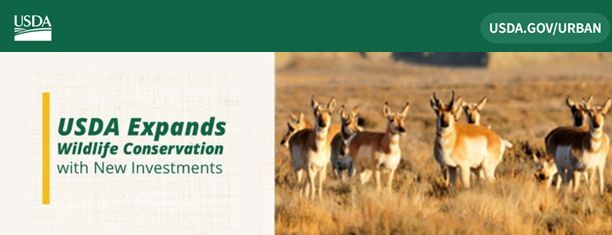 |
The U.S. Department of Agriculture is expanding its work on wildlife conservation, leveraging a suite of voluntary, incentive-based tools. Leveraging resources of the Conservation Reserve Program and the Inflation Reduction Act, the five-year commitment includes significant funding and staff resources, focusing their delivery to working lands in key geographies across the country through a series of new Frameworks for Conservation Action. https://tinyurl.com/yc5mfpce
We’re inviting urban producers, innovative producers, and other stakeholders to virtually attend a public meeting of the Federal Advisory Committee for Urban Agriculture and Innovative Production on August 1 from 9am - Noon (HST). Learn more and register.
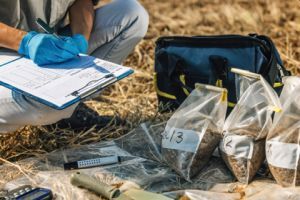
USDA’s Natural Resources Conservation Service plans to invest $3 million in partnerships to promote research that informs and improves soil surveys at the regional level, part of an ongoing effort to continue to provide critical data to the country. Learn how to submit your proposal.
|
August 1, 2023 - Deadline to submit nominations for County Committee Elections
September 8, 2023 - Deadline to sign up for the Reimbursement of Transportation Cost Payment Program
September 30, 2023 - Deadline for Floriculture, Aquaculture & Christmas Tree producers to apply for the 2023 Non-Insured Crop Disaster Assistance Program (NAP)
November 1, 2023 - Deadline to apply for Organic Certification Cost Share Program (OCCSP) for fiscal year 2023
|