USDA is extending the deadline for the Emergency Relief Program (ERP) Phase Two and Pandemic Assistance Revenue Program (PARP) to July 14, 2023, to give producers more time to apply for assistance. The original deadline was June 2. Additionally, USDA’s Farm Service Agency (FSA) is partnering with nine organizations to provide educational and technical assistance to agricultural producers and provide assistance in completing an ERP Phase Two application. The extended deadline will give producers more time to work with these partner organizations and apply for assistance.
Cooperative Agreements for ERP Phase Two Application Assistance
Through cooperative agreements with FSA, the following organizations are providing free assistance to producers across the United States and territories.
Depending on a producer’s location, these nine partners can provide assistance either by phone or through online meeting software like Zoom or Microsoft Teams. There is never a charge for technical assistance provided by FSA employees or cooperative agreement recipients. These organizations will assist producers with completing the application and any follow-up future insurance coverage requirements. Producers who receive ERP payments are statutorily required to purchase crop insurance or Noninsured Crop Disaster Assistance Program (NAP) coverage for the next two available crop years. These organizations will not collect producer records, complete or sign the application form, or act on the producer’s behalf in any way throughout this process. Find more information on FSA cooperative agreements and contact information for the nine organizations please visit fsa.usda.gov/programs-and-services/cooperative-agreements/index.
Eligibility
To be eligible for ERP Phase Two, producers must have suffered a decrease in allowable gross revenue in 2020 or 2021 due to necessary expenses related to losses of eligible crops from a qualifying natural disaster event. Assistance will be primarily to producers of crops that were not covered by Federal Crop Insurance or NAP, since crops covered by Federal Crop Insurance and NAP were included in the assistance under ERP Phase One.
To be eligible for PARP, an agricultural producer must have been in the business of farming during at least part of the 2020 calendar year and had a 15% or greater decrease in allowable gross revenue for the 2020 calendar year, as compared to a baseline year. FSA offers an online ERP tool and PARP tool that can help producers determine what is considered allowable gross revenue for each respective program. Producers should contact their local FSA office to make an appointment to apply for ERP Phase Two and PARP assistance. Producers should also keep in mind that July 15 is a major deadline to complete acreage reports for most crops. FSA encourages producers to complete the ERP Phase Two application, PARP application and acreage reporting during the same office visit.
More Information
For more information, view the ERP Phase Two Fact Sheet, PARP Fact Sheet, the ERP Phase Two-PARP Comparison Fact Sheet, ERP Phase Two application video tutorial, PARP application video tutorial, myth-buster blog or contact your local USDA Service Center.
|
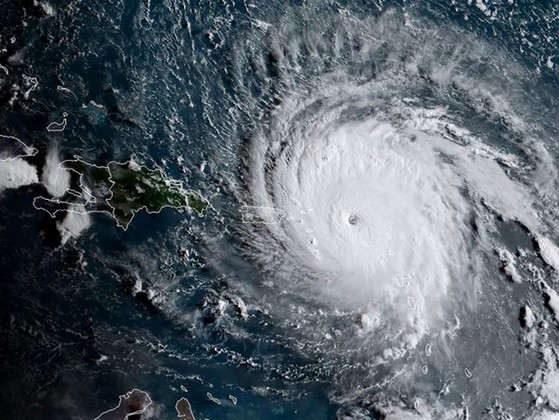
Hurricane season is officially underway and lasts until November 30. The National Oceanic and Atmospheric Administration (NOAA) predicts that the 2023 hurricane season will be near normal in the Atlantic and produce 12 to 17 named storms, of which five to nine could become hurricanes, including one to four major hurricanes.
USDA encourages producers to prepare and protect their family and agricultural operations.
1. Develop an Emergency Plan - Ensure your household and employees know your hurricane plan, including meeting points, emergency contact lists, and alternate evacuation routes in case infrastructure is damaged.
2. Remove Debris and Secure Large Objects - Clean out culverts, ditches, and other drainage areas, especially before and during peak hurricane season to reduce water damage. Most injuries to animals, people, or structures during a hurricane are caused by flying objects. To lessen the risk, minimize the presence of equipment, supplies, and debris that may become airborne during high winds or encountered in floodwaters.
3. Secure Important Records and Documents- Pre- and post-hurricane documentation is extremely important for insurance compensation and recovery assistance. You’ll want to have thorough records of damages and losses sustained on your farm as well as documentation of your cleanup and recovery efforts.
- It is critical to document inventory of farm buildings, vehicles, equipment, and livestock before a disaster occurs. Take photos, videos, or make written lists with descriptions. Keep copies of this inventory in multiple places: computer, off-site in a safe location, and on a cloud-based server where information is transmitted and saved weekly.
4. Know Your Insurance Options- Regularly review your insurance policies with your agent to be sure you have adequate coverage, including flood insurance, for your facilities, vehicles, farm buildings, crops and livestock. Note, there are limitations on how soon insurance coverage will take effect. Generally, insurance policies will not cover damage if the policy was not in place before a disaster.
5. Gather Supplies - Have drinking water, canned food, a generator, batteries, a flashlight, and fuel available in case you lose power. For widespread outages, credit and debit cards may not work, so have cash handy.
6. Access Real-time Emergency Information- Download the FEMA app for free on the App Store and Google Play for safety tips on what to do before, during, and after disasters. Subscribe to our text message and email service to receive real-time, local operational and recovery information from the Farm Service Agency, Natural Resources Conservation Service and Risk Management Agency.
On farmers.gov, the Hurricane Webpage, Disaster Assistance Discovery Tool, Disaster-at-a-Glance fact sheet, and Loan Assistance Tool can help producers and landowners determine program or loan options. For assistance with a crop insurance claim, producers and landowners should contact their crop insurance agent. For FSA and NRCS programs, they should contact their local USDA Service Center.
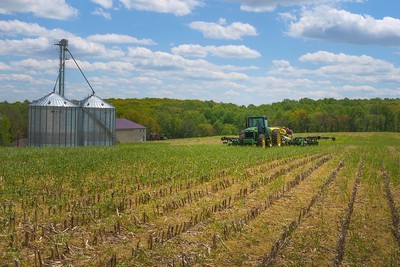
Spring is finally here and for many, this is a time of hope and renewal. As some head to the local hardware store to kickstart outdoor improvements, America’s agricultural producers are already putting their spring plans into action, planting the seeds that will feed, fuel, and clothe us later in the year.
As in years past, we’d like to showcase the planting season stories of farmers and ranchers across America. To share yours, make a post on Facebook, Instagram or Twitter with photos or video and tag @FarmersGov. Be sure to include where you are and what you’re working on in your post. You can also direct message us through any of our @FarmersGov social media accounts.
Alternatively, email us at SM.FP.Social@usda.gov with your name or the name of your operation, your location (city/county and state), and information about what’s happening in your photos or videos.
Need more ideas on what makes a great #Plant23 photo? Check out highlights from previous years:
Make sure to follow @FarmersGov on Facebook, Twitter, and Instagram, and we look forward to sharing your story!
USDA is seeking nominations for four positions on the Federal Advisory Committee for Urban Agriculture and Innovative Production. Nominations will be open to public from May 15, 2023, to July 15, 2023. The 12-member Committee, which first convened in March 2022, is part of USDA’s efforts to increase support for urban agriculture and innovative production. Members of the Committee provide input on policy development and help identify barriers to urban agriculture as USDA works to promote urban farming and the economic opportunities it provides in cities across the country.
Members of the Committee include agricultural producers and representatives from the areas of higher education or extension programs, non-profits, business and economic development, supply chains and financing. The Committee last met in April 2023.
Nominations
USDA is seeking nominations for individuals representing a broad spectrum of expertise. Four positions are open for nominations including:
- One individual representing urban agriculture.
- One individual representing an institution of higher education or extension program.
- One individual representing business and economic development, which may include a business development entity, community development initiatives, a chamber of commerce, a city government or a planning organization.
- One individual representing related experience in urban, indoor and other emerging agriculture production practices.
Individuals who wish to be considered for membership must submit a nomination package including the following:
- A completed background disclosure form (Form AD-755) signed by the nominee; https://www.usda.gov/sites/default/files/documents/ad-755.pdf.
- A brief summary explaining the nominee's interest in one or more open vacancies including any unique qualifications that address the membership composition and criteria described above.
- A resume providing the nominee's background, experience, and educational qualifications.
- Recent publications by the nominee relative to extending support for urban agriculture or innovative production (optional).
- Letter(s) of endorsement (optional).
Nomination packages must be submitted by email to UrbanAgricultureFederalAdvisoryCommittee@usda.gov or postmarked by July 15, 2023. If sending by mail, packages should be addressed to the Office of Urban Agriculture and Innovative Production, Department of Agriculture, 1400 Independence Avenue SW, Room 4627-S, Washington, DC 20250. Any interested person or organization may nominate qualified individuals for membership, including self-nominations. For special accommodations, contact Markus Holliday at UrbanAgricultureFederalAdvisoryCommittee@usda.gov.
Additional details are available in the Federal Register notice.
Farmers can use USDA farm ownership microloans to buy and improve property. These microloans are especially helpful to beginning or underserved farmers, U.S. veterans looking for a career in farming, and those who have small and mid-sized farming operations. Microloans have helped farmers and ranchers with operating costs, such as feed, fertilizer, tools, fencing, equipment, and living expenses since 2013.
Microloans can also help with farmland and building purchases and soil and water conservation improvements. FSA designed the expanded program to simplify the application process, expand eligibility requirements and expedite smaller real estate loans to help farmers strengthen their operations. Microloans provide up to $50,000 to qualified producers and can be issued to the applicant directly from the USDA Farm Service Agency (FSA).
To learn more about the FSA microloan program, contact FSA at your local USDA Service Center or visit fsa.usda.gov/microloans.
-
June 15, 2023 - acreage reporting deadline - tomatoes
-
July 14, 2023- deadline for the Emergency Relief Program (ERP) Phase Two and Pandemic Assistance Revenue Program (PARP)
-
July 15, 2023 - acreage reporting deadline - beans (limas only), cucumbers (planted 4/20-6/25), all other crops, perennial forage, CRP
-
July 31, 2023 - acreage reporting deadline - hemp
-
July 31, 2023 - deadline for producers to submit a CRP offer for re-enrolling and CLEAR30 acres
-
August 15, 2023 - acreage reporting deadline for beans (all types except limas), cucumbers (planted 6/26-8/10)
-
September 1, 2023 - NAP coverage application closing date – value-loss crops or controlled environment crops, ornamental nursery, aquaculture, Christmas trees, ginseng, floriculture, mushrooms, and turf grass sod
-
September 30, 2023 - NAP coverage application closing date – biennial and perennial forage crops, alfalfa, grass forages, mixed forages and other forages
-
September 30, 2023 - Acreage reporting deadline - value-loss (ie -oysters) and controlled environment crops (except nursery)
|