In This Issue:
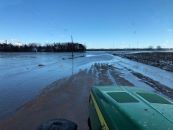
Hurricane season is officially underway, and it lasts until November 30. The National Oceanic and Atmospheric Administration (NOAA) predicts that the 2023 hurricane season will be near normal in the Atlantic and produce 12 to 17 named storms, of which five to nine could become hurricanes, including one to four major hurricanes.
USDA is encouraging producers to take precautions to prepare and protect their family and agricultural operations.
-
Develop an Emergency Plan - Ensure your household and employees know your hurricane plan, including meeting points, emergency contact lists, and alternate evacuation routes in case infrastructure is damaged.
-
Remove Debris and Secure Large Objects - Clean out culverts, ditches, and other drainage areas, especially before and during peak hurricane season to reduce water damage. Most injuries to animals, people, or structures during a hurricane are caused by flying objects. To lessen the risk, minimize the presence of equipment, supplies, and debris that may become airborne during high winds or encountered in floodwaters.
-
Secure Important Records and Documents- Pre- and post-hurricane documentation is extremely important for insurance compensation and recovery assistance. You’ll want to have thorough records of damages and losses sustained on your farm as well as documentation of your cleanup and recovery efforts.
- It is critical to document inventory of farm buildings, vehicles, equipment, and livestock before a disaster occurs. Take photos, videos, or make written lists with descriptions. Keep copies of this inventory in multiple places: computer, off-site in a safe location, and on a cloud-based server where information is transmitted and saved weekly.
-
Know Your Insurance Options- Regularly review your insurance policies with your agent to be sure you have adequate coverage, including flood insurance, for your facilities, vehicles, farm buildings, crops and livestock. Note, there are limitations on how soon insurance coverage will take effect. Generally, insurance policies will not cover damage if the policy was not in place before a disaster.
-
Gather Supplies - Have drinking water, canned food, a generator, batteries, a flashlight, and fuel available in case you lose power. For widespread outages, credit and debit cards may not work, so have cash handy.
-
Access Real-time Emergency Information- Download the FEMA app for free on the App Store and Google Play for safety tips on what to do before, during, and after disasters. Subscribe to our text message and email service to receive real-time, local operational and recovery information from the Farm Service Agency, Natural Resources Conservation Service and Risk Management Agency.
On farmers.gov, the Hurricane Webpage, Disaster Assistance Discovery Tool, Disaster-at-a-Glance fact sheet, and Loan Assistance Tool can help producers and landowners determine program or loan options. For assistance with a crop insurance claim, producers and landowners should contact their crop insurance agent. For FSA and NRCS programs, they should contact their local USDA Service Center.
|
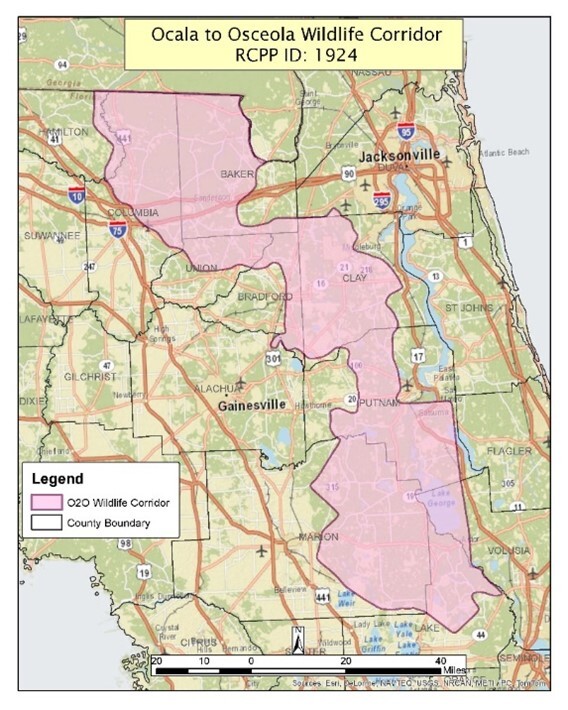 USDA Natural Resources Conservation Service and North Florida Land Trust partner to solve on-farm, watershed, and regional natural resource concerns in the Ocala to Osceola Wildlife Corridor
Florida landowners interested in aligning their land uses with conservation values have additional time to apply for a conservation easement program in partnership with the United States Department of Agriculture (USDA), Natural Resources Conservation Service (NRCS) and the North Florida Land Trust (NFLT). The application deadline for fiscal year 2023 funding through this Regional Conservation Partnership Program (RCPP) has been extended from it’s original June 16th deadline to June 30th to allow for more landowner participation.
Applications for United States Held Easements are accepted and evaluated by NRCS and NFLT year-round; however, applications received after June 30th, 2023, will be considered for the following fiscal year, as funding allows.
The RCPP is a partner-driven approach to conservation that funds solutions to natural resource challenges on agricultural land. The RCPP promotes coordination of NRCS conservation activities with partners that offer value-added contributions to expand our collective ability to address on-farm, watershed, and regional natural resource concerns.
The NFLT is leading this RCPP project to protect the Ocala to Osceola Wildlife Corridor. The O2O Wildlife Corridor (O2O) is a 100-mile-long, 1.6-million-acre, landscape of public and private lands that connect the Ocala and Osceola National Forests. The O2O includes priority lands for the Florida Ecological Greenways Network (FEGN) and is a significant part of the Florida Wildlife Corridor. By protecting this system of natural landscapes and connector lands, the O2O will continue to provide habitat for Florida black bears and imperiled species like the red-cockaded woodpecker, indigo snake, and gopher tortoise. In addition, there are opportunities for protecting iconic Florida ecosystems, including longleaf pine forests, sandhills, and scrub in the O2O.
As part of this initiative, NRCS and its partners have funding through the RCPP to pay landowners for conservation easements placed upon their land. NRCS will be responsible for screening for land eligibility, coordinating appropriately to determine the proper entity holder, coordinating with landowners to develop conservation easement project applications, negotiating conservation easement terms, and developing a land management plan. Due to the complex nature of conservation easement projects, landowners interested in this funding are strongly encouraged to contact NRCS to discuss this funding option prior to submitting an application.
Conservation easements funded through the RCPP program may maintain agricultural uses, promote longleaf pine range, native forest and grassland restoration, weather resiliency, carbon sequestration practices, and wildfire adaptability. These easements will also contribute to protect habitats and migration routes of native, threatened, endangered, and imperiled species. To protect water quality and quantity, these easements protect watershed and springshed (i.e., surface and ground waters). Land eligible for conservation easements within the O2O will be evaluated based on criteria that include connectivity and accessibility to pre-existing conservation tracts, existing agricultural uses, presence of wetlands and watersheds, and natural habitats. Non-industrial, private forest land may also be enrolled when associated with active agricultural and/or conservation land. NRCS and NFLT encourage landowners and farmers who are historically underserved (HU) to apply. HU farmers are defined as farmers who are beginners, socially disadvantaged, or veterans, and/or who have limited resources.
Participating in the RCPP Grants program helps secure the future of the nation’s food supply, prevents land with high conservation value from being developed or converted to a non-agricultural use, and provides public benefits including environmental quality, historic preservation, wildlife habitat, and protection of open space.
If you are a landowner interested in conserving your land in partnership with NFLT, the O2O Partnership, and NRCS, please contact:
Heather Barnes, NFLT O2O Coordinator, at hbarnes@nflt.org or (904) 579-1967.
Michael Ruiz, NRCS RCPP-Easements, at michael.ruiz@usda.gov or (352) 338-9566.
Websites linked in story:
Natural Resources Conservation Service (Florida): https://www.nrcs.usda.gov/conservation-basics/conservation-by-state/florida
North Florida Land Trust: https://www.nflt.org/
Regional Conservation Partnership Program: https://www.nrcs.usda.gov/programs-initiatives/rcpp-regional-conservation-partnership-program/florida/regional-conservation
USDA is extending the deadline for the Emergency Relief Program (ERP) Phase Two and Pandemic Assistance Revenue Program (PARP) to July 14, 2023, to give producers more time to apply for assistance. The original deadline was June 2. Additionally, USDA’s Farm Service Agency (FSA) is partnering with nine organizations to provide educational and technical assistance to agricultural producers and provide assistance in completing an ERP Phase Two application. The extended deadline will give producers more time to work with these partner organizations and apply for assistance.
Cooperative Agreements for ERP Phase Two Application Assistance
Through cooperative agreements with FSA, the following organizations are providing free assistance to producers across the United States and territories.
Depending on a producer’s location, these nine partners can provide assistance either by phone or through online meeting software like Zoom or Microsoft Teams. There is never a charge for technical assistance provided by FSA employees or cooperative agreement recipients. These organizations will assist producers with completing the application and any follow-up future insurance coverage requirements. Producers who receive ERP payments are statutorily required to purchase crop insurance or Noninsured Crop Disaster Assistance Program (NAP) coverage for the next two available crop years. These organizations will not collect producer records, complete or sign the application form, or act on the producer’s behalf in any way throughout this process. Find more information on FSA cooperative agreements and contact information for the nine organizations please visit fsa.usda.gov/programs-and-services/cooperative-agreements/index.
PARP Application Assistance
USDA will host a webinar that focus on completing the PARP application form on June 8, 2023 from 2:00 to 4:00 p.m. eastern with members of the National Farm Income Tax Extension Committee. Register here.
Eligibility
To be eligible for ERP Phase Two, producers must have suffered a decrease in allowable gross revenue in 2020 or 2021 due to necessary expenses related to losses of eligible crops from a qualifying natural disaster event. Assistance will be primarily to producers of crops that were not covered by Federal Crop Insurance or NAP, since crops covered by Federal Crop Insurance and NAP were included in the assistance under ERP Phase One. To be eligible for PARP, an agricultural producer must have been in the business of farming during at least part of the 2020 calendar year and had a 15% or greater decrease in allowable gross revenue for the 2020 calendar year, as compared to a baseline year. FSA offers an online ERP tool and PARP tool that can help producers determine what is considered allowable gross revenue for each respective program. Producers should contact their local FSA office to make an appointment to apply for ERP Phase Two and PARP assistance. Producers should also keep in mind that July 15 is a major deadline to complete acreage reports for most crops. FSA encourages producers to complete the ERP Phase Two application, PARP application and acreage reporting during the same office visit.
More Information
For more information, view the ERP Phase Two Fact Sheet, PARP Fact Sheet, the ERP Phase Two-PARP Comparison Fact Sheet, ERP Phase Two application video tutorial, PARP application video tutorial, myth-buster blog or contact your local USDA Service Center.

The U.S. Department of Agriculture (USDA) launched a new online tool to help farmers and ranchers better navigate the farm loan application process. This uniform application process will help to ensure all farm loan applicants receive equal support and have a consistent customer experience with USDA’s Farm Service Agency (FSA) regardless of their individual circumstances.
USDA experiences a high rate of incomplete or withdrawn applications, particularly among underserved customers, due in part to a challenging and lengthy paper-based application process. The Loan Assistance Tool is available 24/7 and gives customers an online step-by-step guide that supplements the support they receive when working in person with a USDA employee, providing materials that may help an applicant prepare their loan application in one tool.
Farmers can access the Loan Assistance Tool by visiting Loan Assistance Tool / Home (usda.gov) and clicking the ‘Get Started’ button. From here they can follow the prompts to complete the Eligibility Self-Assessment and start the farm loan journey. The tool is built to run on any modern browser like Chrome, Edge, Firefox, or the Safari browser, and is fully functional on mobile devices. It does not work in Internet Explorer.
The Loan Assistance Tool is the first of multiple farm loan process improvements that will be available to USDA customers on farmers.gov in the future. Other improvements and tools that are anticipated to launch in 2023 include:
- A streamlined and simplified direct loan application, reduced from 29 pages to 13 pages.
- An interactive online direct loan application that gives customers a paperless and electronic signature option, along with the ability to attach supporting documents such as tax returns.
- An online direct loan repayment feature that relieves borrowers from the necessity of calling, mailing, or visiting a local Service Center to pay a loan installment.
|
Farm Service Agency (FSA) is committed to providing our farm loan borrowers the tools necessary to be successful. FSA staff will provide guidance and counsel from the loan application process through the borrower’s graduation to commercial credit. While it is FSA’s commitment to advise borrowers as they identify goals and evaluate progress, it is crucial for borrowers to communicate with their farm loan staff when changes occur. It is the borrower’s responsibility to alert FSA to any of the following:
- Any proposed or significant changes in the farming operation
- Any significant changes to family income or expenses
- The development of problem situations
- Any losses or proposed significant changes in security
If a farm loan borrower can’t make payments to suppliers, other creditors, or FSA on time, contact your farm loan staff immediately to discuss loan servicing options.
For more information on FSA farm loan programs, contact your Local USDA Service Center or visit fsa.usda.gov.

If you participate in USDA programs, it’s time to start preparing to file your taxes. In this Ask the Expert, Dr. Tamara Cushing answers questions about choosing a tax professional. Dr. Cushing is an Extension Forest Business Specialist from the University of Florida who works to educate landowners, foresters and tax professionals about the economics of growing trees, tax interactions with forestry and landowner succession.
What Qualifies Someone to Complete Your Tax Return?
- Here are some qualifications to look for: A degree in accounting and possibly in taxation; maybe a law degree.
- Certification by a state licensing body or the Internal Revenue Service (IRS). This may include CPA, Licensed Tax Consultant (LTC), Licensed Tax Preparer (LTP), Enrolled Agent (EA), and tax attorney. Also, some Certified Financial Planners (CFP) can provide tax services. Some states require paid preparers to have specific qualifications to complete state tax returns and some don’t. Qualified, licensed and or certified tax preparers may be found through various locations some of which will be discussed later in this Q&A.
- Some preparers may not hold educational or other professional credentials but are IRS-authorized. These preparers will have a PTIN (Preparer tax identification number) and complete continuing education courses required by the IRS and or state regulatory agency.
- All preparers should have a PTIN.
To read the full blog visit https://www.farmers.gov/blog/ask-the-expert-qa-on-choosing-tax-professional-with-tamara-cushing.
|

USDA announced assistance for dairy producers with the new Organic Dairy Marketing Assistance Program (ODMAP). ODMAP is established to help mitigate market volatility, higher input and transportation costs, and unstable feed supply and prices that have created unique hardships in the organic dairy industry. Specifically, under the ODMAP, USDA’s Farm Service Agency (FSA) is making $104 million available to organic dairy operations to assist with projected marketing costs in 2023, calculated using their marketing costs in 2022. FSA began accepting applications for ODMAP on May 24, 2023. Eligible producers include certified organic dairy operations that produce milk from cows, goats and sheep.
How ODMAP Works
FSA is providing financial assistance for a producer’s projected marketing costs in 2023 based on their 2022 costs. ODMAP provides a one-time cost-share payment based on marketing costs on pounds of organic milk marketed in the 2022 calendar year. ODMAP provides financial assistance that will immediately support certified organic dairy operations during 2023 keeping organic dairy operations sustainable until markets return to more normal conditions.
How to Apply
FSA is accepting applications from May 24 to July 26, 2023. To apply, producers should contact FSA at their local USDA Service Center. To complete the ODMAP application, producers must certify to pounds of 2022 milk production, show documentation of their organic certification, and submit a completed application form.
Organic dairy operations are required to provide their USDA certification of organic status confirming operation as an organic dairy in 2023 and 2022 along with the certification of 2022 milk production in hundredweight.
ODMAP complements other assistance available to dairy producers, including Dairy Margin Coverage (DMC) and Supplemental DMC, with more than $300 million in benefits paid for the 2023 program year to date. Learn more on the FSA Dairy Programs webpage.
|

USDA is seeking nominations for four positions on the Federal Advisory Committee for Urban Agriculture and Innovative Production. Nominations will be open to public from May 15, 2023, to July 15, 2023. The 12-member Committee, which first convened in March 2022, is part of USDA’s efforts to increase support for urban agriculture and innovative production. Members of the Committee provide input on policy development and help identify barriers to urban agriculture as USDA works to promote urban farming and the economic opportunities it provides in cities across the country.
Members of the Committee include agricultural producers and representatives from the areas of higher education or extension programs, non-profits, business and economic development, supply chains and financing. The Committee last met in April 2023.
Nominations
USDA is seeking nominations for individuals representing a broad spectrum of expertise. Four positions are open for nominations including:
- One individual representing urban agriculture.
- One individual representing an institution of higher education or extension program.
- One individual representing business and economic development, which may include a business development entity, community development initiatives, a chamber of commerce, a city government or a planning organization.
- One individual representing related experience in urban, indoor and other emerging agriculture production practices.
Individuals who wish to be considered for membership must submit a nomination package including the following:
- A completed background disclosure form (Form AD-755) signed by the nominee; https://www.usda.gov/sites/default/files/documents/ad-755.pdf.
- A brief summary explaining the nominee's interest in one or more open vacancies including any unique qualifications that address the membership composition and criteria described above.
- A resume providing the nominee's background, experience, and educational qualifications.
- Recent publications by the nominee relative to extending support for urban agriculture or innovative production (optional).
- Letter(s) of endorsement (optional).
Nomination packages must be submitted by email to UrbanAgricultureFederalAdvisoryCommittee@usda.gov or postmarked by July 15, 2023. If sending by mail, packages should be addressed to the Office of Urban Agriculture and Innovative Production, Department of Agriculture, 1400 Independence Avenue SW, Room 4627-S, Washington, DC 20250. Any interested person or organization may nominate qualified individuals for membership, including self-nominations. For special accommodations, contact Markus Holliday at UrbanAgricultureFederalAdvisoryCommittee@usda.gov.
Additional details are available in the Federal Register notice.
|

CRP helps producers invest in the long-term health, sustainability, and profitability of their land and resources.
Agriculture Secretary Tom Vilsack announced today the U.S. Department of Agriculture (USDA) is accepting more than 1 million acres in this year’s Conservation Reserve Program (CRP) General signup. This is one of several signups that USDA’s Farm Service Agency (FSA) is holding for the program, and these results reflect the recognition the agricultural community give to CRP as a resource for climate-smart agriculture that helps promote plant and animal biodiversity as well as healthier soil. The signup’s results include 780 acres in Florida.
While offers for new land in this General CRP signup totaled about 295,000 acres nationwide, producers submitted re-enrollment offers for 891,000 expiring acres, reflecting the successes of participating in CRP longer term. The total number of CRP acres will continue to climb in the coming weeks once FSA accepts acres on the Grassland CRP signup, which closed May 26. Additionally, so far this year, FSA has received 761,000 offered acres for the Continuous CRP signup, for which FSA accepts applications year-round.
The number of accepted acres that are actually enrolled in General CRP will be decided later this year. Participating producers and landowners should also remember that submitting and accepting a CRP offer is the start of the process, and producers still need to develop a conservation plan before enrolling their land on October 1, 2023. Each year, during the window between offer acceptance and land enrollment, some producers change their mind and ultimately decide not to enroll some accepted acres without penalty.
General CRP Signup
The General CRP Signup 60 ran from February 27 through April 7, 2023.
Through CRP, producers and landowners establish long-term, resource-conserving plant species, such as approved grasses or trees, to control soil erosion, improve soil health and water quality, and enhance wildlife habitat on agricultural land. In addition to the other well-documented benefits, lands enrolled in CRP are playing a key role in climate change mitigation efforts across the country.
In 2021, FSA introduced improvements to the program, which included a new Climate-Smart Practice Incentive to increase carbon sequestration and reduce greenhouse gas emissions. This incentive provides a 3, 5, or 10 percent incentive payment based on the predominant vegetation type for the practices enrolled – from grasses to trees to wetland restoration.
Other CRP Signups
Grassland CRP is a working lands program that helps producers and landowners protect grassland from conversion while enabling haying and grazing activities to continue. Lands enrolled support haying and grazing operations and promotes plant and animal biodiversity. Lands are also protected from being converted to uses other than grassland. This year’s signup for Grassland CRP ran from April 17 through May 26.
Under Continuous CRP, producers and landowners can enroll throughout the year. Offers are automatically accepted provided the producer and land meet the eligibility requirements and the enrollment levels do not exceed the statutory cap. Continuous CRP includes the State Acres for Wildlife Enhancement (SAFE) Initiative, the Farmable Wetlands Program (FWP), and the Conservation Reserve Enhancement Program (CREP). Also available is the Clean Lakes Estuaries and Rivers (CLEAR) initiative. CLEAR30, a signup opportunity under that initiative, was originally piloted in twelve states but has since been expanded nationwide, giving producers and landowners across the country the opportunity to enroll in 30-year CRP contracts for water quality practices.
More Information
To learn more about FSA programs, producers can contact their local USDA Service Center. Producers can also prepare maps for acreage reporting as well as manage farm loans and view other farm records data and customer information by logging into their farmers.gov account. If you don’t have an account, sign up today.
|
July 14 - Pandemic Assistance Revenue Program (PARP)
July 14 - Emergency Relief Program (ERP) Phase Two
July 24 - EXTENDED ECP application deadline for Brevard, Broward, Charlotte, Clay, Collier, DeSoto, Flagler, Glades, Hardee, Hendry, Highlands, Hillsborough, Indian River, Lake, Lee, Manatee, Martin, Okeechobee, Orange, Osceola, Palm Beach, Polk, Putnam, Sarasota, Seminole, St. Johns, St. Lucie, and Volusia.
July 26 - Organic Dairy Marketing Assistance Program (ODMAP)
July 31 - CLEAR30 for Producers with Expiring CRP Acres
| Farm Operating - Direct |
4.500% |
| Farm Operating - Microloan |
4.500% |
| Farm Ownership - Direct |
4.7500% |
| Farm Ownership - Microloan |
4.7500% |
| Farm Ownership - Direct, Joint Financing |
2.750% |
| Farm Ownership - Down Payment |
1.500% |
| Emergency Loan - Amount of Actual Loss |
3.750% |
|








