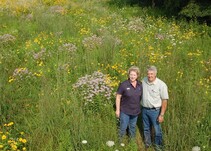
USDA announced that agricultural producers and private landowners can begin signing up for the Grassland Conservation Reserve Program (CRP) starting April 17, 2023 and running through May 26, 2023. Among CRP enrollment opportunities, Grassland CRP is a unique working lands program, allowing producers and landowners to continue grazing and haying practices while conserving grasslands and promoting plant and animal biodiversity as well as healthier soil.
|
More than 3.1 million acres were accepted through the 2022 Grassland CRP signup from agricultural producers and private landowners. That signup—the highest ever for the program—reflects the continued success and value of investments in voluntary, producer-led, working lands conservation programs. The current total participation in Grassland CRP is 6.3 million acres, which is part of the 23 million acres enrolled in CRP opportunities overall.
Since 2021, USDA’s FSA, which administers all CRP programs, has made several improvements to Grassland CRP to broaden the program’s reach, including:
- Creating two National Priority Zones to put focus on environmentally sensitive land such as that prone to wind erosion.
- Enhancing offers with 10 additional ranking points to producers and landowners who are historically underserved, including beginning farmers and military veterans.
- Leveraging the Conservation Reserve Enhancement Program (CREP) to engage historically underserved communities within Tribal Nations in the Great Plains.
How to Sign Up for Grassland CRP
Landowners and producers interested in Grassland CRP, or any other CRP enrollment option, should contact their local USDA Service Center to learn more or to apply for the program before the deadlines.
Producers with expiring CRP acres can enroll in the Transition Incentives Program (TIP), which incentivizes producers who sell or enter into a long-term lease with a beginning, veteran, or socially disadvantaged farmer or rancher who plans to sustainably farm or ranch the land.
Other CRP Signups Under Continuous CRP, producers and landowners can enroll throughout the year. Offers are automatically accepted provided the producer and land meet the eligibility requirements and the enrollment levels do not exceed the statutory cap. Continuous CRP includes a Climate-Smart Practice Incentive to increase carbon sequestration and reduce greenhouse gas emissions by helping producers and landowners establish trees and permanent grasses, enhance wildlife habitat, and restore wetlands.
FSA offers several additional enrollment opportunities within Continuous CRP, including the State Acres for Wildlife Enhancement (SAFE) Initiative, the Farmable Wetlands Program (FWP), and the Conservation Reserve Enhancement Program (CREP). Also available is the Clean Lakes Estuaries and Rivers (CLEAR30) Initiative, which was originally piloted in twelve states but has since been expanded nationwide, giving producers and landowners across the country the opportunity to enroll in 30-year CRP contracts for water quality practices.
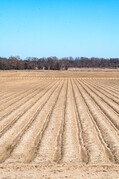
Maps are now available at the Ingham/Livingston FSA Office for acreage reporting purposes. We will be mailing maps out starting the week of May 15, 2023. If you wish to pick up your maps or have them emailed instead, please call our office at (517) 676-4644 Ext. 2 or e-mail william.brandt@usda.gov and gretchen.wasper@usda.gov. We can have your maps ready for pick up or e-mailed later that day, or by the next business day.
After you’re done planting, fill out the maps with crops and planting dates for each field and call us to set up an appointment to certify your acres. Other options to return your completed maps include USPS mail, e-mail, bring them in to the front counter, or use the 24 hour drop box located outside the front door of the FSA office. Remember we need time to load your crops and get the FSA-578’s back to you for your signature before the July 15th deadline.
In order to maintain program eligibility and benefits, you must file timely acreage reports. Failure to file an acreage report by the crop acreage reporting deadline of July 15th may cause ineligibility for future program benefits. FSA will not accept acreage reports provided more than a year after the acreage reporting deadline.
Producers are encouraged to file their acreage reports as soon as planting is completed.
|

USDA announced its $75 million investment in conservation assistance for producers transitioning to organic production. As part of the multi-agency Organic Transition Initiative (OTI), USDA’s Natural Resources Conservation Service (NRCS) will dedicate financial and technical assistance to a new organic management standard and partner with new organic technical experts to increase staff capacity and expertise.
|
The investment, which includes funds from the 2020 Coronavirus Aid, Relief, and Economic Security Act (CARES Act), will help build new and better markets and income streams, strengthen local and regional food systems and increase affordable food supply for more Americans, while promoting climate-smart agriculture and ensuring equity for all producers.
Direct Farmer Assistance NRCS will dedicate $70 million to assist producers with a new organic management standard under the Environmental Quality Incentives Program (EQIP).
NRCS will help producers adopt the new organic management standard, which allows flexibility for producers to get the assistance and education they need such as attending workshops or requesting help from experts or mentors. It supports conservation practices required for organic certification and may provide foregone income reimbursement for dips in production during the transition period.
Higher payment rates and other options are available for underserved producers including socially disadvantaged, beginning, veteran, and limited resource farmers and ranchers.
How to Apply
Eligible producers include farmers, ranchers, forest landowners, and other producers beginning or in the process of transitioning to organic certification. NRCS will announce state-specific deadlines later this year, after which producers can apply through NRCS at their local USDA Service Center.
Notice of Funding for Seven New Positions
NRCS will dedicate $5 million to partner with six organic technical experts through five-year agreements. The organic experts will develop regional networks and support NRCS staff who provide services to USDA customers. These services include hosting hands-on organic training and fielding organic-related staff questions. One organic research position will support this network. A Notice of Funding Opportunity, closing on June 11, 2023, outlines requirements for proposals from regional organizations and partners.
For more information, visit farmers.gov/organic.

The U.S. Department of Agriculture (USDA) launched a new online tool to help farmers and ranchers better navigate the farm loan application process. This uniform application process will help to ensure all farm loan applicants receive equal support and have a consistent customer experience with USDA’s Farm Service Agency (FSA) regardless of their individual circumstances.
|
USDA experiences a high rate of incomplete or withdrawn applications, particularly among underserved customers, due in part to a challenging and lengthy paper-based application process. The Loan Assistance Tool is available 24/7 and gives customers an online step-by-step guide that supplements the support they receive when working in person with a USDA employee, providing materials that may help an applicant prepare their loan application in one tool.
Farmers can access the Loan Assistance Tool by visiting farmers.gov/farm-loan-assistance-tool and clicking the ‘Get Started’ button. From here they can follow the prompts to complete the Eligibility Self-Assessment and start the farm loan journey. The tool is built to run on any modern browser like Chrome, Edge, Firefox, or the Safari browser, and is fully functional on mobile devices. It does not work in Internet Explorer.
The Loan Assistance Tool is the first of multiple farm loan process improvements that will be available to USDA customers on farmers.gov in the future. Other improvements and tools that are anticipated to launch in 2023 include:
- A streamlined and simplified direct loan application, reduced from 29 pages to 13 pages.
- An interactive online direct loan application that gives customers a paperless and electronic signature option, along with the ability to attach supporting documents such as tax returns.
- An online direct loan repayment feature that relieves borrowers from the necessity of calling, mailing, or visiting a local Service Center to pay a loan installment.
Background
USDA provides access to credit to approximately 115,000 producers who cannot obtain sufficient commercial credit through direct and guaranteed farm loans. With the funds and direction Congress provided in Section 22006 of the Inflation Reduction Act, USDA is taking action to immediately provide relief to qualifying distressed borrowers whose operations are at financial risk while working on making transformational changes to loan servicing so that borrowers are provided the flexibility and opportunities needed to address the inherent risks and unpredictability associated with agricultural operations.
If you don’t have a current determination or you plan to conduct activities that may affect highly erodible land conservation (HELC) or wetland compliance (WC) on your land, notify FSA by filing form AD-1026.
Common activities needing a Form AD-1026 include:
- bringing new land into production
- removing fence rows
- removing trees
- conducting drainage activities
- combining fields
- filling low areas
FSA will notify NRCS, and NRCS will then provide highly erodible land or wetland technical evaluations and issue determinations if needed.
It’s best to receive a determination before breaking ground. Then FSA and NRCS can help you make an informed decision about what is best for your farm operation up front, before funds are spent or lost.
Conservation Provisions apply to any person seeking benefits from certain USDA programs, including Farm Service Agency (FSA) loans and disaster assistance, Natural Resources Conservation Service (NRCS) and FSA conservation programs, and Risk Management Agency (RMA) Federal crop insurance premium subsidies.
-
Ongoing - Farm Records Updates - Report Changes (new leases, deeds for newly purchased land, etc.)
-
Ongoing - Conservation Reserve Program (CCRP) - Continuous
-
May 29, 2023 - Memorial Day Holiday - office closed
-
JUNE 2, 2023 - Emergency Relief Program (ERP) Phase Two Application Deadline and - Pandemic Assistance Revenue Program (PARP) Application Deadline
-
June 19, 2023 - Juneteenth Holiday - office closed
-
July 4, 2023 - Independence Day Holiday - office closed
-
July 15, 2023 - Last Day to Timely Certify Spring Seeded Crops
For more information on program deadlines, go to USDA's National Program Deadlines Webpage.
|