In This Issue:
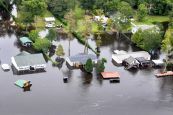
Severe weather events create significant challenges and often result in catastrophic loss for agricultural producers. Despite every attempt to mitigate risk, your operation may suffer losses. USDA offers several programs to help with recovery.
Risk Management
For producers who have risk protection through Federal Crop Insurance or the Noninsured Crop Disaster Assistance Program (NAP), we want to remind you to report crop damage to your crop insurance agent or the local Farm Service Agency (FSA) office.
If you have crop insurance, contact your agency within 72 hours of discovering damage and be sure to follow up in writing within 15 days. If you have NAP coverage, file a Notice of Loss (also called Form CCC-576) within 15 days of loss becoming apparent, except for hand-harvested crops, which should be reported within 72 hours.
Disaster Assistance
USDA also offers disaster assistance programs, which is especially important to livestock, fruit and vegetable, specialty and perennial crop producers who have fewer risk management options.
First, the Livestock Indemnity Program (LIP) and Emergency Assistance for Livestock, Honeybee and Farm-raised Fish Program (ELAP) reimburses producers for a portion of the value of livestock, poultry and other animals that died as a result of a qualifying natural disaster event or for loss of grazing acres, feed and forage. And, the Livestock Forage Disaster Program (LFP) provides assistance to producers of grazed forage crop acres that have suffered crop loss due to a qualifying drought. Livestock producers suffering the impacts of drought can also request Emergency Haying and Grazing on Conservation Reserve Program (CRP) acres.
Next, the Tree Assistance Program (TAP) provides cost share assistance to rehabilitate and replant tree, vines or shrubs loss experienced by orchards and nurseries. This complements NAP or crop insurance coverage, which cover the crop but not the plants or trees in all cases.
For LIP and ELAP, you will need to file a Notice of Loss for livestock and grazing or feed losses within 30 days and honeybee losses within 15 days. For TAP, you will need to file a program application within 90 days.
Documentation
It’s critical to keep accurate records to document all losses following a devastating weather event. Producers are advised to document by taking time and date-stamped video or pictures prior to and after the loss.
Other common documentation options include:
- Purchase records
- Production records
- Vaccination records
- Bank or other loan documents
- Third-party certification
Other Programs
The Emergency Conservation Program and Emergency Forest Restoration Program can assist landowners and forest stewards with financial and technical assistance to restore damaged farmland or forests.
Additionally, FSA offers a variety of loans available including emergency loans that are triggered by disaster declarations and operating loans that can assist producers with credit needs. You can use these loans to replace essential property, purchase inputs like livestock, equipment, feed and seed, or refinance farm-related debts, and other needs.
Meanwhile, USDA’s Natural Resources Conservation Service (NRCS) provides financial resources through its Environmental Quality Incentives Program to help with immediate needs and long-term support to help recover from natural disasters and conserve water resources. Assistance may also be available for emergency animal mortality disposal from natural disasters and other causes.
Additional Resources
Additional details – including payment calculations – can be found on our NAP, ELAP, LIP, and TAP fact sheets. On farmers.gov, the Disaster Assistance Discovery Tool, Disaster-at-a-Glance fact sheet, and Farm Loan Discovery Tool can help you determine program or loan options.
While we never want to have to implement disaster programs, we are here to help. To file a Notice of Loss or to ask questions about available programs, contact your local USDA Service Centers.
|

Florida agricultural producers and farmers in the process of transitioning to organic certification can now sign-up for assistance through the United States Department of Agriculture (USDA) Organic Transition Initiative (OTI), announced Nathan Fikkert, acting state conservationist for USDA’s Natural Resources Conservation Service (NRCS) in Florida. Farmers can sign-up for OTI through NRCS’s Environmental Quality Incentives Program at their local USDA NRCS office.
This Florida NRCS sign-up follows a recent national announcement detailing the USDA’s multi-agency approach to assist producers beginning or in the process of transitioning to achieve organic certification. Only those producers are eligible to apply for this sign-up. While NRCS accepts applications for conservation programs year-round, those interested should apply by June 15, 2023, to be eligible for this funding batch.
“Producers who are transitioning to organic production can take comfort in knowing the NRCS is here to help them through this process,” said Fikkert. “NRCS will dedicate financial and technical assistance to a new organic management standard and partner with new organic technical experts to increase staff capacity and expertise.”
The new organic management standard gives producers the flexibility to get the assistance and education they need, such as attending workshops or requesting help from organic production experts or mentors. It supports conservation activities and practices required for organic certification and may provide foregone income reimbursement for dips in production during the transition period.
The OTI-specific practices included in this sign-up are as follows:
- Organic Management (Practice Code 823)
- Conservation Plan Supporting Organic Transition (Practice Code 138)
- Transition to Organic Design (Practice Code 140)
- Conservation Cover (Practice Code 327)
- Conservation Crop Rotation (Practice Code 327)
- Cover Crops (Practice Code 340)
- Field Borders (Practice Code 386)
- Nutrient Management (Practice Code 590)
Flexible education and training activities can include field days, working alongside organic experts and more. You can work with NRCS field staff, approved technical service providers, and other approved organic partners.
This funding is part of the $70 million in American Rescue Plan funding for technical and financial assistance as part of the OTI.
Higher payment rates and other options are available for historically underserved producers including socially disadvantaged, beginning, veteran, and limited resource farmers and ranchers.
More Information For more information, visit farmers.gov/your-business/organic.
|
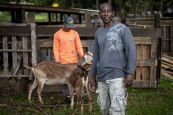
Beginning January 23, 2023, agricultural producers can begin to apply for two new important programs for revenue losses, from 2020 and 2021 natural disasters or the COVID-19 pandemic. Both programs equitably fill gaps in earlier assistance.
First, you may be eligible for assistance through the Emergency Relief Program (ERP) Phase Two if you experienced revenue losses from eligible natural disasters in 2020 and 2021.
You may also be eligible for the Pandemic Assistance Revenue Program (PARP) if you experienced revenue losses in calendar year 2020. PARP is addressing gaps in previous pandemic assistance, which was targeted at price loss or lack of market access, rather than overall revenue losses.
Applications for both new programs are due June 2, 2023, and you can apply for both programs during your same appointment with USDA’s Farm Service Agency (FSA).
Historically, FSA programs have been designed to make direct payments to producers based on a single disaster event or for a single commodity loss. For many of you, this may be the first revenue-based program that you’ve applied for with FSA.
Why revenue-based programs?
ERP Phase Two and PARP take a much more holistic approach to disaster assistance, ensuring that producers not just make it through a single growing season but have the financial stability to invest in the long-term well-being of their operations and employees.
In general, ERP Phase Two payments are based on the difference in allowable gross revenue between a benchmark year, representing a typical year of revenue for the producer and the disaster year – designed to target the remaining needs of producers impacted by qualifying natural disasters and avoid duplicative payments. ERP Phase Two revenue loss is based on tax years.
For PARP, an agricultural producer must have been in the business of farming during at least part of the 2020 calendar year and had a decrease in revenue for the 2020 calendar year, as compared to a typical year. PARP revenue loss is based on calendar years.
How to Apply
In preparation for enrollment, producers should gather supporting documentation including:
- Schedule F (Form 1040); and
-
Profit or Loss from Farming or similar tax documents for tax years 2018, 2019, 2020, 2021 and 2022 for ERP and for calendar years 2018, 2019 and 2020 for PARP.
Producers should also have, or be prepared to have, the following forms on file for both ERP and PARP program participation:
- Form AD-2047, Customer Data Worksheet (as applicable to the program participant);
- Form CCC-902, Farm Operating Plan for an individual or legal entity;
- Form CCC-901, Member Information for Legal Entities (if applicable); and
- Form AD-1026 Highly Erodible Land Conservation (HELC) and Wetland Conservation (WC) Certification.
- Form CCC-860, Socially Disadvantaged, Limited Resource, Beginning and Veteran Farmer or Rancher Certification, as certain existing permanent and ad-hoc disaster programs provide increased benefits or reduced fees and premiums.
Most producers, especially those who have previously participated in FSA programs, will likely have these required forms on file. However, those who are uncertain or want to confirm should contact FSA at their local USDA Service Center.
Yes, FSA is stepping outside of the box.
FSA is a big proponent of agricultural producers having a say in the design, implementation and delivery of the programs that directly impact their livelihoods. We also believe that some of the most creative and useful ideas for program and process improvements come from the FSA employees who administer this assistance through our network of more than 2,100 county offices. We want to thank producers across the country, along with the entire FSA workforce, for not just thinking outside of the box but also providing their input to make sure that we can improve and enhance our programs and our approach to assistance to better and more efficiently serve all producers who need our help.
Please visit your local USDA Service Center for more information on ERP Phase Two, PARP and our full portfolio of conservation, prices support, safety-net, credit and disaster assistance programs.
|

In this Ask the Expert, urban conservationist Brooke Franklin explains the support available for urban producers through USDA and offers tips for urban gardening in the summer heat. Brooke is a Natural Resource Specialist working on urban conservation with USDA’s Natural Resources Conservation Service (NRCS) in Kansas.
How do you work with urban producers at NRCS?
In my current position I help specialty crop and small-scale farmers conserve natural resources so they can continue to have a profitable and sustainable business. I provide technical assistance to farmers to conserve soil, water, air, and other natural resources. At NRCS we have programs that can help all farmers achieve their conservation goals.
I help small and urban farms practice conservation using cover crops, pollinator/native plantings, composting, micro-irrigation, and rain catchment systems. I also work a lot with high tunnels due to the fact that many urban farms are growing what some call market gardens, which help feed the community. The high tunnels help these farmers extend the growing season by starting earlier and farming later into the year and they are even able to overwinter crops in some cases.
To read the full blog visit farmers.gov/blog/ask-the-expert-qa-on-urban-conservation-and-gardening-in-the-summer-with-brooke-franklin.
|
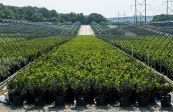
Farmers and ranchers rely on crop insurance to protect themselves from disasters and unforeseen events, but not all crops are insurable through the USDA’s Risk Management Agency. The Farm Service Agency’s (FSA) Noninsured Crop Disaster Assistance Program (NAP) provides producers another option to obtain coverage against disaster for these crops. NAP provides financial assistance to producers of non-insurable crops impacted by natural disasters that result in lower yields, crop losses, or prevents crop planting.
Commercially produced crops and agricultural commodities for which crop insurance is not available are generally eligible for NAP. Eligible crops include those grown specifically for food, fiber, livestock consumption, biofuel or biobased products, or value loss crops such as aquaculture, Christmas trees, ornamental nursery, and others. Contact your local FSA office to see which crops are eligible in your state and county.
Eligible causes of loss include drought, freeze, hail, excessive moisture, excessive wind or hurricanes, earthquake and flood. These events must occur during the NAP policy coverage period, before or during harvest, and the disaster must directly affect the eligible crop. For guidance on causes of loss not listed, contact your local FSA county office.
Interested producers apply for NAP coverage using FSA form CCC-471, “Application for Coverage,” and pay the applicable service fee at the FSA office where their farm records are maintained. These must be filed by the application closing date, which varies by crop. Contact your local FSA office to verify application closing dates and ensure coverage for eligible NAP crops.
At the time of application, each producer acknowledges they have received the NAP Basic Provisions, which describes NAP requirements for coverage. NAP participants must report crop acreage shortly after planting and provide verifiable or reliable crop production records when required by FSA.
Producers are required to pay service fees which vary depending on the number of crops and number of counties your operation is located in. The NAP service fee is the lesser of $325 per crop or $825 per producer per administrative county, not to exceed a total of $1,950 for a producer with farming interests in multiple counties. Premiums also apply when producers elect higher levels of coverage with a maximum premium of $15,750 per person or legal entity.
A producer’s certification on Form CCC-860 Socially Disadvantaged, Limited Resource, Beginning and Veteran Farmer or Rancher Certification may serve as an application for basic NAP coverage for all eligible crops beginning with crop year 2022. These producers will have all NAP-related service fees for basic coverage waived, in addition to a 50 percent premium reduction if higher levels of coverage are elected.
For more detailed information on NAP, download the NAP Fact Sheet. To get started with NAP, we recommend you contact your local USDA service center.
|
If you are a producer or landowner who participates in USDA’s Natural Resources Conservation Service (NRCS) conservation programs, the Farm Service Agency (FSA) may be reaching out by mail with information about a form you’ll need to fill out.
Starting this year, all producers and landowners participating or applying to participate in certain NRCS conservation programs must complete form CCC-902, Farm Operating Plan. Historically, to participate in these programs, legal entities could file either the CCC-901, Member Information or the CCC-902, while individuals were not specifically required to file the CCC-902 with FSA. Now, to ensure FSA and NRCS are properly determining payment eligibility and maximum payment limitations, all customers must have a CCC-902 on file to establish eligibility.
These changes will not affect participants who already have a Form CCC-902 with a “determined” status recorded with FSA. Customers that do not have a CCC-902 on file with FSA will be sent a letter in the mail in the coming weeks with detailed information on what is needed and how to file the form. The letter requests that the form be completed within 30 days of receiving the letter.
For added convenience, USDA is offering options for remote or in-person submission of the CCC-902. Fiscal year 2021 is considered a transition year to ensure all NRCS program participants can meet this updated filing requirement. Beginning in FY 2022, if form CCC-902 is not on file your payments may be impacted.
We can help: NRCS and FSA staff are available at USDA Service Centers nationwide to provide information and assistance to walk you through meeting this filing requirement. For more information, see the NRCS National Bulletin 300-21-7 or FSA Notice PL-293.
Farmers can use USDA farm ownership microloans to buy and improve property. These microloans are especially helpful to beginning or underserved farmers, U.S. veterans looking for a career in farming, and those who have small and mid-sized farming operations.
Microloans have helped farmers and ranchers with operating costs, such as feed, fertilizer, tools, fencing, equipment, and living expenses since 2013.
Microloans can also help with farmland and building purchases and soil and water conservation improvements. FSA designed the expanded program to simplify the application process, expand eligibility requirements and expedite smaller real estate loans to help farmers strengthen their operations. Microloans provide up to $50,000 to qualified producers and can be issued to the applicant directly from the USDA Farm Service Agency (FSA).
To learn more about the FSA microloan program, contact your local Service Center or visit fsa.usda.gov/microloans.
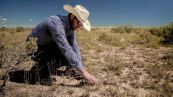
This is likely no surprise to you, but drought persists across the western U.S. and is intensifying in some areas. No geographic area is immune to the potential of drought at any given time. The U.S. Drought Monitor provides a weekly drought assessment, and it plays an important role in USDA programs that help farmers and ranchers recover from drought.
Fact #1 - Numerous agencies use the Drought Monitor to inform drought-related decisions.
The map identifies areas of drought and labels them by intensity on a weekly basis. It categorizes the entire country as being in one of six levels of drought. The first two, None and Abnormally Dry (D0), are not considered to be drought. The next four describe increasing levels of drought: Moderate (D1), Severe (D2), Extreme (D3) and Exceptional (D4).
While many entities consult the Drought Monitor for drought information, drought declarations are made by federal, state and local agencies that may or may not use the Drought Monitor to inform their decisions. Some of the ways USDA uses it to determine a producer’s eligibility for certain drought assistance programs, like the Livestock Forage Disaster Program and Emergency Haying or Grazing on Conservation Reserve Program acres and to “fast-track” Secretarial drought disaster designations.
Fact #2 - U.S. Drought Monitor is made with more than precipitation data.
When you think about drought, you probably think about water, or the lack of it. Precipitation plays a major role in the creation of the Drought Monitor, but the map’s author considers numerous indicators, including drought impacts and local insight from over 450 expert observers around the country. Authors use several dozen indicators to assess drought, including precipitation, streamflow, reservoir levels, temperature and evaporative demand, soil moisture and vegetation health. Because the drought monitor depicts both short and long‐term drought conditions, the authors must look at data for multiple timeframes. The final map produced each week represents a summary of the story being told by all the pieces of data. To help tell that story, authors don’t just look at data. They converse over the course of the map-making week with experts across the country and draw information about drought impacts from media reports and private citizens.
Fact #3 - A real person, using real data, updates the map.
Each week’s map author, not a computer, processes and analyzes data to update the drought monitor. The map authors are trained climatologists or meteorologists from the National Drought Mitigation Center at the University of Nebraska-Lincoln (the academic partner and website host of the Drought Monitor), the National Oceanic and Atmospheric Administration and USDA. The author’s job is to do what a computer can’t – use their expertise to reconcile the sometimes-conflicting stories told by each stream of data into a single assessment.
Fact #4 - The Drought Monitor provides a current snapshot, not a forecast.
The Drought Monitor is a “snapshot” of conditions observed during the most recent week and builds off the previous week’s map. The map is released on Thursdays and depicts conditions based on data for the week that ended the preceding Tuesday. Rain that falls on the Wednesday just before the USDM’s release won’t be reflected until the next map is published. This provides a consistent, week‐to‐week product and gives the author a window to assess the data and come up with a final map.
Fact #5 – Your input can be part of the drought-monitoring process.
State climatologists and other trained observers in the drought monitoring network relay on-the-ground information from numerous sources to the US Drought monitor author each week. That can include information that you contribute.
The Drought Monitor serves as a trigger for multiple forms of federal disaster relief for agricultural producers, and sometimes producers contact the author to suggest that drought conditions in their area are worse than what the latest drought monitor shows. When the author gets a call like that, it prompts them to look closely at all available data for that area, to see whether measurements of precipitation, temperature, soil moisture and other indicators corroborate producer-submitted reports. This is the process that authors follow whether they receive one report or one hundred reports, although reports from more points may help state officials and others know where to look for impacts.
There are multiple ways to contribute your observations:
-
Talk to your state climatologist - Find the current list at the American Association of State Climatologists website.
-
Email - Emails sent to droughtmonitor@unl.edu inform the USDM authors.
-
Become a CoCoRaHS observer - Submit drought reports along with daily precipitation observations to the Community Collaborative Rain, Hail & Snow Network.
-
Submit Condition Monitoring Observer Reports (CMOR) - go.unl.edu/CMOR.
For more information, read our Ask the Expert blog with a NDMC climatologist or visit farmers.gov/protection-recovery.
|
The Inflation Reduction Act provides $2.2 billion in financial assistance for farmers, ranchers, and forest landowners who experienced discrimination in USDA’s farm lending programs prior to January 1, 2021.
USDA has become aware of some lawyers and groups spreading misleading information about this process, pressuring people to sign retainer agreements, and asking people to fill out forms with private and sensitive information.
Application forms for this program are not yet available and the application filing period has not started. Before the application process opens, USDA will publish a list of trusted community organizations located across the country that will provide FREE help completing applications.
Please beware of organizations seeking to file your application for a fee. Filing an application for the program will be FREE. You will not need a lawyer to file an application for this program. If you feel the need for legal advice, seek the assistance of a trusted, licensed attorney.
Beware of solicitations by mail, email, or phone calls from individuals claiming to be connected to USDA. USDA will not solicit you for information.
The most up-to-date information on this program will be posted at www.farmers.gov/22007, a USDA website. Please check there for any concerns or reach out to your local FSA office. To find your local office, visit farmers.gov/service-locator.
If you believe there is an organization conducting a scam related to this process, please contact the USDA Office of the Inspector General (OIG) or any other appropriate authorities. The USDA OIG hotline can be accessed online at https://usdaoig.oversight.gov/hotline and by phone at (800) 424-9121.
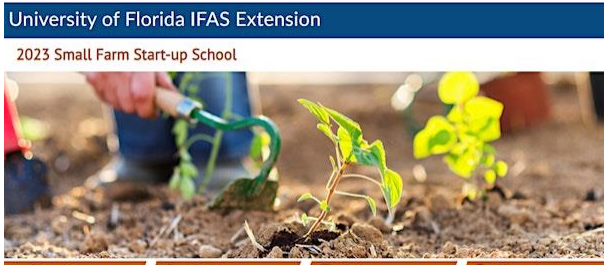
Wed, May 24, 2023, 6:30 PM – 8:30 PM EDT – Wed, July
12, 2023, 6:30 – 8:30 PM EDT
UF/IFAS Extension Sarasota County (Twin Lakes Park) 6700 Clark Road Sarasota, FL 34241
This 8-week series covers all aspects of starting a farm business from market research,
business planning and production decisions to pricing, sales & marketing, legal and
regulatory. First, fourth(tentative) and last sessions are in-person; other sessions are virtual. First session includes a tour of several local farms. Last session will include a farmer roundtable. Guest speakers will join virtually to share their expertise on crop and animal production, enterprise evaluation and business planning, marketing, regulatory etc.
Registration covers a family unit (Husband-wife, Father-daughter etc.) Each family
(farming enterprise) is required to 'work' on a business plan. Coaching and other
resources will be provided.
Completion of all deliverables for the program will enable you to be a qualified borrower
for Farm Service Agency and Farm Credit beginning farmer loans based on education
requirements. More details will be shared closer to the start date with information on classroom site, Zoom calls and Canvas Course Room arrangements.
This course will require 2-3 hours weekly outside of class to maximize learning and to
complete deliverables and work on business plan.
PRICE INCLUDES THE FOLLOWING:
• Registration for up to two people per
farm
• Web access to all resources and
course material
• Business plan guidance
• Farm tours/Farmer panels
• Networking with peers and experts
Lots of great handouts & links
• Evidence-based, unbiased information
TOPICS TO BE COVERED IN THIS EIGHT-WEEK PROGRAM (Subject to changes)
• Taking Stock: What do I have and what do I want to do?? Answering Key Q’s
• Financial Planning. Business Plans & Market Research
• Environment: Soil, Water, Air, Climate.
• Buildings, Equipment, Infrastructure Needs
• Enterprise Analysis, Land Acquisition, Business Models
• Fruits, Vegetables & Alternative Crops
• Livestock Care, Management & Marketing
• Legal, Regulatory, Sales and Marketing, E-commerce
Investment
$299.00 per farm. Two people from same family/farm can attend. Limited
scholarships are available
Registration is Required: Small Farm Startup School Tickets, Wed, May 24, 2023 at 6:30 PM | Eventbrite
|
The program is open to anyone in Florida. Registration for the 2023 Ag Entrepreneurship Series is available through UF/IFAS Extension Online Learning.
The award-winning Ag Entrepreneurship series first launched in 2018 and has since expanded to include three workshops. Each workshop starts with a two-week, online course that includes recorded presentations, case study videos, worksheets and a discussion forum where workshop members can ask questions of the workshop leaders and network with each other.
-
Starting a Farm (June 16-30): Introduces learners to the basics of starting a farm business and includes setting a vision and goals, assessing financial readiness, evaluating suitability and feasibility of the enterprise, and the ins and outs of business structures, registration and regulations.
-
Farm Business Planning (Aug. 10-24): Takes learners through the more technical aspects of developing a farm business and includes conducting market research and a SWOT analysis, developing a mission statement and plans for marketing, operations, human resources, finances and risk management.
-
Marketing for Your Small Farm (Oct. 13-27): Walks learners through business plan implementation and includes marketing and promotional strategies, avenues for selling to consumers, and technologies for taking orders and accepting payment online.
At the end of each online course, participants attend a two-hour presentation and Q & A session with industry experts, including representatives from program partners Farm Credit of Florida and the Center for Rural Enterprise Engagement. Participants can attend these sessions in person or via Zoom.
People can sign up for one or more workshops in the series. Each workshop is $45, and participants who register for all three get a discounted rate of $100. Workshops are capped at 35 people, so early registration is recommended.
May 22 - EXTENDED ECP application deadline for Brevard, Broward, Charlotte, Clay, Collier, DeSoto, Flagler, Glades, Hardee, Hendry, Highlands, Hillsborough, Indian River, Lake, Lee, Manatee, Martin, Okeechobee, Orange, Osceola, Palm Beach, Polk, Putnam, Sarasota, Seminole, St. Johns, St. Lucie, and Volusia.
May 26 - Grassland Conservation Reserve Program (CRP)
June 2 - Pandemic Assistance Revenue Program (PARP)
June 2 - Emergency Relief Program (ERP) Phase Two
July 31 - CLEAR30 for Producers with Expiring CRP Acres
| Farm Operating - Direct |
5.000% |
| Farm Operating - Microloan |
5.000% |
| Farm Ownership - Direct |
5.000% |
| Farm Ownership - Microloan |
5.000% |
| Farm Ownership - Direct, Joint Financing |
3.000% |
| Farm Ownership - Down Payment |
1.500% |
| Emergency Loan - Amount of Actual Loss |
3.750% |
|