In January, we announced two new programs designed to assist producers who experienced revenue losses from 2020 and 2021 natural disasters or the COVID-19 pandemic. These programs are revenue-based and feel a little different from our regular programs, but the goal is to better support farmers.
Both the Emergency Relief Program (ERP) Phase Two and the Pandemic Assistance Revenue Program (PARP) offer a holistic approach to disaster assistance and provide economic support for producers who bear the financial brunt of circumstances beyond their control.
With the rollout of any new program, there is a learning curve for producers and employees alike. ERP Phase Two and PARP are no exception. To encourage producer participation in these valuable programs, I’m going to do my best to debunk some myths and misconceptions surrounding ERP Phase Two and PARP.
With a June 2, 2023, deadline to apply for both programs, it’s important that we clear up confusion about how to apply, what documents are required for participation, insurance requirements and related misinformation making its way across the countryside.
Now, let’s do some myth-busting.
Myth #1 – You need to submit a completed tax return to FSA to apply for ERP Phase Two or PARP.
While these programs are based on revenue losses, you do not need a tax return, completed or otherwise, to apply for assistance. In fact, we have an ERP Phase 2 tool and PARP tool that walk you through the process step by step.
We understand that you may have questions for your certified public accountant or tax preparer, who was likely been hard to reach prior to the April 18 Internal Revenue Service tax deadline but we encourage you to download the program decision tools and get started. You’ll probably discover that you already have on hand much of the information you need.
The following supporting materials will help you:
- Schedule F (Form 1040); and
-
Profit or Loss from Farming or similar tax documents for tax years 2018, 2019, 2020, 2021, and 2022 for ERP and for calendar years 2018, 2019, and 2020 for PARP.
The only reason you might have to provide your tax returns to FSA is in the event of a spot check or a request from the FSA County Committee.
Producers can register for a free webinar hosted by USDA and members of the National Farm Income Tax Extension Committee on Monday, May 1 at 2 p.m. eastern for a discussion on completing the ERP Phase Two application form.
Myth #2 – You cannot receive an ERP Phase Two payment if you received a payment under Phase One.
It’s possible that you can still receive ERP Phase Two benefits if you received an ERP Phase One payment. There is also a possibility that your Phase Two payment may be offset.
Myth #3 – ERP Phase Two was intended to be an additional payment to those who received payment under Phase One.
ERP Phase Two was never designed or intended to be an additional payment. Instead, it was intended to assist those producers who did not receive relief in Phase One.
Click here to read the full blog and view a producer testimonial on the application process.
|
Earlier this year, we made several updates to disaster assistance programs to give more farmers, ranchers, and Tribes equitable access to recovery programs administered by the Farm Service Agency (FSA).
Specifically, I’d like to point out changes made to the Noninsured Crop Disaster Assistance Program (NAP) and how we’ve simplified the application process for underserved producers.
This important policy change opens the door to risk management options for producers who may not have previously known about or been able to obtain coverage to protect their crops.
NAP provides financial assistance to producers of noninsurable crops when natural disaster events cause low yields, loss of inventory, or prevented planting.
Our policy improvements mean that, beginning with the 2022 crop year, having a CCC-860 form, Socially Disadvantaged, Limited Resource, Beginning and Veteran Farmer or Rancher Certification, on file with FSA will provide producers with basic NAP coverage for all eligible crops. Specifically, FSA is waiving all NAP-related service fees for basic coverage for producers with a CCC-860 on file prior to the application closing date for each crop. These producers are also eligible to receive a 50% premium reduction if they elect higher levels of coverage before the application closing date for each crop.
At the end of January, we notified producers who already have the CCC-860 certification form on file regarding their eligibility for NAP basic coverage for 2022. If you suffered losses from natural disasters in 2022, you will need to contact your local FSA county office to file an acreage report, as well as a notice of loss, and an application for a NAP payment.
If you are interested in NAP coverage for 2023 and future years, your local FSA county office staff will be more than happy to provide information on eligibility, coverage options, and how to apply for additional coverage.
While these recent policy changes are intended to remove barriers to available benefits and help underserved producers manage risk, any producer of noninsurable crops can apply for NAP coverage by completing FSA form CCC-471, Application for Coverage, and paying a service fee. Your local FSA office can verify application closing dates and ensure coverage for your crops is available.
My staff and I are committed to revisiting FSA program policies and finding ways, within our authorities, to remove obstacles that prevent participation. Expanding NAP to ensure all producers of noninsured crops have access to risk coverage is the result of proactive input from producers and the willingness of FSA employees to think outside of the box for the benefit of the producers we serve.
Please contact your local USDA Service Center for more information on NAP coverage options.
Spring is finally here and for many, this is a time of hope and renewal. As some head to the local hardware store to kickstart outdoor improvements, America’s agricultural producers are already putting their spring plans into action, planting the seeds that will feed, fuel, and clothe us later in the year.
As in years past, we’d like to showcase the planting season stories of farmers and ranchers across America. To share yours, make a post on Facebook, Instagram or Twitter with photos or video and tag @FarmersGov. Be sure to include where you are and what you’re working on in your post. You can also direct message us through any of our @FarmersGov social media accounts.
Alternatively, email us at SM.FP.Social@usda.gov with your name or the name of your operation, your location (city/county and state), and information about what’s happening in your photos or videos.
Need more ideas on what makes a great #Plant23 photo? Check out highlights from previous years:
Make sure to follow @FarmersGov on Facebook, Twitter, and Instagram, and we look forward to sharing your story!
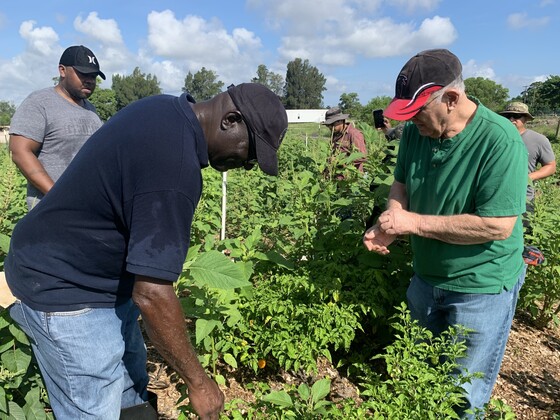
The People’s Garden community is growing! Last May, USDA renewed the People’s Garden initiative. On the anniversary of the reopening we invite you to join approximately 1,200 People’s Gardens that have signed up nationwide in the past year by registering on the USDA People’s Garden website. Community gardens, urban farms, school gardens, and small-scale agriculture projects in rural, suburban and urban areas can join the “People’s Garden” community.
We invite you to:
-
Join the People’s Garden community.
-
Grow using sustainable practices that benefit people and wildlife.
-
Teach about local, resilient food systems.
- People’s Gardens are marked on a map on the USDA website and may be featured in USDA communications. You’ll receive a People’s Garden sign to display and learn about People’s Garden community information such as webinars.
Sign up at www.usda.gov/peoples-garden
 |
-
May 15, 2023 - acreage reporting deadline for peas (green only) and potatoes
-
May 26, 2023 - final day to submit Grassland CRP offers
-
June 2, 2023 - ERP Phase 2 and PARP application deadline
-
June 15, 2023 - acreage reporting deadline - tomatoes
-
July 15, 2023 - acreage reporting deadline - beans (limas only), cucumbers (planted 4/20-6/25), all other crops, perennial forage, CRP
-
July 31, 2023 - acreage reporting deadline - hemp
-
July 31, 2023 - deadline for producers to submit a CRP offer for re-enrolling and CLEAR30 acres
-
August 15, 2023 - acreage reporting deadline for beans (all types except limas), cucumbers (planted 6/26-8/10)
-
September 1, 2023 - NAP coverage application closing date – value-loss crops or controlled environment crops, ornamental nursery, aquaculture, Christmas trees, ginseng, floriculture, mushrooms, and turf grass sod
-
September 30, 2023 - NAP coverage application closing date – biennial and perennial forage crops, alfalfa, grass forages, mixed forages and other forages
-
September 30, 2023 - Acreage reporting deadline - value-loss (ie -oysters) and controlled environment crops (except nursery)
|