|
|
Alabama USDA Newsletter - April 2023
|
|
|
|
Farm Service Agency | Natural Resources Conservation Service | Risk Management Agency
|
In This Issue:
From the Farm Service Agency State Executive Director
The Alabama Farm Service Agency County offices are set to educate our producers and partners. Each county office will be hosting a series of Open Houses to discuss FSA programs. Go by your county office to check out their schedule of topics for open house. If you have signed up for govDelivery you will find the dates and topic for the upcoming Open House in your monthly newsletter.
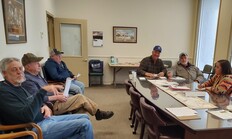
Cullman County, AL under the direction of Belinda Woods, hosted the States first Open House of 2023. Belinda and her team of Program Technicians informed producers about two new disaster programs, the Emergency Relief Program (ERP2) and the Pandemic Assistance Revenue Program (PARP) in a hour session from 8-9am on March 13. Three producers set appointments that day to complete an application! Don't miss your opportunity to learn about FSA's latest programs and program updates.
Our doors are open! To contact the FSA office nearest you follow this link USDA Service Center Locator.
Dates to Remember
Farm Loan Interest Rates
|
The U.S. Department of Agriculture (USDA) today announced that beginning in April it will provide approximately $123 million in additional, automatic financial assistance for qualifying farm loan program borrowers who are facing financial risk, as part of the $3.1 billion to help distressed farm loan borrowers that was provided through Section 22006 of the Inflation Reduction Act (IRA). The announcement builds on financial assistance offered to borrowers through the same program in October 2022.
The IRA directed USDA to expedite assistance to distressed borrowers of direct or guaranteed loans administered by USDA’s Farm Service Agency (FSA) whose operations face financial risk. For example, in the October payments, farmers that were 60 days delinquent due to challenges like natural disasters, the pandemic or other unexpected situations were brought current and had their next installment paid to give them breathing room.
In October 2022, USDA provided approximately $800 million in initial IRA assistance to more than 11,000 delinquent direct and guaranteed borrowers and approximately 2,100 borrowers who had their farms liquidated and still had remaining debt. USDA shared that it would conduct case-by-case reviews of about 1,600 complex cases for potential initial relief payments, including cases of borrowers in foreclosure or bankruptcy. These case-by-case reviews are underway.
At the same time in October 2022, USDA announced that it anticipated payments using separate pandemic relief funding totaling roughly $66 million on over 7,000 direct loans to borrowers who used the USDA Farm Service Agency’s disaster-set-aside option during the COVID-19 pandemic. The majority of these payments have been processed and USDA anticipates it will complete all such payments in April 2023.
New Assistance for Distressed Borrowers
FSA intends to provide the new round of relief starting in April to additional distressed borrowers. This will include approximately $123 million in automatic financial assistance for qualifying Farm Loan Program (FLP) direct loan borrowers who meet certain criteria. Similar to the automatic payments announced in October 2022, qualifying borrowers will receive an individual letter detailing the assistance as payments are made. Distressed borrowers’ eligibility for these new categories of automatic payments will be determined based on their circumstances as of today. More information about the new categories that make up the $123 million in assistance announced today and the specific amount of assistance a distressed borrower receives can be found described in this fact sheet, IRA Section 22006: Additional Automatic Payments, Improved Procedures, and Policy Recommendations.
To continue to make sure producers are aware of relief potentially available to them, all producers with open FLP loans will receive a letter detailing a new opportunity to receive assistance if they took certain extraordinary measures to avoid delinquency on their FLP loans, such as taking on more debt, selling property or cashing out retirement accounts. The letter will provide details on eligibility, the specific types of actions that may qualify for assistance, and the process for applying for and providing the documentation to seek that assistance.
These steps are part of a process USDA announced along with the October payments that is focused on assisting borrowers unable to make their next scheduled installment. Earlier this year, all borrowers should have received a letter detailing the process for seeking this type of assistance even before they become delinquent. Borrowers who are within two months of their next installment may seek a cashflow analysis from FSA using a recent balance sheet and operating plan to determine their eligibility.
Tax Resources
USDA will continue to work with the Department of Treasury to help borrowers understand the potential tax implications from the receipt of an IRA payment, including that options may be available to potentially avoid or alleviate any tax burden incurred as a result of receiving this financial assistance.
In early April, USDA will send a specific set of revised tax documents, educational materials and resources to borrowers that received assistance in 2022, including a link to a webinar hosted by a group of farm tax experts to provide education on the options available. USDA cannot provide tax advice and encourages borrowers to consult their own tax professional, but FSA is providing educational materials for borrowers to be aware of the options. USDA has tax-related resources available at farmers.gov/taxes.
Improved Procedures and Policy Recommendations
FSA is finalizing changes to its policy handbooks to remove unnecessary hurdles, improve loan making and loan servicing and provide more flexibility on how loans are structured to maximize the opportunities for borrowers. Additional details on those changes can be found in the linked fact sheet and are the start of a broader set of process enhancements. The fact sheet also provides information on the eight, no-cost legislative proposals included in the Fiscal Year 2024 President’s Budget that are designed to improve the borrower experience.
|
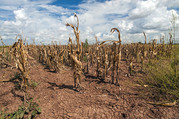
Severe weather events create significant challenges and often result in catastrophic loss for agricultural producers. Despite every attempt to mitigate risk, your operation may suffer losses. USDA offers several programs to help with recovery.
Risk Management
For producers who have risk protection through Federal Crop Insurance or the Noninsured Crop Disaster Assistance Program (NAP), we want to remind you to report crop damage to your crop insurance agent or the local Farm Service Agency (FSA) office.
If you have crop insurance, contact your agency within 72 hours of discovering damage and be sure to follow up in writing within 15 days. If you have NAP coverage, file a Notice of Loss (also called Form CCC-576) within 15 days of loss becoming apparent, except for hand-harvested crops, which should be reported within 72 hours.
Disaster Assistance
USDA also offers disaster assistance programs, which is especially important to livestock, fruit and vegetable, specialty and perennial crop producers who have fewer risk management options.
First, the Livestock Indemnity Program (LIP) and Emergency Assistance for Livestock, Honeybee and Farm-raised Fish Program (ELAP) reimburses producers for a portion of the value of livestock, poultry and other animals that died as a result of a qualifying natural disaster event or for loss of grazing acres, feed and forage. And, the Livestock Forage Disaster Program (LFP) provides assistance to producers of grazed forage crop acres that have suffered crop loss due to a qualifying drought. Livestock producers suffering the impacts of drought can also request Emergency Haying and Grazing on Conservation Reserve Program (CRP) acres.
Next, the Tree Assistance Program (TAP) provides cost share assistance to rehabilitate and replant tree, vines or shrubs loss experienced by orchards and nurseries. This complements NAP or crop insurance coverage, which cover the crop but not the plants or trees in all cases.
For LIP and ELAP, you will need to file a Notice of Loss for livestock and grazing or feed losses within 30 days and honeybee losses within 15 days. For TAP, you will need to file a program application within 90 days.
Documentation
It’s critical to keep accurate records to document all losses following this devastating cold weather event. Livestock producers are advised to document beginning livestock numbers by taking time and date-stamped video or pictures prior to after the loss.
Other common documentation options include:
- Purchase records
- Production records
- Vaccination records
- Bank or other loan documents
- Third-party certification
Other Programs
The Emergency Conservation Program and Emergency Forest Restoration Program can assist landowners and forest stewards with financial and technical assistance to restore damaged farmland or forests.
Additionally, FSA offers a variety of loans available including emergency loans that are triggered by disaster declarations and operating loans that can assist producers with credit needs. You can use these loans to replace essential property, purchase inputs like livestock, equipment, feed and seed, or refinance farm-related debts, and other needs.
Meanwhile, USDA’s Natural Resources Conservation Service (NRCS) provides financial resources through its Environmental Quality Incentives Program to help with immediate needs and long-term support to help recover from natural disasters and conserve water resources. Assistance may also be available for emergency animal mortality disposal from natural disasters and other causes.
Additional Resources
Additional details – including payment calculations – can be found on our NAP, ELAP, LIP, and TAP fact sheets. On farmers.gov, the Disaster Assistance Discovery Tool, Disaster-at-a-Glance fact sheet, and Farm Loan Discovery Tool can help you determine program or loan options.
While we never want to have to implement disaster programs, we are here to help. To file a Notice of Loss or to ask questions about available programs, contact your local USDA Service Center. All USDA Service Centers are open for business, including those that restrict in-person visits or require appointments because of the pandemic.
|

USDA has made great strides to better reach underserved agricultural producers and to support climate-smart agriculture through crop insurance. In the past two years, USDA’s Risk Management Agency (RMA) has created new insurance options while improving others and invested in a comprehensive risk management education effort.
Equity in Crop Insurance
RMA took steps to ensure that underserved, specialty crop, organic, small-scale, and urban producers had access to crop insurance options and information during the past two years. This includes launching the new Micro Farm option in 2021 to better serve direct market and small-scale producers. Micro Farm provides a risk management safety net for all eligible commodities on a farm under one insurance policy, but on a smaller scale. In 2022, RMA listened to producers and expanded the program's eligibility to reach more producers.
Meanwhile, RMA made several improvements to Whole-Farm Revenue Protection (WFRP), an important policy to specialty crop and organic producers, including:
- Increasing expansion limits for organic and aquaculture producers.
- Increasing insurable revenue up to $17 million in revenue (formerly $8.5 million).
As part of USDA’s broader Organic Transition Initiative, RMA provided a premium benefit to organic and transitioning producers through the Transitional and Organic Grower Assistance (TOGA) Program. TOGA reduces producers’ overall crop insurance premium bills and helps them continue to use organic agricultural systems.
In order to better engage with producers about these and other risk management tools, RMA has increased its support of risk management education and outreach. In 2021 and 2022, RMA invested about $6.5 million in partnerships with 27 organizations to provide risk management education as well as to train and equip the next generation of crop insurance agents, adjusters, and outreach educators about crop insurance options.
RMA created a roadshow series to promote Micro Farm and WFRP insurance options. The roadshow series reached over 3,000 producers who attended the events either virtually or in-person since its creation in late fall 2022.
Climate-Smart Agriculture
RMA has taken steps to support producers who are using climate-smart practices, including planting cover crops and split-applying nitrogen. RMA introduced the Pandemic Cover Crop Program (PCCP), which supports climate smart agricultural practices and helps farmers maintain their cover crop systems, despite the financial challenges posed by the pandemic. RMA provided more than $110 million in premium support for producers who planted cover crops on over 22 million net acres through PCCP during the 2021 and 2022 seasons. RMA also updated policy in 2021 to allow producers with crop insurance to hay, graze or chop cover crops at any time and still receive 100% of the prevented planting payment.
In 2022, RMA introduced its Post Application Coverage Endorsement (PACE) in certain states for non-irrigated corn, providing coverage for producers who use this practice that saves them money and is considered better for natural resources, and expanded the program in September.
Supporting Domestic Production
To increase domestic food production amid potential global food shortages and supply chain disruptions, RMA expanded double crop insurance opportunities in nearly 1,500 counties where double cropping is viable.
Improvements to Crop Insurance
RMA continues to work with producers and agricultural groups to improve crop insurance. Some examples include:
Crop insurance is sold and delivered solely through private crop insurance agents. A list of crop insurance agents is available at all USDA Service Centers and online at the RMA Agent Locator. Learn more about crop insurance and the modern farm safety net at rma.usda.gov or by contacting your RMA Regional Office.
|
|
|
|
Alabama USDA
|
Farm Service Agency (FSA)
4121 Carmichael Road, Ste 600
Montgomery, AL 36106
Phone: (334) 279-3500
Fax: (855) 747-0599
FSA State Director
Clifton Warren, Jr
|
Natural Resource Conservation Service (NRCS)
3381 Skyway Dr.
Auburn, AL 36830
Phone: (334) 887-4500
Fax: (855)292-1671
NRCS State Conservationist
Ben Malone
|
|
FSA State Committee
Donald Means, Chairperson
Marvin Datcher
Gary Terry
William Townsend Kyser III
Danny Ellison
|
Risk Management
106 S. Patterson Street, Suite 250
Valdosta, GA 31601-5673
Phone: 229-242-7235
Fax: (229) 242-3566
RMA Regional Director
Davina Lee
|
|
|
|
|
|
USDA is an equal opportunity provider, employer and lender. To file a complaint of discrimination, write: USDA, Office of the Assistant Secretary for Civil Rights, Office of Adjudication, 1400 Independence Ave., SW, Washington, DC 20250-9410 or call (866) 632-9992 (Toll-free Customer Service), (800) 877-8339 (Local or Federal relay), (866) 377-8642 (Relay voice users).
|
|