|
The U.S. Department of Agriculture (USDA) has developed a simplified direct loan application to provide improved customer experience for producers applying for loans from the Farm Service Agency (FSA). The simplified direct loan application enables producers to complete a more streamlined application, reduced from 29 to 13 pages. Producers will also have the option to complete an electronic fillable form or prepare a traditional, paper application for submission to their local FSA farm loan office. The paper and electronic versions of the form will be available starting March 1, 2023.
Approximately 26,000 producers submit a direct loan application to the FSA annually, but there is a high rate of incomplete or withdrawn applications, due in part to a challenging and lengthy paper-based application process. Coupled with the Loan Assistance Tool released in October 2022, the simplified application will provide all loan applicants access to information regarding the application process and assist them with gathering the correct documents before they begin the process. This new application will help farmers and ranchers submit complete loan applications and reduce the number of incomplete, rejected, or withdrawn applications.
In October 2022, USDA launched the Loan Assistance Tool, an online step-by-step guide that provides materials to help an applicant prepare their farm loan application in one tool. Farmers can access the Loan Assistance Tool by visiting farmers.gov/farm-loan-assistance-tool and clicking the ‘Get Started’ button. The tool is built to run on any modern browser like Chrome, Edge, Firefox, or the Safari browser. A version compatible with mobile devices is expected to be available by the summer. It does not work in Internet Explorer.
The simplified direct loan application and Loan Assistance Tool are the first of multiple farm loan process improvements that will be available to USDA customers on farmers.gov in the future. Other improvements that are anticipated to launch in 2023 include:
- An interactive online direct loan application that gives customers a paperless and electronic signature option, along with the ability to attach supporting documents such as tax returns.
- An online direct loan repayment feature that relieves borrowers from the necessity of calling, mailing, or visiting a local Service Center to pay a loan installment.
USDA provides access to credit to approximately 115,000 producers who cannot obtain sufficient commercial credit through direct and guaranteed farm loans. With the funds and direction Congress provided in Section 22006 of the Inflation Reduction Act, USDA took action in October 2022 to provide relief to qualifying distressed borrowers while working on making transformational changes to loan servicing so that borrowers are provided the flexibility and opportunities needed to address the inherent risks and unpredictability associated with agricultural operations.
Soon, all direct loan borrowers will receive a letter from USDA describing the circumstances under which additional payments will be made to distressed borrowers and how they can work with their FSA local office to discuss these options. Producers can explore all available options on all FSA loan options at fsa.usda.gov or by contacting their local USDA Service Center.
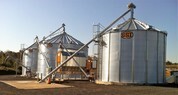
In this Ark the Expert, Toni Williams answers questions about Farm Storage Facility Loans (FSFL) provide Low interest financing to help producers build or upgrade commodity storage facilities. Toni is the Agricultural Program Manager for FSFLs at the Farm Service Agency (FSA).
Toni has worked for FSA for more than 32 years and is responsible for providing national policy and guidance for Farm Storage Facility Loans.
What are Farm Storage Facility Loans?
Farm Storage Facility Loans provide low-interest financing for eligible producers to build or upgrade facilities to store commodities.
The FSFL program was created in May 2000 to address an existing grain shortage. Historically, FSFLs benefitted grain farmers, but a change in the 2008 Farm Bill extended the program to fruit and vegetable producers for cold storage. An additional change extended the program to washing and packing sheds, where fresh produce is washed, sorted, graded, labeled, boxed up, and stored before it heads to market. Since May 2000, FSA has made more than 40,000 loans for on-farm storage.
Eligible facility types include grain bins, hay barns, bulk tanks, and facilities for cold storage. Drying and handling and storage equipment including storage and handling trucks are also eligible. Eligible facilities and equipment may be new or used, permanently affixed or portable.
To read the full blog visit farmers.gov/blog/ask-the-expert-qa-on-farm-storage-facility-loans-with-toni-williams.
|
Signup began January 23 for additional emergency relief from the U.S. Department of Agriculture (USDA) through the Emergency Relief Program (ERP) Phase Two.
To be eligible for Phase Two, producers must have suffered a decrease in allowable gross revenue in 2020 or 2021 due to necessary expenses related to losses of eligible crops from a qualifying natural disaster event. Eligible crops include both traditional insurable commodities and specialty crops that are produced in the United States as part of a farming operation and are intended to be commercially marketed. This also includes losses of eligible on-farm stored commodities. ERP Phase 2 applicants will use the following tax years when selecting allowable gross revenue:
- Benchmark years: 2018 and/or 2019; estimated for new producers with no 2018 or 2019 revenue or adjusted if the benchmark years are not representative of the disaster year due to a change in operation size.
- Disaster years: 2020 and/or 2021. The allowable gross revenue for the specific disaster year will be based on the tax year applicable to that revenue (2020, 2021 or 2022).
The ERP tool assists producers in calculating allowable gross revenue, as well as adjusted revenue for the benchmark years 2018 and 2019, and allowable gross revenue for representative tax years 2020-2022 which represent disaster years 2020 and 2021. Once producers complete the allowable gross revenue entries, they are able to print forms FSA-521 and FSA-521A through this tool.
The ERP Phase 2 and PARP application period is open from January 23 through June 2 2023.
For more information on payment calculations, payment limitations or how to determine allowable gross revenue, please reference the ERP Phase 2 fact sheet.
Farmers can use USDA farm ownership microloans to buy and improve property. These microloans are especially helpful to beginning or underserved farmers, U.S. veterans looking for a career in farming, and those who have small and mid-sized farming operations.
Microloans have helped farmers and ranchers with operating costs, such as feed, fertilizer, tools, fencing, equipment, and living expenses since 2013.
Microloans can also help with farmland and building purchases and soil and water conservation improvements. FSA designed the expanded program to simplify the application process, expand eligibility requirements and expedite smaller real estate loans to help farmers strengthen their operations. Microloans provide up to $50,000 to qualified producers and can be issued to the applicant directly from the USDA Farm Service Agency (FSA).
To learn more about the FSA microloan program, contact your local Parish USDA Service Center or visit fsa.usda.gov/microloans.

The Farm Service Agency (FSA) assists beginning farmers to finance agricultural enterprises. Under these designated farm loan programs, FSA can provide financing to eligible applicants through either direct or guaranteed loans. FSA defines a beginning farmer as a person who:
- Has operated a farm for not more than 10 years
- Will materially and substantially participate in the operation of the farm
- Agrees to participate in a loan assessment, borrower training and financial management program sponsored by FSA
- Does not own a farm in excess of 30 percent of the county’s average size farm.
For more information contact, contact your local Parish USDA Service Center or visit fsa.usda.gov.
|

Farm Service Agency (FSA) loans require applicants to have a satisfactory credit history. A credit report is requested for all FSA direct farm loan applicants. These reports are reviewed to verify outstanding debts, see if bills are paid timely and to determine the impact on cash flow.
Information on your credit report is strictly confidential and is used only as an aid in conducting FSA business.
Our farm loan staff will discuss options with you if you have an unfavorable credit report and will provide a copy of your report. If you dispute the accuracy of the information on the credit report, it is up to you to contact the issuing credit report company to resolve any errors or inaccuracies.
There are multiple ways to remedy an unfavorable credit score:
- Make sure to pay bills on time
- Setting up automatic payments or automated reminders can be an effective way to remember payment due dates.
- Pay down existing debt
- Keep your credit card balances low
- Avoid suddenly opening or closing existing credit accounts
FSA’s farm loan staff will guide you through the process, which may require you to reapply for a loan after improving or correcting your credit report.
For more information on FSA farm loan programs, contact your Panola County USDA Service Center at (662)578-8045 ext. 2 or visit fsa.usda.gov.
|
USDA Announces Signup for Pandemic Assistance Revenue Program The Pandemic Assistance Revenue Program (PARP) will assist eligible producers of agricultural commodities who experienced revenue decreases in calendar year 2020 compared to 2018 or 2019 due to the COVID-19 pandemic. PARP will help address gaps in previous pandemic assistance, which was targeted at price loss or lack of market access, rather than overall revenue losses.
USDA's Farm Service Agency will accept PARP applications from January 23, 2023, through June 2, 2023.
Eligible and Ineligible Commodities
For PARP, eligible agricultural commodities include crops, aquaculture, livestock, livestock byproducts, or other animals or animal byproducts that are produced as part of a farming operation and are intended to be commercially marketed. This includes only commodities produced in the United States or those produced outside the United States by a producer located in the United States and marketed inside the United States.
The following commodities are not eligible for PARP:
- Wild free-roaming animals.
- Horses and other animals used or intended to be used for racing or wagering.
- Aquatic species that do not meet the definition of aquaculture.
-
Cannabis sativa L. and any part of that plant that does not meet the definition of hemp.
- Timber.
Program Eligibility
PARP payments will be made on a whole-farm basis, not commodity-by-commodity. To be eligible for PARP, an agricultural producer must have been in the business of farming during at least part of the 2020 calendar year and must have experienced a 15 percent decrease in allowable gross revenue in 2020, as compared to either:
- The 2018 or 2019 calendar year, as elected by the producer, if they received allowable gross revenue during the 2018 or 2019 calendar years, or
- The producer’s expected 2020 calendar year allowable gross revenue, if the producer had no allowable gross revenue in 2018 or 2019.
PARP payments will be issued after the application period ends on June 2, 2023.
For more information on determining allowable gross revenue visit farmers.gov/coronavirus/pandemic-assistance/parp or review the PARP fact sheet.
More Information
To apply for PARP, contact your local USDA Service Center.

FSA guaranteed loans allow lenders to provide agricultural credit to farmers who do not meet the lender's normal underwriting criteria. Farmers and ranchers apply for a guaranteed loan through a lender, and the lender arranges for the guarantee. FSA can guarantee up to 95 percent of the loss of principal and interest on a loan. Guaranteed loans can be used for both farm ownership and operating purposes.
Guaranteed farm ownership loans can be used to purchase farmland, construct or repair buildings, develop farmland to promote soil and water conservation or to refinance debt.
Guaranteed operating loans can be used to purchase livestock, farm equipment, feed, seed, fuel, farm chemicals, insurance and other operating expenses.
FSA can guarantee farm ownership and operating loans up to $2,037,000. Repayment terms vary depending on the type of loan, collateral and the producer's ability to repay the loan. Operating loans are normally repaid within seven years and farm ownership loans are not to exceed 40 years.
For more information on guaranteed loans, contact your Morehouse Parish USDA Service Center at 318-281-1561 or visit fsa.usda.gov.
|
Grassland CRP Signup to open April 17
The U.S. Department of Agriculture (USDA) announced that agricultural producers and private landowners can begin applying for the Grassland Conservation Reserve Program (CRP) signup starting April 17 through May 26, 2023. Among CRP enrollment opportunities, Grassland CRP is unique as a working lands program, allowing producers and landowners to continue grazing and haying practices while protecting grasslands and promoting plant and animal biodiversity and conservation.
Protecting grasslands with CRP not only benefits participants with annual rental payments and cost share assistance; it also contributes positively to the economy of many regions, builds biodiversity, and provides important carbon sequestration benefits to deliver lasting climate outcomes.
More than 2.4 million acres were enrolled through the 2022 Grassland CRP Signup from agricultural producers and private landowners. That signup – the highest ever for the program– reflects the continued success and value of investments in voluntary, producer-led, working lands conservation programs. The current total participation in Grassland CRP is 6.3 million acres, which is part of the 23 million acres enrolled in CRP opportunities overall.
Since 2021, the USDA’s Farm Service Agency (FSA), which administers all CRP programs, has made several improvements to Grassland CRP to broaden the program’s reach, including:
- Creating two National Priority Zones to put focus on environmentally sensitive land such as that prone to wind erosion.
- Enhanced offers with 10 additional ranking points to producers and landowners who are historically underserved, including beginning farmers and military veterans.
- Leverage the Conservation Reserve Enhancement Program (CREP) to engage historically underserved communities Tribal Nations in the Great Plains
Other CRP Signups
General CRP
General CRP signup closed on April 7. The program helps producers and landowners establish long-term, resource-conserving plant species, such as approved grasses or trees, to control soil erosion, improve water quality and enhance wildlife habitat on cropland. Additionally, General CRP includes a Climate-Smart Practice Incentive to help increase carbon sequestration and reduce greenhouse gas emissions by helping producers and landowners establish trees and permanent grasses, enhance wildlife habitat, and restore wetlands.
Continuous CRP
Under Continuous CRP, producers and landowners can enroll in CRP throughout the year. Offers are automatically accepted provided the producer and land meet the eligibility requirements and the enrollment levels do not exceed the statutory cap. The Climate-Smart Practice Incentive is also available in the Continuous signup.
FSA offers several additional enrollment opportunities within Continuous CRP, including the State Acres for Wildlife Enhancement (SAFE) Initiative, the Farmable Wetlands Program (FWP), and the Conservation Reserve Enhancement Program (CREP). Also available is the Clean Lakes Estuaries and Rivers Initiative CLEAR30 Initiative, which was originally piloted in twelve states but has been expanded nationwide, allowing producers and landowners to enroll in 30-year CRP contracts for water quality practices.
How to Sign Up
Landowners and producers interested in Grassland CRP, or any other CRP enrollment option, should contact their local USDA Service Center to learn more or to apply for the program before their deadlines.
Producers with expiring CRP acres can use the Transition Incentives Program (TIP), which incentivizes producers who sell or enter a long-term lease with a beginning, veteran, or socially disadvantaged farmer or rancher who plans to sustainably farm or ranch the land.
More Information
Signed into law in 1985, CRP is one of the largest voluntary private-lands conservation programs in the United States. It was originally intended to primarily control soil erosion and potentially stabilize commodity prices by taking marginal lands out of production. The program has evolved over the years, providing many conservation and economic benefits.
USDA touches the lives of all Americans each day in so many positive ways. Under the Biden-Harris administration, USDA is transforming America’s food system with a greater focus on more resilient local and regional food production, fairer markets for all producers, ensuring access to safe, healthy and nutritious food in all communities, building new markets and streams of income for farmers and producers using climate smart food and forestry practices, making historic investments in infrastructure and clean energy capabilities in rural America, and committing to equity across the Department by removing systemic barriers and building a workforce more representative of America. To learn more, visit usda.gov.
May 26: Grassland Conservation Reserve Program sign-up deadline
May 31: Deadline to apply for 2022 Marketing Assistance Loans (MAL)
June 1: Status Date for determination of Minor Child and Change in Farming Operation
June 2: Emergency Relief Program (ERP) Phase 2 application deadline
June 2: Pandemic Assistance Revenue Program (PARP) application deadline
Jul. 17: Acreage reporting deadline for most spring seeded crops
Aug. 1: Last day to request a Farm Reconstitution
FSA now offers SMS texting; receive text message alerts on your cell phone regarding important deadlines, reporting requirements and updates. Call your local Service Center to schedule an appointment. You can find contact information at farmers.gov/service-locator.
-
Interest rates for Operating and Ownership loans for April 2023 are as follows:
FSA also offers guaranteed loans through commercial lenders at rates set by those lenders.
To access an interactive online, step-by-step guide through the farm loan process, visit the Loan Assistance Tool on farmers.gov.
Commodity and Storage Facility Loans
Commodity Loans (less than one year disbursed): 5.875%
|