In This Issue:
Beginning January 23, 2023, agricultural producers can begin to apply for two new important programs for revenue losses, from 2020 and 2021 natural disasters or the COVID-19 pandemic. Both programs equitably fill gaps in earlier assistance.
First, you may be eligible for assistance through the Emergency Relief Program (ERP) Phase Two if you experienced revenue losses from eligible natural disasters in 2020 and 2021.
You may also be eligible for the Pandemic Assistance Revenue Program (PARP) if you experienced revenue losses in calendar year 2020. PARP is addressing gaps in previous pandemic assistance, which was targeted at price loss or lack of market access, rather than overall revenue losses.
Applications for both new programs are due June 2, 2023, and you can apply for both programs during your same appointment with USDA’s Farm Service Agency (FSA).
Historically, FSA programs have been designed to make direct payments to producers based on a single disaster event or for a single commodity loss. For many of you, this may be the first revenue-based program that you’ve applied for with FSA.
Why revenue-based programs?
ERP Phase Two and PARP take a much more holistic approach to disaster assistance, ensuring that producers not just make it through a single growing season but have the financial stability to invest in the long-term well-being of their operations and employees.
In general, ERP Phase Two payments are based on the difference in allowable gross revenue between a benchmark year, representing a typical year of revenue for the producer and the disaster year – designed to target the remaining needs of producers impacted by qualifying natural disasters and avoid duplicative payments. ERP Phase Two revenue loss is based on tax years.
For PARP, an agricultural producer must have been in the business of farming during at least part of the 2020 calendar year and had a decrease in revenue for the 2020 calendar year, as compared to a typical year. PARP revenue loss is based on calendar years.
How to Apply
In preparation for enrollment, producers should gather supporting documentation including:
- Schedule F (Form 1040); and
-
Profit or Loss from Farming or similar tax documents for tax years 2018, 2019, 2020, 2021 and 2022 for ERP and for calendar years 2018, 2019 and 2020 for PARP.
Producers should also have, or be prepared to have, the following forms on file for both ERP and PARP program participation:
- Form AD-2047, Customer Data Worksheet (as applicable to the program participant);
- Form CCC-902, Farm Operating Plan for an individual or legal entity;
- Form CCC-901, Member Information for Legal Entities (if applicable); and
- Form AD-1026 Highly Erodible Land Conservation (HELC) and Wetland Conservation (WC) Certification.
- Form CCC-860, Socially Disadvantaged, Limited Resource, Beginning and Veteran Farmer or Rancher Certification, as certain existing permanent and ad-hoc disaster programs provide increased benefits or reduced fees and premiums.
Most producers, especially those who have previously participated in FSA programs, will likely have these required forms on file. However, those who are uncertain or want to confirm should contact FSA at their local USDA Service Center.
Yes, FSA is stepping outside of the box.
FSA is a big proponent of agricultural producers having a say in the design, implementation and delivery of the programs that directly impact their livelihoods. We also believe that some of the most creative and useful ideas for program and process improvements come from the FSA employees who administer this assistance through our network of more than 2,100 county offices. We want to thank producers across the country, along with the entire FSA workforce, for not just thinking outside of the box but also providing their input to make sure that we can improve and enhance our programs and our approach to assistance to better and more efficiently serve all producers who need our help.
Please visit your local USDA Service Center for more information on ERP Phase Two, PARP and our full portfolio of conservation, prices support, safety-net, credit and disaster assistance programs.
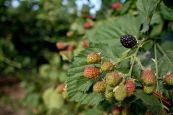
Farmers and ranchers rely on crop insurance to protect themselves from disasters and unforeseen events, but not all crops are insurable through the USDA’s Risk Management Agency. The Farm Service Agency’s (FSA) Noninsured Crop Disaster Assistance Program (NAP) provides producers another option to obtain coverage against disaster for these crops. NAP provides financial assistance to producers of non-insurable crops impacted by natural disasters that result in lower yields, crop losses, or prevents crop planting.
Commercially produced crops and agricultural commodities for which crop insurance is not available are generally eligible for NAP. Eligible crops include those grown specifically for food, fiber, livestock consumption, biofuel or biobased products, or value loss crops such as aquaculture, Christmas trees, ornamental nursery, and others. Contact your local FSA office to see which crops are eligible in your state and county.
Eligible causes of loss include drought, freeze, hail, excessive moisture, excessive wind or hurricanes, earthquake and flood. These events must occur during the NAP policy coverage period, before or during harvest, and the disaster must directly affect the eligible crop. For guidance on causes of loss not listed, contact your local FSA county office.
Interested producers apply for NAP coverage using FSA form CCC-471, “Application for Coverage,” and pay the applicable service fee at the FSA office where their farm records are maintained. These must be filed by the application closing date, which varies by crop. Contact your local FSA office to verify application closing dates and ensure coverage for eligible NAP crops.
At the time of application, each producer acknowledges they have received the NAP Basic Provisions, which describes NAP requirements for coverage. NAP participants must report crop acreage shortly after planting and provide verifiable or reliable crop production records when required by FSA.
Producers are required to pay service fees which vary depending on the number of crops and number of counties your operation is located in. The NAP service fee is the lesser of $325 per crop or $825 per producer per administrative county, not to exceed a total of $1,950 for a producer with farming interests in multiple counties. Premiums also apply when producers elect higher levels of coverage with a maximum premium of $15,750 per person or legal entity.
A producer’s certification on Form CCC-860 Socially Disadvantaged, Limited Resource, Beginning and Veteran Farmer or Rancher Certification may serve as an application for basic NAP coverage for all eligible crops beginning with crop year 2022. These producers will have all NAP-related service fees for basic coverage waived, in addition to a 50 percent premium reduction if higher levels of coverage are elected.
For more detailed information on NAP, download the NAP Fact Sheet. To get started with NAP, we recommend you contact your local USDA service center.
|
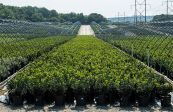
The USDA’s Risk Management Agency (RMA) reminds Florida Nursery Value Select growers that the final date to apply for crop insurance coverage for the 2024 crop year is May 1. Current policyholders who wish to make changes to their existing coverage also have until the May 1 sales closing date to do so. Growers applying for the first time may purchase coverage at any time.
Federal crop insurance is critical to the farm safety net. It helps producers and owners manage revenue risks and strengthens the rural economy. Coverage is available for Nursery Value Select in select Florida counties. Please contact your insurance agent to see if your county is covered. Coverage begins 30 days after receipt of a signed application and approval of required documents.
For Nursery Value Select coverage, a Nursery Value Report, Monthly Unit Value Plan, and two copies of the grower’s most recent catalog are required. More information on nursery crop insurance is available at RMA's Nursery Policy Web Page.
Growers are encouraged to visit their crop insurance agent soon to learn specific details for the 2023 crop year.
Crop insurance is sold and delivered solely through private crop insurance agents. A list of crop insurance agents is available online using the RMA Agent Locator. Producers can use the RMA Cost Estimator to get a premium amount estimate of their insurance needs online. Learn more about crop insurance and the modern farm safety net at www.rma.usda.gov.
|

The newly updated Lab Data Mart website brings valuable soil data to the public’s fingertips through a user-friendly, state-of-the-art interactive map. Architects, educators, engineers, farmers, landowners, researchers, scientists, and anyone looking to learn more about their soil can access the latest data to make more informed decisions and reduce potential soil risks and hazards. Understanding your specific soil and its dynamic properties, which can change over time due to human impacts, land management, and climate change, can be invaluable. Learn more.
|
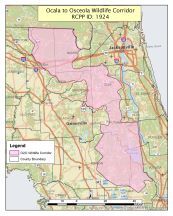
Florida landowners interested in aligning their land uses with conservation values have an opportunity to apply for a conservation easement program in partnership with the U.S. Department of Agriculture (USDA), Natural Resources Conservation Service (NRCS) and the North Florida Land Trust (NFLT) beginning April 17.
Applications for the fiscal year 2023 NRCS Regional Conservation Partnership Program (RCPP) US Held Easements will be accepted and evaluated by NRCS and NFLT through June 16, 2023. NFLT and NRCS accept conservation easement applications year-round; however, applications received after June 16th, 2023, will be considered for the following fiscal year, as funding allows.
The RCPP is a partner-driven approach to conservation that funds solutions to natural resource challenges on agricultural land. The RCPP promotes coordination of NRCS conservation activities with partners that offer value-added contributions to expand our collective ability to address on-farm, watershed, and regional natural resource concerns.
The NFLT is leading this RCPP project to protect the Ocala to Osceola Wildlife Corridor. The O2O Wildlife Corridor (O2O) is a 100-mile-long, 1.6-million-acre, landscape of public and private lands that connect the Ocala and Osceola National Forests. The O2O includes priority lands for the Florida Ecological Greenways Network (FEGN) and is a significant part of the Florida Wildlife Corridor. By protecting this system of natural landscapes and connector lands, the O2O will continue to provide habitat for Florida black bears and imperiled species like the red-cockaded woodpecker, indigo snake, and gopher tortoise. In addition, there are opportunities for protecting iconic Florida ecosystems, including longleaf pine forests, sandhills, and scrub in the O2O.
As part of this initiative, NRCS and its partners have funding through the RCPP to pay landowners for conservation easements placed upon their land. NRCS will be responsible for screening for land eligibility, coordinating appropriately to determine the proper entity holder, coordinating with landowners to develop conservation easement project applications, negotiating conservation easement terms, and developing a land management plan. Due to the complex nature of conservation easement projects, landowners interested in this funding are strongly encouraged to contact NRCS to discuss this funding option prior to submitting an application.
|

USDA’s Natural Resources Conservation Service can help you conserve water and build resilience to drought, through conservation practices that improve irrigation efficiency, boost soil health, and manage grazing lands.
Irrigation Efficiency
USDA helps you improve your irrigation efficiency to ensure each drop of water is used wisely. Saving water on your farm can help during drought and can offset rising water costs; reduce expenditures for energy, chemicals, and labor; and enhance revenues through higher crop yields and improved crop quality. Funded conservation practices include conversion to more efficient irrigation systems, such as micro-irrigation or subsurface drip irrigation, installation of irrigation pipeline, irrigation water management, structures for water control, and flow meters. Tools like drip irrigation, which provides water precisely where and when it’s needed, can achieve greater precision with flow meters and soil moisture sensors.
Soil Health
In addition, soil health conservation practices, such as reduced- or no-till, cover crops, mulching and residue management can help to make your soil, and the plants you grow or animals you raise, healthier. Healthier soil can absorb and retain more water for longer periods of time, making your farm or ranch more resilient to drought. Using soil health practices, you can conserve water by increasing your soil’s water-holding capacity and use conservation tillage to keep the ground covered, reducing water loss through transpiration and evaporation.
And soil health practices increase organic matter, and each pound of organic matter can hold up to 20 pounds of water. Every 1% increase in organic matter results in as much as 25,000 gallons of soil water per acre. Each 1% increase in organic matter can also provide up to 30 pounds of more available nitrogen per acre. That means less money and time spent on inputs like water and fertilizer, which make your operation more profitable.
Rotational/Prescribed Grazing, Water Sources for Livestock
Drought also impacts grazing lands, and NRCS works with you to increase the resilience of your livestock operation. Ranchers can adapt to dry conditions in two main ways: increasing the availability and suitability of forage and ensuring that cattle have an adequate and reliable source of water. For forage, rotational or prescribed grazing (rotating cattle among pastures) can relieve pressure on stressed vegetation and ensure a more consistent supply of forage for animals. NRCS conservationists can also work with you to plant more drought-tolerant forage species, plants best suited to local soils and conditions. For reliable sources of water, NRCS can help you with installing watering facilities, water wells, or water pipeline for livestock. Having available forage and water for livestock can make a big difference in difficult drought conditions.
USDA and NRCS are here for you, helping you recover from drought and prepare for the next one. For more information on drought recovery assistance at farmers.gov/protection-recovery/drought#recovery. For more information on conservation practices to make your operation more resilient to drought in future years, go to www.nrcs.usda.gov.
|
 |
|
A multi-agency guide for USDA assistance for underserved farmers and ranchers is now available. If you are a farmer or rancher and are a minority, woman, veteran, beginning, or limited resource producer, you can use this booklet to learn about assistance and targeted opportunities available to you. This includes programs offered through the Farm Service Agency, Natural Resources Conservation Service, and Risk Management Agency. Download the guide here. The guide is also available in Spanish, Hmong, Korean, Vietnamese, Thai and Chinese on farmers.gov/translations. |

USDA’s Farm Service Agency (FSA) has implemented pre-authorized debit (PAD) for Farm Loan Program (FLP) borrowers. PAD is a voluntary and alternative method for making weekly, bi-weekly, monthly, quarterly, semi-annual or annual payments on loans.
PAD payments are pre-authorized transactions that allow the National Financial and Accounting Operations Center (NFAOC) to electronically collect loan payments from a customer’s account at a financial institution.
PAD may be useful if you use nonfarm income from regular wages or salary to make payments on loans or adjustment offers or for payments from seasonal produce stands. PAD can only be established for future payments.
To request PAD, customers, along with their financial institution, must fill out form RD 3550-28. This form has no expiration date, but a separate form RD 3550-28 must be completed for each loan to which payments are to be applied. A fillable form can be accessed on the USDA Rural Development (RD) website at rd.usda.gov/publications/regulations-guidelines. Click forms and search for “Form 3550-28.”
If you have a “filter” on the account at your financial institution, you will need to provide the financial institution with the following information: Origination ID: 1220040804, Agency Name: USDA RD DCFO.
PAD is offered by FSA at no cost. Check with your financial institution to discuss any potential cost. Preauthorized debit has no expiration date, but you can cancel at any time by submitting a written request to your local FSA office. If a preauthorized debit agreement receives three payment rejections within a three-month period, the preauthorized debit agreement will be cancelled by FSA. The payment amount and due date of your loan is not affected by a cancellation of preauthorized debit. You are responsible to ensure your full payment is made by the due date.
For more information about PAD, contact your local USDA Service Center.
|
FSA guaranteed loans allow lenders to provide agricultural credit to farmers who do not meet the lender's normal underwriting criteria. Farmers and ranchers apply for a guaranteed loan through a lender, and the lender arranges for the guarantee. FSA can guarantee up to 95 percent of the loss of principal and interest on a loan. Guaranteed loans can be used for both farm ownership and operating purposes.
Guaranteed farm ownership loans can be used to purchase farmland, construct or repair buildings, develop farmland to promote soil and water conservation or to refinance debt.
Guaranteed operating loans can be used to purchase livestock, farm equipment, feed, seed, fuel, farm chemicals, insurance and other operating expenses.
FSA can guarantee farm ownership and operating loans up to $2,037,000. Repayment terms vary depending on the type of loan, collateral and the producer's ability to repay the loan. Operating loans are normally repaid within seven years and farm ownership loans are not to exceed 40 years.
For more information on guaranteed loans, contact your local USDA Service Center.
If you are a farmer or rancher, or have agricultural or business experience, join us in supporting the next generation and in investing in your local community. Your experiences and knowledge as a business owner, agricultural professional, or farmer can provide vital support to your community.
SCORE – score.org - the nation's largest network of volunteer, expert business mentors, is looking to expand the field of available agricultural mentors and provide free business mentoring to farmers, ranchers, and other agricultural and rural business owners.
SCORE is currently looking for volunteers with experience in an agriculture-related field who would like to become part of an extended field of volunteers. The organization’s Orientation and Mentoring Certification program provides volunteers with everything needed to be a successful volunteer. Training includes background about SCORE’s mission and services, as well as guidance on how to be a business mentor, including enhancement of listening, interviewing and problem-solving skills.
Current mentors have backgrounds in finance, accounting, marketing, operations, business and financial planning. The mentors provide local expertise and free one-on-one business mentoring to new and existing farmers and business owners. Together they work through the process of starting or maintaining agricultural and rural businesses. No matter what stage a business is in, SCORE volunteer mentors can help in developing business plans, navigating financing and legal issues, identifying new markets, and other topics, in order to help their clients succeed.
Learn more and sign up to become a mentor today at score.org/usda.
May 1 - EXTENDED deadline to file a LIP application for payment for losses from Hurricane Ian
May 22 - EXTENDED ECP application deadline for Brevard, Broward, Charlotte, Clay, Collier, DeSoto, Flagler, Glades, Hardee, Hendry, Highlands, Hillsborough, Indian River, Lake, Lee, Manatee, Martin, Okeechobee, Orange, Osceola, Palm Beach, Polk, Putnam, Sarasota, Seminole, St. Johns, St. Lucie, and Volusia.
June 2 - Pandemic Assistance Revenue Program (PARP)
June 2 - Emergency Relief Program (ERP) Phase Two
| Farm Operating - Direct |
4.750% |
| Farm Operating - Microloan |
4.750% |
| Farm Ownership - Direct |
4.875% |
| Farm Ownership - Microloan |
4.875% |
| Farm Ownership - Direct, Joint Financing |
2.875% |
| Farm Ownership - Down Payment |
1.500% |
| Emergency Loan - Amount of Actual Loss |
3.750% |
|