-
April 7: Conservation Reserve Program (CRP) – General Signup
-
April 30: 2022 Census of Agriculture
-
May 29: Memorial Day - Office's Closed
-
June 2: Pandemic Assistance Revenue Program (PARP) Deadline
-
June 2: Emergency Relief Program (ERP) Phase Two Deadline
-
June 19: Juneteenth Day - Office's Closed
Click here to learn more about local deadlines and ongoing programs.
Producers with farmers.gov accounts can now access farm records and maps online, the latest self-service feature added to the U.S. Department of Agriculture (USDA) website.
You can quickly and easily access your land information in real time by desktop computer, tablet or phone. Capabilities include:
- View, print and export detailed farm records such as cropland, base acres, yields, CRP acres, land ownership details, and much more;
- View, print and export farm/tract maps that can be provided to lenders, chemical or fertilizer providers, and FSA for reporting acreage and crop insurance agents; and
- Export common land unit (field) boundaries as ESRI shapefiles.
The ability to access these records on demand without a visit to the service center saves you time and money.
Farmers.gov now includes the most popular functionalities from FSAFarm+, the FSA portal for producers, while providing enhanced functionality and an improved user experience. A new enhancement expands the scope of accessibility to include farmers and ranchers who are members of an entity, as well as people with a power of attorney form (FSA-211) on file with FSA.
Managing USDA Business Online
Using farmers.gov, producers, entities and those acting on their behalf can also:
- View, upload, download, and e-sign conservation documents.
- Request financial assistance, including submitting a program application.
- View and submit conservation requests.
- View technical references and submit questions.
- Access information on current and past conservation practices, plans and contracts.
- Report practice completion and request practice certification.
- View farm loan and interest information (producers only).
Future plans include adding the ability to import and view other shapefiles, such as precision agriculture planting boundaries.
To access your information, you’ll will need a USDA eAuth account to login to farmers.gov. After obtaining an eAuth account, producers should visit farmers.gov and sign into the site’s authenticated portal via the Sign In/Sign Up link at the top right of the website. Google Chrome, Mozilla Firefox or Microsoft Edge are the recommended browsers to access the feature.
In addition to the self-service features available by logging into farmers.gov, the website also has ample information on USDA programs, including pandemic assistance, farm loans, disaster assistance, conservation programs and crop insurance. Recently, USDA updated the navigation and organization of the site as well as added some new webpages, including “Get Involved,” “Common Forms,” and “Translations.” Learn more about these changes.
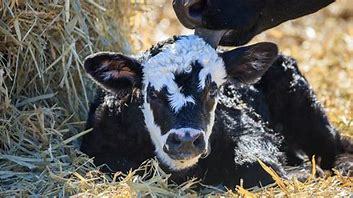
The Livestock Indemnity Program (LIP) provides assistance to you for livestock deaths in excess of normal mortality caused by adverse weather, disease and attacks by animals reintroduced into the wild by the federal government or protected by federal law.
For disease losses, FSA county committees can accept veterinarian certifications that livestock deaths were directly related to adverse weather and unpreventable through good animal husbandry and management.
For 2023 livestock losses, you must file a notice within 30 calendar days of when the loss is first apparent. You then must provide the following supporting documentation to your local FSA office no later than 60 calendar days after the end of the calendar year in which the eligible loss condition occurred.
- Proof of death documentation
- Copy of grower’s contracts
- Proof of normal mortality documentation
USDA has established normal mortality rates for each type and weight range of eligible livestock, i.e. Adult Beef Cow = 1.5% and Non-Adult Beef Cattle (less than 400 pounds) = 3.9% (400 pounds and over) = 2%. These established percentages reflect losses that are considered expected or typical under “normal” conditions.
In addition to filing a notice of loss, you must also submit an application for payment by March 1, 2024.
For more information, contact your local County USDA Service Center or visit fsa.usda.gov.
|
Signup began January 23 for additional emergency relief from the U.S. Department of Agriculture (USDA) through the Emergency Relief Program (ERP) Phase Two.
To be eligible for Phase Two, producers must have suffered a decrease in allowable gross revenue in 2020 or 2021 due to necessary expenses related to losses of eligible crops from a qualifying natural disaster event. Eligible crops include both traditional insurable commodities and specialty crops that are produced in the United States as part of a farming operation and are intended to be commercially marketed. This also includes losses of eligible on-farm stored commodities. ERP Phase 2 applicants will use the following tax years when selecting allowable gross revenue:
- Benchmark years: 2018 and/or 2019; estimated for new producers with no 2018 or 2019 revenue or adjusted if the benchmark years are not representative of the disaster year due to a change in operation size.
- Disaster years: 2020 and/or 2021. The allowable gross revenue for the specific disaster year will be based on the tax yearapplicable to that revenue (2020, 2021 or 2022).
The ERP tool assists producers in calculating allowable gross revenue, as well as adjusted revenue for the benchmark years 2018 and 2019, and allowable gross revenue for representative tax years 2020-2022 which represent disaster years 2020 and 2021. Once producers complete the allowable gross revenue entries, they are able to print forms FSA-521 and FSA-521A through this tool.
The ERP Phase 2 and PARP application period is open from January 23 through June 2 2023.
For more information on payment calculations, payment limitations or how to determine allowable gross revenue, please reference the ERP Phase 2 fact sheet.
The Pandemic Assistance Revenue Program (PARP) will assist eligible producers of agricultural commodities who experienced revenue decreases in calendar year 2020 compared to 2018 or 2019 due to the COVID-19 pandemic. PARP will help address gaps in previous pandemic assistance, which was targeted at price loss or lack of market access, rather than overall revenue losses.
USDA's Farm Service Agency will accept PARP applications from January 23, 2023, through June 2, 2023.
Eligible and Ineligible Commodities
For PARP, eligible agricultural commodities include crops, aquaculture, livestock, livestock byproducts, or other animals or animal byproducts that are produced as part of a farming operation and are intended to be commercially marketed. This includes only commodities produced in the United States or those produced outside the United States by a producer located in the United States and marketed inside the United States.
The following commodities are not eligible for PARP:
- Wild free-roaming animals.
- Horses and other animals used or intended to be used for racing or wagering.
- Aquatic species that do not meet the definition of aquaculture.
-
Cannabis sativa L. and any part of that plant that does not meet the definition of hemp.
- Timber.
Program Eligibility
PARP payments will be made on a whole-farm basis, not commodity-by-commodity. To be eligible for PARP, an agricultural producer must have been in the business of farming during at least part of the 2020 calendar year and must have experienced a 15 percent decrease in allowable gross revenue in 2020, as compared to either:
- The 2018 or 2019 calendar year, as elected by the producer, if they received allowable gross revenue during the 2018 or 2019 calendar years, or
- The producer’s expected 2020 calendar year allowable gross revenue, if the producer had no allowable gross revenue in 2018 or 2019.
PARP payments will be issued after the application period ends on June 2, 2023.
For more information on determining allowable gross revenue visit farmers.gov/coronavirus/pandemic-assistance/parp or review the PARP fact sheet.
More Information
To apply for PARP, contact your local USDA Service Center.
The Farm Service Agency (FSA) is accepting offers for specific conservation practices under the Conservation Reserve Program (CRP) Continuous Signup.
In exchange for a yearly rental payment, farmers enrolled in the program agree to remove environmentally sensitive land from agricultural production and to plant species that will improve environmental health and quality. The program’s long-term goal is to re-establish valuable land cover to improve water quality, prevent soil erosion, and reduce loss of wildlife habitat. Contracts for land enrolled in CRP are 10-15 years in length.
Under continuous CRP signup, environmentally sensitive land devoted to certain conservation practices can be enrolled in CRP at any time. Offers for continuous enrollment are not subject to competitive bidding during specific periods. Instead they are automatically accepted provided the land and producer meet certain eligibility requirements and the enrollment levels do not exceed the statutory cap.
For more information, including a list of acceptable practices, contact your local County USDA Service Center or visit fsa.usda.gov/crp.
If loan grain has been disposed of through feeding, selling or any other form of disposal without prior written authorization from the county office staff, it is considered unauthorized disposition. The financial penalties for unauthorized dispositions are severe and your name will be placed on a loan violation list for a two-year period. Always call before you haul any grain under loan. |
|
 |
Farmers and ranchers in Idaho still have time to be counted in the 2022 Census of Agriculture, according to the U.S. Department of Agriculture's (USDA) National Agricultural Statistics Service (NASS). Although the deadline for submitting the ag census has just passed, NASS will continue to accept completed census questionnaires through the spring to ensure all farmers and ranchers take advantage of the opportunity to be represented in the widely used data.
"I can’t express enough my gratitude to those who have taken time out of their busy schedule to complete their Census form, and also can’t emphasize enough the importance for all Idaho ag producers to take part in representing their industry.” said Ben Johnson, Idaho State Statistician. "The data provided will be a valuable piece of history and will inform decisions that will help shape the future of American agriculture for the next five or six years."
NASS will continue to follow up with Idaho producers through the spring with mailings, phone calls, and personal visits. Farmers and ranchers are encouraged to complete their ag census either online at agcounts.usda.gov or by mail as soon as possible.
Federal law under Title 7 USC 2204(g) Public Law 105-113 mandates that everyone who received the 2022 Census of Agriculture questionnaire complete and return it, even if they are not currently farming. The same law requires NASS to keep all submissions confidential, use the information for statistical purposes only, and publish aggregate data to prevent disclosing the identity of any individual producer or farm operation.
NASS will release the results of the ag census in early 2024. To learn more about the Census of Agriculture, visit nass.usda.gov/AgCensus. On the website, producers and other data users can access frequently asked questions, past ag census data, special study information, and more. For highlights of these and the latest information, follow USDA NASS on Twitter at @usda_nass.
Farm Service Agency (FSA) borrowers with farms located in designated primary or contiguous disaster areas who are unable to make their scheduled FSA loan payments should consider the Disaster Set-Aside (DSA) program.
DSA is available to producers who suffered losses as a result of a natural disaster and relieves immediate and temporary financial stress. FSA is authorized to consider setting aside the portion of a payment/s needed for the operation to continue on a viable scale.
Borrowers must have at least two years left on the term of their loan in order to qualify.
Borrowers have eight months from the date of the disaster designation to submit a complete application. The application must include a written request for DSA signed by all parties liable for the debt along with production records and financial history for the operating year in which the disaster occurred. FSA may request additional information from the borrower in order to determine eligibility.
All farm loans must be current or less than 90 days past due at the time the DSA application is complete. Borrowers may not set aside more than one installment on each loan.
The amount set-aside, including interest accrued on the principal portion of the set-aside, is due on or before the final due date of the loan.
For more information, contact your local County USDA Service Center or visit fsa.usda.gov.
|