|
|
Orange/Madison/Greene/Culpeper/Rappahannock New Upadates - Apr. 2023
|
|
|
|
Farm Service Agency | Natural Resources Conservation Service | Risk Management Agency
|
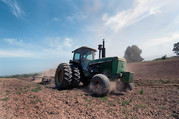
The term “sodbusting” is used to identify the conversion of land from native vegetation to commodity crop production after December 23, 1985. As part of the conservation provisions of the Food Security Act of 1985, if you’re proposing to produce agricultural commodities (crops that require annual tillage including one pass planting operations and sugar cane) on land that has been determined highly erodible and that has no crop history prior to December 23, 1985, that land must be farmed in accordance with a conservation plan or system that ensures no substantial increase in soil erosion.
Eligibility for many USDA programs requires compliance with a conservation plan or system on highly erodible land (HEL) used for the production of agricultural commodities. This includes Farm Service Agency (FSA) loan, disaster assistance, safety net, price support, and conservation programs; Natural Resources Conservation Service (NRCS) conservation programs; and Risk Management Agency (RMA) Federal crop insurance.
Before you clear or prepare areas not presently under production for crops that require annual tillage, you are required to file Form AD-1026 “Highly Erodible Land Conservation and Wetland Conservation Certification,” with FSA indicating the area to be brought into production. The notification will be referred to NRCS to determine if the field is considered highly erodible land. If the field is considered HEL, you are required to implement a conservation plan or system that limits the erosion to the tolerable soil loss (T) for the predominant HEL soil on those fields.
In addition, prior to removing trees or conducting any other land manipulations that may affect wetlands, remember to update form AD-1026, to ensure you remain in compliance with the wetland conservation provisions.
Prior to purchasing or renting new cropland acres, it is recommended that you check with your local USDA Service Center to ensure your activities will be in compliance with the highly erodible land and wetland conservation provisions.
For additional information on highly erodible land conservation and wetland conservation compliance, contact your local USDA Service Center.
|

Beginning January 23, 2023, agricultural producers can begin to apply for two new important programs for revenue losses, from 2020 and 2021 natural disasters or the COVID-19 pandemic. Both programs equitably fill gaps in earlier assistance.
First, you may be eligible for assistance through the Emergency Relief Program (ERP) Phase Two if you experienced revenue losses from eligible natural disasters in 2020 and 2021.
You may also be eligible for the Pandemic Assistance Revenue Program (PARP) if you experienced revenue losses in calendar year 2020. PARP is addressing gaps in previous pandemic assistance, which was targeted at price loss or lack of market access, rather than overall revenue losses.
Applications for both new programs are due June 2, 2023, and you can apply for both programs during your same appointment with USDA’s Farm Service Agency (FSA).
Historically, FSA programs have been designed to make direct payments to producers based on a single disaster event or for a single commodity loss. For many of you, this may be the first revenue-based program that you’ve applied for with FSA.
Why revenue-based programs?
ERP Phase Two and PARP take a much more holistic approach to disaster assistance, ensuring that producers not just make it through a single growing season but have the financial stability to invest in the long-term well-being of their operations and employees.
In general, ERP Phase Two payments are based on the difference in allowable gross revenue between a benchmark year, representing a typical year of revenue for the producer and the disaster year – designed to target the remaining needs of producers impacted by qualifying natural disasters and avoid duplicative payments. ERP Phase Two revenue loss is based on tax years.
For PARP, an agricultural producer must have been in the business of farming during at least part of the 2020 calendar year and had a decrease in revenue for the 2020 calendar year, as compared to a typical year. PARP revenue loss is based on calendar years.
How to Apply
In preparation for enrollment, producers should gather supporting documentation including:
- Schedule F (Form 1040); and
-
Profit or Loss from Farming or similar tax documents for tax years 2018, 2019, 2020, 2021 and 2022 for ERP and for calendar years 2018, 2019 and 2020 for PARP.
Producers should also have, or be prepared to have, the following forms on file for both ERP and PARP program participation:
- Form AD-2047, Customer Data Worksheet (as applicable to the program participant);
- Form CCC-902, Farm Operating Plan for an individual or legal entity;
- Form CCC-901, Member Information for Legal Entities (if applicable); and
- Form AD-1026 Highly Erodible Land Conservation (HELC) and Wetland Conservation (WC) Certification.
- Form CCC-860, Socially Disadvantaged, Limited Resource, Beginning and Veteran Farmer or Rancher Certification, as certain existing permanent and ad-hoc disaster programs provide increased benefits or reduced fees and premiums.
Most producers, especially those who have previously participated in FSA programs, will likely have these required forms on file. However, those who are uncertain or want to confirm should contact FSA at their local USDA Service Center.
Yes, FSA is stepping outside of the box.
FSA is a big proponent of agricultural producers having a say in the design, implementation and delivery of the programs that directly impact their livelihoods. We also believe that some of the most creative and useful ideas for program and process improvements come from the FSA employees who administer this assistance through our network of more than 2,100 county offices. We want to thank producers across the country, along with the entire FSA workforce, for not just thinking outside of the box but also providing their input to make sure that we can improve and enhance our programs and our approach to assistance to better and more efficiently serve all producers who need our help.
Please visit your local USDA Service Center for more information on ERP Phase Two, PARP and our full portfolio of conservation, prices support, safety-net, credit and disaster assistance programs.
|
The U.S. Department of Agriculture (USDA) today announced that beginning in April it will provide approximately $123 million in additional, automatic financial assistance for qualifying farm loan program borrowers who are facing financial risk, as part of the $3.1 billion to help distressed farm loan borrowers that was provided through Section 22006 of the Inflation Reduction Act (IRA). The announcement builds on financial assistance offered to borrowers through the same program in October 2022.
The IRA directed USDA to expedite assistance to distressed borrowers of direct or guaranteed loans administered by USDA’s Farm Service Agency (FSA) whose operations face financial risk. For example, in the October payments, farmers that were 60 days delinquent due to challenges like natural disasters, the pandemic or other unexpected situations were brought current and had their next installment paid to give them breathing room.
In October 2022, USDA provided approximately $800 million in initial IRA assistance to more than 11,000 delinquent direct and guaranteed borrowers and approximately 2,100 borrowers who had their farms liquidated and still had remaining debt. USDA shared that it would conduct case-by-case reviews of about 1,600 complex cases for potential initial relief payments, including cases of borrowers in foreclosure or bankruptcy. These case-by-case reviews are underway.
At the same time in October 2022, USDA announced that it anticipated payments using separate pandemic relief funding totaling roughly $66 million on over 7,000 direct loans to borrowers who used the USDA Farm Service Agency’s disaster-set-aside option during the COVID-19 pandemic. The majority of these payments have been processed and USDA anticipates it will complete all such payments in April 2023.
New Assistance for Distressed Borrowers
FSA intends to provide the new round of relief starting in April to additional distressed borrowers. This will include approximately $123 million in automatic financial assistance for qualifying Farm Loan Program (FLP) direct loan borrowers who meet certain criteria. Similar to the automatic payments announced in October 2022, qualifying borrowers will receive an individual letter detailing the assistance as payments are made. Distressed borrowers’ eligibility for these new categories of automatic payments will be determined based on their circumstances as of today. More information about the new categories that make up the $123 million in assistance announced today and the specific amount of assistance a distressed borrower receives can be found described in this fact sheet, IRA Section 22006: Additional Automatic Payments, Improved Procedures, and Policy Recommendations.
To continue to make sure producers are aware of relief potentially available to them, all producers with open FLP loans will receive a letter detailing a new opportunity to receive assistance if they took certain extraordinary measures to avoid delinquency on their FLP loans, such as taking on more debt, selling property or cashing out retirement accounts. The letter will provide details on eligibility, the specific types of actions that may qualify for assistance, and the process for applying for and providing the documentation to seek that assistance.
These steps are part of a process USDA announced along with the October payments that is focused on assisting borrowers unable to make their next scheduled installment. Earlier this year, all borrowers should have received a letter detailing the process for seeking this type of assistance even before they become delinquent. Borrowers who are within two months of their next installment may seek a cashflow analysis from FSA using a recent balance sheet and operating plan to determine their eligibility.
Tax Resources
USDA will continue to work with the Department of Treasury to help borrowers understand the potential tax implications from the receipt of an IRA payment, including that options may be available to potentially avoid or alleviate any tax burden incurred as a result of receiving this financial assistance.
In early April, USDA will send a specific set of revised tax documents, educational materials and resources to borrowers that received assistance in 2022, including a link to a webinar hosted by a group of farm tax experts to provide education on the options available. USDA cannot provide tax advice and encourages borrowers to consult their own tax professional, but FSA is providing educational materials for borrowers to be aware of the options. USDA has tax-related resources available at farmers.gov/taxes.
Improved Procedures and Policy Recommendations
FSA is finalizing changes to its policy handbooks to remove unnecessary hurdles, improve loan making and loan servicing and provide more flexibility on how loans are structured to maximize the opportunities for borrowers. Additional details on those changes can be found in the linked fact sheet and are the start of a broader set of process enhancements. The fact sheet also provides information on the eight, no-cost legislative proposals included in the Fiscal Year 2024 President’s Budget that are designed to improve the borrower experience.
|

The Virginia Forest and Grassland Council will stage a Basic Grazing School on May 2 and 3 at the Rapidan River Ranch near Madison. The event is formatted to be of special assistance to producers in their initial years as livestock owners and farmers transitioning from traditional to advanced grazing management, but there’s likely to be something on the two-day agenda that pertains to just about every operation.
Topics to be discussed include Pasture and Grazing Management; Soils and Fertility; How to Implement Rotational Grazing; Electric Fencing; Nutrition for Forage Animals and Extending Your Grazing Seasons. Among the scheduled presenters is J.B. Daniel, NRCS Virginia’s state grassland agronomist. Also on the speakers’ list are former VFGC President Keith Tuck, Chesapeake Bay Foundation field technician Alston Horn and Matt Booher and Brad Jarvis, both of Virginia Cooperative Extension.
The course will be limited to 25 participants and the fee of $150 includes meals. For more information, directions to the site and access to registration forms, visit vaforages.org/events.
|
|
|
|
|
325B Madison Road
Orange, VA 22960
Phone: 540-672-1638
Fax: 855-616-1654
|
|