|
Table Of Contents
Violence seems to play a big role in our daily news cycle. With that being said, the number one priority of this USDA administration is to make sure our employees and customers are safe. I want to remind all of our employees to please refresh themselves on all safety protocols and to institute any security measures deemed necessary. And for our customers, some of these safety precautions might seem cumbersome to you, but I assure you that they are implemented with your safety as our priority.
Producers are firing up into the busy time of Spring. I know this is a high-pressure time of year, but be careful around your machines and please take the time to do the proper maintenance. Break downs in the middle of a field, when you are by yourself and under a lot of pressure to get things done, creates an environment of pure danger. My biggest worry along the front range where we farm is the machines becoming unhitched from the tractors and getting flat tires while we are transporting up and down these traffic filled highways.
Be prepared, be careful, BE SAFE. Have a great month.
KP

The Farm Service Agency is accepting applications for the following positions. Interested individuals may apply using the below links to USAJOBS
-
Upcoming Announcements
The following announcements will be coming soon. Be watching USAJobs for these announcements:
- Farm Loan Officer Trainee vacancy in Logan County
- Farm Loan Officer Trainee vacancy in Montezuma County
- Temporary Program Technician vacancy in Adams County
If you are interested or know of someone who might be interested, please share this information with them. Contact Claudia Drechsel at claudia.drechsel@usda.gov or 720-544-2878 if you have specific questions regarding the positions.
|
Producers with farmers.gov accounts can now access farm records and maps online, the latest self-service feature added to the U.S. Department of Agriculture (USDA) website.
You can quickly and easily access your land information in real time by desktop computer, tablet or phone. Capabilities include:
- View, print and export detailed farm records such as cropland, base acres, yields, CRP acres, land ownership details, and much more;
- View, print and export farm/tract maps that can be provided to lenders, chemical or fertilizer providers, and FSA for reporting acreage and crop insurance agents; and
- Export common land unit (field) boundaries as ESRI shapefiles.
The ability to access these records on demand without a visit to the service center saves you time and money.
Farmers.gov now includes the most popular functionalities from FSAFarm+, the FSA portal for producers, while providing enhanced functionality and an improved user experience. A new enhancement expands the scope of accessibility to include farmers and ranchers who are members of an entity, as well as people with a power of attorney form (FSA-211) on file with FSA.
Managing USDA Business Online
Using farmers.gov, producers, entities and those acting on their behalf can also:
- View, upload, download, and e-sign conservation documents.
- Request financial assistance, including submitting a program application.
- View and submit conservation requests.
- View technical references and submit questions.
- Access information on current and past conservation practices, plans and contracts.
- Report practice completion and request practice certification.
- View farm loan and interest information (producers only).
Future plans include adding the ability to import and view other shapefiles, such as precision agriculture planting boundaries.
To access your information, you’ll will need a USDA eAuth account to login to farmers.gov. After obtaining an eAuth account, producers should visit farmers.gov and sign into the site’s authenticated portal via the Sign In/Sign Up link at the top right of the website. Google Chrome, Mozilla Firefox or Microsoft Edge are the recommended browsers to access the feature.
In addition to the self-service features available by logging into farmers.gov, the website also has ample information on USDA programs, including pandemic assistance, farm loans, disaster assistance, conservation programs and crop insurance. Recently, USDA updated the navigation and organization of the site as well as added some new webpages, including “Get Involved,” “Common Forms,” and “Translations.” Learn more about these changes.
The term “sodbusting” is used to identify the conversion of land from native vegetation to commodity crop production after December 23, 1985. As part of the conservation provisions of the Food Security Act of 1985, if you’re proposing to produce agricultural commodities (crops that require annual tillage including one pass planting operations and sugar cane) on land that has been determined highly erodible and that has no crop history prior to December 23, 1985, that land must be farmed in accordance with a conservation plan or system that ensures no substantial increase in soil erosion.
Eligibility for many USDA programs requires compliance with a conservation plan or system on highly erodible land (HEL) used for the production of agricultural commodities. This includes Farm Service Agency (FSA) loan, disaster assistance, safety net, price support, and conservation programs; Natural Resources Conservation Service (NRCS) conservation programs; and Risk Management Agency (RMA) Federal crop insurance.
Before you clear or prepare areas not presently under production for crops that require annual tillage, you are required to file Form AD-1026 “Highly Erodible Land Conservation and Wetland Conservation Certification,” with FSA indicating the area to be brought into production. The notification will be referred to NRCS to determine if the field is considered highly erodible land. If the field is considered HEL, you are required to implement a conservation plan or system that limits the erosion to the tolerable soil loss (T) for the predominant HEL soil on those fields.
In addition, prior to removing trees or conducting any other land manipulations that may affect wetlands, remember to update form AD-1026, to ensure you remain in compliance with the wetland conservation provisions.
Prior to purchasing or renting new cropland acres, it is recommended that you check with your local USDA Service Center to ensure your activities will be in compliance with the highly erodible land and wetland conservation provisions.
For additional information on highly erodible land conservation and wetland conservation compliance, contact your local USDA Service Center.
The U.S. Department of Agriculture (USDA) has developed a simplified direct loan application to provide improved customer experience for producers applying for loans from the Farm Service Agency (FSA). The simplified direct loan application enables producers to complete a more streamlined application, reduced from 29 to 13 pages. Producers will also have the option to complete an electronic fillable form or prepare a traditional, paper application for submission to their local FSA farm loan office. The paper and electronic versions of the form will be available starting March 1, 2023.
Approximately 26,000 producers submit a direct loan application to the FSA annually, but there is a high rate of incomplete or withdrawn applications, due in part to a challenging and lengthy paper-based application process. Coupled with the Loan Assistance Tool released in October 2022, the simplified application will provide all loan applicants access to information regarding the application process and assist them with gathering the correct documents before they begin the process. This new application will help farmers and ranchers submit complete loan applications and reduce the number of incomplete, rejected, or withdrawn applications.
In October 2022, USDA launched the Loan Assistance Tool, an online step-by-step guide that provides materials to help an applicant prepare their farm loan application in one tool. Farmers can access the Loan Assistance Tool by visiting farmers.gov/farm-loan-assistance-tool and clicking the ‘Get Started’ button. The tool is built to run on any modern browser like Chrome, Edge, Firefox, or the Safari browser. A version compatible with mobile devices is expected to be available by the summer. It does not work in Internet Explorer.
The simplified direct loan application and Loan Assistance Tool are the first of multiple farm loan process improvements that will be available to USDA customers on farmers.gov in the future. Other improvements that are anticipated to launch in 2023 include:
- An interactive online direct loan application that gives customers a paperless and electronic signature option, along with the ability to attach supporting documents such as tax returns.
- An online direct loan repayment feature that relieves borrowers from the necessity of calling, mailing, or visiting a local Service Center to pay a loan installment.
USDA provides access to credit to approximately 115,000 producers who cannot obtain sufficient commercial credit through direct and guaranteed farm loans. With the funds and direction Congress provided in Section 22006 of the Inflation Reduction Act, USDA took action in October 2022 to provide relief to qualifying distressed borrowers while working on making transformational changes to loan servicing so that borrowers are provided the flexibility and opportunities needed to address the inherent risks and unpredictability associated with agricultural operations.
Soon, all direct loan borrowers will receive a letter from USDA describing the circumstances under which additional payments will be made to distressed borrowers and how they can work with their FSA local office to discuss these options. Producers can explore all available options on all FSA loan options at fsa.usda.gov or by contacting their local USDA Service Center.

Filing taxes can be challenging, especially if you are new to USDA programs or running a farm business, or if you are trying to forecast your farm’s tax bill.
To support farmers and ranchers, USDA is partnering with tax experts from across the country to connect producers to information and resources related to taxes and USDA program payments, including those from the Inflation Reduction Act for distressed borrowers. RSVP for webinars or use the new tax estimator tool. Learn More
|
USDA is improving two of its most comprehensive risk management safety net programs, Whole-Farm Revenue Protection (WFRP) and Micro Farm, making them more accessible to America’s agricultural producers. This includes doubling the maximum insurable revenue under WFRP, now $17 million, more than tripling the size of farm operations eligible for Micro Farm, now $350,000 and reducing paperwork requirements for WFRP. These improvements are in direct response to feedback from stakeholders as USDA’s Risk Management Agency (RMA) recognizes the important role these insurance options play for many producers, including specialty crop, organic and direct market producers.
Whole-Farm Revenue Protection
The WFRP program provides protection for all eligible commodities on a farm under one insurance policy. Now, producers can insure up to $17 million in revenue (formerly $8.5 million).
Other updates to WFRP include:
- Allowing a producer to report and self-certify yield at the beginning of the year for commodities without other insurance options in a way similar to those with individual crop policies. This will significantly reduce the amount of paperwork required to apply for WFRP.
- Eliminating expense reporting to reduce paperwork burden. In place of expense reporting, WFRP will reduce the expected revenue of commodities a producer is unable to plant to 60%, similar to prevented planting for other programs.
These updates build on others recently made to WFRP, including expanded coverage and flexibilities for organic producers.
Micro Farm
The Micro Farm program, offered through WFRP, provides a risk management safety net for all eligible commodities on a farm under one insurance policy, but on a smaller scale. Now, producers with farm operations up to $350,000 in approved revenue (formerly $100,000) can get coverage. RMA introduced the new Micro Farm program in 2021 to better serve direct market and small-scale producers. While the program is well received and feedback has been largely positive, industry partners and small, diversified producers have informed RMA that the current limit is too low to meet the needs of many interested producers. In response, the FCIC approved the increase in size for eligible farm operations.
The updates to WFRP and Micro Farm take effect in crop year 2023.
Crop insurance is sold and delivered solely through private crop insurance agents. A list of crop insurance agents is available at all USDA Service Centers and online at the RMA Agent Locator. Learn more about crop insurance and the modern farm safety net at rma.usda.gov.
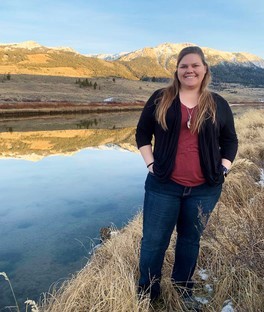
“My work wouldn’t be possible without the ranchers and farmers of Northwest Colorado who are eager and willing to work with NRCS to improve wildlife habitat in the expansive landscape of Moffat County,” ...
Rebecca Burton
The Hugh Hammond Bennett Award for Conservation Excellence recognizes individuals at the local, state, and national level for extraordinary achievements in and contributions to the soil and water conservation movement in the United States. To be recognized is to stand shoulder-to-shoulder with outstanding conservationists across the country. This year Rebecca Burton, Range and Wildlife Conservationist and NRCS Partner Biologist with Pheasants Forever, has been recognized as the Hugh Hammond Bennett Regional Planner of the Year.
READ MORE
|
Be sure to join Rural Development (RD) webinar(s) to hear more about the Value Added Producer Grant Program (VAPG) & how to apply. Tune in on April 11th at 10 AM or April 13th at 1PM.
Grant funds can be used for planning activities or working capital expenses related to producing and marketing a value-added agricultural product.
Planning activities may include conducting feasibility studies and developing business plans. The maximum award for a planning grant is $75,000.
Working capital expenses may include costs associated with processing, marketing, advertising, inventory and salaries. The maximum award for a working capital grant is $250,000.
The deadline to apply for VAPG grants is May 16, 2023. For more information on the VAPG program in Colorado, contact these members on our team: Jessica Akers, Bill Chester, or Robert McElroy.
To Register, Click the session link below:
April 11th Webinar Registration
April 13th Webinar Registration
Applications must be received by 11:59 p.m. Eastern Time on April 27, 2023
The U.S. Department of Agriculture (USDA) is seeking applications for projects that will improve outreach to underserved producers and underserved communities about conservation programs and services and opportunities for students to pursue careers in agriculture, natural resources and related sciences. USDA’s Natural Resources Conservation Service (NRCS) is offering up to $70 million in cooperative agreements with entities for two-year projects that encourage participation in NRCS programs, especially in underserved communities and among urban and small-scale producers.
Who Is Eligible
Entities and individuals who provide outreach assistance to underserved groups are eligible. Eligible entities include:
- Native American tribal governments (Federally recognized)
- Native American tribal governments (State recognized)
- Native American tribal organizations
- Nonprofits having a 501(c)(3) status with the IRS (other than institutions of higher education)
- Nonprofits that do not have a 501(c)(3) status with the IRS (other than institutions of higher education)
- Nonprofit private institutions of higher education
- Public and state-controlled institutions of higher education
- Conservation districts
Underserved producers include beginning, limited resource, socially disadvantaged, and veteran farmers and ranchers, as well as other underrepresented or disadvantaged communities.
LEARN MORE
 More data available at NASS.USDA.GOV
 For more information visit NASS.USDA.GOV
|








