
The deadline recently expired for Agriculture Risk Coverage/Price Loss Coverage (ARC/PLC) program enrollment for 2023. Thanks to everyone for their assistance and patience as we worked to get folks through this process. Please respond to any follow-up calls or emails from our office as we work to finalize program materials.
It’s calving season, which we know can make for some long days and nights. However, please remember that now is a good time to ensure record keeping is a part of your calving process. Records are critical in the event disaster strikes and you need to apply for assistance through the Livestock Indemnity Program. Thorough records help us be able to help you.
Our office currently is accepting applications for two new financial assistance programs, the Emergency Relief Program Phase 2 (ERP 2) and the Pandemic Assistance Revenue Program (PARP). ERP 2 addresses revenue losses from natural disasters in 2020 and 2021. PARP addresses revenue losses in 2020 and is designed to cover gaps in previous pandemic assistance. These are producer certification programs, with most of the information necessary for application completion found in your personal financial records, rather than in FSA databases. We have put together producer information packets as well as recorded an informational video to help you understand these programs. I highly encourage you to look at the materials posted on the Nebraska FSA website homepage, www.fsa.usda.gov/ne. We also have producer information packets available at the office. While the application deadline isn’t for a couple of months, if you are interested in these programs, I encourage you to begin the application process now before you get busy with the activities of Spring.
In closing, March is the month the nation marks the achievements of our farmers and ranchers through National Ag Day, which this year was March 21. Thank you to all those who work so hard in production agriculture. We appreciate you.
That’s all for this month. Enjoy the changing seasons.
-- Raela Brandt
|
April 7, 2023 – Deadline to offer contracts for the Conservation Reserve Program General signup
May 31, 2023 – NRCS deadline to apply for assistance for agricultural land impacted by wildfire through the Environmental Quality Incentives Program
June 2, 2023 – FSA deadline for applications to the Emergency Relief Program Phase 2 (ERP2) and the Pandemic Assistance Revenue Program (PARP)
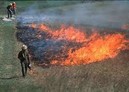
All Conservation Reserve Program (CRP) participants with contracts from 2004 and beyond must complete at least one management activity during the life of the contract.
Management activities must be completed before the end of year six for 10-year contracts or before the end of year nine for contracts with a 15-year contract length. An approved Conservation Plan of Operation will provide information on when the CRP management activity is scheduled during the life of the CRP contract.
Landowners who are due to conduct a management practice should carefully consider all options and plan ahead. Current dry conditions could prevent the use of prescribed burning, depending on local conditions and directives from fire officials. Landowners considering a prescribed burn as a management practice are required to secure a “burn packet,” consisting of a burn plan and burn permit, from their local FSA office ahead of time. The FSA staff also will provide instructions for grass seeding for the areas being inter-seeded.
Management activities create plant diversity for wildlife as well as enhance permanent cover. In addition to prescribed burn and inter-seeding, landowners can choose from the following other appropriate management practices:
- Tillage and inter-seeding;
- Spraying with inter-seeding;
- Haying with inter-seeding; or
- Prescribed grazing with inter-seeding.
Inter-seeding is optional if the existing CRP cover meets plant diversity requirements. If using the broadcast seeding method, the seeding rate should be doubled.
Management activities must be completed outside the primary nesting season. For Nebraska the primary nesting season is May 1 through July 15.
Based on the choice of practice, your local FSA office will furnish the necessary forms to report completion, cost associated with the activity and request for cost-share assistance. CRP participants must complete and sign the FSA-848B and provide necessary paperwork such as bills and seed receipts to receive cost-share assistance for the management activity. Please note for any CRP contract effective October 2018 or later, cost-share for management activities is not authorized.
Please contact the Otoe County FSA office to discuss management practices.
|

The term “sodbusting” is used to identify the conversion of land from native vegetation to commodity crop production after December 23, 1985. As part of the conservation provisions of the Food Security Act of 1985, if you’re proposing to produce agricultural commodities (crops that require annual tillage including one pass planting operations and sugar cane) on land that has been determined highly erodible and that has no crop history prior to December 23, 1985, that land must be farmed in accordance with a conservation plan or system that ensures no substantial increase in soil erosion.
Eligibility for many USDA programs requires compliance with a conservation plan or system on highly erodible land (HEL) used for the production of agricultural commodities. This includes Farm Service Agency (FSA) loan, disaster assistance, safety net, price support, and conservation programs; Natural Resources Conservation Service (NRCS) conservation programs; and Risk Management Agency (RMA) Federal crop insurance.
Before you clear or prepare areas not presently under production for crops that require annual tillage, you are required to file Form AD-1026 “Highly Erodible Land Conservation and Wetland Conservation Certification,” with FSA indicating the area to be brought into production. The notification will be referred to NRCS to determine if the field is considered highly erodible land. If the field is considered HEL, you are required to implement a conservation plan or system that limits the erosion to the tolerable soil loss (T) for the predominant HEL soil on those fields.
In addition, prior to removing trees or conducting any other land manipulations that may affect wetlands, remember to update form AD-1026, to ensure you remain in compliance with the wetland conservation provisions.
Prior to purchasing or renting new cropland acres, it is recommended that you check with your local USDA Service Center to ensure your activities will be in compliance with the highly erodible land and wetland conservation provisions.
For additional information on highly erodible land conservation and wetland conservation compliance, contact your local USDA Service Center.
|

There are options for Farm Service Agency loan customers during financial stress. If you are a borrower who is unable to make payments on a loan, contact your local FSA Farm Loan Manager to learn about the options available to you.
Farmers and ranchers also can access assistance through other entities in Nebraska that offer services during financially challenging times. The Rural Response Hotline provides referral and support services for farmers, ranchers and rural residents and their families. The number to call is (800) 464-0258 or visit the website at https://farmhotline.com.
The Nebraska Department of Agriculture manages the Negotiations Program, which offers mediation services for agricultural borrowers, creditors and USDA program participants. Through this program, participants also can access free one-on-one education on agricultural financial and legal matters. For information, call (402) 471-4876 or visit the website at https://negotiations.nebraska.gov/.
|
OPERATING/OWNERSHIP
Operating: 4.75%
Operating – Microloan: 4.75%
Farm Ownership: 4.875%
Farm Ownership - Joint Financing: 2.875%
Farm Ownership - Down Payment: 1.5%
Emergency - Actual Loss: 3.750%
FARM STORAGE FACILITY LOAN
3-year term: 4%
5-year term: 3.75%
7-year term: 3.75%
10-year term: 3.625%
12-year term: 3.625%
MARKETING ASSISTANCE
Commodity Loan: 5.750%
|
Otoe County USDA Service Center
988 11th Street
Syracuse, NE 68446
Phone: 402-269-2361
Fax: 855-783-1581
|
Farm Service Agency
Raela Brandt
County Executive Director
402-269-2361 x 2
raela.brandt@usda.gov
|
Natural Resources Conservation Service
Michael Burgert
Resource Conservationist
402-269-2361 x 3
michael.burgert@usda.gov
|
|
Farm Service Agency - Farm Loan
Wayne Gansemer
Farm Loan Manager
402-269-2361 x 2
wayne.gansemer@usda.gov
|
Otoe County Office Committee
Arlyn Werner, Chairperson
Neal Niebruegge, Vice Chairperson
Keith Kimbell, Member
Robyn Stubbendick, Advisor
|
|
Next COC Meeting: April 20, 2023 (Subject to Change)
|
|