Manager's Comments
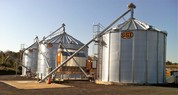
Spring is here but it sure does not feel like it. Winter started early and wants to stay late. It is just a matter of time before the snow will melt and we will be enjoying nice spring days.
Emergency Grain Storage Facility Assistance Program (EGSFP) - Do you need grain storage? Have you been thinking that grain storage will assist your operation? Maybe you are planning to add some grain storage in the next few years. We have the program for you. The Emergency Grain Storage Facility Assistance Program (EGSFP) has recently been announced. This program will provide cost-share assistance of 75% or 90% (historically underserved producers) up to $125,000 for grain storage, drying, augers. To be eligible you needed to produce an eligible commodity in an eligible county in 2022 (West Otter Tail and Wilkin Counties are eligible), demonstrate a need for additional grain storage, and plan to farm for at least 3 more years. If you produced an eligible commodity in Clay County or any other eligible county, you are eligible for this program even if the farm is administered in a different county. Please read the article later in this bulletin which will provide more details about the program including a map of eligible counties. If you are thinking of adding storage, act NOW and apply for assistance through this program. This program is first come first serve.
Conservation Reserve Program (CRP) – Through CRP, farmers and ranchers establish long-term, resource-conserving plant species, such as approved grasses or trees, to control soil erosion, improve water quality, and enhance wildlife habitat on cropland. In return, USDA provides an annual rental payment for land devoted to conservation purposes.
USDA has announced the 2023 General CRP signup period to run from February 27, 2023 to April 7, 2023. Land that is not currently enrolled in CRP or is expiring CRP may be offered for enrollment during General CRP signup 60.
The general sign-up process is conducted on a competitive basis, whereby enrollment offers are scored based on an Environmental Benefits Index (EBI). Producers can improve their individual EBI score by enhancing the existing cover (if offering expiring CRP) or select a grass mixture that is more diverse, if planting a new stand of grass. There are several ways to improve the EBI.
The Continuous CRP Signup is now underway for new offers. Under the continuous CRP signup, environmentally sensitive land devoted to certain conservation practices can be enrolled in CRP at any time. Offers for continuous enrollment are not subject to competitive bidding during specific periods. Instead they are automatically accepted provided the land and producer meet certain eligibility requirements and the enrollment levels do not exceed the statutory cap. A new practice established under the 2018 Farm Bill is CP43 Prairie Strips which could be used on perimeter of fields to replace conservation issues with headlands, irrigation corners, and salinity areas on cropland.
For Continuous Signup, participants may submit offers to re-enroll land beginning April 1, 2023 through July 31, 2023. Participants offering new land only can submit offers anytime. Approved re-enrolled contracts will begin on October 1, 2023 and approved new land contracts can begin on the first day of the month following contract approval.
Farm Records & Other Changes – Producers who are buying, selling, or renting different land must notify the County Office as soon as possible after the transaction. Please provide a copy of the recorded deed for any purchased land. Also, if you will be renting new land, we will need a copy of the lease before we can add you to the farm and/or give you information about the farm such as maps, base acres, yields, etc. FSA is not notified by the county courthouse of these sales. Updating records now will save you time during program signups. If you have changed your bank or bank account, please provide FSA with your updated account as to not miss payments in the future.
Revenue Loss Assistance Programs – Emergency Relief Program (ERP) Phase 2 is a tax year-based certification program that provides assistance for producers that suffered a loss in revenue due to necessary expenses associated with losses of eligible crops (excluding crops intended for grazing), due in whole or in part, to a qualifying disaster event that occurred in the 2020 or 2021 calendar year. Qualifying natural disaster events include wildfires, hurricanes, floods, derechos, excessive heat, winter storms, freeze (including a polar vortex), smoke exposure, excessive moisture, qualifying drought, and related conditions. In general, ERP phase two payments are to be based on the difference in certain farm revenue between a typical year of revenue (2018 or 2019) and the disaster year. Signup will be from January 23 to June 2, 2023.
The second program will be the Pandemic Assistance Revenue Program (PARP). USDA is providing critical support to producers impacted by the effects of the COVID-19 outbreak through the Pandemic Assistance Revenue Program (PARP). PARP provides direct financial assistance to producers of agricultural commodities who suffered at least a 15% loss in gross revenue in calendar year 2020 due to the COVID-19 pandemic. Payments to eligible producers will be based upon a comparison of the producer’s gross revenue from 2020 compared to either 2018 or 2019, as elected by the producer. The Farm Service Agency (FSA) is accepting applications for PARP from January 23 to June 2, 2023.
For additional information: Emergency Relief Program (ERP) and Pandemic Assistance Relief Program (PARP). Information on these programs may be found by clicking the links below or visiting farmers.gov.
Need to upgrade a piece of equipment for handling your commodities? Check out our FSFL Program – Grain carts and trucks, semi-trailers (hopper, live bottom, end dump), bulk tanks, baggers, bale wrappers, skid steers, sugar beet carts, augers, and liquified petroleum tanks are just a few pieces of farm equipment that can be purchased using the FSFL program with FSA along with our traditional bins, dryers and airflow systems. Terms range from 3 to 12 years with very favorable interest rates (3.625% - 4.00%) currently. This is a great program to take advantage of! However, it does have some steps involved so plan accordingly when looking into your project. Contact our office for more details.
Historically Underserved Producers (Socially Disadvantaged, Limited Resource, Beginning and Veteran Farmer or Rancher) – Underserved producers are encouraged to register their status with FSA, using form CCC-860, “Socially Disadvantaged, Limited Resource, Beginning and Veteran Farmer or Rancher Certification”, as certain existing permanent and ad-hoc disaster programs provide increased benefits or reduced fees and premiums. Producers who have not previously certified to their status may submit a new CCC-860 (using the 1-11-23 version) to be eligible for additional program benefits.
Leon Johnson, CED
|
Important Dates and Deadlines:
April 7, 2023 - General CRP Signup Ends
March 15 – Enrollment/Election Period ends for 2023 ARCPLC Program
March 15 – Deadline to Purchase 2023 NAP Coverage for Spring-Seeded Crops
March 31 – Deadline to Apply for a Commodity Loan for 2022-Crop Wheat, Barley,
Oats, Canola, Honey and Flax
May 31 – Deadline to Apply for a Commodity Loan for 2022-Crop Corn, Soybeans,
Sunflowers, & Dry Peas
Ongoing - Continuous CRP Signup
March 2023 Interest Rates
Commodity Loan Rate: 5.750%
Farm Loan Program:
4.750% - Farm Operating Loans, Direct
4.875% - Farm Ownership Loans, Direct
2.875% - Farm Ownership, Joint Financing
1.500% - Farm Ownership Loans, Beginning Farmer Down Payment
Farm Storage Facility Loan Program:
4.000% - Farm Storage Facility Loans, 3-Year
3.750% - Farm Storage Facility Loans, 5-Year
3.750% - Farm Storage Facility Loans, 7-Year
3.625% - Farm Storage Facility Loans, 10-Year
3.625% - Farm Storage Facility Loans, 12-Year
Get a Text From FSA: As we continue to transition to more and more electronic pathways of communication, I encourage you to sign up for our text message alerts. This will assist you with staying on top of all FSA program deadlines. FSA provides text message alerts (no more than 2 per month) for important reminders and deadlines. Don’t miss out on getting these effortless reminders. Let’s get you signed up right now!
- Take out your cell-phone
- Create a new text message, sending MNWestOtterTail or MNWilkin to 372-669
- Hit send
If you did these 3 easy steps, you are signed up to receive text alerts!
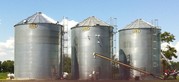
New Program Helps Fill the Need Caused by Damaged Grain Storage Facilities in Kentucky, Minnesota, and South Dakota
Agriculture Secretary Tom Vilsack today announced that producers in counties affected by eligible disaster events in Kentucky, Minnesota, South Dakota, Illinois, Indiana, Iowa, Missouri, North Dakota, and Tennessee can apply for cost-share assistance through the Emergency Grain Storage Facility Assistance Program (EGSFP). The new program provides cost-share assistance for the construction of new grain storage capacity and drying and handling needs, in order to support the orderly marketing of commodities. An initial allocation of $20 million in cost-share assistance is available to agricultural producers in affected counties impacted by the damage to or destruction of large commercial grain elevators as a result of natural disasters from Dec. 1, 2021, to Aug. 1, 2022. The application period opens later this month and closes Dec. 29, 2023.
This assistance from USDA’s Farm Service Agency (FSA) is designed to help producers affected by the December 2021 tornadoes that passed through 11 counties in Kentucky, as well as producers in Illinois, Indiana, Iowa, Minnesota, Missouri, North Dakota, South Dakota, and Tennessee affected by eligible disaster events in 2022. The program was previewed last fall and will be made available with the publication of the Notice in the Federal Register.
Eligibility
Maps showing the location of damaged grain facilities in Kentucky, Minnesota, South Dakota and surrounding eligible areas are available online. These maps depict damaged storage facility locations and the affected counties within a 30-mile radius of these facilities where producers may be eligible to apply for EGSFP benefits if they can demonstrate a need for additional on-farm grain storage capacity.
Additionally, FSA may determine a need for EGSFP assistance in counties in other states and regions during the application period where an eligible disaster event has damaged storage facility locations. Eligible disaster events include hurricanes, tornadoes, floods, derechos, straight-line winds and winter storms that occurred between Dec. 1, 2021, and Aug. 1, 2022.
EGSFP helps producers build permanent or temporary on-farm grain storage capacity, restore existing storage capacity, and purchase drying and handling equipment in affected counties.
The following types of new/used facilities and upgrades are eligible for cost-share assistance and must have a useful life of at least three years:
· conventional-type cribs or bins designed and engineered for grain storage
· open buildings with two end walls
· converted storage structures
· asphalt, concrete or gravel floors with grain piles and tarp covering,
· ag baggers (including bags)
On-farm grain storage structures may account for aeration, drainage, and may require loading or unloading augers, drying and handling equipment.
How to Apply
Producers must submit the EGSFP Application, form FSA-413, and any additional required forms to their FSA county office either in person, by mail, email, or facsimile starting later this month and by the Dec. 29, 2023, deadline. Form FSA-413-1, Continuation Sheet for EGSFP, must be submitted with the FSA-413 when a group of producers are applying for assistance.
Payment Calculation
FSA will use the producer’s self-certified cost of the additional on-farm grain storage capacity or drying and handling equipment needed multiplied by the producer’s share of grain.
This amount will then be multiplied by the cost share factor of 75% or 90%. An eligible producer who certifies they are socially disadvantaged, limited resource, beginning and veteran farmer or rancher by filing form CCC-860 with FSA will receive the higher 90% cost share rate.
More Information For more information visit the program webpage or the EGSFP fact sheet. USDA also has an existing Farm Storage Facility Loan Program that can immediately provide low-interest financing for eligible producers who may not be eligible for EGSFP but are in need of on-farm storage capacity.
|
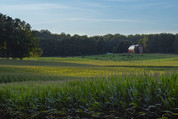
FSA Working Hard to Design Programs in the Best Interest of the Producers We Serve
Today, agricultural producers can begin to apply for two new important programs for revenue losses, from 2020 and 2021 natural disasters or the COVID-19 pandemic. Both programs equitably fill gaps in earlier assistance.
First, you may be eligible for assistance through the Emergency Relief Program (ERP) Phase Two if you experienced revenue losses from eligible natural disasters in 2020 and 2021.
You may also be eligible for the Pandemic Assistance Revenue Program (PARP) if you experienced revenue losses in calendar year 2020. PARP is addressing gaps in previous pandemic assistance, which was targeted at price loss or lack of market access, rather than overall revenue losses.
Applications for both new programs are due June 2, 2023, and you can apply for both programs during your same appointment with USDA’s Farm Service Agency (FSA).
Historically, FSA programs have been designed to make direct payments to producers based on a single disaster event or for a single commodity loss. For many of you, this may be the first revenue-based program that you’ve applied for with FSA.
Why revenue-based programs?
ERP Phase Two and PARP take a much more holistic approach to disaster assistance, ensuring that producers not just make it through a single growing season but have the financial stability to invest in the long-term well-being of their operations and employees.
In general, ERP Phase Two payments are based on the difference in allowable gross revenue between a benchmark year, representing a typical year of revenue for the producer and the disaster year – designed to target the remaining needs of producers impacted by qualifying natural disasters and avoid duplicative payments. ERP Phase Two revenue loss is based on tax years.
For PARP, an agricultural producer must have been in the business of farming during at least part of the 2020 calendar year and had a decrease in revenue for the 2020 calendar year, as compared to a typical year. PARP revenue loss is based on calendar years.
In preparation for enrollment, producers should gather supporting documentation including:
-
Schedule F (Form 1040); and
-
Profit or Loss from Farming or similar tax documents for tax years 2018, 2019, 2020, 2021 and 2022 for ERP and for calendar years 2018, 2019 and 2020 for PARP.
Producers should also have, or be prepared to have, the following forms on file for both ERP and PARP program participation:
-
Form AD-2047, Customer Data Worksheet (as applicable to the program participant);
-
Form CCC-902, Farm Operating Plan for an individual or legal entity;
-
Form CCC-901, Member Information for Legal Entities (if applicable); and
-
Form AD-1026 Highly Erodible Land Conservation (HELC) and Wetland Conservation (WC) Certification.
-
Form CCC-860, Socially Disadvantaged, Limited Resource, Beginning and Veteran Farmer or Rancher Certification, as certain existing permanent and ad-hoc disaster programs provide increased benefits or reduced fees and premiums.
Most producers, especially those who have previously participated in FSA programs, will likely have these required forms on file. However, those who are uncertain or want to confirm should contact FSA at their local USDA Service Center.
Yes, FSA is stepping outside of the box.
FSA is a big proponent of agricultural producers having a say in the design, implementation and delivery of the programs that directly impact their livelihoods. We also believe that some of the most creative and useful ideas for program and process improvements come from the FSA employees who administer this assistance through our network of more than 2,100 county offices. We want to thank producers across the country, along with the entire FSA workforce, for not just thinking outside of the box but also providing their input to make sure that we can improve and enhance our programs and our approach to assistance to better and more efficiently serve all producers who need our help.
Please visit your local USDA Service Center for more information on ERP Phase Two, PARP and our full portfolio of conservation, prices support, safety-net, credit and disaster assistance programs.
|
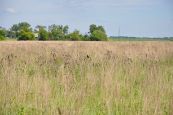
General CRP Signup to open February 27
Agriculture Secretary Tom Vilsack announced that agricultural producers and private landowners can begin applying for the Conservation Reserve Program (CRP) General signup starting February 27 through April 7, 2023. CRP is a cornerstone voluntary conservation program offered by the U.S. Department of Agriculture (USDA) and a key tool in the Biden-Harris administration’s effort to address climate change and help agricultural communities invest in the long-term well-being of their land and natural resources.
Producers and landowners enrolled more than 5 million acres into CRP through signups in 2022, building on the acceptance of more than 3.1 million acres in the largest Grassland CRP signup in history. There are currently 23 million acres enrolled in CRP, with 1.9 million set to expire this year. USDA’s Farm Service Agency (FSA) is aiming to reach the 27-million-acre cap statutorily set for fiscal year 2023.
General CRP helps producers and landowners establish long-term, resource-conserving plant species, such as approved grasses or trees, to control soil erosion, improve water quality and enhance wildlife habitat on cropland. Additionally, General CRP includes a Climate-Smart Practice Incentive to help increase carbon sequestration and reduce greenhouse gas emissions by helping producers and landowners establish trees and permanent grasses, enhance wildlife habitat, and restore wetlands.
Under Continuous CRP, producers and landowners can enroll in CRP throughout the year. Offers are automatically accepted provided the producer and land meet the eligibility requirements and the enrollment levels do not exceed the statutory cap. The Climate-Smart Practice Incentive is also available in the Continuous signup.
FSA offers several additional enrollment opportunities within Continuous CRP, including the Clean Lakes Estuaries and Rivers Initiative (CLEAR30), the State Acres for Wildlife Enhancement (SAFE) Initiative, the Farmable Wetlands Program (FWP), and the Conservation Reserve Enhancement Program (CREP). The CLEAR30 Initiative, which was originally piloted in twelve states in the Great Lakes and Chesapeake Bay watershed, has been expanded nationwide, allowing producers and landowners to enroll in 30-year CRP contracts for water quality practices. Under this administration, FSA also moved SAFE practices back to the Continuous CRP signup, giving producers and landowners more opportunities to participate in the initiative. Through the FWP, producers and landowners can enroll land in CRP as part of their efforts to restore previously farmed wetlands and wetland buffers, to improve both vegetation and water flow.
This administration has also made significant improvements to CREP, which leverages federal and non-federal funds to target specific State, regional or nationally significant conservation concerns. Specifically, USDA made significant improvements to CREP to reduce barriers and make the program more accessible to a broad range of producers and new types of partners.
These updates included flexibility for partners to provide matching funds in the form of cash, in-kind contributions, or technical assistance, along with an investment in additional staff to work directly with partners. Through CREP, for the first time ever, three Tribal Nations are now partnering with USDA to help conserve, maintain, and improve grassland productivity, reduce soil erosion, and enhance wildlife habitat.
FSA will announce the dates for Grassland CRP signup in the coming weeks. Grassland CRP is a working lands program, helping landowners and operators protect grassland, including rangeland and pastureland and certain other lands, while maintaining the areas as working grazing lands.
Protecting grasslands contributes positively to the economy of many regions, provides biodiversity of plant and animal populations, and provides important carbon sequestration benefits to deliver lasting climate outcomes.
Landowners and producers interested in CRP should contact their local USDA Service Center to learn more or to apply for the program before their deadlines.
Producers with expiring CRP acres can use the Transition Incentives Program (TIP), which incentivizes producers who sell or enter a long-term lease with a beginning, veteran, or socially disadvantaged farmer or rancher who plans to sustainably farm or ranch the land.
Signed into law in 1985, CRP is one of the largest voluntary private-lands conservation programs in the United States. It was originally intended to primarily control soil erosion and potentially stabilize commodity prices by taking marginal lands out of production. The program has evolved over the years, providing many conservation and economic benefits.
|
FSA offers direct farm ownership and direct farm operating loans to producers who want to establish, maintain, or strengthen their farm or ranch. Direct loans are processed, approved and serviced by FSA loan officers.
Direct farm operating loans can be used to purchase livestock and feed, farm equipment, fuel, farm chemicals, insurance, and other costs including family living expenses. Operating loans can also be used to finance minor improvements or repairs to buildings and to refinance some farm-related debts, excluding real estate.
Direct farm ownership loans can be used to purchase farmland, enlarge an existing farm, construct and repair buildings, and to make farm improvements.
The maximum loan amount for direct farm ownership loans is $600,000 and the maximum loan amount for direct operating loans is $400,000 and a down payment is not required. Repayment terms vary depending on the type of loan, collateral and the producer's ability to repay the loan. Operating loans are normally repaid within seven years and farm ownership loans are not to exceed 40 years.
Please contact your local FSA office for more information or to apply for a direct farm ownership or operating loan.
|
|