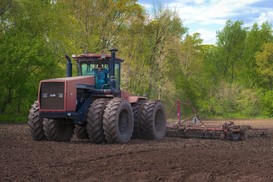
It’s officially spring and planting has taken off across the state. During this time of year, I know a lot of producers are focused on getting crops in and off to a good start. I want to make sure that at the same time, you are staying informed of programs that could have a positive impact on your farm or ranch.
The Emergency Relief Program Phase 2 (ERP Phase 2) and Pandemic Assistance Revenue Program (PARP) signups have been ongoing since Jan. 23. Texas FSA has received less applications than expected from producers. While the information needed to apply for these programs differ from past programs, please start the process early to allow plenty of time to complete applications and gather supporting documentation before the June 2 deadline. While your tax returns will be a source of information for your application, you are not required to submit them to FSA when applying for ERP Phase 2 or PARP.
Additional information is available online at farmers.gov/parp and fsa.usda.gov/erp, including answers to questions on the type of documentation needed to complete an application for both ERP Phase 2 and PARP.
Also, please consider making offers for the Continuous Conservation Reserve Program (CRP) SAFE Initiative. Producers in eligible project areas have an opportunity to enroll outside of the annual General CRP signup period and earn annual rental payments for implementing conservation practices. CRP SAFE is available for year-round as a part of Continuous CRP. You can read more on the Lower Rio Grande Valley Thornscrub SAFE Project and the Prairie SAFE Project below.
If you have any questions or need program support, reach out to your local FSA office. Our staff will be happy to help.
Sincerely,
Kelly Adkins
State Executive Director
Farm Service Agency - Texas
|
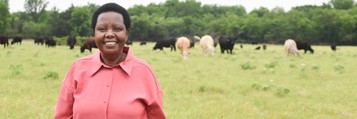
The Natural Resources Conservation Service (NRCS) is celebrating Women’s History Month and this year’s focus features women in agriculture who are leading the way in conservation and agriculture production. Throughout the month, we have been and will continue to share the unique stories of these women, highlighting their individual journeys that lead them to farming, ranching and conservation. They include Kenya native Elizabeth Thinwa, who achieved her childhood dream of owning a ranch and caring for the land with help from NRCS in Waco; Susie Fan and her husband, Ken, who have an impressive fresh vegetable production on their farm near Greenville; Denton County rancher Carla Payne, who is a well-known leader in the cattle industry; and, NRCS employee Porche Jackson who has a heart for conservation and shares how it led to a rewarding career with NRCS.
As a reminder, local work group (LWG) meetings continue to be held across the state. NRCS district conservationists are supporting the Soil and Water Conservation Districts (SWCD) who host LWG meetings. I strongly encourage you to check with your local service center to see when the next LWG meeting will be held in your area. Participating in the meetings is an excellent opportunity to provide feedback on agricultural and natural resource concerns in your county and guide our conservation efforts at the local level.
On Feb. 13, 2023, the Biden-Harris Administration announced the availability of Inflation Reduction Act (IRA) funding for Climate-Smart Agriculture. The IRA provides $19.5 billion over five years for climate smart agriculture through farm bill conservation programs that NRCS implements. In fiscal year 2023, $850 million will be available nationally for agriculture producers and foresters through the Environmental Quality Incentives Program (EQIP), Conservation Stewardship Program (CSP), Agricultural Conservation Easement Program (ACEP) and Regional Conservation Partnership Program (RCPP). These funds will provide direct climate mitigation benefits and will expand access to financial and technical assistance for producers to advance conservation on their farm, ranch, or forest land through practices like cover cropping, conservation tillage, wetland restoration, prescribed grazing, nutrient management, tree planting and more.
USDA is asking for public input on two water quality conservation initiatives: the Mississippi River Basin Healthy Watersheds Initiative (MRBI) and the National Water Quality Initiative (NWQI). The comment period opened March 8 and closes April 7, 2023. Information can be found in the Federal Register or through the USDA news release on the NRCS website.
NRCS in Texas is currently accepting applications for the following grants in the coming months:
-
Texas Partners for Conservation Program: NRCS Texas is offering grants up to $200,000 through the Partners for Conservation Program. We will host an online webinar March 23, 2023, from 10-11:00 a.m. Central time to provide information to the public on applying for the grants. Participants can join the meeting via phone at (469) 294-4461, conference ID: 474-726-593, or dial in via Microsoft Teams.
- A priority will be placed on projects addressing outreach and education to historically underserved producers and operations that utilize Farm Bill funding to implement climate-smart agriculture and forestry practices, urban and small farm agriculture, expand technical assistance to producers or expand landscape planning to include the ACEP.
- Applications are due by April 24, 2023, and must be submitted through gov.
-
Conservation Innovation Grant (CIG) Program: CIG is a competitive program supporting the development of new tools, approaches, practices, and technologies to further natural resource conservation on private lands. Through creative problem solving and innovation, CIG partners work to address our nation’s water quality, air quality, soil health and wildlife habitat challenges, all while improving agricultural operations.
- Applicants must submit their applications by 11:59 p.m. Eastern time on April 24, 2023, via gov. A total of up to $1 million has been made available for NRCS Texas CIG.
-
Underserved Communities: USDA is seeking applications for projects that will improve outreach to underserved producers and underserved communities about conservation programs and services and opportunities for students to pursue careers in agriculture, natural resources and related sciences. NRCS is offering up to $70 million in cooperative agreements with entities for two-year projects that encourage participation in NRCS programs, especially in underserved communities and among urban and small-scale producers.
- Application are due by April 27, 2023, via gov.
For assistance with the registration process, contact Grants.gov applicant support at 1-800-518-4726 or via email at support@grants.gov.
Finally, NRCS joined the Seeds of Faith Collective and GROW North Texas for the groundbreaking of a new People’s Garden at Garth Chapel A.M.E. in Dallas on March 4, 2023. This is the second People’s Garden in Dallas established by the USDA NRCS. People’s Gardens empower communities to participate in local food production and provide diversity and resiliency to the food supply chain. The People’s Gardens Initiative is an example of how local gardens can foster community collaboration, grow local and nutritious food, nurture greenspace and inspire people through the experience of growing from seed to plant. The People’s Gardens, which are collaborative in nature, also benefit and educate the community and incorporate sustainable practices.
Sincerely,
Kristy Oates
State Conservationist
Natural Resources Conservation Service - Texas
|
Signup begins January 23 for additional emergency relief from the U.S. Department of Agriculture (USDA) through the Emergency Relief Program (ERP) Phase Two.
To be eligible for Phase Two, producers must have suffered a decrease in allowable gross revenue in 2020 or 2021 due to necessary expenses related to losses of eligible crops from a qualifying natural disaster event. Eligible crops include both traditional insurable commodities and specialty crops that are produced in the United States as part of a farming operation and are intended to be commercially marketed. This also includes losses of eligible on-farm stored commodities. ERP Phase 2 applicants will use the following tax years when selecting allowable gross revenue:
- Benchmark years: 2018 and/or 2019; estimated for new producers with no 2018 or 2019 revenue or adjusted if the benchmark years are not representative of the disaster year due to a change in operation size.
- Disaster years: 2020 and/or 2021. The allowable gross revenue for the specific disaster year will be based on the tax yearapplicable to that revenue (2020, 2021 or 2022).
The ERP tool assists producers in calculating allowable gross revenue, as well as adjusted revenue for the benchmark years 2018 and 2019, and allowable gross revenue for representative tax years 2020-2022 which represent disaster years 2020 and 2021. Once producers complete the allowable gross revenue entries, they are able to print forms FSA-521 and FSA-521A through this tool.
The ERP Phase 2 and PARP application period is open from January 23 through June 2 2023.
For more information on payment calculations, payment limitations or how to determine allowable gross revenue, please reference the ERP Phase 2 fact sheet.
The United States Department of Agriculture’s (USDA) Farm Service Agency (FSA) in Texas is encouraging eligible producers to make offers for enrollment in the Continuous Conservation Reserve Program’s (CRP) State Acres for Wildlife Enhancement (SAFE) Initiative.
FSA previously announced SAFE initiatives in Texas, including the Prairie SAFE Project and the Lower Rio Grande Valley Thornscrub SAFE Project.
CRP pays a yearly rental payment in exchange for farmers and landowners removing environmentally sensitive land from agricultural production and planting species that will improve environmental quality.
Signup for new enrollments for CRP SAFE initiatives utilizing fiscal year 2023 soil rental rates began on Feb. 27, 2023. The revised 2023 soil rental rates are available on FSA’s webpage.
Producers with current CRP-1 contracts may make offers for reenrollment in CRP SAFE starting April 1, 2023. Land currently enrolled in CRP may be offered for reenrollment through Continuous CRP if the land enrolled in CRP is in the last year of a CRP-1 contract, and no earlier than 6 months before the CRP-1 contract is scheduled to expire.
Land previously enrolled in CRP with a contract that expired since 2012 and was maintained as CRP would meet the cropping history requirement for enrollment.
Financial assistance through the SAFE projects may include:
- 10-15 years of annual rental payments
- Payments of up to 50% cost-share for practice establishment
- Practices enrolled through Continuous CRP Sign-up will also receive:
- A 50% Practice Incentive Payment
- Sign-up Incentive Payment equal to 32.5% of first full year’s annual rental payment
- A Climate Smart Annual Practice Incentive of 3, 5, or 10 based on the practice cover.
- Payments up to 90% of established Soil Rental Rate may be possible for:
- Habitat Buffers for Upland Birds
- Permanent Wildlife Habitat
- Rare and Declining Habitat (Primarily Grasses and Trees)
Unlike General CRP, Continuous CRP SAFE does not have a ranking period. Eligible offers may be accepted, and contracts may be approved on a first-come basis until the county reaches the 25% cropland limit.
Farmers and landowners interested in learning more about these CRP SAFE Initiative projects can contact their local USDA Service Center for more information. Prairie SAFE Project and Lower Rio Grande Valley Thornscrub SAFE Project fact sheets can also be found online at fsa.usda.gov/tx. Offers are accepted year-round for Continuous CRP.
The U.S. Department of Agriculture (USDA) has issued nearly $290.5 million in top-up payments through the Coronavirus Food Assistance Program 2 (CFAP) to nearly 172,000 underserved producers. USDA’s Farm Service Agency (FSA) will continue to issue payments to underserved producers who participated in CFAP 2 and are certified as underserved producers.
Producers without form CCC-860, Socially Disadvantaged, Limited Resource, Beginning and Veteran Farmer or Rancher Certification, on file can submit by March 31, 2023, to receive the top-up payment. This is an extension from the Feb. 10, 2023, deadline. Contact your local USDA Service Center for more information.
The top-up payment is part of a broader effort by the Biden-Harris administration to better reach agricultural producers and industries impacted by COVID-19 market disruptions by providing a holistic, inclusive approach to pandemic assistance.
In this Ask the Expert, Toni Williams answers questions about how Farm Storage Facility Loans (FSFLs) provide low-interest financing to help producers build or upgrade commodity storage facilities. Toni is the Agricultural Program Manager for FSFLs at the Farm Service Agency (FSA).
Toni has worked for FSA for more than 32 years and is responsible for providing national policy and guidance for Farm Storage Facility Loans.
What are Farm Storage Facility Loans?
Farm Storage Facility Loans provide low-interest financing for eligible producers to build or upgrade facilities to store commodities.
The FSFL program was created in May 2000 to address an existing grain shortage. Historically, FSFLs benefitted grain farmers, but a change in the 2008 Farm Bill extended the program to fruit and vegetable producers for cold storage. An additional change extended the program to washing and packing sheds, where fresh produce is washed, sorted, graded, labeled, boxed up, and stored before it heads to market. Since May 2000, FSA has made more than 40,000 loans for on-farm storage.
Eligible facility types include grain bins, hay barns, bulk tanks, and facilities for cold storage. Drying and handling and storage equipment including storage and handling trucks are also eligible. Eligible facilities and equipment may be new or used, permanently affixed or portable.
To read the full blog visit farmers.gov/blog/ask-the-expert-qa-on-farm-storage-facility-loans-with-toni-williams.
Farmers and ranchers can use the Farm Loan Discovery Tool on farmers.gov to find information on USDA farm loans that may best fit their operations.
USDA’s Farm Service Agency (FSA) offers a variety of loan options to help farmers finance their operations. From buying land to financing the purchase of equipment, FSA loans can help.
USDA conducted field research in eight states, gathering input from farmers and FSA farm loan staff to better understand their needs and challenges.
How the Tool Works
Farmers who are looking for financing options to operate a farm or buy land can answer a few simple questions about what they are looking to fund and how much money they need to borrow. After submitting their answers, farmers will receive information on farm loans that best fit their specific needs. The loan application and additional resources also will be provided.
Farmers can download application quick guides that outline what to expect from preparing an application to receiving a loan decision. There are four guides that cover loans to individuals, entities, and youth, as well as information on microloans. The guides include general eligibility requirements and a list of required forms and documentation for each type of loan. These guides can help farmers prepare before their first USDA service center visit with a loan officer.
Farmers can access the Farm Loan Discovery Tool by visiting farmers.gov/fund and clicking the “Start” button. Follow the prompts and answer five simple questions to receive loan information that is applicable to your agricultural operation. The tool is built to run on any modern browser like Chrome, Edge, Firefox, or the Safari browser, and is fully functional on mobile devices. It does not work in Internet Explorer.
About Farmers.gov
In 2018, USDA unveiled farmers.gov, a dynamic, mobile-friendly public website combined with an authenticated portal where farmers will be able to apply for programs, process transactions, and manage accounts.
The Farm Loan Discovery Tool is one of many resources on farmers.gov to help connect farmers to information that can help their operations. Earlier this year, USDA launched the My Financial Information feature, which enables farmers to view their loan information, history, payments, and alerts by logging into the website.
USDA is building farmers.gov for farmers, by farmers. In addition to the interactive farm loan features, the site also offers a Disaster Assistance Discovery Tool. Farmers can visit farmers.gov/recover/disaster-assistance-tool#step-1 to find disaster assistance programs that can help their operation recover from natural disasters.
For more information, contact your local USDA Service Center or visit farmers.gov.
FSA offers direct farm ownership and direct farm operating loans to producers who want to establish, maintain, or strengthen their farm or ranch. Direct loans are processed, approved and serviced by FSA loan officers.
Direct farm operating loans can be used to purchase livestock and feed, farm equipment, fuel, farm chemicals, insurance, and other costs including family living expenses. Operating loans can also be used to finance minor improvements or repairs to buildings and to refinance some farm-related debts, excluding real estate.
Direct farm ownership loans can be used to purchase farmland, enlarge an existing farm, construct and repair buildings, and to make farm improvements.
The maximum loan amount for direct farm ownership loans is $600,000 and the maximum loan amount for direct operating loans is $400,000 and a down payment is not required. Repayment terms vary depending on the type of loan, collateral and the producer's ability to repay the loan. Operating loans are normally repaid within seven years and farm ownership loans are not to exceed 40 years.
Please contact your local FSA office for more information or to apply for a direct farm ownership or operating loan.
Did you know you can subscribe to receive free email and text message updates from USDA related to urban agriculture and innovative production here in Texas.
Whether you’re scrolling through emails on your break or checking a text message between tasks, USDA wants to keep you posted on the latest news in urban agriculture and innovative production. Subscribe now to receive emails and text messages about important program information, eligibility requirements and deadlines from the Farm Service Agency (FSA), Natural Resources Conservation Service (NRCS), and Risk Management Agency (RMA) related to urban agriculture, specifically in Texas.
Dallas is one of the 17 USDA urban hubs, which are home to an FSA Urban County Committee as well as a flagship People’s Garden.
You can sign up for email alerts by visiting farmers.gov/subscribe (select “TX – Urban Agriculture and Innovative Production”) or text alerts by texting TXUrbanAg. Urban agriculture is one of the many topics available to producers. If you subscribe online, you can also sign up for information on other topics, including disaster assistance, conservation programs, crop insurance and farm loans. Participants may unsubscribe at any time.
Filing taxes can be challenging, especially if you are new to USDA programs or running a farm business, or if you are trying to forecast your farm’s tax bill.
To support farmers and ranchers, USDA is partnering with tax experts from across the country to connect producers to information and resources related to taxes and USDA program payments, including those from the Inflation Reduction Act for distressed borrowers. RSVP for webinars or use the new tax estimator tool.
LEARN MORE
Are you a farmer, rancher or forest manager? Please share your vital feedback with USDA by taking a nationwide survey at farmers.gov/survey! The survey is completely anonymous, will take about 10 minutes to complete, is available in multiple languages, and will be open until March 31, 2023. The survey focuses on gathering feedback about the Farm Service Agency, Natural Resources Conservation Service and Risk Management Agency.
All farmers, ranchers and forest managers are encouraged to take the survey. USDA would especially like to hear from prospective customers: those who don’t know about USDA or have yet to work with USDA, and those who were unable to participate in the past. The survey will help USDA enhance support, improve programs and services, increase access, and advance equity for new and existing customers.
March 25-27
2023 Texas and Southwestern Cattle Raisers Association Convention & Expo, Fort Worth
March 27
Hills of Childress Creek Subdivision HOA Annual Meeting, China Spring
April 3-4
SWCD Director and Employee Workshop, Temple
April 25-26
Hemphill Beef Conference, Canadian
|