March Madness is the perfect name for the weather patterns we have been experiencing lately. Staying home may have allowed you to catch up on some bookwork and make plans for the new crop year.
Have you been considering enrolling some acres into the Conservation Reserve Program (CRP)? General CRP signup 60 is one of multiple CRP signups occurring in 2023. General signup 60 started February 27 and runs through April 7, 2023. The other three types of CRP are Grasslands, Continuous, and CREP.
Have you been considering tiling or bringing land into production? Now is the time to complete form AD-1026. NRCS will determine if the field is considered highly erodible land. If the field is considered HEL, you are required to implement a conservation plan or system that limits the erosion. If you rented or purchased new land this year, check with the office to ensure your activities will be in compliance with the highly erodible land and wetland conservation provisions.
Have you heard about the Pandemic Relief Programs? The Emergency Relief Program (ERP) Phase 2 and Pandemic Assistance Revenue Program (PARP) application period opened January 23 and closes June 2, 2023. Due to privacy, the staff is unable to review your financials to assist with signup. These program signups will be utilizing the website tools and upload your data on to the application form. No payments will be issued until the signup period has closed.
Information on these programs may be found by clicking the links below or visiting farmers.gov
Fact Sheets: ERP Phase 2 Fact Sheet PARP Fact Sheet Comparison Fact Sheet
PARP website: https://www.farmers.gov/coronavirus/pandemic-assistance/parp
PARP tool will aid in completing the FSA-1122 application: https://www.fsa.usda.gov/Assets/USDA-FSA-Public/usdafiles/help/fsa_parp_gross_revenue_tool.xlsm
PARP applicants will apply through: https://apps.fsa.usda.gov/parp/index.jsp
ERP2 website: https://www.fsa.usda.gov/programs-and-services/emergency-relief/index
ERP2 tool will aid in completing the FSA-521 application: https://www.fsa.usda.gov/Assets/USDA-FSA-Public/usdafiles/emergency-relief-program/docs/erp_tool_version_1_3.xlsm
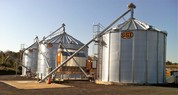
Also announced this week is the Emergency Grain Storage Facility Assistance Program (EGSFP). The new program provides cost-share assistance for new or used, permanent, portable or temporary on-farm grain storage structures and drying and handling equipment. The application period opened March 16, 2023 and closes Dec. 29, 2023. The fact sheet is available for informational purposes only; other restrictions or requirements may apply including funding availability. EGSFP fact sheet. Contact our office for an more information.
|
March 31-Deadline to request Marketing Assistance Loan (MAL) for prior year harvested wheat, barley, canola, crambe, flaxseed, honey, oats, rapeseed, and sesame.
April 3-Deadline for annual certification of maple sap.
April 7-Deadline to apply for the Conservation Reserve Program (CRP) General Signup.
Farm Loan Program Interest Rates
4.750% - Farm Operating Loans, Direct
4.875% - Farm Ownership Loans, Direct
2.875% - Farm Ownership, Joint Financing
1.500% - Farm Ownership Loans, Beginning Farmer Down Payment
Farm Storage Facility Loan Program Interest Rates
4.00% - Farm Storage Facility Loans, 3-Year
3.750% - Farm Storage Facility Loans, 5-Year
3.750% - Farm Storage Facility Loans, 7-Year
3.625% - Farm Storage Facility Loans, 10-Year
3.625% - Farm Storage Facility Loans, 12-Year
March 2023 Commodity Loan Interest Rates
5.750% - Commodity Loans
LINCOLN COUNTY COMMODITY LOAN RATES for 2023 CROP
Wheat (HRS) $3.53/bu. Oats $2.05/bu.
Corn $2.11/bu. Soybeans $6.01/bu.

Agriculture Secretary Tom Vilsack announced that agricultural producers and private landowners can begin applying for the Conservation Reserve Program (CRP) General signup starting February 27 through April 7, 2023. CRP is a cornerstone voluntary conservation program offered by the U.S. Department of Agriculture (USDA) and a key tool in the Biden-Harris administration’s effort to address climate change and help agricultural communities invest in the long-term well-being of their land and natural resources.
Producers and landowners enrolled more than 5 million acres into CRP through signups in 2022, building on the acceptance of more than 3.1 million acres in the largest Grassland CRP signup in history. There are currently 23 million acres enrolled in CRP, with 1.9 million set to expire this year. USDA’s Farm Service Agency (FSA) is aiming to reach the 27-million-acre cap statutorily set for fiscal year 2023.
|
General CRP
General CRP helps producers and landowners establish long-term, resource-conserving plant species, such as approved grasses or trees, to control soil erosion, improve water quality and enhance wildlife habitat on cropland. Additionally, General CRP includes a Climate-Smart Practice Incentive to help increase carbon sequestration and reduce greenhouse gas emissions by helping producers and landowners establish trees and permanent grasses, enhance wildlife habitat, and restore wetlands.
Continuous CRP
Under Continuous CRP, producers and landowners can enroll in CRP throughout the year. Offers are automatically accepted provided the producer and land meet the eligibility requirements and the enrollment levels do not exceed the statutory cap. The Climate-Smart Practice Incentive is also available in the Continuous signup.
FSA offers several additional enrollment opportunities within Continuous CRP, including the Clean Lakes Estuaries and Rivers Initiative (CLEAR30), the State Acres for Wildlife Enhancement (SAFE) Initiative, the Farmable Wetlands Program (FWP), and the Conservation Reserve Enhancement Program (CREP). The CLEAR30 Initiative, which was originally piloted in twelve states in the Great Lakes and Chesapeake Bay watershed, has been expanded nationwide, allowing producers and landowners to enroll in 30-year CRP contracts for water quality practices. Under this administration, FSA also moved SAFE practices back to the Continuous CRP signup, giving producers and landowners more opportunities to participate in the initiative. Through the FWP, producers and landowners can enroll land in CRP as part of their efforts to restore previously farmed wetlands and wetland buffers, to improve both vegetation and water flow.
This administration has also made significant improvements to CREP, which leverages federal and non-federal funds to target specific State, regional or nationally significant conservation concerns. Specifically, USDA made significant improvements to CREP to reduce barriers and make the program more accessible to a broad range of producers and new types of partners.
These updates included flexibility for partners to provide matching funds in the form of cash, in-kind contributions, or technical assistance, along with an investment in additional staff to work directly with partners. Through CREP, for the first time ever, three Tribal Nations are now partnering with USDA to help conserve, maintain, and improve grassland productivity, reduce soil erosion, and enhance wildlife habitat.
Grassland CRP
FSA will announce the dates for Grassland CRP signup in the coming weeks. Grassland CRP is a working lands program, helping landowners and operators protect grassland, including rangeland and pastureland and certain other lands, while maintaining the areas as working grazing lands.
Protecting grasslands contributes positively to the economy of many regions, provides biodiversity of plant and animal populations, and provides important carbon sequestration benefits to deliver lasting climate outcomes.
How to Sign Up
Landowners and producers interested in CRP should contact their local USDA Service Center to learn more or to apply for the program before their deadlines.
Producers with expiring CRP acres can use the Transition Incentives Program (TIP), which incentivizes producers who sell or enter a long-term lease with a beginning, veteran, or socially disadvantaged farmer or rancher who plans to sustainably farm or ranch the land.
Signup begins January 23 for additional emergency relief from the U.S. Department of Agriculture (USDA) through the Emergency Relief Program (ERP) Phase Two.
To be eligible for Phase Two, producers must have suffered a decrease in allowable gross revenue in 2020 or 2021 due to necessary expenses related to losses of eligible crops from a qualifying natural disaster event. Eligible crops include both traditional insurable commodities and specialty crops that are produced in the United States as part of a farming operation and are intended to be commercially marketed. This also includes losses of eligible on-farm stored commodities. ERP Phase 2 applicants will use the following tax years when selecting allowable gross revenue:
- Benchmark years: 2018 and/or 2019; estimated for new producers with no 2018 or 2019 revenue or adjusted if the benchmark years are not representative of the disaster year due to a change in operation size.
- Disaster years: 2020 and/or 2021. The allowable gross revenue for the specific disaster year will be based on the tax yearapplicable to that revenue (2020, 2021 or 2022).
The ERP tool assists producers in calculating allowable gross revenue, as well as adjusted revenue for the benchmark years 2018 and 2019, and allowable gross revenue for representative tax years 2020-2022 which represent disaster years 2020 and 2021. Once producers complete the allowable gross revenue entries, they are able to print forms FSA-521 and FSA-521A through this tool.
The ERP Phase 2 and PARP application period is open from January 23 through June 2 2023.
For more information on payment calculations, payment limitations or how to determine allowable gross revenue, please reference the ERP Phase 2 fact sheet.
The Pandemic Assistance Revenue Program (PARP) will assist eligible producers of agricultural commodities who experienced revenue decreases in calendar year 2020 compared to 2018 or 2019 due to the COVID-19 pandemic. PARP will help address gaps in previous pandemic assistance, which was targeted at price loss or lack of market access, rather than overall revenue losses.
USDA's Farm Service Agency will accept PARP applications from January 23, 2023, through June 2, 2023.
Eligible and Ineligible Commodities
For PARP, eligible agricultural commodities include crops, aquaculture, livestock, livestock byproducts, or other animals or animal byproducts that are produced as part of a farming operation and are intended to be commercially marketed. This includes only commodities produced in the United States or those produced outside the United States by a producer located in the United States and marketed inside the United States.
The following commodities are not eligible for PARP:
- Wild free-roaming animals.
- Horses and other animals used or intended to be used for racing or wagering.
- Aquatic species that do not meet the definition of aquaculture.
-
Cannabis sativa L. and any part of that plant that does not meet the definition of hemp.
- Timber
Program Eligibility
PARP payments will be made on a whole-farm basis, not commodity-by-commodity. To be eligible for PARP, an agricultural producer must have been in the business of farming during at least part of the 2020 calendar year and must have experienced a 15 percent decrease in allowable gross revenue in 2020, as compared to either:
- The 2018 or 2019 calendar year, as elected by the producer, if they received allowable gross revenue during the 2018 or 2019 calendar years, or
- The producer’s expected 2020 calendar year allowable gross revenue, if the producer had no allowable gross revenue in 2018 or 2019.
PARP payments will be issued after the application period ends on June 2, 2023.
For more information on determining allowable gross revenue visit farmers.gov/coronavirus/pandemic-assistance/parp or review the PARP fact sheet.
|
The term “sodbusting” is used to identify the conversion of land from native vegetation to commodity crop production after December 23, 1985. As part of the conservation provisions of the Food Security Act of 1985, if you’re proposing to produce agricultural commodities (crops that require annual tillage including one pass planting operations and sugar cane) on land that has been determined highly erodible and that has no crop history prior to December 23, 1985, that land must be farmed in accordance with a conservation plan or system that ensures no substantial increase in soil erosion.
Eligibility for many USDA programs requires compliance with a conservation plan or system on highly erodible land (HEL) used for the production of agricultural commodities. This includes Farm Service Agency (FSA) loan, disaster assistance, safety net, price support, and conservation programs; Natural Resources Conservation Service (NRCS) conservation programs; and Risk Management Agency (RMA) Federal crop insurance.
Before you clear or prepare areas not presently under production for crops that require annual tillage, you are required to file Form AD-1026 “Highly Erodible Land Conservation and Wetland Conservation Certification,” with FSA indicating the area to be brought into production. The notification will be referred to NRCS to determine if the field is considered highly erodible land. If the field is considered HEL, you are required to implement a conservation plan or system that limits the erosion to the tolerable soil loss (T) for the predominant HEL soil on those fields.
In addition, prior to removing trees or conducting any other land manipulations that may affect wetlands, remember to update form AD-1026, to ensure you remain in compliance with the wetland conservation provisions.
Prior to purchasing or renting new cropland acres, it is recommended that you check with your local USDA Service Center to ensure your activities will be in compliance with the highly erodible land and wetland conservation provisions.
For additional information on highly erodible land conservation and wetland conservation compliance, contact your local USDA Service Center.
|








