Newsletter from USDA Service Center in Douglas/ Elbert County

View as a webpage / Share

US Department of Agriculture

  Douglas/Elbert County Updates-  March 21, 2023


Before You Break Out New Ground, Ensure Your Farm Meets Conservation Compliance

planting

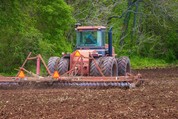
The term “sodbusting” is used to identify the conversion of land from native vegetation to commodity crop production after December 23, 1985. As part of the conservation provisions of the Food Security Act of 1985, if you’re proposing to produce agricultural commodities (crops that require annual tillage including one pass planting operations and sugar cane) on land that has been determined highly erodible and that has no crop history prior to December 23, 1985, that land must be farmed in accordance with a conservation plan or system that ensures no substantial increase in soil erosion.

Eligibility for many USDA programs requires compliance with a conservation plan or system on highly erodible land (HEL) used for the production of agricultural commodities. This includes Farm Service Agency (FSA) loan, disaster assistance, safety net, price support, and conservation programs; Natural Resources Conservation Service (NRCS) conservation programs; and Risk Management Agency (RMA) Federal crop insurance.

Before you clear or prepare areas not presently under production for crops that require annual tillage, you are required to file Form AD-1026 “Highly Erodible Land Conservation and Wetland Conservation Certification,” with FSA indicating the area to be brought into production. The notification will be referred to NRCS to determine if the field is considered highly erodible land. If the field is considered HEL, you are required to implement a conservation plan or system that limits the erosion to the tolerable soil loss (T) for the predominant HEL soil on those fields.

In addition, prior to removing trees or conducting any other land manipulations that may affect wetlands, remember to update form AD-1026, to ensure you remain in compliance with the wetland conservation provisions.

Prior to purchasing or renting new cropland acres, it is recommended that you check with your local USDA Service Center to ensure your activities will be in compliance with the highly erodible land and wetland conservation provisions.

For additional information on highly erodible land conservation and wetland conservation compliance, contact your local USDA Service Center.


Update Your Records:

FSA Farm Loans is cleaning up our borrower record database and needs your help. Any changes of address, phone number, email address, personal name, business name or demographic information need to be reported to our office. You should also report changes in your farm operation, like the addition of a farm by lease or purchase. Information can be updated by filling out form AD-2047 Customer Data Worksheet. You can access this form online at https://www.fsa.usda.gov - select Forms/Browse Forms/  (Agency Name is FSA & Form Number is 2047)

You also have the option of contacting your local FSA office and requesting the form AD-2047 Customer Data Worksheet.


USDA Announces New Opportunities to Improve Nutrient Management

No-Till

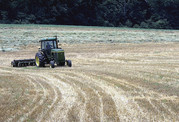
USDA welcomed the passage of the Inflation Reduction Act, which will deliver $19.5 billion in new conservation funding to support climate-smart agriculture. This historic funding will bolster the new steps that USDA’s Natural Resources Conservation Service (NRCS) announced to improve opportunities for nutrient management. NRCS will target funding, increasing program flexibilities, launch a new outreach campaign to promote nutrient management’s economic benefits, in addition to expanding partnerships to develop nutrient management plans. This is part of USDA’s broader effort to address future fertilizer availability and cost challenges for U.S. producers.

Through USDA’s conservation programs, America’s farmers and ranchers will have streamlined opportunities to improve their nutrient management planning, which provides conservation benefits while mitigating the impacts of supply chain disruptions and increased input costs.

Specifically, NRCS efforts include:

  • Streamlined Nutrient Management Initiative – A streamlined initative will incentivize nutrient management activities through key conservation programs, including the Environmental Quality Incentives Program (EQIP), EQIP Conservation Incentive Contracts, and the Conservation Stewardship Program. The initiative will use a ranking threshold for pre-approval and include a streamlined and expedited application process, targeted outreach to small-scale and historically underserved producers, and coordination with FSA to streamline the program eligibility process for producers new to USDA. In addition to otherwise available funding at the state level, NRCS is targeting additional FY23 funds for nutrient management. NRCS is also announcing a streamlined funding opportunity for up to $40 million in nutrient management grant opportunities through the Regional Conservation Partnership Program (RCPP).
  • Nutrient Management Economic Benefits Outreach Campaign – A new outreach campaign will highlight the economic benefits of nutrient management planning for farmers. The potential net savings to farmers who adopt a nutrient management plan is estimated to be an average of $30 per acre for cropland.  It is estimated that there are 89 million acres of cropland (28% of total U.S. cropland) currently exceeding the nitrogen loss threshold; and if all those acres implemented a nutrient management plan, the average net savings would be $2.6 billion. NRCS staff develop nutrient management plans to help producers use nutrient resources effectively and efficiently to adequately supply soils and plants with necessary nutrients while minimizing transport of nutrients to ground and surface waters. Producer information is available at farmers.gov/global-food-security.
  • Expanded Nutrient Management Support through Technical Service Providers Streamlining and Pilots – New agreements with key partners who have existing capacity to support nutrient management planning and technical assistance will expand benefits and serve as a model to continue streamlining the certification process for Technical Service Providers (TSPs).  NRCS is also developing new opportunities to support partner training frameworks, nutrient management outreach and education, and new incentive payments through TSP partners for nutrient management planning and implementation.  

Alongside the Bipartisan Infrastructure Act and American Rescue Plan, the Inflation Reduction Act provides once-in-a-generation investment in rural communities and their infrastructure needs, while also responding to the climate crisis. The bill invests $40 billion into existing USDA programs promoting climate smart agriculture, rural energy efficiency and reliability, forest conservation, and more.

Approximately $20 billion of this investment will support conservation programs that are oversubscribed, meaning that more producers will have access to conservation assistance that will support healthier land and water, improve the resilience of their operations, support their bottom line, and combat climate change. This includes:

  • $8.45 billion for EQIP
  • $4.95 billion for the Regional Conservation Partnership Program (RCPP)
  • $3.25 billion for the Conservation Stewardship Program (CSP)   
  • $1.4 billion for the Agricultural Conservation Easement Program (ACEP)

For more information and resources for nutrient management planning, visit farmers.gov/global-food-insecurity.  Contact NRCS at your local USDA Service Center to get assistance with a nutrient management plan for your land.


Five Facts About the United States Drought Monitor

Drought

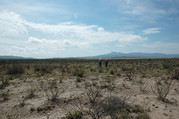
This is likely no surprise to you, but drought persists across the western U.S. and is intensifying in some areas. No geographic area is immune to the potential of drought at any given time. The U.S. Drought Monitor provides a weekly drought assessment, and it plays an important role in USDA programs that help farmers and ranchers recover from drought.

Fact #1 - Numerous agencies use the Drought Monitor to inform drought-related decisions.

The map identifies areas of drought and labels them by intensity on a weekly basis. It categorizes the entire country as being in one of six levels of drought. The first two, None and Abnormally Dry (D0), are not considered to be drought. The next four describe increasing levels of drought: Moderate (D1), Severe (D2), Extreme (D3) and Exceptional (D4).

While many entities consult the Drought Monitor for drought information, drought declarations are made by federal, state and local agencies that may or may not use the Drought Monitor to inform their decisions. Some of the ways USDA uses it to determine a producer’s eligibility for certain drought assistance programs, like the Livestock Forage Disaster Program and Emergency Haying or Grazing on Conservation Reserve Program acres and to “fast-track” Secretarial drought disaster designations.

Fact #2 - U.S. Drought Monitor is made with more than precipitation data.

When you think about drought, you probably think about water, or the lack of it. Precipitation plays a major role in the creation of the Drought Monitor, but the map’s author considers numerous indicators, including drought impacts and local insight from over 450 expert observers around the country. Authors use several dozen indicators to assess drought, including precipitation, streamflow, reservoir levels, temperature and evaporative demand, soil moisture and vegetation health. Because the drought monitor depicts both short and long‐term drought conditions, the authors must look at data for multiple timeframes. The final map produced each week represents a summary of the story being told by all the pieces of data. To help tell that story, authors don’t just look at data. They converse over the course of the map-making week with experts across the country and draw information about drought impacts from media reports and private citizens

Fact #3 - A real person, using real data, updates the map. Each week’s map author, not a computer, processes and analyzes data to update the drought monitor. The map authors are trained climatologists or meteorologists from the National Drought Mitigation Center at the University of Nebraska-Lincoln (the academic partner and website host of the Drought Monitor), the National Oceanic and Atmospheric Administration and USDA. The author’s job is to do what a computer can’t – use their expertise to reconcile the sometimes-conflicting stories told by each stream of data into a single assessment.

Fact #4 - The Drought Monitor provides a current snapshot, not a forecast.

The Drought Monitor is a “snapshot” of conditions observed during the most recent week and builds off the previous week’s map. The map is released on Thursdays and depicts conditions based on data for the week that ended the preceding Tuesday. Rain that falls on the Wednesday just before the USDM’s release won’t be reflected until the next map is published. This provides a consistent, week‐to‐week product and gives the author a window to assess the data and come up with a final map.

Fact #5 – Your input can be part of the drought-monitoring process.

State climatologists and other trained observers in the drought monitoring network relay on-the-ground information from numerous sources to the US Drought monitor author each week. That can include information that you contribute.

The Drought Monitor serves as a trigger for multiple forms of federal disaster relief for agricultural producers, and sometimes producers contact the author to suggest that drought conditions in their area are worse than what the latest drought monitor shows. When the author gets a call like that, it prompts them to look closely at all available data for that area, to see whether measurements of precipitation, temperature, soil moisture and other indicators corroborate producer-submitted reports. This is the process that authors follow whether they receive one report or one hundred reports, although reports from more points may help state officials and others know where to look for impacts.

There are multiple ways to contribute your observations: 1. Talk to your state climatologist - Find the current list at the American Association of State Climatologists website. 2. Email - Emails sent to droughtmonitor@unl.edu inform the USDM authors.

3. Become a CoCoRaHS observer - Submit drought reports along with daily precipitation observations to the Community Collaborative Rain, Hail & Snow Network. 4. Submit Condition Monitoring Observer Reports (CMOR) - go.unl.edu/CMOR.

For more information, read our Ask the Expert blog with a NDMC climatologist or visit farmers.gov/protection-recovery.

504 Washington Ave
PO Box 188
Simla, Co 80835

Phone: 719-541-2358
Fax: 844-904-9059

Farm Service Agency

Christine Mergelman
County Executive Director
Elbert/Douglas

719-541-2358

christine.mergelman@usda,gov


NRCS 

Kevin Triplett
Resource Team Lead
Elbert/Douglas

719-541-2358

kevin.triplett1@usda.gov


USDA Service Center