
FSA Notes
Today is the day! March 15 is the final day to get your name in the hat for election/enrollment for 2023 ARCPLC. You must contact our office by close of business today with
your program election choices to be considered timely filed.
If you have a CRP contract expiring September 30, 2023, notification letters were mailed out yesterday. Be on the lookout for the notification in the mail. Please call the office to make an appointment to complete an offer for re-enrollment if interest.
-
March 15 – 2023 ARCPLC Enrollment Deadline
-
March 15 – 2023 NAP Deadline for FAV and Haygrazers
-
April 7 – CRP General Signup 60 deadline
-
June 2 – ERP Phase 2 and PARP signup deadline
NRCS Notes
Applications for the current funding cycle of the Conservation Stewardship Program with NRCS is February 24, 2023. Please call the office to schedule appointments.
806-983-2352
|
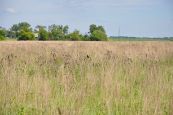
Agriculture Secretary Tom Vilsack announced that agricultural producers and private landowners can begin applying for the Conservation Reserve Program (CRP) General signup starting February 27 through April 7, 2023. CRP is a cornerstone voluntary conservation program offered by the U.S. Department of Agriculture (USDA) and a key tool in the Biden-Harris administration’s effort to address climate change and help agricultural communities invest in the long-term well-being of their land and natural resources.
Producers and landowners enrolled more than 5 million acres into CRP through signups in 2022, building on the acceptance of more than 3.1 million acres in the largest Grassland CRP signup in history. There are currently 23 million acres enrolled in CRP, with 1.9 million set to expire this year. USDA’s Farm Service Agency (FSA) is aiming to reach the 27-million-acre cap statutorily set for fiscal year 2023.
General CRP
General CRP helps producers and landowners establish long-term, resource-conserving plant species, such as approved grasses or trees, to control soil erosion, improve water quality and enhance wildlife habitat on cropland. Additionally, General CRP includes a Climate-Smart Practice Incentive to help increase carbon sequestration and reduce greenhouse gas emissions by helping producers and landowners establish trees and permanent grasses, enhance wildlife habitat, and restore wetlands.
Continuous CRP
Under Continuous CRP, producers and landowners can enroll in CRP throughout the year. Offers are automatically accepted provided the producer and land meet the eligibility requirements and the enrollment levels do not exceed the statutory cap. The Climate-Smart Practice Incentive is also available in the Continuous signup.
FSA offers several additional enrollment opportunities within Continuous CRP, including the Clean Lakes Estuaries and Rivers Initiative (CLEAR30), the State Acres for Wildlife Enhancement (SAFE) Initiative, the Farmable Wetlands Program (FWP), and the Conservation Reserve Enhancement Program (CREP). The CLEAR30 Initiative, which was originally piloted in twelve states in the Great Lakes and Chesapeake Bay watershed, has been expanded nationwide, allowing producers and landowners to enroll in 30-year CRP contracts for water quality practices. Under this administration, FSA also moved SAFE practices back to the Continuous CRP signup, giving producers and landowners more opportunities to participate in the initiative. Through the FWP, producers and landowners can enroll land in CRP as part of their efforts to restore previously farmed wetlands and wetland buffers, to improve both vegetation and water flow.
This administration has also made significant improvements to CREP, which leverages federal and non-federal funds to target specific State, regional or nationally significant conservation concerns. Specifically, USDA made significant improvements to CREP to reduce barriers and make the program more accessible to a broad range of producers and new types of partners.
These updates included flexibility for partners to provide matching funds in the form of cash, in-kind contributions, or technical assistance, along with an investment in additional staff to work directly with partners. Through CREP, for the first time ever, three Tribal Nations are now partnering with USDA to help conserve, maintain, and improve grassland productivity, reduce soil erosion, and enhance wildlife habitat.
Grassland CRP
FSA will announce the dates for Grassland CRP signup in the coming weeks. Grassland CRP is a working lands program, helping landowners and operators protect grassland, including rangeland and pastureland and certain other lands, while maintaining the areas as working grazing lands.
Protecting grasslands contributes positively to the economy of many regions, provides biodiversity of plant and animal populations, and provides important carbon sequestration benefits to deliver lasting climate outcomes.
How to Sign Up
Landowners and producers interested in CRP should contact their local USDA Service Center to learn more or to apply for the program before their deadlines.
Producers with expiring CRP acres can use the Transition Incentives Program (TIP), which incentivizes producers who sell or enter a long-term lease with a beginning, veteran, or socially disadvantaged farmer or rancher who plans to sustainably farm or ranch the land.
More Information
Signed into law in 1985, CRP is one of the largest voluntary private-lands conservation programs in the United States. It was originally intended to primarily control soil erosion and potentially stabilize commodity prices by taking marginal lands out of production. The program has evolved over the years, providing many conservation and economic benefits.
|

Agricultural producers who have not yet enrolled in the Agriculture Risk Coverage (ARC) or Price Loss Coverage (PLC) programs for the 2023 crop year have until March 15, 2023, to elect and enroll a contract. The U.S. Department of Agriculture (USDA) offers these two safety net programs to provide vital income support to farmers experiencing substantial declines in crop prices or revenues.
Producers can elect coverage and enroll in ARC-County or PLC, which are both commodity-by-commodity, or ARC-Individual, which covers the entire farm. Although election changes for 2023 are optional, producers must enroll through a signed contract each year. Additionally, if a producer has a multi-year contract on their farm and makes an election change for 2023, they will need to sign a new contract.
If producers do not submit an election by the March 15, 2023, deadline, the election remains the same as the 2022 election for commodities on the farm. Farm owners cannot enroll in either program unless they have a share interest in the commodity.
In Texas, producers have completed 44,543 contracts to date, representing 50% of the more than 88,000 expected contracts.
Producers who do not complete enrollment by the deadline will not be enrolled in ARC or PLC for the 2023 year and will not receive a payment if triggered.
Producers are eligible to enroll farms with base acres for the following commodities: barley, canola, large and small chickpeas, corn, crambe, flaxseed, grain sorghum, lentils, mustard seed, oats, peanuts, dry peas, rapeseed, long grain rice, medium and short grain rice, safflower seed, seed cotton, sesame, soybeans, sunflower seed and wheat.
Decision Tools
In partnership with USDA, two web-based decision tools are available to assist producers in making informed, educated decisions using crop data specific to their respective farming operations:
-
Gardner-farmdoc Payment Calculator, a tool available through the University of Illinois allows producers to estimate payments for farms and counties for ARC-CO and PLC.
-
ARC and PLC Decision Tool, a tool available through Texas A&M University that allows producers to estimate payments and yield updates and expected payments for 2023.
Crop Insurance Considerations and Decision Deadline
ARC and PLC are part of a broader safety net provided by USDA, which also includes crop insurance and marketing assistance loans. Producers are reminded that ARC and PLC elections and enrollments can impact eligibility for some crop insurance products.
Producers on farms with a PLC election have the option of purchasing Supplemental Coverage Option (SCO) through their Approved Insurance Provider. However, producers on farms where ARC is the election are ineligible for SCO on their planted acres for that crop on that farm.
Unlike SCO, the Enhanced Coverage Option (ECO) is unaffected by an ARC election. Producers may add ECO regardless of the farm program election.
Upland cotton farmers who choose to enroll seed cotton base acres in ARC or PLC are ineligible for the stacked income protection plan (STAX) on their planted cotton acres for that farm.
Producers should contact their crop insurance agent to make certain that the election and enrollment made at FSA follows their intention to participate in STAX or SCO coverage. Producers have until March 15, 2023, to make the appropriate changes or cancel their ARC or PLC contract.
For more information on ARC and PLC, producers can visit the ARC and PLC webpage or contact their local USDA Service Center.
|

Farmers and ranchers working with USDA’s Farm Service Agency or Natural Resources Conservation Service can now sign and share documents online in just a few clicks. By using Box or OneSpan, producers can digitally complete business transactions without leaving their homes or agricultural operations. Both services are free, secure, and available for multiple FSA and NRCS programs.
Box is a secure, cloud-based site where FSA or NRCS documents can be managed and shared. Producers who choose to use Box can create a username and password to access their secure Box account, where documents can be downloaded, printed, manually signed, scanned, uploaded, and shared digitally with Service Center staff. This service is available to any FSA or NRCS customer with access to a mobile device or computer with printer connectivity.
OneSpan is a secure eSignature solution for FSA and NRCS customers. Like Box, no software downloads or eAuthentication is required for OneSpan. Instead, producers interested in eSignature through OneSpan can confirm their identity through two-factor authentication using a verification code sent to their mobile device or a personalized question and answer. Once identity is confirmed, documents can be reviewed and e-signed through OneSpan via the producer’s personal email address. Signed documents immediately become available to the appropriate Service Center staff.
Box and OneSpan are both optional services for customers interested in improved efficiency in signing and sharing documents with USDA, and they do not replace existing systems using eAuthentication for digital signature. Instead, these tools provide additional digital options for producers to use when conducting business with FSA or NRCS.
USDA Service Center staff are available to help producers get started with Box and OneSpan through a few simple steps. Please visit farmers.gov/service-locator to find your local office and let Service Center staff know you’re interested in signing and sharing documents through these new features. In most cases, one quick phone call will be all that is needed to initiate the process.
Visit farmers.gov/mydocs to learn more about Box and OneSpan, steps for getting started, and additional resources for conducting business with USDA online.
|
Agricultural producers in Floyd County who lost property due to recent natural disasters are eligible for physical loss loans from the U.S. Department of Agriculture (USDA). USDA’s Farm Service Agency (FSA) offers these loans for losses caused by excessive heat that occurred on May 1, 2022 through September 30, 2022.
FSA is offering these low-interest emergency loans to producers with a qualifying loss. Approval is limited to applicants who suffered severe physical losses only, including the loss of buildings and livestock. The deadline for producers in designated primary and contiguous counties to apply for loans for physical losses is September 13, 2023.
Physical loss loans can help producers repair or replace damaged or destroyed physical property essential to the success of the agricultural operation, including livestock losses. Examples of property commonly affected include essential farm buildings, fixtures to real estate, equipment, livestock, perennial crops, fruit and nut bearing trees, and harvested or stored crops and hay.
Please contact FSA for more information on loan eligibility and the application process. FSA office inromation is available at http://offices.usda.gov. Additional FSA disaster assistance program information is available at disaster.fsa.usda.gov .
|
If you are a producer or landowner who participates in USDA’s Natural Resources Conservation Service (NRCS) conservation programs, the Farm Service Agency (FSA) may be reaching out by mail with information about a form you’ll need to fill out.
All producers and landowners participating or applying to participate in certain NRCS conservation programs must complete form CCC-902, Farm Operating Plan. Historically, to participate in these programs, legal entities could file either the CCC-901, Member Information or the CCC-902, while individuals were not specifically required to file the CCC-902 with FSA. Now, to ensure FSA and NRCS are properly determining payment eligibility and maximum payment limitations, all customers must have a CCC-902 on file to establish eligibility.
These changes will not affect participants who already have a Form CCC-902 with a “determined” status recorded with FSA. Customers that do not have a CCC-902 on file with FSA will be sent a letter in the mail in the coming weeks with detailed information on what is needed and how to file the form. The letter requests that the form be completed within 30 days of receiving the letter.
For added convenience, USDA is offering options for remote or in-person submission of the CCC-902. Fiscal year 2021 is considered a transition year to ensure all NRCS program participants can meet this updated filing requirement. Beginning in FY 2022, if form CCC-902 is not on file your payments may be impacted.
We can help: NRCS and FSA staff are available at USDA Service Centers nationwide to provide information and assistance to walk you through meeting this filing requirement. For more information, see the NRCS National Bulletin 300-21-7 or FSA Notice PL-293
|