
It’s that time of year for producers to consider all of their risk management options including safety-net coverage elections through Agricultural Risk Coverage (ARC) and Price Loss Coverage (PLC). It’s through programs like ARC and PLC that USDA can provide producers economic support and peace of mind when the unexpected results in market volatility. Producers who do not complete enrollment (sign a contract) by the close of business on March 15 will not be enrolled in ARC or PLC for the 2023 crop year and will be ineligible to receive a payment should one trigger for an eligible crop. If you have yet to sign up, I encourage you to contact your local FSA office today to schedule an appointment.
March 15 is also the deadline for applications for coverage under the Noninsured Crop Disaster Assistance Program (NAP) for spring seeded crops. NAP provides financial assistance to producers of noninsurable crops when low yields, loss of inventory, or prevented planting occur due to natural disasters. For more information on NAP coverage please review the article in the newsletter below.
USDA reminds farmers, ranchers, and forest managers of the approaching March 31 deadline to complete the Prospective Customer Survey. The survey will help USDA enhance support, improve programs and services, increase access, and advance equity for new and existing customers. It is completely anonymous and takes about 10 minutes to complete. Please consider taking the Prospective Customer Survey today to make sure your voice is heard.
There is still time to respond to the 2022 Census of Agriculture. The USDA’s National Agricultural Statistics Service continues to collect data, which assists with making informed decisions regarding policy, programs, rural development, research, and much more. In mid-February, a second request questionnaire was mailed to those producers that have yet to respond. If you have responded, thank you! There is nothing more you need to do. If not, I encourage you to please take a few minutes and fill out that form you received and mail it back or go online at www.agcounts.usda.gov as data will be collected through the month of April. Help ensure the full scope of Minnesota agriculture is represented by including your farm!
The USDA Agricultural Marketing Service (AMS) is seeking nominees for a number of their Research and Promotion program boards. These programs focus on nutrition, research, marketing, and consumer outreach efforts that improve, maintain, and develop opportunities for agricultural commodities and products. The programs allow stakeholders across an industry to pool their expertise and resources. These programs are administered by a board or council whose members are nominated by the specific industry and then appointed by the U.S. Secretary of Agriculture. There are over 20 national research and promotion programs serving a variety of commodity industries. To learn more about opportunities to get involved, please visit ams.usda.gov/ResearchandPromotion.
Lastly, because conservation plays a very important role on Minnesota farms, I wanted to provide a reminder that the Conservation Reserve Program General Signup is open through April 7. Landowners and producers interested in CRP should contact their local USDA Service Center now to learn more or to apply for the program.
Respectfully,
Whitney Place, State Executive Director
|
FSA Working Hard to Design Programs in the Best Interest of the Producers We Serve
Agricultural producers can begin to apply for two new important programs for revenue losses, from 2020 and 2021 natural disasters or the COVID-19 pandemic. Both programs equitably fill gaps in earlier assistance.
First, you may be eligible for assistance through the Emergency Relief Program (ERP) Phase Two if you experienced revenue losses from eligible natural disasters in 2020 and 2021.
You may also be eligible for the Pandemic Assistance Revenue Program (PARP) if you experienced revenue losses in calendar year 2020. PARP is addressing gaps in previous pandemic assistance, which was targeted at price loss or lack of market access, rather than overall revenue losses.
Applications for both new programs are due June 2, 2023, and you can apply for both programs during your same appointment with USDA’s Farm Service Agency (FSA).
Historically, FSA programs have been designed to make direct payments to producers based on a single disaster event or for a single commodity loss. For many of you, this may be the first revenue-based program that you’ve applied for with FSA.
Why revenue-based programs?
ERP Phase Two and PARP take a much more holistic approach to disaster assistance, ensuring that producers not just make it through a single growing season but have the financial stability to invest in the long-term well-being of their operations and employees.
In general, ERP Phase Two payments are based on the difference in allowable gross revenue between a benchmark year, representing a typical year of revenue for the producer and the disaster year – designed to target the remaining needs of producers impacted by qualifying natural disasters and avoid duplicative payments. ERP Phase Two revenue loss is based on tax years.
For PARP, an agricultural producer must have been in the business of farming during at least part of the 2020 calendar year and had a decrease in revenue for the 2020 calendar year, as compared to a typical year. PARP revenue loss is based on calendar years.
How to Apply
In preparation for enrollment, producers should gather supporting documentation including:
- Schedule F (Form 1040); and
-
Profit or Loss from Farming or similar tax documents for tax years 2018, 2019, 2020, 2021 and 2022 for ERP and for calendar years 2018, 2019 and 2020 for PARP.
Producers should also have, or be prepared to have, the following forms on file for both ERP and PARP program participation:
- Form AD-2047, Customer Data Worksheet (as applicable to the program participant);
- Form CCC-902, Farm Operating Plan for an individual or legal entity;
- Form CCC-901, Member Information for Legal Entities (if applicable); and
- Form AD-1026 Highly Erodible Land Conservation (HELC) and Wetland Conservation (WC) Certification.
- Form CCC-860, Socially Disadvantaged, Limited Resource, Beginning and Veteran Farmer or Rancher Certification, as certain existing permanent and ad-hoc disaster programs provide increased benefits or reduced fees and premiums.
Most producers, especially those who have previously participated in FSA programs, will likely have these required forms on file. However, those who are uncertain or want to confirm should contact FSA at their local USDA Service Center.
Yes, FSA is stepping outside of the box.
FSA is a big proponent of agricultural producers having a say in the design, implementation and delivery of the programs that directly impact their livelihoods. We also believe that some of the most creative and useful ideas for program and process improvements come from the FSA employees who administer this assistance through our network of more than 2,100 county offices. We want to thank producers across the country, along with the entire FSA workforce, for not just thinking outside of the box but also providing their input to make sure that we can improve and enhance our programs and our approach to assistance to better and more efficiently serve all producers who need our help.
Please visit your local USDA Service Center for more information on ERP Phase Two, PARP and our full portfolio of conservation, prices support, safety-net, credit and disaster assistance programs.
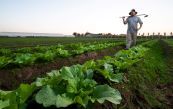
The USDA Farm Service Agency (FSA) encourages you to review available USDA crop risk protection options, including federal crop insurance and Noninsured Crop Disaster Assistance Program (NAP) coverage, before the crop deadline of March 15 for sage and spring seeded annual crops.
Federal crop insurance covers crop losses from natural adversities such as drought, hail and excessive moisture. NAP covers losses from natural disasters on crops for which no permanent federal crop insurance program is available.
You can determine if crops are eligible for federal crop insurance or NAP by visiting the RMA website.
NAP offers higher levels of coverage, from 50 to 65 percent of expected production in 5 percent increments, at 100 percent of the average market price. Producers of organics and crops marketed directly to consumers also may exercise the “buy-up” option to obtain NAP coverage of 100 percent of the average market price at the coverage levels of between 50 and 65 percent of expected production. NAP basic coverage is available at 55 percent of the average market price for crop losses that exceed 50 percent of expected production.
For all coverage levels, the NAP service fee is the lesser of $325 per crop or $825 per producer per county, not to exceed a total of $1,950 for a producer with farming interests in multiple counties.
If a producer has a Socially Disadvantaged, Limited Resource, Beginning and Veteran Farmer or Rancher Certification (Form CCC-860) on file with FSA, it may serve as an application for basic coverage for all eligible crops beginning with crop year 2022 and all NAP-related service fees for basic coverage will be waived for these producers.
Federal crop insurance coverage is sold and delivered solely through private insurance agents. Agent lists are available at all USDA Service Centers or at USDA’s online Agent Locator. You can use the USDA Cost Estimator to predict insurance premium costs.
For more information on NAP, service fees, sales deadlines, contact your local County USDA Service Center or visit fsa.usda.gov.
|
The U.S. Department of Agriculture (USDA) has developed a simplified direct loan application to provide improved customer experience for producers applying for loans from the Farm Service Agency (FSA). The simplified direct loan application enables producers to complete a more streamlined application, reduced from 29 to 13 pages. Producers will also have the option to complete an electronic fillable form or prepare a traditional, paper application for submission to their local FSA farm loan office. The paper and electronic versions of the form will be available starting March 1, 2023.
Approximately 26,000 producers submit a direct loan application to the FSA annually, but there is a high rate of incomplete or withdrawn applications, due in part to a challenging and lengthy paper-based application process. Coupled with the Loan Assistance Tool released in October 2022, the simplified application will provide all loan applicants access to information regarding the application process and assist them with gathering the correct documents before they begin the process. This new application will help farmers and ranchers submit complete loan applications and reduce the number of incomplete, rejected, or withdrawn applications.
In October 2022, USDA launched the Loan Assistance Tool, an online step-by-step guide that provides materials to help an applicant prepare their farm loan application in one tool. Farmers can access the Loan Assistance Tool by visiting farmers.gov/farm-loan-assistance-tool and clicking the ‘Get Started’ button. The tool is built to run on any modern browser like Chrome, Edge, Firefox, or the Safari browser. A version compatible with mobile devices is expected to be available by the summer. It does not work in Internet Explorer.
The simplified direct loan application and Loan Assistance Tool are the first of multiple farm loan process improvements that will be available to USDA customers on farmers.gov in the future. Other improvements that are anticipated to launch in 2023 include:
-
An interactive online direct loan application that gives customers a paperless and electronic signature option, along with the ability to attach supporting documents such as tax returns.
-
An online direct loan repayment feature that relieves borrowers from the necessity of calling, mailing, or visiting a local Service Center to pay a loan installment.
USDA provides access to credit to approximately 115,000 producers who cannot obtain sufficient commercial credit through direct and guaranteed farm loans. With the funds and direction Congress provided in Section 22006 of the Inflation Reduction Act, USDA took action in October 2022 to provide relief to qualifying distressed borrowers while working on making transformational changes to loan servicing so that borrowers are provided the flexibility and opportunities needed to address the inherent risks and unpredictability associated with agricultural operations.
Soon, all direct loan borrowers will receive a letter from USDA describing the circumstances under which additional payments will be made to distressed borrowers and how they can work with their FSA local office to discuss these options. Producers can explore all available options on all FSA loan options at fsa.usda.gov or by contacting their local USDA Service Center.
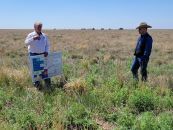
Agriculture Secretary Tom Vilsack announced that agricultural producers and private landowners can begin applying for the Conservation Reserve Program (CRP) General signup starting February 27 through April 7, 2023. CRP is a cornerstone voluntary conservation program offered by the U.S. Department of Agriculture (USDA) and a key tool in the Biden-Harris administration’s effort to address climate change and help agricultural communities invest in the long-term well-being of their land and natural resources.
Producers and landowners enrolled more than 5 million acres into CRP through signups in 2022, building on the acceptance of more than 3.1 million acres in the largest Grassland CRP signup in history. There are currently 23 million acres enrolled in CRP, with 1.9 million set to expire this year. USDA’s Farm Service Agency (FSA) is aiming to reach the 27-million-acre cap statutorily set for fiscal year 2023.
General CRP helps producers and landowners establish long-term, resource-conserving plant species, such as approved grasses or trees, to control soil erosion, improve water quality and enhance wildlife habitat on cropland. Additionally, General CRP includes a Climate-Smart Practice Incentive to help increase carbon sequestration and reduce greenhouse gas emissions by helping producers and landowners establish trees and permanent grasses, enhance wildlife habitat, and restore wetlands.
Under Continuous CRP, producers and landowners can enroll in CRP throughout the year. Offers are automatically accepted provided the producer and land meet the eligibility requirements and the enrollment levels do not exceed the statutory cap. The Climate-Smart Practice Incentive is also available in the Continuous signup.
FSA offers several additional enrollment opportunities within Continuous CRP, including the Clean Lakes Estuaries and Rivers Initiative (CLEAR30), the State Acres for Wildlife Enhancement (SAFE) Initiative, the Farmable Wetlands Program (FWP), and the Conservation Reserve Enhancement Program (CREP). The CLEAR30 Initiative, which was originally piloted in twelve states in the Great Lakes and Chesapeake Bay watershed, has been expanded nationwide, allowing producers and landowners to enroll in 30-year CRP contracts for water quality practices. Under this administration, FSA also moved SAFE practices back to the Continuous CRP signup, giving producers and landowners more opportunities to participate in the initiative. Through the FWP, producers and landowners can enroll land in CRP as part of their efforts to restore previously farmed wetlands and wetland buffers, to improve both vegetation and water flow.
This administration has also made significant improvements to CREP, which leverages federal and non-federal funds to target specific State, regional or nationally significant conservation concerns. Specifically, USDA made significant improvements to CREP to reduce barriers and make the program more accessible to a broad range of producers and new types of partners.
These updates included flexibility for partners to provide matching funds in the form of cash, in-kind contributions, or technical assistance, along with an investment in additional staff to work directly with partners. Through CREP, for the first time ever, three Tribal Nations are now partnering with USDA to help conserve, maintain, and improve grassland productivity, reduce soil erosion, and enhance wildlife habitat.
FSA will announce the dates for Grassland CRP signup in the coming weeks. Grassland CRP is a working lands program, helping landowners and operators protect grassland, including rangeland and pastureland and certain other lands, while maintaining the areas as working grazing lands.
Protecting grasslands contributes positively to the economy of many regions, provides biodiversity of plant and animal populations, and provides important carbon sequestration benefits to deliver lasting climate outcomes.
Landowners and producers interested in CRP should contact their local USDA Service Center to learn more or to apply for the program before their deadlines.
Producers with expiring CRP acres can use the Transition Incentives Program (TIP), which incentivizes producers who sell or enter a long-term lease with a beginning, veteran, or socially disadvantaged farmer or rancher who plans to sustainably farm or ranch the land.
Signed into law in 1985, CRP is one of the largest voluntary private-lands conservation programs in the United States. It was originally intended to primarily control soil erosion and potentially stabilize commodity prices by taking marginal lands out of production. The program has evolved over the years, providing many conservation and economic benefits.
|
Fruit, vegetable and wild rice producers will continue to follow the same rules for certain Farm Service Agency (FSA) programs.
If you intend to participate in the Agriculture Risk Coverage (ARC) or Price Loss Coverage (PLC) programs, you are subject to an acre-for-acre payment reduction when fruits and nuts, vegetables or wild rice are planted on payment acres of a farm. Payment reductions do not apply to mung beans, dry peas, lentils or chickpeas. Planting fruits, vegetables or wild rice on acres not considered payment acres will not result in a payment reduction. Farms that are eligible to participate in ARC/PLC but are not enrolled for a particular year may plant unlimited fruits, vegetables and wild rice for that year but will not receive ARC/PLC payments. Eligibility for succeeding years is not affected.
Planting and harvesting fruits, vegetables and wild rice on ARC/PLC acreage is subject to the acre-for-acre payment reduction when those crops are planted on more than 15 percent of the base acres of an ARC enrolled farm using the county coverage or PLC, or more than 35 percent of the base acres of an ARC enrolled farm using the individual coverage.
Fruits, vegetables and wild rice that are planted in a double-cropping practice will not cause a payment reduction if the farm is in a double-cropping region as designated by the USDA’s Commodity Credit Corporation.

The U.S. Department of Agriculture (USDA) made updates to several conservation, livestock and crop disaster assistance programs to give more farmers, ranchers, and tribes the opportunity to apply for and access programs that support recovery following natural disasters. Specifically, USDA’s Farm Service Agency (FSA) expanded eligibility and enhanced available benefits for a suite of its programs. These updates will provide critical assistance to producers who need to rebuild and recover after suffering catastrophic losses of production and infrastructure due to natural disasters.
FSA has updated the following programs: The Emergency Conservation Program (ECP), the Emergency Forest Restoration Program (EFRP), the Emergency Assistance for Livestock, Honeybees, and Farm-raised Fish (ELAP), the Livestock Forage Disaster Program (LFP), the Livestock Indemnity Program (LIP) and the Noninsured Crop Disaster Assistance Program (NAP).
Conservation Disaster Assistance Updates
FSA updated ECP to:
-
Allow producers who lease Federally owned or managed lands, including tribal trust land, as well as State land the opportunity to participate.
-
Provide advance payments, up to 25% of the cost, for all ECP practices before the restoration is carried out, an option that was previously only available for fence repair or replacement. The cost-share payment must be spent within 60 days.
Additionally, Congress also authorized the Federal government to pay 100% of the ECP and EFRP cost for damage associated with the Hermit’s Peak/Calf Canyon Fire in New Mexico. This fire burned over 340,000 acres from April 2022 to June 2022 and was the largest wildfire in recorded history in New Mexico. ECP and EFRP cost-share assistance is typically capped at 75%. This policy change for 100% cost-share applies only to those locations impacted by the Hermit’s Peak/Calf Canyon Fire.
ECP and EFRP provide financial and technical assistance to restore conservation practices like fencing, damaged farmland or forests.
Livestock Disaster Assistance Updates
FSA also expanded eligible livestock under ELAP, LFP and LIP. Specifically, horses maintained on eligible grazing land are eligible for ELAP, LFP and LIP. Many family farms and ranches use their forage to raise horses to augment their other agriculture endeavors. FSA recognizes that animals maintained in a commercial agriculture operation, add value to the operation and could be available for marketing from the farm. FSA regulations have been updated to include these animals as eligible livestock
Horses and other animals that are used or intended to be used for racing and wagering remain ineligible.
Ostriches are also now eligible for LFP and ELAP. FSA is making this change because ostriches satisfy more than 50% of their net energy requirement through the consumption of growing forage grasses and legumes and are therefore considered “grazing animals.”
This change for ostriches is effective for the 2022 program year for both LFP and ELAP. ELAP requires a notice of loss to be filed with FSA within 30 days of when the loss is first apparent. Because this deadline may have passed for 2022, FSA is extending the deadline for filing notices of loss through March 31, 2023.
LIP and ELAP reimburses producers for a portion of the value of livestock, poultry and other animals that died as a result of a qualifying natural disaster event or for loss of grazing acres, feed and forage. LFP provides benefits for grazing losses due to drought and eligible wildfires on federally managed lands.
Noninsured Crop Disaster Assistance
NAP provides financial assistance to producers of non-insurable crops when low yields, loss of inventory or prevented planting occur due to natural disasters. Basic NAP coverage is equivalent to the catastrophic level risk protection plan of insurance coverage, which is based on the amount of loss that exceeds 50% of expected production at 55% of the average market price for the crop.
Previously, to be eligible for NAP coverage, a producer had to submit an application (Form CCC-471) for NAP coverage on or before the application closing date. For 2022, if a producer has a Socially Disadvantaged, Limited Resource, Beginning and Veteran Farmer or Rancher Certification (Form CCC-860) on file with FSA, it will serve as an application for basic coverage for all eligible crops having a 2022 application closing date and all NAP-related service fees for basic coverage will be waived for these producers.
FSA will notify all eligible producers who already have the CCC-860 certification form on file of their eligibility for NAP basic coverage for 2022. To potentially receive NAP assistance, producers who suffered losses due to natural disasters in 2022 should file an acreage report as well as a notice of loss with the FSA at their local Service Center.
Producers who are interested in obtaining NAP coverage for 2023 and subsequent years should also contact their local FSA county office for information on eligibility, coverage options and applying for coverage.
Producers impacted by a natural disaster should report losses and damages and file an application with their FSA county office. Timelines for reporting losses and applying for payments differ by program.
For LIP and ELAP, producers will need to file a Notice of Loss for livestock and grazing or feed losses within 30 days and honeybee losses within 15 days. For LFP, producers must provide a completed application for payment and required supporting documentation to their FSA office within 30 calendar days after the end of the calendar year in which the grazing loss occurred.
For NAP, producers should contact their local FSA office for guidelines on submitting a notice of loss and filing an acreage certification.
The updates to these programs build on other Biden-Harris administration efforts to improve disaster assistance programs, including additional flexibility in obtaining Noninsured Crop Disaster Assistance Program (NAP) basic coverage for socially disadvantaged, beginning, limited resource and veteran farmers and ranchers.
Previous enhancement to the ELAP provide program benefits to producers of fish raised for food and other aquaculture species as well as cover above normal expenses for transporting livestock to forage and grazing acres and transport feed to livestock impacted by qualifying drought. And earlier updates to the LIP payment rates better reflect the true market value of non-adult beef, beefalo, bison and dairy animals.
Yesterday, FSA announced it would begin accepting applications for the Emergency Relief Program (ERP) Phase Two and the new Pandemic Assistance Revenue Program (PARP) on Jan. 23, 2023, through June 2, 2023. ERP Phase Two is designed to fill gaps in the delivery of program benefits not covered in ERP Phase One and improves equity in program delivery to underserved producers. PARP will help address gaps in previous pandemic assistance, which was targeted at price loss or lack of market access, rather than overall revenue losses. Learn more in the Jan. 9, 2023 news release.
|
The U.S. Department of Agriculture (USDA) launched a new online tool to help farmers and ranchers better navigate the farm loan application process. This uniform application process will help to ensure all farm loan applicants receive equal support and have a consistent customer experience with USDA’s Farm Service Agency (FSA) regardless of their individual circumstances.
USDA experiences a high rate of incomplete or withdrawn applications, particularly among underserved customers, due in part to a challenging and lengthy paper-based application process. The Loan Assistance Tool is available 24/7 and gives customers an online step-by-step guide that supplements the support they receive when working in person with a USDA employee, providing materials that may help an applicant prepare their loan application in one tool.
Farmers can access the Loan Assistance Tool by visiting farmers.gov/farm-loan-assistance-tool and clicking the ‘Get Started’ button. From here they can follow the prompts to complete the Eligibility Self-Assessment and start the farm loan journey. The tool is built to run on any modern browser like Chrome, Edge, Firefox, or the Safari browser, and is fully functional on mobile devices. It does not work in Internet Explorer.
The Loan Assistance Tool is the first of multiple farm loan process improvements that will be available to USDA customers on farmers.gov in the future. Other improvements and tools that are anticipated to launch in 2023 include:
-
A streamlined and simplified direct loan application, reduced from 29 pages to 13 pages.
-
An interactive online direct loan application that gives customers a paperless and electronic signature option, along with the ability to attach supporting documents such as tax returns.
-
An online direct loan repayment feature that relieves borrowers from the necessity of calling, mailing, or visiting a local Service Center to pay a loan installment.
USDA provides access to credit to approximately 115,000 producers who cannot obtain sufficient commercial credit through direct and guaranteed farm loans. With the funds and direction Congress provided in Section 22006 of the Inflation Reduction Act, USDA is taking action to immediately provide relief to qualifying distressed borrowers whose operations are at financial risk while working on making transformational changes to loan servicing so that borrowers are provided the flexibility and opportunities needed to address the inherent risks and unpredictability associated with agricultural operations.

Did you know you can subscribe to receive free email and text message updates from USDA related to urban agriculture and innovative production here in Minnesota?
Whether you’re scrolling through emails on your break or checking a text message between tasks, USDA wants to keep you posted on the latest news in urban agriculture and innovative production. Subscribe now to receive emails and text messages about important program information, eligibility requirements and deadlines from the Farm Service Agency (FSA), Natural Resources Conservation Service (NRCS), and Risk Management Agency (RMA) related to urban agriculture, specifically in Minnesota.
Minneapolis-St. Paul is one of the 17 USDA urban hubs, which are home to an FSA Urban County Committee as well as a flagship People’s Garden.
You can sign up for email alerts by visiting farmers.gov/subscribe (select “MN – Minneapolis-St. Paul – Urban Agriculture and Innovative Production”) or text alerts by texting MNUrbanAg, or MNMSPUrbanAg for updates specific to the Minneapolis-St. Paul urban hub, to 372-669.
Urban agriculture is one of the many topics available to producers. If you subscribe online, you can also sign up for information on other topics, including disaster assistance, conservation programs, crop insurance and farm loans. Participants may unsubscribe at any time.
|
In this Ask the Expert, Toni Williams answers questions about how Farm Storage Facility Loans (FSFLs) provide low-interest financing to help producers build or upgrade commodity storage facilities. Toni is the Agricultural Program Manager for FSFLs at the Farm Service Agency (FSA).
Toni has worked for FSA for more than 32 years and is responsible for providing national policy and guidance for Farm Storage Facility Loans.
What are Farm Storage Facility Loans?
Farm Storage Facility Loans provide low-interest financing for eligible producers to build or upgrade facilities to store commodities.
The FSFL program was created in May 2000 to address an existing grain shortage. Historically, FSFLs benefitted grain farmers, but a change in the 2008 Farm Bill extended the program to fruit and vegetable producers for cold storage. An additional change extended the program to washing and packing sheds, where fresh produce is washed, sorted, graded, labeled, boxed up, and stored before it heads to market. Since May 2000, FSA has made more than 40,000 loans for on-farm storage.
Eligible facility types include grain bins, hay barns, bulk tanks, and facilities for cold storage. Drying and handling and storage equipment including storage and handling trucks are also eligible. Eligible facilities and equipment may be new or used, permanently affixed or portable.
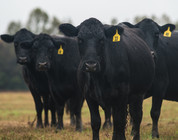
The Livestock Indemnity Program (LIP) provides assistance to you for livestock deaths in excess of normal mortality caused by adverse weather, disease and attacks by animals reintroduced into the wild by the federal government or protected by federal law.
For disease losses, FSA county committees can accept veterinarian certifications that livestock deaths were directly related to adverse weather and unpreventable through good animal husbandry and management.
For 2023 livestock losses, you must file a notice within 30 calendar days of when the loss is first apparent. You then must provide the following supporting documentation to your local FSA office no later than 60 calendar days after the end of the calendar year in which the eligible loss condition occurred.
-
Proof of death documentation
-
Copy of grower’s contracts
- Proof of normal mortality documentation
USDA has established normal mortality rates for each type and weight range of eligible livestock, i.e. Adult Beef Cow = 1.5% and Non-Adult Beef Cattle (less than 250 pounds) = 5%. These established percentages reflect losses that are considered expected or typical under “normal” conditions.
In addition to filing a notice of loss, you must also submit an application for payment by March 1, 2024.
For more information, contact your local County USDA Service Center or visit fsa.usda.gov.
|
Using the correct signature when doing business with FSA can save time and prevent a delay in program benefits.
The following are FSA signature guidelines:
-
A married woman must sign her given name: Mrs. Mary Doe, not Mrs. John Doe
-
For a minor, FSA requires the minor's signature and one from the minor’s parent
Note, by signing a document with a minor, the parent is liable for actions of the minor and may be liable for refunds, liquidated damages, etc.
When signing on one’s behalf the signature must agree with the name typed or printed on the form or be a variation that does not cause the name and signature to be in disagreement. Example - John W. Smith is on the form. The signature may be John W. Smith or J.W. Smith or J. Smith. Or Mary J. Smith may be signed as Mrs. Mary Joe Smith, M.J. Smith, Mary Smith, etc.
FAXED signatures will be accepted for certain forms and other documents provided the acceptable program forms are approved for FAXED signatures. Producers are responsible for the successful transmission and receipt of FAXED information.
Spouses may sign documents on behalf of each other for FSA and CCC programs in which either has an interest, unless written notification denying a spouse this authority has been provided to the county office.
Spouses cannot sign on behalf of each other as an authorized signatory for partnerships, joint ventures, corporations or other similar entities. Likewise, a spouse cannot sign a document on behalf of the other in order to affirm the eligibility of oneself.
Any member of a general partnership can sign on behalf of the general partnership and bind all members unless the Articles of Partnership are more restrictive. Spouses may sign on behalf of each other’s individual interest in a partnership, unless notification denying a spouse that authority is provided to the county office. Acceptable signatures for general partnerships, joint ventures, corporations, estates, and trusts must consist of an indicator “by” or “for” the individual’s name, individual’s name and capacity, or individual’s name, capacity, and name of entity.
For additional clarification on proper signatures contact your local FSA office.
|







