| Si Necesita una Explicación en Español, Por Favor Llámenos a la Oficina |
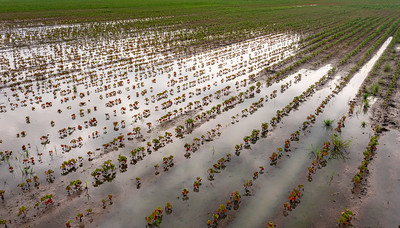
California Farm Service Agency (FSA) offers disaster assistance and low-interest loan programs to assist you in your recovery efforts following recent heavy rains and flooding. Available programs and loans include:
-
Non-Insured Crop Disaster Assistance Program (NAP) - provides financial assistance to producers of non-insurable crops when low yields, loss of inventory, or prevented planting occur due to natural disasters including excessive wind and qualifying drought (includes native grass for grazing).
-
Livestock Indemnity Program (LIP) - offers payments to eligible producers for livestock death losses in excess of normal mortality due to adverse weather.
-
Tree Assistance Program (TAP) – provides assistance to eligible orchardists and nursery tree growers for qualifying tree, shrub and vine losses due to natural disaster
-
Emergency Assistance for Livestock, Honeybees, and Farm-Raised Fish Program (ELAP) - provides emergency relief for losses due to feed or water shortages, disease, adverse weather, or other conditions, which are not adequately addressed by other disaster programs.
-
Emergency Loan Program – available to producers with agriculture operations located in a county under a primary or contiguous Secretarial Disaster designation. These low interest loans help producers recover from production and physical losses due to flooding.
-
Emergency Conservation Program (ECP) - provides emergency funding for farmers and ranchers to rehabilitate land severely damaged by natural disasters; includes fence loss.
To establish or retain FSA program eligibility, you must report prevented planting and failed acres (crops and grasses). Prevented planting acreage must be reported on form FSA-576, Notice of Loss, no later than 15 calendar days after the final planting date as established by FSA and Risk Management Agency (RMA).
For more information on these programs, contact your San Luis Obispo County USDA Service Center at 805-434-0396 ext. 2 or visit fsa.usda.gov/disaster.
Beginning January 23, 2023, agricultural producers can begin to apply for two new important programs for revenue losses, from 2020 and 2021 natural disasters or the COVID-19 pandemic. Both programs equitably fill gaps in earlier assistance.
First, you may be eligible for assistance through the Emergency Relief Program (ERP) Phase Two if you experienced revenue losses from eligible natural disasters in 2020 and 2021. ERP Phase Two is for producers who didn’t receive assistance from ERP Phase One.
You may also be eligible for the Pandemic Assistance Revenue Program (PARP) if you experienced revenue losses in calendar year 2020. PARP is addressing gaps in previous pandemic assistance, which was targeted at price loss or lack of market access, rather than overall revenue losses.
Applications for both new programs are due June 2, 2023, and you can apply for both programs during your same appointment with USDA’s Farm Service Agency (FSA).
Historically, FSA programs have been designed to make direct payments to producers based on a single disaster event or for a single commodity loss. For many of you, this may be the first revenue-based program that you’ve applied for with FSA.
Why revenue-based programs?
ERP Phase Two and PARP take a much more holistic approach to disaster assistance, ensuring that producers not just make it through a single growing season but have the financial stability to invest in the long-term well-being of their operations and employees.
In general, ERP Phase Two payments are based on the difference in allowable gross revenue between a benchmark year, representing a typical year of revenue for the producer and the disaster year – designed to target the remaining needs of producers impacted by qualifying natural disasters and avoid duplicative payments. ERP Phase Two revenue loss is based on tax years.
For PARP, an agricultural producer must have been in the business of farming during at least part of the 2020 calendar year and had a decrease in revenue for the 2020 calendar year, as compared to a typical year. PARP revenue loss is based on calendar years.
How to Apply
In preparation for enrollment, producers should gather supporting documentation including:
- Schedule F (Form 1040); and
-
Profit or Loss from Farming or similar tax documents for tax years 2018, 2019, 2020, 2021 and 2022 for ERP and for calendar years 2018, 2019 and 2020 for PARP.
Producers should also have, or be prepared to have, the following forms on file for both ERP and PARP program participation:
- Form AD-2047, Customer Data Worksheet (as applicable to the program participant);
- Form CCC-902, Farm Operating Plan for an individual or legal entity;
- Form CCC-901, Member Information for Legal Entities (if applicable); and
- Form AD-1026 Highly Erodible Land Conservation (HELC) and Wetland Conservation (WC) Certification.
- Form CCC-860, Socially Disadvantaged, Limited Resource, Beginning and Veteran Farmer or Rancher Certification, as certain existing permanent and ad-hoc disaster programs provide increased benefits or reduced fees and premiums.
Most producers, especially those who have previously participated in FSA programs, will likely have these required forms on file. However, those who are uncertain or want to confirm should contact FSA at their local USDA Service Center.
Yes, FSA is stepping outside of the box.
FSA is a big proponent of agricultural producers having a say in the design, implementation and delivery of the programs that directly impact their livelihoods. We also believe that some of the most creative and useful ideas for program and process improvements come from the FSA employees who administer this assistance through our network of more than 2,100 county offices. We want to thank producers across the country, along with the entire FSA workforce, for not just thinking outside of the box but also providing their input to make sure that we can improve and enhance our programs and our approach to assistance to better and more efficiently serve all producers who need our help.
Please visit your local USDA Service Center for more information on ERP Phase Two, PARP and our full portfolio of conservation, prices support, safety-net, credit and disaster assistance programs.
Agricultural producers can now change election and enroll in the Agriculture Risk Coverage (ARC) and Price Loss Coverage programs for the 2023 crop year, two key safety net programs offered by the U.S. Department of Agriculture (USDA). Signup began Oct. 17, 2022, and producers have until March 15, 2023, to enroll in these two programs. Additionally, USDA’s Farm Service Agency (FSA) has started issuing payments totaling more than $255 million to producers with 2021 crops that have triggered payments through ARC or PLC.
2023 Elections and Enrollment
Producers can elect coverage and enroll in ARC-County (ARC-CO) or PLC, which provide crop-by-crop protection, or ARC-Individual (ARC-IC), which protects the entire farm. Although election changes for 2023 are optional, producers must enroll through a signed contract each year. Also, if a producer has a multi-year contract on the farm and makes an election change for 2023, they must sign a new contract.
If producers do not submit their election by the March 15, 2023 deadline, their election remains the same as their 2022 election for crops on the farm. Farm owners cannot enroll in either program unless they have a share interest in the farm.
Covered commodities include barley, canola, large and small chickpeas, corn, crambe, flaxseed, grain sorghum, lentils, mustard seed, oats, peanuts, dry peas, rapeseed, long grain rice, medium and short grain rice, safflower seed, seed cotton, sesame, soybeans, sunflower seed and wheat.
Web-Based Decision Tools
In partnership with USDA, the University of Illinois and Texas A&M University offer web-based decision tools to assist producers in making informed, educated decisions using crop data specific to their respective farming operations. Tools include:
-
Gardner-farmdoc Payment Calculator, a tool available through the University of Illinois allows producers to estimate payments for farms and counties for ARC-CO and PLC.
-
ARC and PLC Decision Tool, a tool available through Texas A&M that allows producers to obtain basic information regarding the decision and factors that should be taken into consideration such as future commodity prices and historic yields to estimate payments for 2022.
2021 Payments and Contracts
ARC and PLC payments for a given crop year are paid out the following fall to allow actual county yields and the Market Year Average prices to be finalized. This month, FSA processed payments to producers enrolled in 2021 ARC-CO, ARC-IC and PLC for covered commodities that triggered for the crop year.
For ARC-CO, producers can view the 2021 ARC-CO Benchmark Yields and Revenues online database, for payment rates applicable to their county and each covered commodity. For PLC, payments have triggered for rapeseed and peanuts.
For ARC-IC, producers should contact their local FSA office for additional information pertaining to 2021 payment information, which relies on producer-specific yields for the crop and farm to determine benchmark yields and actual year yields when calculating revenues.
By the Numbers
In 2021, producers signed nearly 1.8 million ARC or PLC contracts, and 251 million out of 273 million base acres were enrolled in the programs. For the 2022 crop year signed contracts surpassed 1.8 million, to be paid in the fall of 2023, if a payment triggers.
Since ARC and PLC were first authorized by the 2014 Farm Bill and reauthorized by the 2018 Farm Bill, these safety-net programs have paid out more than $34.9 billion to producers of covered commodities.
Crop Insurance Considerations
ARC and PLC are part of a broader safety net provided by USDA, which also includes crop insurance and marketing assistance loans.
Producers are reminded that ARC and PLC elections and enrollments can impact eligibility for some crop insurance products.
Producers on farms with a PLC election have the option of purchasing Supplemental Coverage Option (SCO) through their Approved Insurance Provider; however, producers on farms where ARC is the election are ineligible for SCO on their planted acres for that crop on that farm.
Unlike SCO, the Enhanced Coverage Option (ECO) is unaffected by an ARC election. Producers may add ECO regardless of the farm program election.
Upland cotton farmers who choose to enroll seed cotton base acres in ARC or PLC are ineligible for the stacked income protection plan (STAX) on their planted cotton acres for that farm.
More Information
For more information on ARC and PLC, visit the ARC and PLC webpage or contact your local USDA Service Center.
San Luis Obispo County was declared a primary disaster due to heavy rains/flooding that occurred from January 2023. Under this designation, if you have operations in any primary or contiguous county, you are eligible to apply for low interest emergency loans.
Emergency loans help you recover from production and physical losses due to drought, flooding and other natural disasters or quarantine.
You have eight months from the date of the declaration to apply for emergency loan assistance. FSA will consider each loan application on its own merits, taking into account the extent of losses, security available and repayment ability. You can borrow up to 100 percent of actual production or physical losses, to a maximum amount of $500,000.
For more information about emergency loans, contact your San Luis Obispo County USDA Service Center at 805-434-0396 ext. 2 or visit fsa.usda.gov.
Crop Reporting Deadlines
- March 1 through March 15 – File Prevented Planting losses with FSA
- March 15 - Fall Alfalfa Seed, Almonds, Apples, Apricots, Fall Barley, Cherries, Figs, Nectarines, Spring Oats (planted 10/01 - 02/15), Olives, Peaches, Pears, Pecans, Plums, Prunes, Potatoes (planted 01/06 - 03/15), Walnuts, Wheat (planted 11/01 - 02/15)
2023 ARC PLC Election and Enrollment Deadline - March 15
General CRP - April 7
Emergency Conservation Program related to Flooding in January
- Eligible Counties: San Luis Obispo, Santa Barbara, Ventura, San Bernardino, Los Angeles, Kings, and Tulare Counties
- Sign-Up: February 13 - April 14, 2023
Emergency Relief Program Phase 2 - June 2, 2023
Pandemic Assistance Revenue Program - June 2, 2023
|