
Our office has been busy as we help you prepare for the upcoming growing season.
The countdown is on to the Agriculture Risk Coverage/Price Loss Coverage programs enrollment deadline of March 15, 2023. If you have not enrolled your farm(s) for 2023, please call our office NOW. March 15 is also the deadline for changing your current program election, meaning selecting ARC or PLC, as well as the deadline to have all signatures for your contracts. While making a new election is optional, you must enroll (sign a new contract) for 2023 by the deadline if you want to remain eligible for potential benefits.
Call (402) 269-2361, ext. 2, to begin the ARC/PLC election and enrollment process immediately.
If you are interested in more information about the ARC/PLC election options, you can listen to the recorded Center for Agricultural Profitability’s webinar, titled “Farm Program Safety Net Options.” Go to fsa.usda.gov/ne and click on the webinar link in the second “spotlights” story.
As you make ARC/PLC decisions, it’s also a good time to work with us on record changes associated with your farm or ranch. Items of importance include changes of address, zip code, phone number, email address or name or business name on file with our office. You should also report changes in your farm operation, like the addition of a farm by lease or purchase, or reorganizational changes such as if you form a Trust, LLC or other legal entity. Keeping this information current helps us more efficiently deliver program benefits to you.
If you are in need of farm or ranch financing for operating in 2023, and accessing commercial credit has been a challenge, you may want to consider contacting our FSA farm loan team. FSA’s February operating loan interest rate is 4.75%, and we just announced changes to our farm loan application in order to streamline the process. In addition, we have a Loan Assistance Tool that can help you find the right loan for you and take you through what to expect when you apply. Learn more at farmers.gov/loans or https://lat.fpac.usda.gov. That’s all for this month. Spring is around the corner.
-- Raela Brandt
|
February 27,2023 – General Conservation Reserve Program (CRP) signup begins
March 2, 2023 – Nebraska State Technical Committee Meeting. More information on how to participate available at nrcs.usda.gov/Nebraska
March 15, 2023 – FSA Agriculture Risk Coverage and Price Loss Coverage (ARC/PLC) Program deadline for elections and enrollment for 2023 production season
March 15, 2023 – ***FSA application closing date for Noninsured Crop Disaster Assistance Program (NAP) coverage for 2023 production season for most annual fruits and vegetables, millet, oats, forage sorghum, dry peas, hemp
May 31, 2023 – NRCS deadline to apply for assistance for agricultural land impacted by wildfire through the Environmental Quality Incentives Program
***Please note any above NAP calendar reference may not be inclusive for all NAP-covered crops; NAP participants should contact their County FSA Office to confirm important program deadlines.
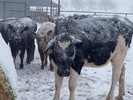
The Livestock Indemnity Program (LIP) provides financial benefits to producers who suffer livestock losses above normal mortality due to adverse weather, which can include winter storms with certain conditions such as heavy snowfall and extremely cold temperatures.
Livestock producers who have experienced weather-related livestock losses are reminded that reporting and documenting those losses is an important part of the LIP application process. Producers must report losses within 30 days of when those livestock losses become apparent. A phone call to the county FSA office can serve as official notice of loss. Otoe County FSA can be reached at (402) 269-2361, ext. 2.
Adequate documentation must be provided that proves the death or injury of eligible livestock occurred as a direct result of an eligible loss condition in the calendar year for which benefits are being requested. Documentation also must provide sufficient data that identifies the quantity and the livestock kind/type and weight range. Documents providing acceptable evidence may include, but are not limited to, any or a combination of the following:
- contemporaneous producer records existing at the time of event - pictures with a date
- rendering truck receipts or certificates
- veterinary records
- records assembled for tax purposes
- private insurance documents
- bank or other loan documents
- brand inspection records
Livestock owners or contract growers who suffered livestock losses will file a notice of loss and an application for payment at the USDA Service Center responsible for the physical location county where the livestock deaths or injuries occurred. While livestock owners and contract growers must file the notice of loss by 30 calendar days of when the loss is first apparent to the participant, producers have until March 1, 2024, to file the application for payment and provide the supporting documentation for 2023 losses.
|

Local Working Groups that provide input on the priorities for many U.S. Department of Agriculture conservation programs will be holding meetings across the state over the next several weeks. A list of scheduled meetings is available on the Nebraska Natural Resources Conservation Service (NRCS) website, or by contacting your local NRCS field office.
The public is invited to attend Local Working Group meetings. There is a Local Working Group in each Natural Resources District (NRD). Working groups provide local input into how Federal dollars are spent.
NRCS Nebraska obligates funds to farmers and ranchers through conservation programs like the Environmental Quality Incentives Program (EQIP), the Conservation Reserve Program (CRP), the Conservation Stewardship Program (CSP), and the Agricultural Conservation Easement Program (ACEP). These programs help landowners and operators make natural resource improvements to their land, water, or wildlife. This funding is allocated, in part, according to priorities set by Local Working Groups.
|
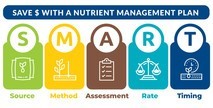
USDA’s Natural Resources Conservation Service (NRCS) works with farmers to develop nutrient management plans that optimize plant yields while reducing the amount of nutrients lost to the environment, where they can impact greenhouse gas emissions and air and water quality.
SMART Nutrient Management includes the 4Rs of nutrient stewardship – the right Source, right Method, right Rate, and right Timing – and emphasizes smart activities to reduce nutrient loss by Assessment of comprehensive, site-specific conditions.
A SMART Nutrient Management Plan considers all conditions on the farm and how they influence one another. It is tailored to the unique farm location, soil, climate, crops grown, management conditions, and other site-specific factors. Visit your local NRCS field office to learn more, or click How to Get Started with Nutrient Management | Farmers.gov.
|
The Farm Loan team in Otoe County is already working on operating loans for spring 2023 and asks potential borrowers to submit their requests early so they can be timely processed. The farm loan team can help determine which loan programs are best for applicants.
FSA offers a wide range of low-interest loans that can meet the financial needs of any farm operation for just about any purpose. The traditional farm operating and farm ownership loans can help large and small farm operations take advantage of early purchasing discounts for spring inputs as well expenses throughout the year.
Microloans are a simplified loan program that will provide up to $50,000 for both Farm Ownership and Operating Microloans to eligible applicants. These loans, targeted for smaller and non-traditional operations, can be used for operating expenses, starting a new operation, purchasing equipment, and other needs associated with a farming operation. Loans to beginning farmers and members of underserved groups are a priority.
Other types of loans available include:
Marketing Assistance Loans allow producers to use eligible commodities as loan collateral and obtain a 9-month loan while the crop is in storage. These loans provide cash flow to the producer and allow them to market the crop when prices may be more advantageous.
Farm Storage Facility Loans can be used to build permanent structures used to store eligible commodities, for storage and handling trucks, or portable or permanent handling equipment. A variety of structures are eligible under this loan, including bunker silos, grain bins, hay storage structures, and refrigerated structures for vegetables and fruit. A producer may borrow up to $500,000 per loan.
|
OPERATING/OWNERSHIP
Operating: 4.75%
Operating – Microloan: 4.75%
Farm Ownership: 4.75%
Farm Ownership - Joint Financing: 2.75%
Farm Ownership - Down Payment: 1.5%
Emergency - Actual Loss: 3.750%
FARM STORAGE FACILITY LOAN
3-year term: 4%
5-year term: 3.75%
7-year term: 3.75%
10-year term: 3.625%
12-year term: 3.75%
MARKETING ASSISTANCE
Commodity Loan: 5.750%
|