|
|
Midland/Gladwin/Clare Counties February News - February 17, 2023
|
|
|
|
Farm Service Agency | Natural Resources Conservation Service | Risk Management Agency
|
 |
|
FSA is cleaning up our producer record database and needs your help.
Please report any changes of address, zip code, phone number, email address or an incorrect name or business name on file to our office. You should also report changes in your farm operation, like the addition of a farm by lease or purchase. You should also report any changes to your operation in which you reorganize to form a Trust, LLC or other legal entity.
FSA and NRCS program participants are required to promptly report changes in their farming operation to the County Committee in writing and to update their Farm Operating Plan on form CCC-902.
|

Farm Service Agency (FSA) program payments are issued electronically into your bank account. In order to receive timely payments, you need to notify your FSA servicing office if you close your account or if your bank information is changed for any reason (such as your financial institution merging or being purchased). Payments can be delayed if FSA is not notified of changes to account and bank routing numbers.
For some programs, payments are not made until the following year. For example, payments for crop year 2019 through the Agriculture Risk Coverage and Price Loss Coverage program aren’t paid until 2020. If the bank account was closed due to the death of an individual or dissolution of an entity or partnership before the payment was issued, please notify your local FSA office as soon as possible to claim your payment.
|

If you have experienced delays in receiving Agriculture Risk Coverage (ARC) and Price Loss Coverage (PLC) payments, Loan Deficiency Payments (LDPs) and Market Gains on Marketing Assistance Loans (MALs), it may be because you have not filed form CCC-941, Adjusted Gross Income Certification.
If you don’t have a valid CCC-941 on file for the applicable crop year you will not receive payments. All farm operator/tenants/owners who have not filed a CCC-941 and have pending payments should IMMEDIATELY file the form with their recording county FSA office. Farm operators and tenants are encouraged to ensure that their landowners have filed the form.
FSA can accept the CCC-941 for 2018, 2019, 2020, 2021, and 2022. Unlike the past, you must have the CCC-941 certifying your AGI compliance before any payments can be issued.
|

Agricultural producers can now change election and enroll in the Agriculture Risk Coverage (ARC) and Price Loss Coverage programs for the 2023 crop year, two key safety net programs offered by the U.S. Department of Agriculture (USDA). Signup began Oct. 17, 2022, and producers have until March 15, 2023, to enroll in these two programs. Additionally, USDA’s Farm Service Agency (FSA) has started issuing payments totaling more than $255 million to producers with 2021 crops that have triggered payments through ARC or PLC.
2023 Elections and Enrollment
Producers can elect coverage and enroll in ARC-County (ARC-CO) or PLC, which provide crop-by-crop protection, or ARC-Individual (ARC-IC), which protects the entire farm. Although election changes for 2023 are optional, producers must enroll through a signed contract each year. Also, if a producer has a multi-year contract on the farm and makes an election change for 2023, they must sign a new contract.
If producers do not submit their election by the March 15, 2023, deadline, their election remains the same as their 2022 election for crops on the farm. Farm owners cannot enroll in either program unless they have a share interest in the farm.
Covered commodities include barley, canola, large and small chickpeas, corn, crambe, flaxseed, grain sorghum, lentils, mustard seed, oats, peanuts, dry peas, rapeseed, long grain rice, medium and short grain rice, safflower seed, seed cotton, sesame, soybeans, sunflower seed and wheat.
|

Farmers and ranchers rely on crop insurance to protect themselves from disasters and unforeseen events, but not all crops are insurable through the USDA’s Risk Management Agency. The Farm Service Agency’s (FSA) Noninsured Crop Disaster Assistance Program (NAP) provides producers another option to obtain coverage against disaster for these crops. NAP provides financial assistance to producers of non-insured crops impacted by natural disasters that result in lower yields, crop losses, or prevents crop planting.
Commercially produced crops and agricultural commodities for which crop insurance is not available are generally eligible for NAP. Eligible crops include those grown specifically for food, fiber, livestock consumption, biofuel or biobased products, or be commodities such as value loss crops like Christmas trees and ornamental nursery, honey, maple sap, and many others. Contact your FSA office to see which crops are eligible in your state and county.
Eligible causes of loss include drought, freeze, hail, excessive moisture, excessive wind or hurricanes, earthquake, flood. These events must occur during the NAP policy coverage period, before or during harvest, and the disaster must directly affect the eligible crop. For guidance on causes of loss not listed, contact your local FSA county office.
Interested producers must apply for coverage using FSA form CCC-471, “Application for Coverage,” and pay the applicable service fee at the FSA office where their farm records are maintained. These must be filed by the application closing date. Closing dates vary by crop, so it is important to contact your local FSA office as soon as possible to ensure you don’t miss an application closing date.
At the time of application, each producer will be provided a copy of the NAP Basic Provisions, which describes how NAP works and all the requirements you must follow to maintain NAP coverage. NAP participants must provide accurate annual reports of their production in non-loss years to ensure their NAP coverage is beneficial to their individual operation.
Producers are required to pay service fees which vary depending on the number of crops and number of counties your operation is located in. The NAP service fee is the lesser of $325 per crop or $825 per producer per administrative county, not to exceed a total of $1,950 for a producer with farming interests in multiple counties. Premiums also apply when producers elect higher levels of coverage with a maximum premium of $15,750 per person or legal entity depending on the maximum payment limitation that may apply to the NAP covered producer. The service fee can be waived for beginning, qualifying veteran, and limited resource farmers and rancher., These farmers and ranchers can also receive a 50 percent reduction in the premium.
|
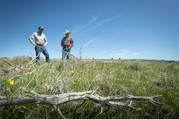
If you are a producer or landowner who participates in USDA’s Natural Resources Conservation Service (NRCS) conservation programs, the Farm Service Agency (FSA) may be reaching out by mail with information about a form you’ll need to fill out.
Starting this year, all producers and landowners participating or applying to participate in certain NRCS conservation programs must complete form CCC-902, Farm Operating Plan. Historically, to participate in these programs, legal entities could file either the CCC-901, Member Information or the CCC-902, while individuals were not specifically required to file the CCC-902 with FSA. Now, to ensure FSA and NRCS are properly determining payment eligibility and maximum payment limitations, all customers must have a CCC-902 on file to establish eligibility.
These changes will not affect participants who already have a Form CCC-902 with a “determined” status recorded with FSA. Customers that do not have a CCC-902 on file with FSA will be sent a letter in the mail in the coming weeks with detailed information on what is needed and how to file the form. The letter requests that the form be completed within 30 days of receiving the letter.
For added convenience, USDA is offering options for remote or in-person submission of the CCC-902. Fiscal year 2021 is considered a transition year to ensure all NRCS program participants can meet this updated filing requirement. Beginning in FY 2022, if form CCC-902 is not on file your payments may be impacted.
We can help: NRCS and FSA staff are available at USDA Service Centers nationwide to provide information and assistance to walk you through meeting this filing requirement
|
|
|
|
 |

Farmers and ranchers rely on crop insurance to protect themselves from disasters and unforeseen events, but not all crops are insurable through the USDA’s Risk Management Agency. The Farm Service Agency’s (FSA) Noninsured Crop Disaster Assistance Program (NAP) provides producers another option to obtain coverage against disaster for these crops. NAP provides financial assistance to producers of non-insured crops impacted by natural disasters that result in lower yields, crop losses, or prevents crop planting.
Commercially produced crops and agricultural commodities for which crop insurance is not available are generally eligible for NAP. Eligible crops include those grown specifically for food, fiber, livestock consumption, biofuel or biobased products, or be commodities such as value loss crops like Christmas trees and ornamental nursery, honey, maple sap, and many others. Contact your FSA office to see which crops are eligible in your state and county.
Eligible causes of loss include drought, freeze, hail, excessive moisture, excessive wind or hurricanes, earthquake, flood. These events must occur during the NAP policy coverage period, before or during harvest, and the disaster must directly affect the eligible crop. For guidance on causes of loss not listed, contact your local FSA county office.
Interested producers must apply for coverage using FSA form CCC-471, “Application for Coverage,” and pay the applicable service fee at the FSA office where their farm records are maintained. These must be filed by the application closing date. Closing dates vary by crop, so it is important to contact your local FSA office as soon as possible to ensure you don’t miss an application closing date.
At the time of application, each producer will be provided a copy of the NAP Basic Provisions, which describes how NAP works and all the requirements you must follow to maintain NAP coverage. NAP participants must provide accurate annual reports of their production in non-loss years to ensure their NAP coverage is beneficial to their individual operation.
Producers are required to pay service fees which vary depending on the number of crops and number of counties your operation is located in. The NAP service fee is the lesser of $325 per crop or $825 per producer per administrative county, not to exceed a total of $1,950 for a producer with farming interests in multiple counties. Premiums also apply when producers elect higher levels of coverage with a maximum premium of $15,750 per person or legal entity depending on the maximum payment limitation that may apply to the NAP covered producer. The service fee can be waived for beginning, qualifying veteran, and limited resource farmers and rancher., These farmers and ranchers can also receive a 50 percent reduction in the premium.
For more detailed information on NAP, download the NAP Fact Sheet. To get started with NAP, we recommend you contact your local USDA service center.
edit this placeholder text.
|
USDA Service Centers
Midland County USDA Service Center
954 E Isabella Rd
Midland, MI 48640
Phone: 989-832-3651
Fax: 855-662-9273
Gladwin/Clare USDA Service Center
1501 N State St
Gladwin, MI 48624
Phone: 989-426-9461
Fax: 855-662-9273
|
County Executive Director
Kimberly Roestel 989-426-9461
kimberly.roestel@usda.gov
|
Loan Manager
Garrett Duranczyk 989-772-5927
garrett.duranczyk@usda.gov
|
|
Program Technicians
Midland:
Darcy Laurin
Amy Stecker
Gladwin:
Brenda Inscho
|
Natural Resources Conservation Service
Gladwin:
Caitlain Thompson 989-426-9461 ext3
caitlain.thompson@usda.gov
Midland:
Dave Lehnert 989-832-3651 ext170
david.lehnert@usda.gov
|
|
Midland FSA County Committee
Heather Leuenberger
David Breasbois
Mark Pelton
Ashley Raetz-Myers
|
Gladwin/Clare FSA County Committee
Dan Fitzpatrick
Linda Peterson
Cody Grove
Anthony Neumeyer
Aaron Ritchie
Alysha Shea
|
|
|
|
|
|