
The Livingston County Farm Service Agency (FSA) office in Geneseo is hiring a full time, Program Technician (PT). The deadline to apply is February 8, 2023.
Duties include general office activities supporting FSA programs administered at the field level. Successful applicants must be reliable, have a professional attitude and enjoy working with the public.
If you are interested or know of someone who might be interested, please share this information with them. Here is the direct link to the position with information on how to apply: https://www.usajobs.gov/GetJob/ViewDetails/700841300
Applications must be completed through USAJOBs no later than close of business on February 8, 2023
Contact Michele McIlroy at (585) 243-0030 if you have specific questions regarding the position.
USDA is an equal opportunity provider, employer, and lender.
|
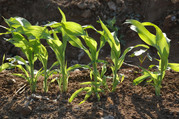
Agricultural producers can now change election and enroll in the Agriculture Risk Coverage (ARC) and Price Loss Coverage programs for the 2023 crop year, two key safety net programs offered by the U.S. Department of Agriculture (USDA). Signup began Monday, and producers have until March 15, 2023, to enroll in these two programs. Additionally, USDA’s Farm Service Agency (FSA) has started issuing payments totaling more than $255 million to producers with 2021 crops that have triggered payments through ARC or PLC.
2023 Elections and Enrollment
Producers can elect coverage and enroll in ARC-County (ARC-CO) or PLC, which provide crop-by-crop protection, or ARC-Individual (ARC-IC), which protects the entire farm. Although election changes for 2023 are optional, producers must enroll through a signed contract each year. Also, if a producer has a multi-year contract on the farm and makes an election change for 2023, they must sign a new contract.
If producers do not submit their election by the March 15, 2023 deadline, their election remains the same as their 2022 election for crops on the farm. Farm owners cannot enroll in either program unless they have a share interest in the farm.
Covered commodities include barley, canola, large and small chickpeas, corn, crambe, flaxseed, grain sorghum, lentils, mustard seed, oats, peanuts, dry peas, rapeseed, long grain rice, medium and short grain rice, safflower seed, seed cotton, sesame, soybeans, sunflower seed and wheat.
Web-Based Decision Tools
In partnership with USDA, the University of Illinois and Texas A&M University offer web-based decision tools to assist producers in making informed, educated decisions using crop data specific to their respective farming operations. Tools include:
-
Gardner-farmdoc Payment Calculator, a tool available through the University of Illinois allows producers to estimate payments for farms and counties for ARC-CO and PLC.
-
ARC and PLC Decision Tool, a tool available through Texas A&M that allows producers to obtain basic information regarding the decision and factors that should be taken into consideration such as future commodity prices and historic yields to estimate payments for 2022.
2021 Payments and Contracts
ARC and PLC payments for a given crop year are paid out the following fall to allow actual county yields and the Market Year Average prices to be finalized. This month, FSA processed payments to producers enrolled in 2021 ARC-CO, ARC-IC and PLC for covered commodities that triggered for the crop year.
For ARC-CO, producers can view the 2021 ARC-CO Benchmark Yields and Revenues online database, for payment rates applicable to their county and each covered commodity. For PLC, payments have triggered for rapeseed and peanuts.
For ARC-IC, producers should contact their local FSA office for additional information pertaining to 2021 payment information, which relies on producer-specific yields for the crop and farm to determine benchmark yields and actual year yields when calculating revenues.
By the Numbers
In 2021, producers signed nearly 1.8 million ARC or PLC contracts, and 251 million out of 273 million base acres were enrolled in the programs. For the 2022 crop year signed contracts surpassed 1.8 million, to be paid in the fall of 2023, if a payment triggers.
Since ARC and PLC were first authorized by the 2014 Farm Bill and reauthorized by the 2018 Farm Bill, these safety-net programs have paid out more than $34.9 billion to producers of covered commodities.
Crop Insurance Considerations
ARC and PLC are part of a broader safety net provided by USDA, which also includes crop insurance and marketing assistance loans.
Producers are reminded that ARC and PLC elections and enrollments can impact eligibility for some crop insurance products.
Producers of farms with a PLC election have the option of purchasing Supplemental Coverage Option (SCO) through their Approved Insurance Provider; however, producers on farms where ARC is the election are ineligible for SCO on their planted acres for that crop on that farm.
Unlike SCO, the Enhanced Coverage Option (ECO) is unaffected by an ARC election. Producers may add ECO regardless of the farm program election.
Upland cotton farmers who choose to enroll seed cotton base acres in ARC or PLC are ineligible for the stacked income protection plan (STAX) on their planted cotton acres for that farm.
More Information
For more information on ARC and PLC, visit the ARC and PLC webpage or contact your local USDA Service Center.
|
Livingston County U.S. Department of Agriculture (USDA) Farm Service Agency (FSA) announced that County Committee elections are over, and the ballots have been counted.
Annetta Herrington of Dansville was elected to represent local administrative area (LAA) 3.
County committee members are a critical component of the day-to-day operations of FSA. They help deliver programs at the county level and work to serve the needs of local producers. All recently elected county committee members will take office in January 2023 and will be joining the existing committee. Every FSA office is required to have a county committee, and they are made up of local farmers, ranchers and foresters who are elected by local producers.
Nearly 7,800 FSA county committee members serve FSA offices nationwide. Each committee has three to 11 elected members who serve three-year terms of office. One-third of county committee seats are up for election each year. County committee members impact the administration of FSA within a community by applying their knowledge and judgment to help FSA make important decisions on its commodity support programs, conservation programs, indemnity and disaster programs, emergency programs and eligibility.
County committee members impact producers through their decision making and help shape the culture of a local FSA office. They also ensure the fair and equitable administration of FSA farm programs in their counties and are accountable to the Secretary of Agriculture. Members conduct hearings and reviews as requested by the state committee, ensure underserved farmers, ranchers and foresters are fairly represented, make recommendations to the state committee on existing programs, monitor changes in farm programs and inform farmers of the purpose and provisions of FSA programs. They also assist with outreach and inform underserved producers such as beginning farmers, ranchers and foresters, about FSA opportunities.
The term “sodbusting” is used to identify the conversion of land from native vegetation to commodity crop production after December 23, 1985. As part of the conservation provisions of the Food Security Act of 1985, if you’re proposing to produce agricultural commodities (crops that require annual tillage including one pass planting operations and sugar cane) on land that has been determined highly erodible and that has no crop history prior to December 23, 1985, that land must be farmed in accordance with a conservation plan or system that ensures no substantial increase in soil erosion.
Eligibility for many USDA programs requires compliance with a conservation plan or system on highly erodible land (HEL) used for the production of agricultural commodities. This includes Farm Service Agency (FSA) loan, disaster assistance, safety net, price support, and conservation programs; Natural Resources Conservation Service (NRCS) conservation programs; and Risk Management Agency (RMA) Federal crop insurance.
Before you clear or prepare areas not presently under production for crops that require annual tillage, you are required to file Form AD-1026 “Highly Erodible Land Conservation and Wetland Conservation Certification,” with FSA indicating the area to be brought into production. The notification will be referred to NRCS to determine if the field is considered highly erodible land. If the field is considered HEL, you are required to implement a conservation plan or system that limits the erosion to the tolerable soil loss (T) for the predominant HEL soil on those fields.
In addition, prior to removing trees or conducting any other land manipulations that may affect wetlands, remember to update form AD-1026, to ensure you remain in compliance with the wetland conservation provisions.
Prior to purchasing or renting new cropland acres, it is recommended that you check with your local USDA Service Center to ensure your activities will be in compliance with the highly erodible land and wetland conservation provisions.
For additional information on highly erodible land conservation and wetland conservation compliance, contact your local USDA Service Center.
The USDA Farm Service Agency’s (FSA) Direct Farm Ownership loans are a resource to help farmers and ranchers become owner-operators of family farms, improve and expand current operations, increase agricultural productivity, and assist with land tenure to save farmland for future generations.
There are three types of Direct Farm Ownership Loans: regular, down payment and joint financing. FSA also offers a Direct Farm Ownership Microloan option for smaller financial needs up to $50,000.
Direct Farm Ownership Loans can be used to construct, purchase or improve farm dwellings, service buildings or other facilities, and to make improvements essential to an operation.
Applicants must provide FSA with an estimate of the total cost of all planned development that completely describe the work, prior to loan approval and must show proof of sufficient funds to pay for the total cost of all planned development at or before loan closing. In some instances, applicants may be asked to provide certified plans, specifications or contract documents. The applicant cannot incur any debts for materials or labor or make any expenditures for development purposes prior to loan closing with the expectation of being reimbursed from FSA funds.
Construction and development work may be performed either by the contract method or the borrower method. Under the contract method, construction and development contractors perform work according to a written contract with the applicant or borrower. If applying for a direct loan to finance a construction project, the applicant must obtain a surety bond that guarantees both payment and performance in the amount of the construction contract from a construction contractor.
Required when a contract exceeds $100,000. An authorized agency official determines that a surety bond appears advisable to protect the borrower against default of the contractor or a contract provides for partial payments in excess of the amount of 60 percent of the value of the work in place.
Under the borrower method, the applicant or borrower will perform the construction and development work. The borrower method may only be used when the authorized agency official determines, based on information from the applicant, that the applicant possesses or arranges to obtain the necessary skill and managerial ability to complete the work satisfactorily and that such work will not interfere with the applicant’s farming operation or work schedule.
Potential applicants should visit with FSA early in the initial project planning process to ensure environmental compliance.
For more eligibility requirements and information on FSA farm loan programs, contact the Farm Loan staff located in the Genesee County USDA Service Center, 585-343-9167 or visit fsa.usda.gov.
|