Happy New Year! With the current winter storm affecting Texas, I hope that you are staying safe and warm. As farmers and ranchers, your work never stops, and I appreciate your dedication.
I’ll start with a friendly reminder that the Agriculture Risk Coverage (ARC) and Price Loss Coverage (PLC) enrollment for crop year 2023 is open. FSA strongly encourages producers to contact your local USDA Service Centers to make or change elections and to enroll for 2023, providing future protections against market fluctuations.
To date, only 25% of farms in Texas have completed ARC/PLC elections and enrollments for the 2023 crop year. With the deadline rapidly approaching, producers are encouraged to schedule appointments to complete the process as soon as possible. Even if you sign an ARC/PLC contract today, you can make changes, if needed, until the March 15, 2023, election and enrollment deadline.
As we work through another winter storm, I want to remind producers that assistance may be available for eligible losses. You can visit farmers.gov/protection-recovery to learn more about what programs may be available to assist producers recovering from natural disasters.
Sincerely,
Kelly Adkins
State Executive Director
Farm Service Agency - Texas
|
January is here and with it, a new year. While we look back at the accomplishments of the past year and the work we completed, NRCS Texas has an eye on the future and the work to be done in 2023. NRCS Texas will build on its historic conservation legacy to address modern natural resource challenges facing agricultural producers across the state.
NRCS Texas is committed to working with producers to support the growing population in every corner of the state, including those in urban areas. Urban agriculture producers work among diverse populations to expand access to fresh foods, provide jobs, educate communities, and foster community engagement.
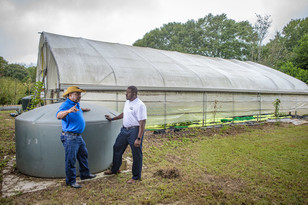
Urban agriculture is an exciting and untapped area for our conservation efforts. This could include community gardens, small-acreage operations, pollinator plantings, and a whole host of other opportunities. Technical and financial assistance is available for urban producers and includes conservation practices such as high tunnels, irrigation water management, weed and pest management, and soil health practices.
Our support of urban agriculture efforts is part of the Department’s broader focus on equity, local food systems, access to safe and nutritional food, and new ways to address climate change. Visit us online at Urban Agriculture | Natural Resources Conservation Service (usda.gov) for more information on how to get started.
As a reminder, Texas producers can continue to enhance their conservation goals with the
2023-1 Conservation Stewardship Program (CSP). Through CSP, NRCS helps farmers, ranchers and forest landowners earn payments for expanding conservation activities while maintaining agricultural production on their land. CSP also encourages the adoption of new technologies, management techniques, and conservation activities, including cover crops and resource-conserving crop rotations. NRCS also provides specific support for organic and for transitioning to organic production activities through CSP. While applications are accepted throughout the year, interested producers should submit applications to their local NRCS office by Feb. 24, 2023. In addition, Environmental Quality Incentives Program (EQIP) applications are accepted throughout the year. Landowners and producers interested in EQIP should contact their local NRCS county office.
As USDA’s premiere water quality initiative, the National Water Quality Initiative (NWQI) provides a way to accelerate voluntary, on-farm conservation investments and focused water quality monitoring and assessment resources where they can deliver the greatest benefits for clean water. NWQI is active in 4 watersheds: Lake Lavon, Lake Lampasas, Big Elm Creek, and Aransas River.
Finally, NRCS Texas currently has four active Regional Conservation Partnership Program (RCPP) agreements and currently working on four RCPP selected proposals to activate. Active projects include: Restoring Perennial Flow in Comanche Springs, Audubon Conservation Ranching Initiative, Texas Coastal Prairie Initiative, and Greater Big Bend Conservation Partnership. Projects in agreement negotiation are the Drought Resilience Incentive Program in Pecan Bayou, Prairie Grasslands Conservation in Central Texas, Nueces Watershed Additive Conservation Partnership, and Camp Bullis Sentinel Landscape. A new national request for proposals is targeted for release this spring on www.grants.gov.
Sincerely,
Kristy Oates
State Conservationist
Natural Resources Conservation Service - Texas
|
Agricultural producers can now change election and enroll in the Agriculture Risk Coverage (ARC) and Price Loss Coverage programs for the 2023 crop year, two key safety net programs offered by the U.S. Department of Agriculture (USDA). Producers have until March 15, 2023, to enroll in these two programs. Additionally, USDA’s Farm Service Agency (FSA) has started issuing payments totaling more than $255 million to producers with 2021 crops that have triggered payments through ARC or PLC.
2023 Elections and Enrollment
Producers can elect coverage and enroll in ARC-County (ARC-CO) or PLC, which provide crop-by-crop protection, or ARC-Individual (ARC-IC), which protects the entire farm. Although election changes for 2023 are optional, producers must enroll through a signed contract each year. Also, if a producer has a multi-year contract on the farm and makes an election change for 2023, they must sign a new contract.
If producers do not submit their election by the March 15, 2023 deadline, their election remains the same as their 2022 election for crops on the farm. Farm owners cannot enroll in either program unless they have a share interest in the farm.
Covered commodities include barley, canola, large and small chickpeas, corn, crambe, flaxseed, grain sorghum, lentils, mustard seed, oats, peanuts, dry peas, rapeseed, long grain rice, medium and short grain rice, safflower seed, seed cotton, sesame, soybeans, sunflower seed and wheat.
Web-Based Decision Tools
In partnership with USDA, the University of Illinois and Texas A&M University offer web-based decision tools to assist producers in making informed, educated decisions using crop data specific to their respective farming operations. Tools include:
-
Gardner-farmdoc Payment Calculator, a tool available through the University of Illinois allows producers to estimate payments for farms and counties for ARC-CO and PLC.
-
ARC and PLC Decision Tool, a tool available through Texas A&M that allows producers to obtain basic information regarding the decision and factors that should be taken into consideration such as future commodity prices and historic yields to estimate payments for 2022.
2021 Payments and Contracts
ARC and PLC payments for a given crop year are paid out the following fall to allow actual county yields and the Market Year Average prices to be finalized. This month, FSA processed payments to producers enrolled in 2021 ARC-CO, ARC-IC and PLC for covered commodities that triggered for the crop year.
For ARC-CO, producers can view the 2021 ARC-CO Benchmark Yields and Revenues online database, for payment rates applicable to their county and each covered commodity. For PLC, payments have triggered for rapeseed and peanuts.
For ARC-IC, producers should contact their local FSA office for additional information pertaining to 2021 payment information, which relies on producer-specific yields for the crop and farm to determine benchmark yields and actual year yields when calculating revenues.
By the Numbers
In 2021, producers signed nearly 1.8 million ARC or PLC contracts, and 251 million out of 273 million base acres were enrolled in the programs. For the 2022 crop year signed contracts surpassed 1.8 million, to be paid in the fall of 2023, if a payment triggers.
Since ARC and PLC were first authorized by the 2014 Farm Bill and reauthorized by the 2018 Farm Bill, these safety-net programs have paid out more than $34.9 billion to producers of covered commodities.
Crop Insurance Considerations
ARC and PLC are part of a broader safety net provided by USDA, which also includes crop insurance and marketing assistance loans.
Producers are reminded that ARC and PLC elections and enrollments can impact eligibility for some crop insurance products.
Producers on farms with a PLC election have the option of purchasing Supplemental Coverage Option (SCO) through their Approved Insurance Provider; however, producers on farms where ARC is the election are ineligible for SCO on their planted acres for that crop on that farm.
Unlike SCO, the Enhanced Coverage Option (ECO) is unaffected by an ARC election. Producers may add ECO regardless of the farm program election.
Upland cotton farmers who choose to enroll seed cotton base acres in ARC or PLC are ineligible for the stacked income protection plan (STAX) on their planted cotton acres for that farm.
More Information
For more information on ARC and PLC, visit the ARC and PLC webpage or contact your local USDA Service Center.
The U.S. Department of Agriculture (USDA) reminds specialty crop producers of available assistance to help cover certain costs of complying with regulatory and market-driven food safety certification requirements. Applications for the Food Safety Certification for Specialty Crops (FSCSC) program for eligible 2022 costs are due by Jan. 31, 2023. USDA’s Farm Service Agency (FSA) will accept applications for 2023 costs from Feb. 1, 2023, to Jan. 31, 2024.
FSA is making available up to $200 million through the FSCSC program, which is part of USDA’s broader effort to transform the food system to create a more level playing field for small-scale agricultural operations and a more balanced, equitable economy for everyone working in food and agriculture.
USDA first announced and opened this program for signup in 2022, delivering critical assistance for specialty crop operations, with an emphasis on equity in program delivery while building on lessons learned from the COVID-19 pandemic and supply chain disruptions.
Program Details
FSCSC assists specialty crop operations that incurred eligible on-farm food safety certification and expenses related to obtaining or renewing a food safety certification in calendar years 2022 and 2023 for certifications issued on or after June 21, 2022. For each year, FSCSC covers a percentage of the specialty crop operation’s eligible costs of obtaining or renewing their certification, as well as a portion of their related expenses.
To be eligible for FSCSC, the applicant must:
- Be a specialty crop operation.
- Meet the definition of a small business or very small business.
- Have paid eligible expenses related to certification.
Specialty crop operations may receive assistance for the following costs:
- Developing a food safety plan for first-time food safety certification.
- Maintaining or updating an existing food safety plan.
- Food safety certification.
- Certification upload fees.
- Microbiological testing for products, soil amendments and water.
FSA calculates FSCSC payments for each category of eligible costs. FSA set a higher payment rate for underserved farmers and ranchers, which includes socially disadvantaged, limited resource, beginning and veteran producers who have a CCC-860 on file with FSA.
FSA will issue payments at the time of application approval for 2022 and after the application period ends for 2023. The 2023 application period opens Feb. 1, 2023, and closes Jan. 31, 2024. If calculated payments exceed the amount of available funding, payments will be prorated.
Applying for Assistance
Interested specialty crop producers can apply by completing the application, FSA-888. The application, along with other required documents, can be submitted to the FSA office at any USDA Service Center nationwide by mail, fax, hand delivery or via electronic means. Producers can visit farmers.gov/service-locator to find their local FSA office. Specialty crop producers can also call 877-508-8364 to speak directly with a USDA employee ready to assist.
Producers can visit farmers.gov/food-safety for additional program details, eligibility information and forms needed to apply.
The U.S. Department of Agriculture (USDA) made updates to several conservation, livestock and crop disaster assistance programs to give more farmers, ranchers, and tribes the opportunity to apply for and access programs that support recovery following natural disasters. Specifically, USDA’s Farm Service Agency (FSA) expanded eligibility and enhanced available benefits for a suite of its programs. These updates will provide critical assistance to producers who need to rebuild and recover after suffering catastrophic losses of production and infrastructure due to natural disasters.
FSA has updated the following programs: The Emergency Conservation Program (ECP), the Emergency Forest Restoration Program (EFRP), the Emergency Assistance for Livestock, Honeybees, and Farm-raised Fish (ELAP), the Livestock Forage Disaster Program (LFP), the Livestock Indemnity Program (LIP) and the Noninsured Crop Disaster Assistance Program (NAP).
Conservation Disaster Assistance Updates
FSA updated ECP to:
- Allow producers who lease Federally owned or managed lands, including tribal trust land, as well as State land the opportunity to participate.
- Provide advance payments, up to 25% of the cost, for all ECP practices before the restoration is carried out, an option that was previously only available for fence repair or replacement. The cost-share payment must be spent within 60 days.
Additionally, Congress also authorized the Federal government to pay 100% of the ECP and EFRP cost for damage associated with the Hermit’s Peak/Calf Canyon Fire in New Mexico. This fire burned over 340,000 acres from April 2022 to June 2022 and was the largest wildfire in recorded history in New Mexico. ECP and EFRP cost-share assistance is typically capped at 75%. This policy change for 100% cost-share applies only to those locations impacted by the Hermit’s Peak/Calf Canyon Fire.
ECP and EFRP provide financial and technical assistance to restore conservation practices like fencing, damaged farmland or forests.
Livestock Disaster Assistance Updates
FSA also expanded eligible livestock under ELAP, LFP and LIP. Specifically, horses maintained on eligible grazing land are eligible for ELAP, LFP and LIP. Many family farms and ranches use their forage to raise horses to augment their other agriculture endeavors. FSA recognizes that animals maintained in a commercial agriculture operation, add value to the operation and could be available for marketing from the farm. FSA regulations have been updated to include these animals as eligible livestock.
Horses and other animals that are used or intended to be used for racing and wagering remain ineligible.
Ostriches are also now eligible for LFP and ELAP. FSA is making this change because ostriches satisfy more than 50% of their net energy requirement through the consumption of growing forage grasses and legumes and are therefore considered “grazing animals”.
This change for ostriches is effective for the 2022 program year for both LFP and ELAP. ELAP requires a notice of loss to be filed with FSA within 30 days of when the loss is first apparent. Because this deadline may have passed for 2022, FSA is extending the deadline for filing notices of loss through March 31, 2023.
LIP and ELAP reimburses producers for a portion of the value of livestock, poultry and other animals that died as a result of a qualifying natural disaster event or for loss of grazing acres, feed and forage. LFP provides benefits for grazing losses due to drought and eligible wildfires on federally managed lands.
Noninsured Crop Disaster Assistance
NAP provides financial assistance to producers of non-insurable crops when low yields, loss of inventory or prevented planting occur due to natural disasters. Basic NAP coverage is equivalent to the catastrophic level risk protection plan of insurance coverage, which is based on the amount of loss that exceeds 50% of expected production at 55% of the average market price for the crop.
Previously, to be eligible for NAP coverage, a producer had to submit an application (Form CCC-471) for NAP coverage on or before the application closing date. For 2022, if a producer has a Socially Disadvantaged, Limited Resource, Beginning and Veteran Farmer or Rancher Certification (Form CCC-860) on file with FSA, it will serve as an application for basic coverage for all eligible crops having a 2022 application closing date and all NAP-related service fees for basic coverage will be waived for these producers.
FSA will notify all eligible producers who already have the CCC-860 certification form on file of their eligibility for NAP basic coverage for 2022. To potentially receive NAP assistance, producers who suffered losses due to natural disasters in 2022 should file an acreage report as well as a notice of loss with the FSA at their local Service Center.
Producers who are interested in obtaining NAP coverage for 2023 and subsequent years should also contact their local FSA county office for information on eligibility, coverage options and applying for coverage.
Reporting Losses
Producers impacted by a natural disaster should report losses and damages and file an application with their FSA county office. Timelines for reporting losses and applying for payments differ by program.
For LIP and ELAP, producers will need to file a Notice of Loss for livestock and grazing or feed losses within 30 days and honeybee losses within 15 days. For LFP, producers must provide a completed application for payment and required supporting documentation to their FSA office within 30 calendar days after the end of the calendar year in which the grazing loss occurred.
For NAP, producers should contact their local FSA office for guidelines on submitting a notice of loss and filing an acreage certification.
More Information
The updates to these programs build on other Biden-Harris administration efforts to improve disaster assistance programs, including additional flexibility in obtaining Noninsured Crop Disaster Assistance Program (NAP) basic coverage for socially disadvantaged, beginning, limited resource and veteran farmers and ranchers.
Previous enhancement to the ELAP provide program benefits to producers of fish raised for food and other aquaculture species as well as cover above normal expenses for transporting livestock to forage and grazing acres and transport feed to livestock impacted by qualifying drought. And earlier updates to the LIP payment rates better reflect the true market value of non-adult beef, beefalo, bison and dairy animals.
FSA announced it would begin accepting applications for the Emergency Relief Program (ERP) Phase Two and the new Pandemic Assistance Revenue Program (PARP) on Jan. 23, 2023, through June 2, 2023. ERP Phase Two is designed to fill gaps in the delivery of program benefits not covered in ERP Phase One and improves equity in program delivery to underserved producers. PARP will help address gaps in previous pandemic assistance, which was targeted at price loss or lack of market access, rather than overall revenue losses. Learn more in the Jan. 9, 2023 news release.
Additional Resources
On farmers.gov, the Disaster Assistance Discovery Tool, Disaster Assistance-at-a-Glance fact sheet, and Farm Loan Discovery Tool can help producers and landowners determine program or loan options. For assistance with a crop insurance claim, producers and landowners should contact their crop insurance agent. For FSA and Natural Resources Conservation Service programs, contact the local USDA Service Center.
the U.S. Department of Agriculture (USDA) has extended the deadline for producers to enroll in Dairy Margin Coverage (DMC) and Supplemental Dairy Margin Coverage (SDMC) for program year 2023 to Jan. 31, 2023.
DMC is a voluntary risk management program that offers protection to dairy producers when the difference between the all-milk price and the average feed price (the margin) falls below a certain dollar amount selected by the producer.
Early projections indicate DMC payments are likely to trigger for the first eight months in 2023. Markets fluctuate, sometimes at a moment’s notice and sometimes with no warning at all, so now’s the time to ensure your operation is covered. Please don’t let this second chance slide.
Nearly 18,000 operations that enrolled in DMC for 2022 have received margin payments for August and September for a total of $76.3 million. At $0.15 per hundredweight for $9.50 coverage, risk coverage through DMC is a relatively inexpensive investment.
DMC offers different levels of coverage, even an option that is free to producers, aside from a $100 administrative fee. Limited resource, beginning, socially disadvantaged, and military veteran farmers and ranchers are exempt from paying the administrative fee, if requested. To determine the appropriate level of DMC coverage for a specific dairy operation, producers can use the online dairy decision tool.
Supplemental DMC
Last year, USDA introduced Supplemental DMC, which provided $42.8 million in payments to better help small- and mid-sized dairy operations that had increased production over the years but were not able to enroll the additional production. Supplemental DMC is also available for 2023. The enrollment period for 2023 Supplemental DMC is also extended to Jan. 31, 2023.
Supplemental DMC coverage is applicable to calendar years 2021, 2022 and 2023. Eligible dairy operations with less than 5 million pounds of established production history may enroll supplemental pounds.
For producers who enrolled in Supplemental DMC in 2022, the supplemental coverage will automatically be added to the 2023 DMC contract that previously established a supplemental production history.
Producers who did not enroll in Supplemental DMC in 2022 can do so now. Producers should complete their Supplemental DMC enrollment before enrolling in 2023 DMC. To enroll, producers will need to provide their 2019 actual milk marketings, which FSA uses to determine established production history.
DMC Payments
FSA will continue to calculate DMC payments using updated feed and premium hay costs, making the program more reflective of actual dairy producer expenses. These updated feed calculations use 100% premium alfalfa hay rather than 50%.
For more information on DMC, visit the DMC webpage or contact your local USDA Service Center.
USDA touches the lives of all Americans each day in so many positive ways. Under the Biden-Harris administration, USDA is transforming America’s food system with a greater focus on more resilient local and regional food production, fairer markets for all producers, ensuring access to safe, healthy and nutritious food in all communities, building new markets and streams of income for farmers and producers using climate smart food and forestry practices, making historic investments in infrastructure and clean energy capabilities in rural America, and committing to equity across the Department by removing systemic barriers and building a workforce more representative of America. To learn more, visit usda.gov.
The U.S. Department of Agriculture (USDA) reminds agricultural producers with perennial forage crops of an option to report their acreage once, without having to report that acreage in subsequent years, as long as there are no applicable changes on the farm. Interested producers can select the continuous certification option after USDA’s Farm Service Agency (FSA) certifies their acreage report.
An acreage report documents a crop grown on a farm or ranch and its intended uses, including perennial crops like mixed forage, birdsfoot trefoil, chicory/radicchio, kochia (prostrata), lespedeza, perennial peanuts and perennial grass varieties. To access many USDA programs, producers must file an accurate and timely acreage report for all crops and land uses, including failed acreage and prevented planting acreage.
The perennial crop continuous certification process requires a producer to initially complete an acreage report certifying the perennial crop acreage. The producer may select the continuous certification option any time after the crop is certified. Once the continuous certification option is selected, the certified acreage will roll forward annually and does not require additional action on the producer’s part in subsequent years unless the acreage report changes.
Once an producer selects continuous certification, then continuous certification is appliable to all fields on the farm for the specific crop, crop type and intended use. If continuous certification is selected by any producers sharing in the crop, then the continuous certification is appliable to fields in which the producer has a share for the specific crop, crop type and intended use.
Producers can opt out of continuous certification at any time. The continuous certification will terminate automatically if a change in the farming operation occurs.
How to File a Report
To file a crop acreage report, producers need to provide:
- Crop and crop type or variety.
- Intended use of the crop.
- Number of acres of the crop.
- Map with approximate boundaries for the crop.
- Planting date(s).
- Planting pattern, when applicable.
- Producer shares.
- Irrigation practice(s).
- Acreage prevented from planting, when applicable.
- Other information as required.
More Information
Producers can contact their local FSA office to see if their crops are eligible for continuous certification or to make an appointment. Producers can make an appointment to report acres by contacting their local USDA Service Center.
Farmers and ranchers can use the Farm Loan Discovery Tool on farmers.gov to find information on USDA farm loans that may best fit their operations
USDA’s Farm Service Agency (FSA) offers a variety of loan options to help farmers finance their operations. From buying land to financing the purchase of equipment, FSA loans can help.
USDA conducted field research in eight states, gathering input from farmers and FSA farm loan staff to better understand their needs and challenges.
How the Tool Works
Farmers who are looking for financing options to operate a farm or buy land can answer a few simple questions about what they are looking to fund and how much money they need to borrow. After submitting their answers, farmers will receive information on farm loans that best fit their specific needs. The loan application and additional resources also will be provided.
Farmers can download application quick guides that outline what to expect from preparing an application to receiving a loan decision. There are four guides that cover loans to individuals, entities, and youth, as well as information on microloans. The guides include general eligibility requirements and a list of required forms and documentation for each type of loan. These guides can help farmers prepare before their first USDA service center visit with a loan officer.
Farmers can access the Farm Loan Discovery Tool by visiting farmers.gov/fund and clicking the “Start” button. Follow the prompts and answer five simple questions to receive loan information that is applicable to your agricultural operation. The tool is built to run on any modern browser like Chrome, Edge, Firefox, or the Safari browser, and is fully functional on mobile devices. It does not work in Internet Explorer.
About Farmers.gov
In 2018, USDA unveiled farmers.gov, a dynamic, mobile-friendly public website combined with an authenticated portal where farmers will be able to apply for programs, process transactions, and manage accounts.
The Farm Loan Discovery Tool is one of many resources on farmers.gov to help connect farmers to information that can help their operations. Earlier this year, USDA launched the My Financial Information feature, which enables farmers to view their loan information, history, payments, and alerts by logging into the website.
USDA is building farmers.gov for farmers, by farmers. In addition to the interactive farm loan features, the site also offers a Disaster Assistance Discovery Tool. Farmers can visit farmers.gov/recover/disaster-assistance-tool#step-1 to find disaster assistance programs that can help their operation recover from natural disasters.
For more information, contact your local USDA Service Center or visit farmers.gov.
The U.S. Department of Agriculture (USDA) is updating its farm loan programs to better support current borrowers, including historically underserved producers. These improvements are part of USDA’s commitment to increase equity in all programs, including farm loans that provide important access to capital for covering operating expenses and purchasing land and equipment.
The 2018 Farm Bill authorized FSA to provide equitable relief to certain direct loan borrowers, who are non-compliant with program requirements due to good faith reliance on a material action of, advice of, or non-action from an FSA official. Previously, borrowers may have been required to immediately repay the loan or convert it to a non-program loan with higher interest rates, less favorable terms, and limited loan servicing.
Now, FSA has additional flexibilities to assist borrowers in such situations. If the agency provided incorrect guidance to an existing direct loan borrower, the agency may provide equitable relief to that borrower. FSA may assist the borrower by allowing the borrower to keep their loans at current rates or other terms received in association with the loan which was determined to be noncompliant or the borrower may receive other equitable relief for the loan as the Agency determines to be appropriate.
USDA encourages producers to reach out to their local loan officials to ensure they fully understand the wide range of loan and servicing options available that can assist them in starting, expanding or maintaining their operation.
Additional Updates
Equitable relief is one of several changes authorized by the 2018 Farm Bill that USDA has made to the direct and guaranteed loan programs. Other changes that were previously implemented include:
- Modifying the existing three-year farming experience requirement for Direct Farm Ownership loans to include additional items as acceptable experience.
- Allowing socially disadvantaged and beginning farmer applicants to receive a guarantee equal to 95%, rather than the otherwise applicable 90% guarantee.
- Expanding the definition of and providing additional benefits to veteran farmers.
- Allowing borrowers who received restructuring with a write down to maintain eligibility for an Emergency loan.
- Expanding the scope of eligible issues and persons covered under the agricultural Certified Mediation Program.
Additional information on these changes is available in the March 8, 2022 rule on the Federal Register.
More Background
FSA has taken other recent steps to increase equity in its programs. Last summer, USDA announced it was providing $67 million in competitive loans through its new Heirs’ Property Relending Program to help agricultural producers and landowners resolve heirs’ land ownership and succession issues. FSA also invested $4.7 million to establish partnerships with organizations to provide outreach and technical assistance to historically underserved farmers and ranchers, which contributed to a fourfold increase in participation by historically underserved producers in the Coronavirus Food Assistance Program 2 (CFAP 2), a key pandemic assistance program, since April 2021.
Additionally, in January 2021, Secretary Vilsack announced a temporary suspension of past-due debt collection and foreclosures for distressed direct loan borrowers due to the economic hardship imposed by the COVID-19 pandemic.
Producers can explore available loan options using the Farm Loan Discovery Tool on farmers.gov (also available in Spanish) or by contacting their local USDA Service Center. Service Center staff continue to work with agricultural producers via phone, email, and other digital tools. Due to the pandemic, some USDA Service Centers are open to limited visitors. Producers can contact their local Service Center to set up an in-person or phone appointment to discuss loan options.
The U.S. Department of Agriculture (USDA) Farm Service Agency (FSA) is currently making automatic Coronavirus Food Assistance Program 2 (CFAP 2) top-up payments to underserved farmers and ranchers. Payments will be based on the 2020 program certification on form CCC-860, Socially Disadvantaged, Limited Resource, Beginning and Veteran Farmer or Rancher Certification.
Producers who have not previously certified to their status for the 2020 program year have until Feb. 10, 2023, to submit form CCC-860 to be eligible for the additional payments. Contact your local USDA Service Center for more information.
America’s farmers and ranchers now have the opportunity to be represented in the nation’s only comprehensive and impartial agriculture data for every state, county and territory. USDA has mailed the 2022 Census of Agriculture to all known agriculture producers across the nation and Puerto Rico. Producers have the option to respond securely and conveniently online at agcounts.usda.gov or by mail. The deadline for response is Feb. 6, 2023.
Collected in service to American agriculture since 1840 and now conducted every five years by USDA’s National Agricultural Statistics Service (NASS), the Census of Agriculture tells the story and shows the value of U.S. agriculture. The data inform decisions about business, programs, rural development, research, and more. These are things that directly impact producers, and better data can lead to better decisions. That is why it is so important for every producer’s voice to be counted.
Responding to the Census of Agriculture is required by law under Title 7 USC 2204(g) Public Law 105-113. The same law requires NASS to keep personally-identifiable information confidential, to use the data only for statistical purposes, and only publish in aggregate form to prevent disclosing the identity of any individual producer or farm operation. NASS will release the results of the ag census in 2024.
To learn more about the Census of Agriculture, visit nass.usda.gov/AgCensus or call 800-727-9540. On the website, producers and other data users can access past ag census data, partner tools to help spread the word about the upcoming ag census, special study information, and more. For highlights of these and the latest information on the upcoming Census of Agriculture, follow USDA NASS on twitter @usda_nass.
February 8-10, Down by The River: Managing for Resilient Riparian Corridors, San Marcos, TX
2023 Urban Riparian Symposium – Texas Riparian Association
February 14-15, 5th Annual Southwest Soil Health Symposium, Lubbock, TX
Soil Health | No-till Texas | United States
February 20-21, Dallas Inner City Growers’ Summit, Dallas, TX
DIGSummit
February 21 & 22, Texas Farm Ranch and Wildlife Expo, Abilene, TX
2023 Texas Farm-Ranch-Wildlife Expo - Feb 21, 2023, to Feb 22, 2023 (abileneworks.com)
|