|
|
Michigan Farm Service Agency Newsletter - January 13, 2023
|
|
|
In This Issue:
|

Apples, Blueberries, Cherries, Grapes and Peaches
Jan. 15 is the deadline to report Apples, Blueberries, Cherries, Grapes and Peaches.
Emergency Assistance for Livestock, Honey Bees, and Farm-raised Fish (ELAP)
Jan. 30 ELAP 2022 Application for payment deadline.
Livestock Indemnity Program
Jan. 30 Deadline to file timely notice of loss for Livestock Indemnity Program applications.
Harvested Wool, Mohair and Unshorn Pelts
Jan. 31 Final Availability Date for Crop Year 2022 Loan/LDP on harvested Wool and Mohair. Deadline for LDP on Unshorn Pelts.
Dairy
Jan. 31 is the deadline to enroll for 2023 Dairy Margin Coverage (DMC).
Specialty Crops
Jan. 31 Food Safety Certification for Specialty Crop Program (FSCSC) for program year 2022 application deadline.
More Information
This information is for general awareness. Program deadlines may change or vary by county. Be sure to verify program deadlines for your land or operation by contacting your local USDA Service Center.
|
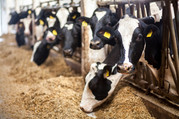
USDA extended the deadline for producers to enroll in Dairy Margin Coverage (DMC) and Supplemental Dairy Margin Coverage (SDMC) for program year 2023 to Jan. 31, 2023.
DMC is a voluntary risk management program that offers protection to dairy producers when the difference between the all-milk price and the average feed price (the margin) falls below a certain dollar amount selected by the producer.
Nearly 18,000 operations that enrolled in DMC for 2022 have received margin payments for August and September for a total of $76.3 million. At $0.15 per hundredweight for $9.50 coverage, risk coverage through DMC is a relatively inexpensive investment.
DMC offers different levels of coverage, even an option that is free to producers, aside from a $100 administrative fee. Limited resource, beginning, socially disadvantaged, and military veteran farmers and ranchers are exempt from paying the administrative fee, if requested. To determine the appropriate level of DMC coverage for a specific dairy operation, producers can use the online dairy decision tool.
Supplemental DMC
Last year, USDA introduced Supplemental DMC, which provided $42.8 million in payments to better help small- and mid-sized dairy operations that had increased production over the years but were not able to enroll the additional production. Supplemental DMC is also available for 2023. The enrollment period for 2023 Supplemental DMC is also extended to Jan. 31, 2023.
Supplemental DMC coverage is applicable to calendar years 2021, 2022 and 2023. Eligible dairy operations with less than 5 million pounds of established production history may enroll supplemental pounds.
For producers who enrolled in Supplemental DMC in 2022, the supplemental coverage will automatically be added to the 2023 DMC contract that previously established a supplemental production history.
Producers who did not enroll in Supplemental DMC in 2022 can do so now. Producers should complete their Supplemental DMC enrollment before enrolling in 2023 DMC. To enroll, producers will need to provide their 2019 actual milk marketings, which FSA uses to determine established production history.
DMC Payments
FSA will continue to calculate DMC payments using updated feed and premium hay costs, making the program more reflective of actual dairy producer expenses. These updated feed calculations use 100% premium alfalfa hay rather than 50%. For more information on DMC, visit the DMC webpage or contact your local USDA Service Center.
|
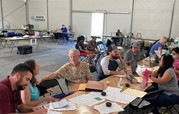
Agricultural producers can now change election and enroll in the Agriculture Risk Coverage (ARC) and Price Loss Coverage programs for the 2023 crop year, two key safety net programs offered by the U.S. Department of Agriculture (USDA). Signup began Oct. 17, 2022, and producers have until March 15, 2023, to enroll in these two programs. Additionally, USDA’s Farm Service Agency (FSA) has started issuing payments totaling more than $255 million to producers with 2021 crops that have triggered payments through ARC or PLC.
2023 Elections and Enrollment
Producers can elect coverage and enroll in ARC-County (ARC-CO) or PLC, which provide crop-by-crop protection, or ARC-Individual (ARC-IC), which protects the entire farm. Although election changes for 2023 are optional, producers must enroll through a signed contract each year. Also, if a producer has a multi-year contract on the farm and makes an election change for 2023, they must sign a new contract.
If producers do not submit their election by the March 15, 2023 deadline, their election remains the same as their 2022 election for crops on the farm. Farm owners cannot enroll in either program unless they have a share interest in the farm.
Covered commodities include barley, canola, large and small chickpeas, corn, crambe, flaxseed, grain sorghum, lentils, mustard seed, oats, peanuts, dry peas, rapeseed, long grain rice, medium and short grain rice, safflower seed, seed cotton, sesame, soybeans, sunflower seed and wheat.
Web-Based Decision Tools
In partnership with USDA, the University of Illinois and Texas A&M University offer web-based decision tools to assist producers in making informed, educated decisions using crop data specific to their respective farming operations. Tools include:
-
Gardner-farmdoc Payment Calculator, a tool available through the University of Illinois allows producers to estimate payments for farms and counties for ARC-CO and PLC.
-
ARC and PLC Decision Tool, a tool available through Texas A&M that allows producers to obtain basic information regarding the decision and factors that should be taken into consideration such as future commodity prices and historic yields to estimate payments for 2022.
2021 Payments and Contracts
ARC and PLC payments for a given crop year are paid out the following fall to allow actual county yields and the Market Year Average prices to be finalized. This month, FSA processed payments to producers enrolled in 2021 ARC-CO, ARC-IC and PLC for covered commodities that triggered for the crop year.
For ARC-CO, producers can view the 2021 ARC-CO Benchmark Yields and Revenues online database, for payment rates applicable to their county and each covered commodity. For PLC, payments have triggered for rapeseed and peanuts.
For ARC-IC, producers should contact their local FSA office for additional information pertaining to 2021 payment information, which relies on producer-specific yields for the crop and farm to determine benchmark yields and actual year yields when calculating revenues.
By the Numbers
In 2021, producers signed nearly 1.8 million ARC or PLC contracts, and 251 million out of 273 million base acres were enrolled in the programs. For the 2022 crop year signed contracts surpassed 1.8 million, to be paid in the fall of 2023, if a payment triggers.
Since ARC and PLC were first authorized by the 2014 Farm Bill and reauthorized by the 2018 Farm Bill, these safety-net programs have paid out more than $34.9 billion to producers of covered commodities.
Crop Insurance Considerations
ARC and PLC are part of a broader safety net provided by USDA, which also includes crop insurance and marketing assistance loans.
Producers are reminded that ARC and PLC elections and enrollments can impact eligibility for some crop insurance products.
Producers on farms with a PLC election have the option of purchasing Supplemental Coverage Option (SCO) through their Approved Insurance Provider; however, producers on farms where ARC is the election are ineligible for SCO on their planted acres for that crop on that farm.
Unlike SCO, the Enhanced Coverage Option (ECO) is unaffected by an ARC election. Producers may add ECO regardless of the farm program election.
Upland cotton farmers who choose to enroll seed cotton base acres in ARC or PLC are ineligible for the stacked income protection plan (STAX) on their planted cotton acres for that farm.
More Information
For more information on ARC and PLC, visit the ARC and PLC webpage or contact your local USDA Service Center.
|

USDA is offering workshops with virtual and in-person options on Jan. 24 and Feb. 25 for agricultural producers and stakeholders to learn about the latest updates and improvements to the Whole-Farm Revenue Protection (WFRP) and the Micro Farm insurance options. WFRP and Micro Farm are two of the most comprehensive risk management options available. These insurance options are especially important to specialty crop, organic, urban and direct market producers. Both programs serve as safety nets for all commodities on a farm under one policy and are available in all counties nationwide. The roadshow workshops are part of RMA’s broader efforts to increase participation in crop insurance and educate producers about policy improvements.
Improvements include:
- Doubling the maximum insurable revenue under WFRP, now up to $17 million
- More than tripling the size of farm operations eligible for Micro Farm to $350,000 in approved revenue
- Reducing paperwork requirements for WFRP
In-person Roadshow Workshops:
-
January 24, 2023, 9:00 a.m. CT for Insurance agents and 1:00 p.m. for farmers and ranchers In-person and virtual event - Davenport, Iowa
Link for Agents/AIPs: Join Crop Insurance Update: WFRP Road Show Event for Agents/AIPs
Link for Producers/Growers: Join Crop Insurance Update: WFRP Road Show Event for Growers
Address: 6000 Eastern Avenue Hosted by: Iowa Organic Association and the USDA RMA St. Paul Regional Office
In-person event: at the Michigan Family Farms Conference
Conference information: www.miffs.org/mffc2023
Address: Kalamazoo Valley Community College (Texas Township Campus), 6767 W O Avenue
Hosted by: RMA Springfield Regional Office
More information is available on the RMA Roadshow webpage.
|

The U.S. Department of Agriculture (USDA) launched a new online tool to help farmers and ranchers better navigate the farm loan application process. This uniform application process will help to ensure all farm loan applicants receive equal support and have a consistent customer experience with USDA’s Farm Service Agency (FSA) regardless of their individual circumstances.
USDA experiences a high rate of incomplete or withdrawn applications, particularly among underserved customers, due in part to a challenging and lengthy paper-based application process. The Loan Assistance Tool is available 24/7 and gives customers an online step-by-step guide that supplements the support they receive when working in person with a USDA employee, providing materials that may help an applicant prepare their loan application in one tool.
Farmers can access the Loan Assistance Tool by visiting farmers.gov/farm-loan-assistance-tool and clicking the ‘Get Started’ button. From here they can follow the prompts to complete the Eligibility Self-Assessment and start the farm loan journey. The tool is built to run on any modern browser like Chrome, Edge, Firefox, or the Safari browser, and is fully functional on mobile devices. It does not work in Internet Explorer.
The Loan Assistance Tool is the first of multiple farm loan process improvements that will be available to USDA customers on farmers.gov in the future. Other improvements and tools that are anticipated to launch in 2023 include:
- A streamlined and simplified direct loan application, reduced from 29 pages to 13 pages.
- An interactive online direct loan application that gives customers a paperless and electronic signature option, along with the ability to attach supporting documents such as tax returns.
- An online direct loan repayment feature that relieves borrowers from the necessity of calling, mailing, or visiting a local Service Center to pay a loan installment.
Background
USDA provides access to credit to approximately 115,000 producers who cannot obtain sufficient commercial credit through direct and guaranteed farm loans. With the funds and direction Congress provided in Section 22006 of the Inflation Reduction Act, USDA is taking action to immediately provide relief to qualifying distressed borrowers whose operations are at financial risk while working on making transformational changes to loan servicing so that borrowers are provided the flexibility and opportunities needed to address the inherent risks and unpredictability associated with agricultural operations.
|

Farmers and ranchers working with USDA’s Farm Service Agency or Natural Resources Conservation Service can now sign and share documents online in just a few clicks. By using Box or OneSpan, producers can digitally complete business transactions without leaving their homes or agricultural operations. Both services are free, secure, and available for multiple FSA and NRCS programs.
Box is a secure, cloud-based site where FSA or NRCS documents can be managed and shared. Producers who choose to use Box can create a username and password to access their secure Box account, where documents can be downloaded, printed, manually signed, scanned, uploaded, and shared digitally with Service Center staff. This service is available to any FSA or NRCS customer with access to a mobile device or computer with printer connectivity.
OneSpan is a secure eSignature solution for FSA and NRCS customers. Like Box, no software downloads or eAuthentication is required for OneSpan. Instead, producers interested in eSignature through OneSpan can confirm their identity through two-factor authentication using a verification code sent to their mobile device or a personalized question and answer. Once identity is confirmed, documents can be reviewed and e-signed through OneSpan via the producer’s personal email address. Signed documents immediately become available to the appropriate Service Center staff.
Box and OneSpan are both optional services for customers interested in improved efficiency in signing and sharing documents with USDA, and they do not replace existing systems using eAuthentication for digital signature. Instead, these tools provide additional digital options for producers to use when conducting business with FSA or NRCS.
USDA Service Center staff are available to help producers get started with Box and OneSpan through a few simple steps. Please visit farmers.gov/service-locator to find your local office and let Service Center staff know you’re interested in signing and sharing documents through these new features. In most cases, one quick phone call will be all that is needed to initiate the process.
Visit farmers.gov/mydocs to learn more about Box and OneSpan, steps for getting started, and additional resources for conducting business with USDA online.
|

USDA announced that it has expanded its Post-Application Coverage Endorsement (PACE) insurance option for corn farmers who “split-apply” nitrogen to include most counties in Iowa, Illinois, Minnesota, and Wisconsin where non-irrigated corn is insurable. USDA’s Risk Management Agency (RMA) rolled out PACE earlier this year to support stewardship of fertilizer, and it will continue to be offered in select counties of Indiana, Kansas, Michigan, Nebraska, North Dakota, Ohio, and South Dakota.
To “split-apply” nitrogen, growers make multiple fertilizer applications during the growing season rather than providing all the crop’s nitrogen requirements with a single treatment before or during planting. This practice can lead to lower input costs and helps prevent runoff and leaching of nutrients into waterways and groundwater.
About PACE
PACE provides payments for the projected yield lost when producers are unable to apply the post nitrogen application during the V3 through V10 corn growth stages (from plant with three visible collared leaves to five weeks after plant emerges) due to field conditions created by weather.
For crop year 2022, PACE will be available in select counties in 11 states, including Illinois, Indiana, Iowa, Kansas, Michigan, Minnesota, Nebraska, North Dakota, Ohio, South Dakota, and Wisconsin. See map. PACE is available as supplemental coverage for Yield Protection (YP), Revenue Protection (RP), and Revenue Protection with Harvest Price Exclusion (RP-HPE) policies. The next sales closing date to purchase insurance is March 15, 2023.
Crop insurance is sold and delivered solely through private crop insurance agents. A list of crop insurance agents is available at all USDA Service Centers and online at the RMA Agent Locator. Learn more about crop insurance and the modern farm safety net at rma.usda.gov.
|

USDA announced it is awarding $2.2 million to 16 organizations to educate historically underserved producers, small-scale farmers and others on farm risk management and climate-smart farm practices. The funding from USDA’s Risk Management Agency (RMA) provides the resources for organizations, such as nonprofits and universities, to develop training and resources for producers on risk management options.
This $2.2 million investment for 2022 builds on a nearly $1 million investment in 2021. RMA advertised available funding in January 2022, and more than 50 organizations applied. Successful applicants provided comprehensive summary of work statements and budgets, and proposals that demonstrated an ability to partner with other entities to deliver training. Organizations receiving funding this year include nonprofits, historically black colleges and universities, and university extensions, among others.
For example, the University of Arkansas at Pine Bluff will use the funding to provide financial, legal, and marketing risk education to underserved producers and limited resource producers in eastern and southwestern Arkansas.
In addition to the University of Pine Bluff at Arkansas, other recipients include:
- The University of Arizona - Provides risk management training to growers on Tribal lands in Arizona and New Mexico.
- Napa Valley Grape Growers - Trains wine-grape producers to mitigate risks related to climate change, drought, and pest and disease risk.
- Up In Farms – Provides training on whole farm and micro farm policies to African American growers in Mississippi.
- Rural South Institute – Educates African American producers on the basics of crop insurance and financial risk management in Alabama, Georgia, and Mississippi.
- AgriLogic Consulting LLC – Delivers risk management, recordkeeping, and crop insurance training to veterans, new farmers, and others in North Carolina, Oklahoma, Tennessee, Texas.
- Adelante Mujeres – Provides regenerative agriculture courses, quarterly workshops, farm field trips, and one-on-one sessions for Hispanic growers in Oregon.
- Michigan State University – Offers in-person networking and resource events for African American, beginning, and urban farmers to meet educators, lenders, and assistance providers.
- Iowa Organic Association – Provides technical support for organic farmers seeking support and guidance about crop insurance, lending resources, and production mentorship.
- MCL Jasco – Trains African American and beginning producers in Mississippi on financial management, farm financial benchmarking, crop insurance, and marketing contracts.
- Alabama A&M University - Trains African American and veteran producers on crop insurance, risk management tools and strategies, with hands-on educational outreach program.
- Center for Rural Affairs - Focuses training on cover crops and relay cropping, new and existing related coverage options, and cost share options in Iowa, Nebraska, and Wisconsin.
- The Gleaning Network of Texas – Provides targeted risk management assistance to direct marketing farmers in North Texas, with an emphasis on specialty crop growers.
- RightRisk LLC - Delivers crop insurance and other risk management training to beginning producers in Alaska
- Organic Trade Association – Creates durable educational materials for organic producers in 19 states, including videos, online courses, podcasts, and webinars on crop insurance.
- Farm Commons - Provides intimate peer-to-peer learning format farmers prefer with the wide reach and constant availability of a podcast.
Crop insurance is sold and delivered solely through private crop insurance agents. A list of crop insurance agents is available at all USDA Service Centers and online at the RMA Agent Locator. Learn more about crop insurance and the modern farm safety net at rma.usda.gov.
|

USDA Rural Development provides guaranteed loan financing and grant funding for agriculture producers and rural small businesses to purchase, install and construct renewable energy systems or complete energy efficiency improvements. Agricultural producers can also apply for new energy-efficient equipment and new system loans for agricultural production and processing. Contact your State Rural Development Energy Coordinator. For additional details, see the Federal Register. Two recent significant changes to the program include:
- Increase in the maximum grant share from 25% to 40% of total project cost.
- Increase of maximum grant amounts from $250,000 to $500,000 for energy efficiency projects and an increase from $500,000 to $1,000,000 for renewable energy systems.
If you any questions or wish to apply, contact Rick Vanderbeek at (517) 324-5218 or at rick.vanderbeek@usda.gov.
|

For the upcoming 2023 production year, producers once again have the opportunity to select which Farm Bill program will work best for their farms. Will it be Price Loss Coverage (PLC) or Agricultural Loss Coverage (ARC) for your farm?
Answering that question is a bit more complex when considering the importance of crop insurance options that tie into farm bill programs. The Supplemental Coverage Option (SCO) and the Enhanced Coverage Option (ECO) are key factors in determining which program may be best. These county-based revenue insurance additions would be on top of what producers have selected for individual coverage on their farms up to 86% for SCO and from 86% up to 95% with ECO.
On January 17, 2023 at 11:00 a.m. and again on February 21, 2023 at 6:30 p.m., experts from Michigan State University Extension and Eagle Valley Ag Risk Advisors, LLC will provide you with the best information to help you evaluate your risk and make your Farm Bill decisions.
At these meetings producers will:
- Hear highlights from the 2022 decisions and how those decisions played out across the state
- Learn the latest in policy and impacts of programs
- Learn about current and new crop insurance options available to you
- Work through case examples using the MSU Extension Farm Bill Calculator to help make better decisions on ARC versus PLC as each crop and FSA farm number may result in a different choice
- Discuss specific program details with experts
Featured Experts:
- Molly Sears, Assistant Professor, Michigan State University Department of Agricultural, Food, and Resource Economics
- Roger Betz, Michigan State University Extension Senior Educator
- Jon LaPorte, Michigan State University Extension Educator
- Elliot Alfredson, Eagle Valley Ag Risk Advisors, LLC
Participation in these meetings is free, but producers are asked to register at https://events.anr.msu.edu/farmbill23/.
Michigan State University Extension provides farmers with assistance in navigating Farm Bill programs by working with other sources around the country. As new information becomes available MSU Extension will inform and update farmers through this site, email newsletters and informational events hosted throughout the state of Michigan. For the latest in Farm Bill information, visit the MSU Extension Farm Bill homepage at: www.canr.msu.edu/farm_bill/
This article was published by Michigan State University Extension. For more information, visit https://extension.msu.edu. To have a digest of information delivered straight to your email inbox, visit https://extension.msu.edu/newsletters. To contact an expert in your area, visit https://extension.msu.edu/experts, or call 888-MSUE4MI (888-678-3464).
|

USDA’s Farm Service Agency (FSA) loans provide important access to capital to help agricultural producers start or expand their farming operation, purchase equipment and storage structures or meet cash flow needs.
Operating, Ownership and Emergency Loans
|
|
|
|
Michigan Farm Service Agency
3001 Coolidge Road, Suite 350
East Lansing, MI 48823
517-324-5110
| State Executive Director |
Tim Boring, PhD |
| |
|
| State Committee |
Cheryl Kobernik, Chair |
| |
Amanda Carey Goodfellow |
| |
Jerry Ann Hebron |
| |
Ryan Shaw |
| |
|
| Conservation Programs Chief |
Dale Allen |
| Farm Loan Programs Chief |
Dave Russ |
| Price Support Programs Chief |
Ken Schapman |
| Production Adjustment Programs Chief |
Kyle Knapp |
|
|