In This Issue:
Hawaii State and Pacific Basin U.S. Department of Agriculture (USDA) Farm Service Agency (FSA) announced that County Committee elections are over, and the ballots have been counted.
Guam County
Michelle Crisostomo was elected to represent LAA 1-2, Guam County. Crisostomo resides in Yona and has produced microgreens, fruits/vegetables and poultry for five years.
Saipan
Jesus Manibusan Castro was elected to represent LAA2-2 in Saipan County to serve as a committee member for a 3-year term. Castro resides in Capital Hill and has produced numerous crops, he has also raised livestock and hogs since he was a young boy.
Hawaii County
Roger Uchima was elected to represent LAA 3, Hawaii County. Uchima resides in Hilo and has produced livestock for 20 years.
Honolulu County
Sang QV Tran was elected to represent LAA 1, Honolulu County to serve as a committee member for a 3-year term.
Catherine Chan was elected to represent LAA 3, Honolulu County to serve as a committee member for a 3-year term..
Kauai County
Godwin M. Esaki was elected to represent LAA 2, Kauai County. Esaki resides in Kapaa and has produced banana’s for over 40 years.
Maui County
Debra Kelly was elected to represent LAA 3, Maui County. Mrs. Kelly resides in Hoolehua and has been the owner and operator of a goat and cattle operation for more than 30 years.
County committee members are a critical component of the day-to-day operations of FSA. They help deliver programs at the county level and work to serve the needs of local producers. All recently elected county committee members will take office in January 2023 and will be joining the existing committee. Every FSA office is required to have a county committee, and they are made up of local farmers, ranchers and foresters who are elected by local producers.
Nearly 7,800 FSA county committee members serve FSA offices nationwide. Each committee has three to 11 elected members who serve three-year terms of office. One-third of county committee seats are up for election each year. County committee members impact the administration of FSA within a community by applying their knowledge and judgment to help FSA make important decisions on its commodity support programs, conservation programs, indemnity and disaster programs, emergency programs and eligibility.
County committee members impact producers through their decision making and help shape the culture of a local FSA office. They also ensure the fair and equitable administration of FSA farm programs in their counties and are accountable to the Secretary of Agriculture. Members conduct hearings and reviews as requested by the state committee, ensure underserved farmers, ranchers and foresters are fairly represented, make recommendations to the state committee on existing programs, monitor changes in farm programs and inform farmers of the purpose and provisions of FSA programs. They also assist with outreach and inform underserved producers such as beginning farmers, ranchers and foresters, about FSA opportunities.
For more information, visit the FSA website at fsa.usda.gov/elections or contact your County FSA office.
America’s farmers and ranchers now have the opportunity to be represented in the nation’s only comprehensive and impartial agriculture data for every state, county and territory. USDA has mailed the 2022 Census of Agriculture to all known agriculture producers across the nation and Puerto Rico. Producers have the option to respond securely and conveniently online at agcounts.usda.gov or by mail. The deadline for response is Feb. 6, 2023.
Collected in service to American agriculture since 1840 and now conducted every five years by USDA’s National Agricultural Statistics Service (NASS), the Census of Agriculture tells the story and shows the value of U.S. agriculture. The data inform decisions about business, programs, rural development, research, and more. These are things that directly impact producers, and better data can lead to better decisions. That is why it is so important for every producer’s voice to be counted.
Responding to the Census of Agriculture is required by law under Title 7 USC 2204(g) Public Law 105-113. The same law requires NASS to keep personally-identifiable information confidential, to use the data only for statistical purposes, and only publish in aggregate form to prevent disclosing the identity of any individual producer or farm operation. NASS will release the results of the ag census in 2024.
To learn more about the Census of Agriculture, visit nass.usda.gov/AgCensus or call 800-727-9540. On the website, producers and other data users can access past ag census data, partner tools to help spread the word about the upcoming ag census, special study information, and more. For highlights of these and the latest information on the upcoming Census of Agriculture, follow USDA NASS on twitter @usda_nass.
Maui County was declared a primary disaster due to an outbreak of bovine tuberculosis that occurred from April 8, 2022. Under this designation, if you have operations in any primary or contiguous county, you are eligible to apply for low interest emergency loans.
Emergency loans help you recover from production and physical losses due to drought, flooding and other natural disasters or quarantine.
The deadline to apply for emergency loans triggered by this declaration is May 26, 2023. FSA will consider each loan application on its own merits, taking into account the extent of losses, security available and repayment ability. You can borrow up to 100 percent of actual production or physical losses, to a maximum amount of $500,000.
For more information about emergency loans, contact your Maui County USDA Service Center at 808-871-5500 ext 2 or visit fsa.usda.gov.
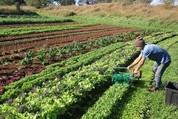
The next deadline for Conservation Stewardship Program (CSP) applications to be considered for Fiscal Year 2023 is February 10, 2023. While USDA’s Natural Resources Conservation Service (NRCS) accepts applications for this program year-round, applications for CSP submitted by February 10th will be considered for this year’s funding. Through CSP, USDA’s Natural Resources Conservation Service helps farmers, ranchers and forest landowners earn payments for expanding conservation activities while maintaining agricultural production on their land. CSP also encourages the adoption of new technologies and management techniques.
Changes in the 2018 Farm Bill authorize NRCS to accept new CSP enrollments from 2020‒2023 and makes additional improvements to the program. NRCS now enrolls eligible, high-ranking applications based on dollars rather than acres.
Higher payment rates are available under the 2018 Farm Bill for certain conservation activities, including cover crops and resource-conserving crop rotations. NRCS now provides specific support for organic and for transitioning to organic production activities through CSP.
To learn more or apply, please visit your local NRCS Pacific Islands Area field office, or contact Nicholas Saumweber at Nicholas.Saumweber@usda.gov or 808-600-2959.
|

The USDA is accepting applications from agricultural producers and forest landowners in the Pacific Islands Area for the Agricultural Conservation Easement Program (ACEP), which helps producers enroll wetlands, grasslands and farmlands into conservation easements. This is the second application announcement period for the Pacific Islands Area.
While USDA’s Natural Resources Conservation Service (NRCS) accepts ACEP applications year-round, Pacific Islands Area producers and landowners should apply by February 17, 2023, to be considered for funding in the current cycle.
NRCS offers ACEP in Hawaii, American Samoa, Guam, and CNMI in the Pacific Islands Area though continuous signups.
ACEP enrollment options include:
-
ACEP-Wetland Reserve Easements (WRE): Helps restore, protect and enhance wetlands on eligible land. Wetland reserve easements are either perpetual, 30-years, or maximum duration under state law.
-
ACEP-Agricultural Land Easements (ALE): Protects farmlands and grasslands by limiting non-agricultural uses of the land. Agricultural Land Easements are either perpetual or the maximum duration allowed under State law and must be submitted by an eligible partner entity such as a land trust
To learn more or apply, please visit your local NRCS Pacific Islands Area field office, or contact Nicholas Saumweber at Nicholas.Saumweber@usda.gov or 808-600-2959.
|
Farm Operating- Direct 5.125%
Farm Operating - Microloan 5.125%
Farm Ownership - Direct 5.250%
Farm Ownership - Microloan 5.250%
Farm Ownership - Direct, Joint Financing 3.250%
Farm Ownership - Down Payment 1.500%
Emergency Loan - Amount of Actual Loss 3.750%
January 30, 2023 - Deadline to apply for the 2022 Disaster Assistance for Livestock Forage Program (LFP)
February 10, 2023 - Application Cut-off Date for Conservation Stewardship Program (CSP)
February 17, 2023 - Application Cut-off Date for Agricultural Conservation Easement Program (ACEP)
March 31, 2022 - Deadline to submit production and acreage reports for crops covered by the Non-Insured Crop Disaster Assistance Program (NAP), fruits and vegetables. Contact your county office for a full list of applicable crops.
May 26, 2023 - Deadline to apply for Emergency Loans in Maui County for Bovine Tuberculosis (Bovine TB) disaster declaration
|