
Fall-Seeded Small Grains, Mint
Dec. 15 is the deadline to report fall-seeded small grains and mint.
Dairy
Jan. 31 is the deadline to enroll for 2023 Dairy Margin Coverage (DMC).
Emergency Relief Program
Dec. 16 Emergency Relief Program (ERP) Phase One application deadline.
Specialty Crops
Jan. 31 Food Safety Certification for Specialty Crop Program (FSCSC) for program year 2022 application deadline.
More Information
This information is for general awareness. Program deadlines may change or vary by county. Be sure to verify program deadlines for your land or operation by contacting your local USDA Service Center.
|

The deadline is nearing for producers to apply for assistance through the Emergency Relief Program (ERP) Phase One. Producers who are eligible for assistance through ERP Phase One and haven't already applied have until Friday, Dec. 16, 2022, to apply to their local USDA Service Center to receive benefits through the program.
ERP is authorized under the Extending Government Funding and Delivering Emergency Assistance Act, which includes $10 billion in assistance to agricultural producers impacted by wildfires, droughts, hurricanes, winter storms and other eligible disasters experienced during calendar years 2020 and 2021.
ERP Phase One was rolled out in May 2022 and has since paid more than $7.1 billion nationally to producers. Under the Phase One program, USDA used existing federal crop insurance and Noninsured Crop Disaster Assistance Program (NAP) data as the basis for establishing program benefits.
To learn more about this assistance program and others, visit: Emergency Relief information page.
|

The U.S. Department of Agriculture’s (USDA) Risk Management Agency (RMA) is adding flexibility to the Sugar Beet Crop Provisions with new options for the 2023 and succeeding crop years. These new options are effective in most states as of November 28, 2022 and published in the Federal Register.
“In response to feedback from the American Sugar Beet Growers Association (ASGA), with the issuance of a final rule RMA is making changes to the Sugar Beet Crop Provisions for the 2023 crop year,” said Springfield Regional Office Director Brian Frieden. “These changes will give sugar beet producers better options for determining their preferred level of crop insurance coverage and help manage the cost of insurance.”
The new options give farmers the opportunity to include stage guarantees in their policy if they prefer lower coverage for a reduced premium or incorporate a stage guarantee removal option in their policy if they wish to maintain or increase their coverage from last year.
These changes for sugar beets will impact producers in California (except in Imperial County where the changes will be effective for the 2024 crop year), Colorado, Idaho, Michigan, Minnesota, Montana, Nebraska, North Dakota, Oregon, Washington, and Wyoming.
Producers should ask their crop insurance agent for further details on the new options.
More Information
Crop insurance is sold and delivered solely through private crop insurance agents. A list of crop insurance agents is available online using the RMA Agent Locator. Producers can use the RMA Cost Estimator to get a premium amount estimate of their insurance needs online. Producers can learn more about crop insurance and the modern farm safety net at rma.usda.gov.
USDA touches the lives of all Americans each day in so many positive ways. Under the Biden-Harris administration, USDA is transforming America’s food system with a greater focus on more resilient local and regional food production, fairer markets for all producers, ensuring access to healthy and nutritious food in all communities, building new markets and streams of income for farmers and producers using climate smart food and forestry practices, making historic investments in infrastructure and clean energy capabilities in rural America, and committing to equity across the Department by removing systemic barriers and building a workforce more representative of America. To learn more, visit usda.gov.
|

USDA announced that distressed borrowers with qualifying USDA farm loans have already received nearly $800 million in assistance, as part of the $3.1 billion in assistance for distressed farm loan borrowers provided through Section 22006 of the Inflation Reduction Act (IRA). The IRA directed USDA to expedite assistance to distressed borrowers of direct or guaranteed loans administered by USDA’s Farm Service Agency (FSA) whose operations face financial risk.
This recent announcement in October 2022 kicks off a process to provide assistance to distressed farm loan borrowers using several complementary approaches, with the goal of keeping them farming, removing obstacles that currently prevent many of these borrowers from returning to farming, and improving the way that USDA approaches borrowing and servicing. Through this assistance, USDA is focused on generating long-term stability and success for distressed borrowers.
Work has already started to bring some relief to distressed farmers. As of Oct. 2022, over 13,000 borrowers have already benefited from the resources provided under the Inflation Reduction Act as follows:
- Approximately 11,000 delinquent direct and guaranteed borrowers had their accounts brought current. USDA also paid the next scheduled annual installment for these direct loan borrowers giving them peace of mind in the near term.
- Approximately 2,100 borrowers who had their farms foreclosed on and still had remaining debt have had this debt resolved in order to cease debt collections and garnishment relieving that burden that has made getting a fresh start more difficult.
In addition to the automatic assistance already provided, USDA has also outlined steps to administer up to an additional $500 million in payments to benefit the following distressed borrowers:
- USDA will administer $66 million in separate automatic payments, using COVID-19 pandemic relief funds, to support up to 7,000 direct loan borrowers who used FSA’s disaster-set-aside option during the pandemic to move their scheduled payments to the end of their loans.
- USDA is also initiating two case-by-case processes to provide additional assistance to farm loan borrowers. Under the first new process, FSA will review and assist with delinquencies from 1,600 complex cases, including cases in which borrowers are facing bankruptcy or foreclosure. The second new process will add a new option using existing direct loan servicing criteria to intervene more quickly and help an estimated 14,000 financially distressed borrowers who request assistance to avoid even becoming delinquent.
More details on each of the categories of assistance, including a downloadable fact sheet, are available on the Inflation Reduction Act webpage on farmers.gov.
Similar to other USDA assistance, all of these payments will be reported as income and borrowers are encouraged to consult their tax advisors. USDA also has resources and partnerships with cooperators who can provide additional assistance and help borrowers navigate the process.
The announcement today is only the first step in USDA’s efforts to provide assistance to distressed farm loan borrowers and respond to farmers and to improve the loan servicing efforts at USDA by adding more tools and relaxing unnecessary restrictions. Additional announcements and investments in assistance will be made as USDA institutes these additional changes and improvements.
This effort will ultimately also include adding more tools and relaxing unnecessary restrictions through assistance made possible by Congress through the IRA. Further assistance and changes to the approach will be made in subsequent phases.
Background
USDA provides access to credit to approximately 115,000 producers who cannot obtain sufficient commercial credit through direct and guaranteed farm loans, which do not include farm storage facility loans or marketing assistance loans. With the funds and direction Congress provided in Section 22006 of IRA, USDA is taking action to immediately provide relief to qualifying distressed borrowers whose operations are at financial risk while working on making transformational changes to how USDA goes about loan servicing in the long run so that borrowers are provided the flexibility and opportunities needed to address the inherent risks and unpredictability associated with agricultural operations and remain in good financial standing.
In January 2021, USDA suspended foreclosures and other adverse actions on direct farm loans due to the pandemic and encouraged guaranteed lenders to follow suit. Last week, USDA reiterated this request to guaranteed lenders to provide time for the full set of IRA distressed borrower assistance to be made available before lenders take irreparable actions.
Producers can explore available loan options using the Farm Loan Discovery Tool on farmers.gov (also available in Spanish) or by contacting their local USDA Service Center. Producers can also call the FSA call center at 877-508-8364 between 8 a.m. and 7 p.m. Eastern. USDA has tax-related resources available at farmers.gov/taxes.
|

The country’s oat and rye producers can now benefit from revenue protection, a crop insurance option available through the U.S. Department of Agriculture (USDA).
After hearing directly from producers, USDA’s Risk Management Agency (RMA) has expanded Small Grains Crop Provisions to now offer revenue protection for oats and rye for crop year 2023, which is already offered for barley and wheat.“
This enhanced coverage for oats and rye is a direct result of RMA listening to and prioritizing the requests and feedback we get from producers,” said RMA Administrator Marcia Bunger. “We are always striving to offer risk management options and opportunities that are in the best interest of the producers and extending revenue protection to include our oat and rye farmers helps us come closer to that goal and offers more equality among our small grain producers.”
Prior to this program change, RMA established prices for oats and rye up to 11 months prior to harvest. For the 2021 and 2022 crop years, oat prices increased about 30% during that time period, leaving oat producers with insurance coverage valued below the actual value of their crop. With this expanded revenue protection, the insurance coverage price would have risen to follow the higher oat prices, providing coverage that better reflects the value of the crop.
These change – to add oat and rye – took effect with a Nov. 25 final rule on the Federal Register.
Revenue protection policies insure producers against yield losses due to natural causes such as drought, excessive moisture, hail, wind, frost, insects, and disease and revenue losses caused by a change in the harvest price from the projected price.
More Information
Crop insurance is sold and delivered solely through private crop insurance agents. A list of crop insurance agents is available at all USDA Service Centers and online at the RMA Agent Locator. Learn more about crop insurance and the modern farm safety net at rma.usda.gov.
USDA touches the lives of all Americans each day in so many positive ways. Under the Biden-Harris administration, USDA is transforming America’s food system with a greater focus on more resilient local and regional food production, fairer markets for all producers, ensuring access to safe, healthy and nutritious food in all communities, building new markets and streams of income for farmers and producers using climate smart food and forestry practices, making historic investments in infrastructure and clean energy capabilities in rural America, and committing to equity across the Department by removing systemic barriers and building a workforce more representative of America. To learn more, visit usda.gov.
|

Agriculture Secretary Tom Vilsack announced that the U.S. Department of Agriculture (USDA) plans to provide up to $200 million in assistance for specialty crop producers who incur eligible on-farm food safety program expenses to obtain or renew a food safety certification in calendar years 2022 or 2023. USDA’s new Food Safety Certification for Specialty Crops (FSCSC) program will help to offset costs for specialty crop producers to comply with regulatory requirements and market-driven food safety certification requirements, which is part of USDA’s broader effort to transform the food system to create a more level playing field for small and medium producers and a more balanced, equitable economy for everyone working in food and agriculture.
Specialty crop operations can apply for assistance for eligible expenses related to a 2022 food safety certificate issued on or after June 21, 2022, beginning June 27, 2022. USDA is delivering FSCSC to provide critical assistance for specialty crop operations, with an emphasis on equity in program delivery while building on lessons learned from the COVID-19 pandemic and supply chain disruptions. Vilsack made the announcement from Hollis, N.H., where he toured a local, family-owned farm and highlighted USDA’s efforts to help reduce costs for farmers and support local economies by providing significant funding to cut regulatory costs and increase market opportunities for farmers in New Hampshire and across the nation.
Program Details
FSCSC will assist specialty crop operations that incurred eligible on-farm food safety certification and related expenses related to obtaining or renewing a food safety certification in calendar years 2022 and 2023. For each year, FSCSC covers a percentage of the specialty crop operation’s cost of obtaining or renewing their certification, as well as a portion of their related expenses.
To be eligible for FSCSC, the applicant must be a specialty crop operation; meet the definition of a small business or very small business; and have paid eligible expenses related to the 2022 (issued on or after June 21, 2022) or 2023 certification.
Specialty crop operations may receive assistance for the following costs:
- Developing a food safety plan for first-time food safety certification.
- Maintaining or updating an existing food safety plan.
- Food safety certification.
- Certification upload fees.
- Microbiological testing for products, soil amendments and water.
- Training.
FSCSC payments are calculated separately for each category of eligible costs. A higher payment rate has been set for socially disadvantaged, limited resource, beginning and veteran farmers and ranchers. Details about the payment rates and limitations can be found at farmers.gov/food-safety.
Applying for Assistance
The FSCSC application period for 2022 is June 27, 2022, through January 31, 2023, and the application period for 2023 will be announced at a later date. FSA will issue payments at the time of application approval for 2022 and after the application period ends for 2023. If calculated payments exceed the amount of available funding, payments will be prorated.
Interested specialty crop producers can apply by completing the FSA-888, Food Safety Certification for Specialty Crops Program (FSCSC) application. The application, along with other required documents, can be submitted to the FSA office at any USDA Service Center nationwide by mail, fax, hand delivery or via electronic means.
Producers can visit farmers.gov/food-safety for additional program details, eligibility information and forms needed to apply.
|
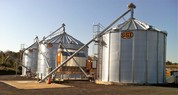
The Farm Service Agency’s (FSA) Farm Storage Facility Loan (FSFL) program provides low-interest financing to help you build or upgrade storage facilities and to purchase portable (new or used) structures, equipment and storage and handling trucks.
Eligible commodities include corn, grain sorghum, rice, soybeans, oats, peanuts, wheat, barley, minor oilseeds harvested as whole grain, pulse crops (lentils, chickpeas and dry peas), hay, honey, renewable biomass, fruits, nuts and vegetables for cold storage facilities, floriculture, hops, maple sap, rye, milk, cheese, butter, yogurt, meat and poultry (unprocessed), eggs, and aquaculture (excluding systems that maintain live animals through uptake and discharge of water). Qualified facilities include grain bins, hay barns and cold storage facilities for eligible commodities.
Loans up to $100,000 can be secured by a promissory note/security agreement, and loans exceeding $100,000 require additional security.
You do not need to demonstrate the lack of commercial credit availability to apply. The loans are designed to assist a diverse range of farming operations, including small and mid-sized businesses, new farmers, operations supplying local food and farmers markets, non-traditional farm products, and underserved producers.
For more information, contact your local USDA Service Center or visit fsa.usda.gov/pricesupport.
|

The Farm Service Agency (FSA) is accepting offers for specific conservation practices under the Conservation Reserve Program (CRP) Continuous Signup.
In exchange for a yearly rental payment, farmers enrolled in the program agree to remove environmentally sensitive land from agricultural production and to plant species that will improve environmental health and quality. The program’s long-term goal is to re-establish valuable land cover to improve water quality, prevent soil erosion, and reduce loss of wildlife habitat. Contracts for land enrolled in CRP are 10-15 years in length.
Under continuous CRP signup, environmentally sensitive land devoted to certain conservation practices can be enrolled in CRP at any time. Offers for continuous enrollment are not subject to competitive bidding during specific periods. Instead they are automatically accepted provided the land and producer meet certain eligibility requirements and the enrollment levels do not exceed the statutory cap.
For more information, including a list of acceptable practices, contact your local USDA Service Center or visit fsa.usda.gov/crp.
|

USDA’s Farm Service Agency (FSA) loans provide important access to capital to help agricultural producers start or expand their farming operation, purchase equipment and storage structures or meet cash flow needs.
Operating, Ownership and Emergency Loans
|
|