In This Issue:
USDA Farm Production and Conservation’s (FPAC) Customer Experience Division works to improve services to make government agricultural programs more accessible, equitable and easier to use. This Division has recently released their 2022 Farmer, Rancher and Forest Manager Prospective Customer Survey which will help them improve programs and services and your help is requested! Please take a few minutes and visit www.farmers.gov/survey and complete the survey.
On November 15, 2022, USDA Secretary Vilsack announced plans for additional emergency relief and pandemic assistance. We are now preparing to roll out the Emergency Relief Program Phase (ERP) Phase Two, as well as the new Pandemic Assistance Revenue Program (PARP). USDA, FSA is sharing this early information to help producers prepare and gather required documentation.
ERP Phase Two builds on ERP Phase One which was rolled out in May 2022 and has since paid out more than $7.1 billion nationwide to producers who incurred eligible crop losses covered by federal crop insurance or NAP. Phase Two will include producers who suffered eligible losses but may not have received program benefits in Phase One. To be eligible for Phase Two, producers must have suffered a loss in allowable gross revenue as defined in forthcoming regulations in 2020 or 2021 due to necessary expenses related to losses of eligible crops from a qualifying natural disaster event. For more information, please visit: https://www.fsa.usda.gov/programs-and-services/emergency-relief/index
To be eligible for Pandemic Assistance Revenue Program a producer must have been in the business of farming at least part of the 2020 calendar year and had a certain threshold decrease in allowable gross revenue for the 2020 year as compared to 2018 or 2019. Exact details on the calculations and eligibility will be forthcoming. For additional information please visit: https://www.farmers.gov/coronavirus/pandemic-assistance/parp
As a reminder, the Maine Agricultural Trades Show, sponsored by Maine DACF, will be held January 10-12, 2023, at the Augusta Civic Center. FSA staff will be present and available to meet with you and answer questions. Stop by and visit us at the USDA (FSA, NRCS and RD) booth.
The Maine FSA State Office Staff wishes you a safe and healthy holiday season!
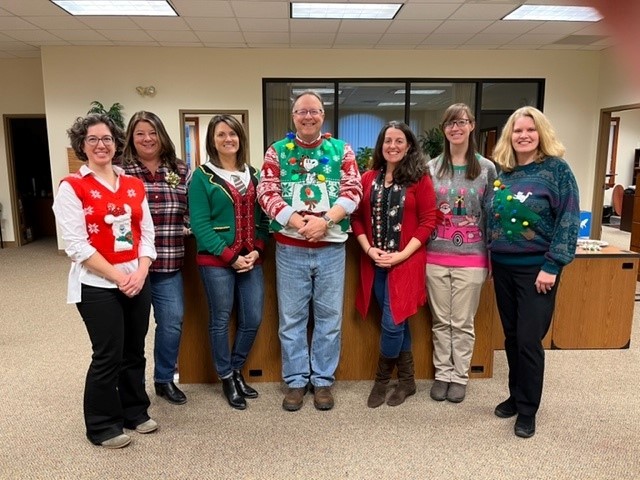
Sherry Hamel
State Executive Director
Producers Encouraged to Enroll As Soon As Possible
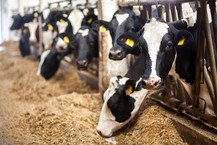
The U.S. Department of Agriculture (USDA) has extended the deadline for producers to enroll in Dairy Margin Coverage (DMC) and Supplemental Dairy Margin Coverage (SDMC) for program year 2023 to Jan. 31, 2023.
DMC is a voluntary risk management program that offers protection to dairy producers when the difference between the all-milk price and the average feed price (the margin) falls below a certain dollar amount selected by the producer.
Early projections indicate DMC payments are likely to trigger for the first eight months in 2023. Markets fluctuate, sometimes at a moment’s notice and sometimes with no warning at all, so now’s the time to ensure your operation is covered. Please don’t let this second chance slide.
Nearly 18,000 operations that enrolled in DMC for 2022 have received margin payments for August and September for a total of $76.3 million. At $0.15 per hundredweight for $9.50 coverage, risk coverage through DMC is a relatively inexpensive investment.
DMC offers different levels of coverage, even an option that is free to producers, aside from a $100 administrative fee. Limited resource, beginning, socially disadvantaged, and military veteran farmers and ranchers are exempt from paying the administrative fee, if requested. To determine the appropriate level of DMC coverage for a specific dairy operation, producers can use the online dairy decision tool.
Supplemental DMC
Last year, USDA introduced Supplemental DMC, which provided $42.8 million in payments to better help small- and mid-sized dairy operations that had increased production over the years but were not able to enroll the additional production. Supplemental DMC is also available for 2023. The enrollment period for 2023 Supplemental DMC is also extended to Jan. 31, 2023.
Supplemental DMC coverage is applicable to calendar years 2021, 2022 and 2023. Eligible dairy operations with less than 5 million pounds of established production history may enroll supplemental pounds.
For producers who enrolled in Supplemental DMC in 2022, the supplemental coverage will automatically be added to the 2023 DMC contract that previously established a supplemental production history.
Producers who did not enroll in Supplemental DMC in 2022 can do so now. Producers should complete their Supplemental DMC enrollment before enrolling in 2023 DMC. To enroll, producers will need to provide their 2019 actual milk marketings, which FSA uses to determine established production history.
DMC Payments
FSA will continue to calculate DMC payments using updated feed and premium hay costs, making the program more reflective of actual dairy producer expenses. These updated feed calculations use 100% premium alfalfa hay rather than 50%.
For more information on DMC, visit the DMC webpage or contact your local USDA Service Center.
USDA touches the lives of all Americans each day in so many positive ways. Under the Biden-Harris administration, USDA is transforming America’s food system with a greater focus on more resilient local and regional food production, fairer markets for all producers, ensuring access to safe, healthy and nutritious food in all communities, building new markets and streams of income for farmers and producers using climate smart food and forestry practices, making historic investments in infrastructure and clean energy capabilities in rural America, and committing to equity across the Department by removing systemic barriers and building a workforce more representative of America. To learn more, visit usda.gov.
|
Farmers can use USDA farm ownership microloans to buy and improve property. These microloans are especially helpful to beginning or underserved farmers, U.S. veterans looking for a career in farming, and those who have small and mid-sized farming operations.
Microloans have helped farmers and ranchers with operating costs, such as feed, fertilizer, tools, fencing, equipment, and living expenses since 2013.
Microloans can also help with farmland and building purchases and soil and water conservation improvements. FSA designed the expanded program to simplify the application process, expand eligibility requirements and expedite smaller real estate loans to help farmers strengthen their operations. Microloans provide up to $50,000 to qualified producers and can be issued to the applicant directly from the USDA Farm Service Agency (FSA).
To learn more about the FSA microloan program, contact your [NAME]llocal County USDA Service Center or visit fsa.usda.gov/microloans.
FSA is cleaning up our producer record database and needs your help. Please report any changes of address, zip code, phone number, email address or an incorrect name or business name on file to our office. You should also report changes in your farm operation, like the addition of a farm by lease or purchase. You should also report any changes to your operation in which you reorganize to form a Trust, LLC or other legal entity.
FSA and NRCS program participants are required to promptly report changes in their farming operation to the County Committee in writing and to update their Farm Operating Plan on form CCC-902.
To update your records, contact your local County USDA Service Center.
Farmers and ranchers can use the Farm Loan Discovery Tool on farmers.gov to find information on USDA farm loans that may best fit their operations.
USDA’s Farm Service Agency (FSA) offers a variety of loan options to help farmers finance their operations. From buying land to financing the purchase of equipment, FSA loans can help.
USDA conducted field research in eight states, gathering input from farmers and FSA farm loan staff to better understand their needs and challenges.
How the Tool Works
Farmers who are looking for financing options to operate a farm or buy land can answer a few simple questions about what they are looking to fund and how much money they need to borrow. After submitting their answers, farmers will receive information on farm loans that best fit their specific needs. The loan application and additional resources also will be provided.
Farmers can download application quick guides that outline what to expect from preparing an application to receiving a loan decision. There are four guides that cover loans to individuals, entities, and youth, as well as information on microloans. The guides include general eligibility requirements and a list of required forms and documentation for each type of loan. These guides can help farmers prepare before their first USDA service center visit with a loan officer.
Farmers can access the Farm Loan Discovery Tool by visiting farmers.gov/fund and clicking the “Start” button. Follow the prompts and answer five simple questions to receive loan information that is applicable to your agricultural operation. The tool is built to run on any modern browser like Chrome, Edge, Firefox, or the Safari browser, and is fully functional on mobile devices. It does not work in Internet Explorer.
About Farmers.gov
In 2018, USDA unveiled farmers.gov, a dynamic, mobile-friendly public website combined with an authenticated portal where farmers will be able to apply for programs, process transactions, and manage accounts.
The Farm Loan Discovery Tool is one of many resources on farmers.gov to help connect farmers to information that can help their operations. Earlier this year, USDA launched the My Financial Information feature, which enables farmers to view their loan information, history, payments, and alerts by logging into the website.
USDA is building farmers.gov for farmers, by farmers. In addition to the interactive farm loan features, the site also offers a Disaster Assistance Discovery Tool. Farmers can visit farmers.gov/recover/disaster-assistance-tool#step-1 to find disaster assistance programs that can help their operation recover from natural disasters.
For more information, contact your local County USDA Service Center or visit farmers.gov.
The Farm Service Agency (FSA) makes loans to youth to establish and operate agricultural income-producing projects in connection with 4-H clubs, FFA and other agricultural groups. Projects must be planned and operated with the help of the organization advisor, produce sufficient income to repay the loan and provide the youth with practical business and educational experience. The maximum loan amount is $5,000.
Youth Loan Eligibility Requirements:
- Be a citizen of the United States (which includes Puerto Rico, the Virgin Islands, Guam, American Samoa, the Commonwealth of the Northern Mariana Islands) or a legal resident alien
- Be 10 years to 20 years of age
- Comply with FSA’s general eligibility requirements
- Be unable to get a loan from other sources
- Conduct a modest income-producing project in a supervised program of work as outlined above
- Demonstrate capability of planning, managing and operating the project under guidance and assistance from a project advisor. The project supervisor must recommend the youth loan applicant, along with providing adequate supervision.
For help preparing the application forms, contact your County USDA Service Center or visit fsa.usda.gov.
The Farm Service Agency’s (FSA) Farm Storage Facility Loan (FSFL) program provides low-interest financing to help you build or upgrade storage facilities and to purchase portable (new or used) structures, equipment and storage and handling trucks.
Eligible commodities include corn, grain sorghum, rice, soybeans, oats, peanuts, wheat, barley, minor oilseeds harvested as whole grain, pulse crops (lentils, chickpeas and dry peas), hay, honey, renewable biomass, fruits, nuts and vegetables for cold storage facilities, floriculture, hops, maple sap, rye, milk, cheese, butter, yogurt, meat and poultry (unprocessed), eggs, and aquaculture (excluding systems that maintain live animals through uptake and discharge of water). Qualified facilities include grain bins, hay barns and cold storage facilities for eligible commodities.
Loans up to $50,000 can be secured by a promissory note/security agreement, loans between $50,000 and $100,000 may require additional security, and loans exceeding $100,000 require additional security.
You do not need to demonstrate the lack of commercial credit availability to apply. The loans are designed to assist a diverse range of farming operations, including small and mid-sized businesses, new farmers, operations supplying local food and farmers markets, non-traditional farm products, and underserved producers.
For more information, contact your local County USDA Service Center or visit fsa.usda.gov/pricesupport.
Persons with disabilities who require accommodations to attend or participate in any meeting/event/function should contact Mary Anne Coffin at 207-990-9140 or Federal Relay Service at 1-800-877-8339.
|