|
|
Michigan Farm Service Agency Newsletter - November 15, 2022
|
|
|
In This Issue:
|

Fall-Seeded Small Grains, Mint
Nov. 15 is the deadline to report fall-seeded small grains and mint.
Dairy
Dec. 9 is the deadline to enroll for 2023 Dairy Margin Coverage (DMC).
More Information
This information is for general awareness. Program deadlines may change or vary by county. Be sure to verify program deadlines for your land or operation by contacting your local USDA Service Center.
|
New Programs Will Provide Additional Pandemic and Natural Disaster Assistance for 2020 and 2021; Deadline Announced for Previous Emergency Relief
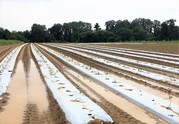
Agriculture Secretary Tom Vilsack today announced plans for additional emergency relief and pandemic assistance from the U.S. Department of Agriculture (USDA). USDA is preparing to roll out the Emergency Relief Program (ERP) Phase Two as well as the new Pandemic Assistance Revenue Program (PARP), which are two programs to help offset crop and revenue losses for producers. USDA is sharing early information to help producers gather documents and train front-line staff on the new approach.
ERP Phase Two will assist eligible agricultural producers who suffered eligible crop losses, measured through decreases in revenue, due to wildfires, hurricanes, floods, derechos, excessive heat, winter storms, freeze (including a polar vortex), smoke exposure, excessive moisture and qualifying droughts occurring in calendar years 2020 and 2021.
PARP will assist eligible producers of agricultural commodities who experienced revenue decreases in calendar year 2020 compared to 2018 or 2019 due to the COVID-19 pandemic. PARP will help address gaps in previous pandemic assistance, which was targeted at price loss or lack of market access, rather than overall revenue losses.
Emergency Relief Program Phase Two
ERP is authorized under the Extending Government Funding and Delivering Emergency Assistance Act, which includes $10 billion in assistance to agricultural producers impacted by wildfires, droughts, hurricanes, winter storms and other eligible disasters experienced during calendar years 2020 and 2021.
Phase Two builds on ERP Phase One, which was rolled out in May 2022 and has since paid more than $7.1 billion to producers who incurred eligible crop losses that were covered by federal crop insurance or Non-insured Crop Disaster Assistance Program.
ERP Phase Two includes producers who suffered eligible losses but may not have received program benefits in Phase One. To be eligible for Phase Two, producers must have suffered a loss in allowable gross revenue as defined in forthcoming program regulations in 2020 or 2021 due to necessary expenses related to losses of eligible crops from a qualifying natural disaster event.
Eligible crops include both traditional insurable commodities and specialty crops that are produced in the United States as part of a farming operation and are intended to be commercially marketed. Like other emergency relief and pandemic assistance programs, USDA’s Farm Service Agency (FSA) continues to look for ways to simplify the process for both staff and producers while reducing the paperwork burden. The design of ERP Phase Two is part of that effort.
In general, ERP Phase Two payments are expected to be based on the difference in certain farm revenue between a typical year of revenue as will be specified in program regulations for the producer and the disaster year. ERP Phase Two assistance is targeted to the remaining needs of producers impacted by qualifying natural disaster events, while avoiding windfalls or duplicative payments. Details will be available when the rule is published later this year.
Deadline for Emergency Relief Program Phase One
Producers who are eligible for assistance through ERP Phase One have until Friday, Dec. 16, 2022, to contact FSA at their local USDA Service Center to receive program benefits. Going forward, if any additional ERP Phase One prefilled applications are generated due to corrections or other circumstances, there will be a 30-day deadline from the date of notification for that particular application.
Pandemic Assistance Revenue Program
PARP is authorized and funded by the Consolidated Appropriations Act of 2021.
To be eligible for PARP, an agricultural producer must have been in the business of farming during at least part of the 2020 calendar year and had a certain threshold decrease in allowable gross revenue for the 2020 calendar year, as compared to 2018 or 2019. Exact details on the calculations and eligibility will be available when the forthcoming rule is published.
How Producers Can Prepare
ERP Phase Two and PARP will use revenue information that is readily available from most tax records. FSA encourages producers to have their tax documents from the past few years and supporting materials ready, as explained further below. Producers will need similar documentation to what was needed for the Coronavirus Food Assistance Program (CFAP) Phase Two, where a producer could use 2018 or 2019 as the benchmark year relative to the disaster year.
In the coming weeks, USDA will provide additional information on how to apply for assistance through ERP Phase Two and PARP. In the meantime, producers are encouraged to begin gathering supporting documentation including:
- Schedule F (Form 1040); and
-
Profit or Loss from Farming or similar tax documents for tax years 2018, 2019, 2020, 2021 and 2022 for ERP and for calendar years 2018, 2019 and 2020 for PARP.
Producers should also have, or be prepared to have, the following forms on file for both ERP and PARP program participation:
- Form AD-2047, Customer Data Worksheet (as applicable to the program participant);
- Form CCC-902, Farm Operating Plan for an individual or legal entity;
- Form CCC-901, Member Information for Legal Entities (if applicable); and
- Form AD-1026 Highly Erodible Land Conservation (HELC) and Wetland Conservation (WC) Certification.
Most producers, especially those who have previously participated in FSA programs, will likely have these required forms on file. However, those who are uncertain or want to confirm should contact FSA at their local USDA Service Center.
In addition to the forms listed above, underserved producers are encouraged to register their status with FSA, using Form CCC-860, Socially Disadvantaged, Limited Resource, Beginning and Veteran Farmer or Rancher Certification, as certain existing permanent and ad-hoc disaster programs provide increased benefits or reduced fees and premiums.
Through proactive communications and outreach, USDA will keep producers and stakeholders informed as program eligibility, application and implementation details unfold.
|

In order to claim a Farm Service Agency (FSA) payment on behalf of a deceased producer, all program conditions for the payment must have been met before the applicable producer’s date of death.
If a producer earned a FSA payment prior to his or her death, the following is the order of precedence for the representatives of the producer:
- administrator or executor of the estate
- the surviving spouse
- surviving sons and daughters, including adopted children
- surviving father and mother
- surviving brothers and sisters
- heirs of the deceased person who would be entitled to payment according to the State law
For FSA to release the payment, the legal representative of the deceased producer must file a form FSA-325 to claim the payment for themselves or an estate. The county office will verify that the application, contract, loan agreement, or other similar form requesting payment issuance, was signed by the applicable deadline by the deceased or a person legally authorized to act on their behalf at that time of application.
If the application, contract or loan agreement form was signed by someone other than the deceased participant, FSA will determine whether the person submitting the form has the legal authority to submit the form.
Payments will be issued to the respective representative’s name using the deceased program participant’s tax identification number. Payments made to representatives are subject to offset regulations for debts owed by the deceased.
FSA is not responsible for advising persons in obtaining legal advice on how to obtain program benefits that may be due to a participant who has died, disappeared or who has been declared incompetent.
|

USDA is offering virtual workshops on Nov. 15 and Dec. 13 for agricultural producers and stakeholders to learn about the latest updates and improvements to the Whole-Farm Revenue Protection (WFRP) and the Micro Farm insurance options. WFRP and Micro Farm are two of the most comprehensive risk management options available. USDA’s Risk Management Agency (RMA) will announce in-person events later this fall. These insurance options are especially important to specialty crop, organic, urban and direct market producers. Policy improvements and these workshops are part of RMA’s efforts to increase participation in crop insurance.
Improvements include:
- Doubling the maximum insurable revenue under WFRP, now up to $17 million;
- More than tripling the size of farm operations eligible for Micro Farm to $350,000 in approved revenue; and
- Reducing paperwork requirements for WFRP.
‘Road Show’ Virtual Workshops
RMA will host these workshops for agricultural producers via Microsoft Teams events. Click the link to join at the day and time.
RSVP is not required. Attendees will have a chance to submit written questions during the event.
These events follow two this week, which RMA hosted for crop insurance agents. The “RMA Roadshow” will include future in person workshops to be announced. More information is available on the RMA Roadshow webpage.
|

Agricultural producers can now change election and enroll in the Agriculture Risk Coverage (ARC) and Price Loss Coverage programs for the 2023 crop year, two key safety net programs offered by the U.S. Department of Agriculture (USDA). Signup began Monday, and producers have until March 15, 2023, to enroll in these two programs. Additionally, USDA’s Farm Service Agency (FSA) has started issuing payments totaling more than $255 million to producers with 2021 crops that have triggered payments through ARC or PLC.
2023 Elections and Enrollment
Producers can elect coverage and enroll in ARC-County (ARC-CO) or PLC, which provide crop-by-crop protection, or ARC-Individual (ARC-IC), which protects the entire farm. Although election changes for 2023 are optional, producers must enroll through a signed contract each year. Also, if a producer has a multi-year contract on the farm and makes an election change for 2023, they must sign a new contract.
If producers do not submit their election by the March 15, 2023 deadline, their election remains the same as their 2022 election for crops on the farm. Farm owners cannot enroll in either program unless they have a share interest in the farm.
Covered commodities include barley, canola, large and small chickpeas, corn, crambe, flaxseed, grain sorghum, lentils, mustard seed, oats, peanuts, dry peas, rapeseed, long grain rice, medium and short grain rice, safflower seed, seed cotton, sesame, soybeans, sunflower seed and wheat.
Web-Based Decision Tools
In partnership with USDA, the University of Illinois and Texas A&M University offer web-based decision tools to assist producers in making informed, educated decisions using crop data specific to their respective farming operations. Tools include:
-
Gardner-farmdoc Payment Calculator, a tool available through the University of Illinois allows producers to estimate payments for farms and counties for ARC-CO and PLC.
-
ARC and PLC Decision Tool, a tool available through Texas A&M that allows producers to obtain basic information regarding the decision and factors that should be taken into consideration such as future commodity prices and historic yields to estimate payments for 2022.
2021 Payments and Contracts
ARC and PLC payments for a given crop year are paid out the following fall to allow actual county yields and the Market Year Average prices to be finalized. This month, FSA processed payments to producers enrolled in 2021 ARC-CO, ARC-IC and PLC for covered commodities that triggered for the crop year.
For ARC-CO, producers can view the 2021 ARC-CO Benchmark Yields and Revenues online database, for payment rates applicable to their county and each covered commodity. For PLC, payments have triggered for rapeseed and peanuts.
For ARC-IC, producers should contact their local FSA office for additional information pertaining to 2021 payment information, which relies on producer-specific yields for the crop and farm to determine benchmark yields and actual year yields when calculating revenues.
By the Numbers
In 2021, producers signed nearly 1.8 million ARC or PLC contracts, and 251 million out of 273 million base acres were enrolled in the programs. For the 2022 crop year signed contracts surpassed 1.8 million, to be paid in the fall of 2023, if a payment triggers.
Since ARC and PLC were first authorized by the 2014 Farm Bill and reauthorized by the 2018 Farm Bill, these safety-net programs have paid out more than $34.9 billion to producers of covered commodities.
Crop Insurance Considerations
ARC and PLC are part of a broader safety net provided by USDA, which also includes crop insurance and marketing assistance loans.
Producers are reminded that ARC and PLC elections and enrollments can impact eligibility for some crop insurance products.
Producers on farms with a PLC election have the option of purchasing Supplemental Coverage Option (SCO) through their Approved Insurance Provider; however, producers on farms where ARC is the election are ineligible for SCO on their planted acres for that crop on that farm.
Unlike SCO, the Enhanced Coverage Option (ECO) is unaffected by an ARC election. Producers may add ECO regardless of the farm program election.
Upland cotton farmers who choose to enroll seed cotton base acres in ARC or PLC are ineligible for the stacked income protection plan (STAX) on their planted cotton acres for that farm.
More Information
For more information on ARC and PLC, visit the ARC and PLC webpage or contact your local USDA Service Center.
|

Are you a military veteran interested in farming? USDA offers resources to help you:
-
Fund Your Operation: USDA’s Farm Service Agency offers a variety of funding opportunities to help agricultural producers finance their businesses. Certain funds are targeted for veterans and beginning farmers and ranchers.
-
Conserve Natural Resources: USDA’s Natural Resources Conservation Service offers conservation programs and expert one-on-one technical assistance to strengthen agricultural operations now and into the future. Veterans may be eligible for a cost share of up to 90 percent and advance payments of up to 50 percent to cover certain conservation practices.
-
Manage Risks: USDA is here to help you prepare for and recover from the unexpected. Veterans who are beginning farmers may be eligible for reduced premiums, application fee waivers, increased insurance coverage, and other incentives for multiple USDA programs that support risk management.
USDA wants to ensure that veterans transitioning to agriculture have the resources needed to succeed. While USDA offices are currently closed to visitors because of the pandemic, Service Center staff continue to work with agricultural producers via phone, email, and other digital tools. To conduct business, please contact your local USDA Service Center. Additionally, more information related to USDA’s response and relief for producers can be found at farmers.gov/coronavirus. If you’re a new farmer, you can also reach out to your state Beginning Farmer and Rancher Coordinator.
|

If you’re an orchardist or nursery tree grower who experienced losses from natural disasters during calendar year 2022, you must submit a TAP application either 90 calendar days after the disaster event or the date when the loss is apparent.
TAP provides financial assistance to help you replant or rehabilitate eligible trees, bushes and vines damaged by natural disasters.
Eligible tree types include trees, bushes or vines that produce an annual crop for commercial purposes. Nursery trees include ornamental, fruit, nut and Christmas trees that are produced for commercial sale. Trees used for pulp or timber are ineligible.
To qualify for TAP, orchardists must suffer a qualifying tree, bush or vine loss in excess of 15 percent mortality from an eligible natural disaster, plus an adjustment for normal mortality. The eligible trees, bushes or vines must have been owned when the natural disaster occurred; however, eligible growers are not required to own the land on which the eligible trees, bushes and vines were planted.
If the TAP application is approved, the eligible trees, bushes and vines must be replaced within 12 months from the date the application is approved. The cumulative total quantity of acres planted to trees, bushes or vines, for which you can receive TAP payments, cannot exceed 1,000 acres annually.
|

The term “sodbusting” is used to identify the conversion of land from native vegetation to commodity crop production after December 23, 1985. As part of the conservation provisions of the Food Security Act of 1985, if you’re proposing to produce agricultural commodities (crops that require annual tillage including one pass planting operations and sugar cane) on land that has been determined highly erodible and that has no crop history prior to December 23, 1985, that land must be farmed in accordance with a conservation plan or system that ensures no substantial increase in soil erosion.
Eligibility for many USDA programs requires compliance with a conservation plan or system on highly erodible land (HEL) used for the production of agricultural commodities. This includes Farm Service Agency (FSA) loan, disaster assistance, safety net, price support, and conservation programs; Natural Resources Conservation Service (NRCS) conservation programs; and Risk Management Agency (RMA) Federal crop insurance.
Before you clear or prepare areas not presently under production for crops that require annual tillage, you are required to file Form AD-1026 “Highly Erodible Land Conservation and Wetland Conservation Certification,” with FSA indicating the area to be brought into production. The notification will be referred to NRCS to determine if the field is considered highly erodible land. If the field is considered HEL, you are required to implement a conservation plan or system that limits the erosion to the tolerable soil loss (T) for the predominant HEL soil on those fields.
In addition, prior to removing trees or conducting any other land manipulations that may affect wetlands, remember to update form AD-1026, to ensure you remain in compliance with the wetland conservation provisions.
Prior to purchasing or renting new cropland acres, it is recommended that you check with your local USDA Service Center to ensure your activities will be in compliance with the highly erodible land and wetland conservation provisions.
For additional information on highly erodible land conservation and wetland conservation compliance, contact your local USDA Service Center.
|

The U.S. Department of Agriculture (USDA) is expanding its People’s Garden Initiative to include eligible gardens nationwide. School gardens, community gardens, urban farms, and small-scale agriculture projects in rural, suburban and urban areas can be recognized as a “People’s Garden” if they register on the USDA website and meet criteria including benefitting the community, working collaboratively, incorporating conservation practices and educating the public. Affiliate People’s Garden locations will be indicated on a map on the USDA website, featured in USDA communications, and provided with a People’s Garden sign.
About the Gardens
USDA originally launched the People’s Garden Initiative in 2009. It’s named for the “People’s Department,” former President Abraham Lincoln’s nickname for USDA, which was established during his presidency in 1862.
People’s Gardens grow fresh, healthy food and support resilient, local food systems; teach people how to garden using conservation practices; nurture habitat for pollinators and wildlife and create greenspace for neighbors.
How to Register
To learn more about People’s Garden or to register one, visit the People’s Garden webpage at usda.gov/Peoples-Garden. The location and information on each garden will be displayed on a map. USDA will send a “People’s Garden” sign to each garden and invite continued engagement through photos and information sharing. Gardens on federal property, such as USDA offices, are required to donate produce. We invite these gardens to report how much is being donated.
To be eligible, gardens:
-
Benefit the community by providing food, green space, wildlife habitat, education space.
-
Are a collaborative effort. This can include groups working together with USDA agencies, food banks, after school programs, Girl Scouts, Master Gardeners, conservation districts, etc.
-
Incorporate conservation management practices, such as using native plant species, rain barrels, integrated pest management, xeriscaping.
-
Educate the public about sustainable gardening practices and the importance of local, diverse, and resilient food systems providing healthy food for the community.
New gardens will join the People’s Garden at USDA headquarters in Washington, D.C. and 17 other flagship gardens established earlier this year.
More Information
The People’s Garden Initiative is part of USDA’s broader efforts to advance equity, support local and regional food systems and access to food, and encourage use of conservation and climate-smart practices.
|
A new multi-agency guide for USDA assistance for underserved farmers and ranchers is now available. If you are a farmer or rancher and are a minority, woman, veteran, beginning, or limited resource producer, you can use this booklet to learn about assistance and targeted opportunities available to you. This includes programs offered through the Farm Service Agency, Natural Resources Conservation Service, and Risk Management Agency. The guide is also available in Spanish, Hmong, Korean, Vietnamese, Thai and Chinese on farmers.gov/translations.
|

USDA’s Farm Service Agency (FSA) loans provide important access to capital to help agricultural producers start or expand their farming operation, purchase equipment and storage structures or meet cash flow needs.
Operating, Ownership and Emergency Loans
|
|
|
|
Michigan Farm Service Agency
3001 Coolidge Road, Suite 350
East Lansing, MI 48823
517-324-5110
| State Executive Director |
Tim Boring, PhD |
| |
|
| State Committee |
Cheryl Kobernik, Chair |
| |
Amanda Carey Goodfellow |
| |
Jerry Ann Hebron |
| |
Ryan Shaw |
| |
|
| Conservation Programs Chief |
Dale Allen |
| Farm Loan Programs Chief |
Dave Russ |
| Price Support Programs Chief |
Ken Schapman |
| Production Adjustment Programs Chief |
Kyle Knapp |
|
|