
Sometimes it seems that consumers often don’t seem to make the connection between food in the store and farming that can be, like in Vermont, all around them. The other connection that is often missed is the impact of farming on the environment. There is no denying that farming has an impact on the environment, to a greater or lesser degree. The production of food is the process of taking nutrients and energy from the sun and the soil and putting it in a “package”, whether it’s a carrot, a pork chop, or a chunk of cheese. One important part of food production today is doing it in a way that provides the nutrients we need but with as small an environmental impact as we can. This aspect of farming under the heading of Climate Smart Agriculture is important to USDA as a whole and the Farm Service Agency in particular.
In the last month the Inflation Reduction Act (IRA) Phase 1 was released. This is a $3.2 Billion commitment to farmers who have found themselves in financially distressed circumstances largely because of the economic upheavals caused by the last two plus years. The intention of this funding is to help farmers to become current with their loan accounts and bring them back into compliance with USDA. Bringing them into compliance has the advantage that the farmers are then eligible for all the programs that USDA administers, not only loans but also the technical and financial assistance from the Natural Resources Conservation Service (NRCS) to make environmental and climate smart improvements to their operations. These steps have the potential to put those farmers on a clear economically solid pathway. As usual, borrowers will be encouraged to seek good agricultural business planning advice to maintain their economic stability.
The hemp industry is going through some positive steps to firmly anchor their industry for long term positive future expansion and growth. As of January 1st, 2023, the State of Vermont will no longer be licensing hemp growers this regulatory necessity will be taken over by the Agricultural Marketing Service (AMS) division of USDA. FSA will continue to assist in the crop reporting requirements that are necessary for all agricultural crops. A recent event held in the Town of Cornwall that attracted about 20 plus producers highlighted how this crop is getting past the hype of 2019 when growers crowded the production many without fully understanding the time commitment of cultivation or finding a buyer for their crop before planting.
Farmers are definitely not settling down for a long winters nap. Now begins the important task of assessing how the 2022 season went and what changes need to be made, or what needs to be improved on for 2023. Now is the time to seek advice and information while going through the necessary planning cycle. Doing the same thing the same way is a recipe for problems in the future.
Thanksgiving is that holiday which celebrates so many positive things through feasting, but one aspect is thanks for the year’s harvest that is going to see us through the coming winter. I hope you all had a thoroughly enjoyable Thanksgiving.
|
A late Happy Thanksgiving to everyone. I hope that you all had the opportunity to spend time with family and friends. As some of you may know, I am serving as the State Conservationist for the Natural Resources Conservation Service (NRCS) in Vermont, an agency within the USDA. Our mission is to deliver conservation solutions so agricultural producers can conserve natural resources and feed a growing world. Communication is an important part of our mission. NRCS’ conservation efforts are voluntary, and it is by reaching producers of all types across Vermont that we realize our vision of resilient lands with clear and abundant water, healthy soils, and thriving agricultural communities. For that reason, we are working with our sister organization FSA on a comprehensive newsletter that encompasses both FSA and NRCS information. NRCS and FSA are often located in the same service center, and we believe that working together will best serve Vermont producers. Thank you for all your work conserving Vermont’s natural resources, and we look forward to working with you to continue that stewardship.
The U.S. Department of Agriculture (USDA) launched a new online tool to help farmers and ranchers better navigate the farm loan application process. This uniform application process will help to ensure all farm loan applicants receive equal support and have a consistent customer experience with USDA’s Farm Service Agency (FSA) regardless of their individual circumstances.
USDA experiences a high rate of incomplete or withdrawn applications, particularly among underserved customers, due in part to a challenging and lengthy paper-based application process. The Loan Assistance Tool is available 24/7 and gives customers an online step-by-step guide that supplements the support they receive when working in person with a USDA employee, providing materials that may help an applicant prepare their loan application in one tool.
Farmers can access the Loan Assistance Tool by visiting farmers.gov/farm-loan-assistance-tool and clicking the ‘Get Started’ button. From here they can follow the prompts to complete the Eligibility Self-Assessment and start the farm loan journey. The tool is built to run on any modern browser like Chrome, Edge, Firefox, or the Safari browser, and is fully functional on mobile devices. It does not work in Internet Explorer.
The Loan Assistance Tool is the first of multiple farm loan process improvements that will be available to USDA customers on farmers.gov in the future. Other improvements and tools that are anticipated to launch in 2023 include:
- A streamlined and simplified direct loan application, reduced from 29 pages to 13 pages.
- An interactive online direct loan application that gives customers a paperless and electronic signature option, along with the ability to attach supporting documents such as tax returns.
- An online direct loan repayment feature that relieves borrowers from the necessity of calling, mailing, or visiting a local Service Center to pay a loan installment.
Background
USDA provides access to credit to approximately 115,000 producers who cannot obtain sufficient commercial credit through direct and guaranteed farm loans. With the funds and direction Congress provided in Section 22006 of the Inflation Reduction Act, USDA is taking action to immediately provide relief to qualifying distressed borrowers whose operations are at financial risk while working on making transformational changes to loan servicing so that borrowers are provided the flexibility and opportunities needed to address the inherent risks and unpredictability associated with agricultural operations.
|
USDA is asking for public input through a Federal Register request for information on implementation of more than $19 billion provided by the Inflation Reduction Act (IRA). The Natural Resources Conservation Service (NRCS) will use the investments provided through IRA-funded conservation programs to support farmers and ranchers in adopting and expanding climate-smart activities and systems. NRCS asks for comments on how to target program benefits, quantify impact, and improve program delivery and outreach, especially for underserved producers. Comments are due December 21. Learn more and submit comments: Read More.
USDA welcomed the passage of the Inflation Reduction Act, which will deliver $19.5 billion in new conservation funding to support climate-smart agriculture. This historic funding will bolster the new steps that USDA’s Natural Resources Conservation Service (NRCS) announced to improve opportunities for nutrient management. NRCS will target funding, increasing program flexibilities, launch a new outreach campaign to promote nutrient management’s economic benefits, in addition to expanding partnerships to develop nutrient management plans. This is part of USDA’s broader effort to address future fertilizer availability and cost challenges for U.S. producers.
Through USDA’s conservation programs, America’s farmers and ranchers will have streamlined opportunities to improve their nutrient management planning, which provides conservation benefits while mitigating the impacts of supply chain disruptions and increased input costs.
Specifically, NRCS efforts include:
· Streamlined Nutrient Management Initiative – A streamlined initiative will incentivize nutrient management activities through key conservation programs, including the Environmental Quality Incentives Program (EQIP), EQIP Conservation Incentive Contracts, and the Conservation Stewardship Program. The initiative will use a ranking threshold for pre-approval and include a streamlined and expedited application process, targeted outreach to small-scale and historically underserved producers, and coordination with FSA to streamline the program eligibility process for producers new to USDA. In addition to otherwise available funding at the state level, NRCS is targeting additional FY23 funds for nutrient management. NRCS is also announcing a streamlined funding opportunity for up to $40 million in nutrient management grant opportunities through the Regional Conservation Partnership Program (RCPP).
· Nutrient Management Economic Benefits Outreach Campaign – A new outreach campaign will highlight the economic benefits of nutrient management planning for farmers. The potential net savings to farmers who adopt a nutrient management plan is estimated to be an average of $30 per acre for cropland. It is estimated that there are 89 million acres of cropland (28% of total U.S. cropland) currently exceeding the nitrogen loss threshold; and if all those acres implemented a nutrient management plan, the average net savings would be $2.6 billion. NRCS staff develop nutrient management plans to help producers use nutrient resources effectively and efficiently to adequately supply soils and plants with necessary nutrients while minimizing transport of nutrients to ground and surface waters. Producer information is available at farmers.gov/global-food-security.
· Expanded Nutrient Management Support through Technical Service Providers Streamlining and Pilots – New agreements with key partners who have existing capacity to support nutrient management planning and technical assistance will expand benefits and serve as a model to continue streamlining the certification process for Technical Service Providers (TSPs). NRCS is also developing new opportunities to support partner training frameworks, nutrient management outreach and education, and new incentive payments through TSP partners for nutrient management planning and implementation.
Alongside the Bipartisan Infrastructure Act and American Rescue Plan, the Inflation Reduction Act provides once-in-a-generation investment in rural communities and their infrastructure needs, while also responding to the climate crisis. The bill invests $40 billion into existing USDA programs promoting climate smart agriculture, rural energy efficiency and reliability, forest conservation, and more.
Approximately $20 billion of this investment will support conservation programs that are oversubscribed, meaning that more producers will have access to conservation assistance that will support healthier land and water, improve the resilience of their operations, support their bottom line, and combat climate change. This includes:
· $8.45 billion for EQIP
· $4.95 billion for the Regional Conservation Partnership Program (RCPP)
· $3.25 billion for the Conservation Stewardship Program (CSP)
· $1.4 billion for the Agricultural Conservation Easement Program (ACEP)
For more information and resources for nutrient management planning, visit farmers.gov/global-food-insecurity. Contact NRCS at your local USDA Service Center to get assistance with a nutrient management plan for your land.
We’re excited to unveil our new website, which was designed for you, whether you’re a farmer, rancher or forest landowner who uses Natural Resources Conservation Service (NRCS) conservation programs or one of our partners who helps us deliver on the conservation mission.
The new NRCS site has been designed to support and enhance our mission by delivering relevant, timely, customer-focused information in an easy-to-navigate platform.
Key features include:
- It’s been designed using the U.S. Web Design System, so you’ll see a certain “family resemblance” among USDA and other federal websites, including farmers.gov.
- It’s accessible (or 508 conformant), meaning the site is designed for use by people with disabilities.
- It’s mobile responsive, meaning that it should work on a phone or tablet at easily as on a desktop computer.
Be sure to check out our:
-
Guides and Instructions - Search by resource type, NRCS program, natural resource concern, and state.
-
Getting Assistance - Learn more about available technical and financial assistance and how you can get support online as well as with the NRCS at your local Service Center.
-
Conservation by State - Find information on NRCS programs, services and other information in Vermont.
If you can’t find something that you used to find on our website, contact us and we can help. For help with the Vermont NRCS page, contact Acting Vermont NRCS Public Affairs Specialist Andrew Thomason.
The NRCS Equity Action Plan was developed using a framework to advance equity in the culture of NRCS and to act with unflinching commitment to institutional transformation. For more information visit the NRCS Equity Action Plan page.
-
EQIP Conservation Incentives Contract – The Agency has recently announced that States may proceed with their EQIP-CIC sign-ups in 2023. The fiscal year 2023 signup runs until January 13, 2023. Producers can submit their application and learn more at their local service center which can be located on the new NRCS website.
-
Agricultural Conservation Easement Program – Wetland Reserve Easements (ACEP-WRE) - NRCS is accepting ACEP-WRE applications from eligible producers through February 10, 2023. Applicants can apply at their local Field office or by contacting the NRCS State Wetland Specialist, eikenberry@usda.gov.
-
Agricultural Conservation Easement Program – Agricultural Land Easements (ACEP-ALE) - NRCS is accepting parcel applications from eligible entities through February 10, 2023. Eligible entities should apply through the Colchester State Office through grey@usda.gov.
-
Regional Conservation Partnership Program Easements Sign-up- NRCS is accepting applications from both eligible entities and eligible landowners for RCPP conservation easements focused on protecting and enhancing water quality. Applications should be submitted by January 13, 2023 to the Colchester State Office through grey@usda.gov
-
RCPP Land Management Sign-up: NRCS and Vermont DEC have announced a January 13, 2023 sign-up deadline for RCPP Land Management and Rental contracts to address water quality resource concerns. This RCPP project offers unique flexibilities for producers beyond that of EQIP and CSP. During 2023, this project will focus heavily on support for grazing and pasture-type applications. Producers can reach out to their local service center which can be located on the new NRCS website .
Now in its eleventh year, the National Water Quality Initiative is a partnership among NRCS, state water quality agencies and the U.S. Environmental Protection Agency to identify and address impaired water bodies through voluntary conservation. NRCS provides targeted funding for financial and technical assistance in small watersheds most in need and where farmers can use conservation practices to make a difference. The NWQI targeted watersheds (including Source Water Protections Projects) in Vermont are: East Creek, Hungerford, Rock River, Bean Brook, East/West Branch Passumpsic River, Black Creek, Browns River, Calendar Brook, Castbane Brook-Connecticut River, East Putney Brook-Connecticut River, Great-Brook Connecticut River, Hardwick Lake Dam-Lamoille River, Headwater Little Otter Creek, Jail Branch, New Haven River, Sacketts Brook, Sodom Pond Brook Winooski River, South Stream-Wolloomsac River, Vernon Dam-Connecticut River, and Whetsone Brook.
- Upcoming State Technical Advisory Committee Meetings: To learn about upcoming State Technical Advisory Committee meeting dates as well as to view older meeting minutes, visit the State Technical Committee webpage
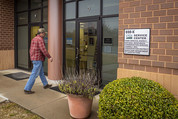
At USDA, we are committed to helping farmers complete loan applications, environmental reviews, and other paperwork free of charge. One-on-one support is available at more than 2,300 USDA Service Centers nationwide. USDA’s Farm Service Agency and Natural Resources Conservation Service staff are usually co-located at these Service Centers and can help guide farmers to the best USDA assistance based on their unique goals, whether it is loans, conservation programs, or insurance.
Service Center staff can guide farmers through the process of preparing and submitting required paperwork on their own, with no need to hire a paid preparer. Language translation service is available in all USDA Service Centers, so one-on-one assistance with a Service Center employee can be translated in real time for farmers requiring it. And while some program and loan applications do have an administrative fee for filing, there is never a charge for preparation services provided by USDA staff.
Farmers who work with the USDA Service Center can:
- Establish their farm by registering for a farm number, which is required for USDA programs and assistance.
- Learn how to meet conservation compliance provisions.
- Verify eligibility for USDA programs.
- Discuss their business and conservation goals.
- Create a conservation plan.
- Fill out and file loan and program applications.
We are committed to delivering USDA programs and services to America’s farmers and ranchers while taking safety measures in response to COVID-19. We encourage you to check the status of your local USDA Service Center and make an appointment to discuss your business needs.
|
|