
The 2022 Farm Service Agency County Committee Elections will begin on November 7, 2022, when ballots are mailed to eligible voters. The deadline to return ballots to local FSA offices, or to be postmarked, is December 5, 2022.
County committee members are an important component of the operations of FSA and provide a link between the agricultural community and USDA. Farmers and ranchers elected to county committees help deliver FSA programs at the local level, applying their knowledge and judgment to make decisions on commodity price support programs; conservation programs; incentive indemnity and disaster programs for some commodities; emergency programs and eligibility. FSA committees operate within official regulations designed to carry out federal laws.
The candidate(s) in this year’s election are as follows:
Jane Rowell Reaves is nominated in LAA 3, Dillon County, to serve as COC member for a 3-year term beginning January 1, 2023.
Jane Reaves resides in LAA 3, and has produced soybeans and corn, along with operating chicken houses for the past 11 years. She has served as the minority advisor for the Dillon County FSA County Office Committee for the past 9 years. Jane is willing to serve if elected.
To be an eligible voter, farmers and ranchers must participate or cooperate in an FSA program. A person who is not of legal voting age but supervises and conducts the farming operations of an entire farm, may also be eligible to vote. A cooperating producer is someone who has provided information about their farming or ranching operation(s) but may not have applied or received FSA program benefits.
Eligible voters in local administrative area 3, who do not receive a ballot can obtain one from their local USDA Service Center.
Newly elected committee members will take office January 1, 2023.
|

The term “sodbusting” is used to identify the conversion of land from native vegetation to commodity crop production after December 23, 1985. As part of the conservation provisions of the Food Security Act of 1985, if you’re proposing to produce agricultural commodities (crops that require annual tillage including one pass planting operations and sugar cane) on land that has been determined highly erodible and that has no crop history prior to December 23, 1985, that land must be farmed in accordance with a conservation plan or system that ensures no substantial increase in soil erosion.
Eligibility for many USDA programs requires compliance with a conservation plan or system on highly erodible land (HEL) used for the production of agricultural commodities. This includes Farm Service Agency (FSA) loan, disaster assistance, safety net, price support, and conservation programs; Natural Resources Conservation Service (NRCS) conservation programs; and Risk Management Agency (RMA) Federal crop insurance.
Before you clear or prepare areas not presently under production for crops that require annual tillage, you are required to file Form AD-1026 “Highly Erodible Land Conservation and Wetland Conservation Certification,” with FSA indicating the area to be brought into production. The notification will be referred to NRCS to determine if the field is considered highly erodible land. If the field is considered HEL, you are required to implement a conservation plan or system that limits the erosion to the tolerable soil loss (T) for the predominant HEL soil on those fields.
In addition, prior to removing trees or conducting any other land manipulations that may affect wetlands, remember to update form AD-1026, to ensure you remain in compliance with the wetland conservation provisions.
Prior to purchasing or renting new cropland acres, it is recommended that you check with your local USDA Service Center to ensure your activities will be in compliance with the highly erodible land and wetland conservation provisions.
For additional information on highly erodible land conservation and wetland conservation compliance, contact your local USDA Service Center.
|
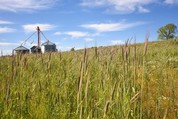
The USDA Farm Service Agency (FSA) recently made several policy updates for acreage reporting for cover crops, revising intended use, late-filed provisions, grazing allotments as well as updated the definitions of “idle” and “fallow.”
Reporting Cover Crops:
Cover crop types can be chosen from the following four categories:
- Cereals and other grasses
- Legumes
- Brassicas and other broadleaves
- Mixtures
If the cover crop is harvested for any use other than forage or grazing and is not terminated according to policy guidelines, then that crop will no longer be considered a cover crop and the acreage report must be revised to reflect the actual crop.
Permitted Revision of Intended use After Acreage Reporting Date:
New operators or owners who pick up a farm after the acreage reporting deadline has passed and the crop has already been reported on the farm, have 30 calendar days from the date when the new operator or owner acquired the lease on land, control of the land or ownership and new producer crop share interest in the previously reported crop acreage. Under this policy, appropriate documentation must be provided to the County Committee’s satisfaction to determine that a legitimate operator or ownership and producer crop share interest change occurred to permit the revision.
Acreage Reports:
In order to maintain program eligibility and benefits, you must timely file acreage reports. Failure to file an acreage report by the crop acreage reporting deadline may result in ineligibility for future program benefits. FSA will not accept acreage reports provided more than a year after the acreage reporting deadline.
Reporting Grazing Allotments:
FSA offices can now accept acreage reports for grazing allotments. You will use form “FSA-578” to report grazing allotments as animal unit months (AUMs) using the “Reporting Unit” field. Your local FSA office will need the grazing period start and end date and the percent of public land.
Definitions of Terms
FSA defines “idle” as cropland or a balance of cropland within a Common Land Unit (CLU) (field/subfield) which is not planted or considered not planted and does not meet the definition of fallow or skip row.
Fallow is considered unplanted cropland acres which are part of a crop/fallow rotation where cultivated land that is normally planted is purposely kept out of production during a regular growing season.
For more information, contact your Dillon County USDA Service Center at 843-774-5122 or visit fsa.usda.gov.
|
If you are a producer or landowner who participates in USDA’s Natural Resources Conservation Service (NRCS) conservation programs, the Farm Service Agency (FSA) may be reaching out by mail with information about a form you’ll need to fill out.
Starting this year, all producers and landowners participating or applying to participate in certain NRCS conservation programs must complete form CCC-902, Farm Operating Plan. Historically, to participate in these programs, legal entities could file either the CCC-901, Member Information or the CCC-902, while individuals were not specifically required to file the CCC-902 with FSA. Now, to ensure FSA and NRCS are properly determining payment eligibility and maximum payment limitations, all customers must have a CCC-902 on file to establish eligibility.
These changes will not affect participants who already have a Form CCC-902 with a “determined” status recorded with FSA. Customers that do not have a CCC-902 on file with FSA will be sent a letter in the mail in the coming weeks with detailed information on what is needed and how to file the form. The letter requests that the form be completed within 30 days of receiving the letter.
For added convenience, USDA is offering options for remote or in-person submission of the CCC-902. Fiscal year 2021 is considered a transition year to ensure all NRCS program participants can meet this updated filing requirement. Beginning in FY 2022, if form CCC-902 is not on file your payments may be impacted.
We can help: NRCS and FSA staff are available at USDA Service Centers nationwide to provide information and assistance to walk you through meeting this filing requirement. For more information, see the NRCS National Bulletin 300-21-7 or FSA Notice PL-293.
Farm Service Agency (FSA) loans require applicants to have a satisfactory credit history. A credit report is requested for all FSA direct farm loan applicants. These reports are reviewed to verify outstanding debts, see if bills are paid timely and to determine the impact on cash flow.
Information on your credit report is strictly confidential and is used only as an aid in conducting FSA business.
Our farm loan staff will discuss options with you if you have an unfavorable credit report and will provide a copy of your report. If you dispute the accuracy of the information on the credit report, it is up to you to contact the issuing credit report company to resolve any errors or inaccuracies.
There are multiple ways to remedy an unfavorable credit score:
- Make sure to pay bills on time
- Setting up automatic payments or automated reminders can be an effective way to remember payment due dates.
- Pay down existing debt
- Keep your credit card balances low
- Avoid suddenly opening or closing existing credit accounts
FSA’s farm loan staff will guide you through the process, which may require you to reapply for a loan after improving or correcting your credit report.
For more information on FSA farm loan programs, contact your Marion County USDA Service Center at 843-423-1341 or visit fsa.usda.gov.
|
Dillon USDA Service Center
1212 Commerce Drive
Dillon, SC 29536
Phone: 843-774-5122
Fax: 855-568-8779
|
Judith Davis, CED
Judith.davis@usda.gov
|
Thad Williams, Farm Loan Manager
thad.williams@usda.gov
|
|
FSA Program Technicians:
Ashley Bryant
Brandi Wagner
Julia Boykin
Rebecca Williams
|
County Committee:
Fitzhugh Bethea
David Blake Allen
James Gary Page III
Jane Rowell Reaves
|
|
|
Soil Conservationist Technician
|
|
SWCD District Clerk
Christa Brown
|
Next County Committee Meeting:
November 16, 2022
|
Questions?
Please contact Judith Davis, County Executive Director, at (843) 774-5122, ext. 2 or judith.davis@usda.gov. For Farm Loans, please contact Thad Williams, Farm Loan Manager, at (843) 423-1341, ext. 4117 or thad.williams@usda.gov. For NRCS, please contact Christa Brown (SWCD Clerk), at (843) 774-5122, ext. 3 or Christa.Brown@sc.nacdnet.net.
|