
|
|
Vermont FSA Newsletter - October 27, 2022
|
|
|
In This Issue:
|

Fall is really in full swing. Much of Vermont’s peak color has passed. Leaves are falling like confetti and whether to rake the lawn has become a discussion issue! Corn that is being chopped for silage is pretty much done, while corn that’s still standing is waiting to dry down so it can be picked for shelled corn or earlage. Many fields in my part of Vermont, Addison County, are either green from the freshly germinated cover crop or brown from the freshly spread manure as farmers continue their fall work and prepare for winter.
On Tuesday October 18th, 2022, Secretary of Agriculture Tom Vilsack announced a far reaching and dramatic investment of money into the farming community. Through the Inflation Reduction Act (IRA) almost $800 Million has been invested in distressed farmers across the country. Nearly $2 Million in Vermont has been used to bring farmers current that were more than 60 days behind on their loan payments due to the economic challenges of the last couple of years. Many of these distressed farmers were shut out from other government programs as they were no longer in compliance because they were not current on their loans. The injection of money brings them back into compliance and makes them eligible for a broad range of programs that will assist their farming operations. This program is another example of the type of farming investment practices that the Biden/Harris administration is undertaking. This is not the end of this kind of investment; there will be more programs forthcoming.
The actions taken for distressed farmers under the IRA are just a part of five cross-cutting strategic priorities being undertaken by USDA, Secretary Vilsack, and the Biden/Harris administration. The five strategies include:
- Addressing Climate Change through Climate Smart Agriculture, Forestry and Clean Energy.
- Advancing Racial Justice, Equity, Opportunity, and Rural Prosperity.
- Creating more, better, and new Market Opportunities.
- Tackling Food and Nutrition Insecurity.
- Making USDA a Great Place to Work for Everyone.
One of the benefits of Vermont’s aggressive approach to water quality regulation is that many of the practices that improve water quality are also examples of Climate Smart farming. Cover cropping has expanded dramatically over the last ten years, as has proper storage of manure, proper management of soils and only applying what a crop needs, managed grazing, and manure injection, are all examples of good climate farming too.
We are heading towards Thanksgiving, so I wish you all the best. Please don’t hesitate to reach out to me if you have any questions.
|
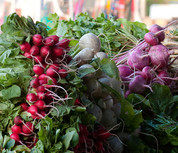
Agriculture Secretary Tom Vilsack announced that the U.S. Department of Agriculture (USDA) plans to provide up to $200 million in assistance for specialty crop producers who incur eligible on-farm food safety program expenses to obtain or renew a food safety certification in calendar years 2022 or 2023. USDA’s new Food Safety Certification for Specialty Crops (FSCSC) program will help to offset costs for specialty crop producers to comply with regulatory requirements and market-driven food safety certification requirements, which is part of USDA’s broader effort to transform the food system to create a more level playing field for small and medium producers and a more balanced, equitable economy for everyone working in food and agriculture.
Specialty crop operations can apply for assistance for eligible expenses related to a 2022 food safety certificate issued on or after June 21, 2022, beginning June 27, 2022. USDA is delivering FSCSC to provide critical assistance for specialty crop operations, with an emphasis on equity in program delivery while building on lessons learned from the COVID-19 pandemic and supply chain disruptions. Vilsack made the announcement from Hollis, N.H., where he toured a local, family-owned farm and highlighted USDA’s efforts to help reduce costs for farmers and support local economies by providing significant funding to cut regulatory costs and increase market opportunities for farmers in New Hampshire and across the nation.
Program Details
FSCSC will assist specialty crop operations that incurred eligible on-farm food safety certification and related expenses related to obtaining or renewing a food safety certification in calendar years 2022 and 2023. For each year, FSCSC covers a percentage of the specialty crop operation’s cost of obtaining or renewing their certification, as well as a portion of their related expenses.
To be eligible for FSCSC, the applicant must be a specialty crop operation; meet the definition of a small business or very small business; and have paid eligible expenses related to the 2022 (issued on or after June 21, 2022) or 2023 certification.
Specialty crop operations may receive assistance for the following costs:
- Developing a food safety plan for first-time food safety certification.
- Maintaining or updating an existing food safety plan.
- Food safety certification.
- Certification upload fees.
- Microbiological testing for products, soil amendments and water.
FSCSC payments are calculated separately for each category of eligible costs. A higher payment rate has been set for socially disadvantaged, limited resource, beginning and veteran farmers and ranchers. Details about the payment rates and limitations can be found at farmers.gov/food-safety.
Applying for Assistance
The FSCSC application period for 2022 is June 27, 2022, through January 31, 2023, and the application period for 2023 will be announced at a later date. FSA will issue payments at the time of application approval for 2022 and after the application period ends for 2023. If calculated payments exceed the amount of available funding, payments will be prorated.
Interested specialty crop producers can apply by completing the FSA-888, Food Safety Certification for Specialty Crops Program (FSCSC) application. The application, along with other required documents, can be submitted to the FSA office at any USDA Service Center nationwide by mail, fax, hand delivery or via electronic means.
Producers can visit farmers.gov/food-safety for additional program details, eligibility information and forms needed to apply.
|

U.S. Department of Agriculture (USDA) Secretary Tom Vilsack today announced that the Biden-Harris Administration is making $500 million in grants available to increase American-made fertilizer production to spur competition and combat price hikes on U.S. farmers caused by the war in Ukraine.
The Biden-Harris Administration’s Fertilizer Production Expansion Program is part of a whole-of-government effort to promote competition in agricultural markets. The funds are being made available through the Commodity Credit Corporation.
Eligible entities are for‐profit businesses and corporations, nonprofit entities, Tribes and Tribal organizations, producer‐owned cooperatives and corporations, certified benefit corporations, and state or local governments. Private entities must be independently owned and operated to apply.
The Department will begin accepting applications in the coming days via www.grants.gov. Notably, there will be two opportunities for submission. Learn more.
|

Accessing capital to begin, extend or support an agriculture operation can be especially challenging to new producers. Farm Service Agency’s “Beginning Farmer” direct and guaranteed loan programs provide an opportunity for qualified applicants to secure loans from funding set aside for producers who meet the following conditions:
- Has operated a farm for not more than 10 years
- Will materially and substantially participate in the operation of the farm
- Agrees to participate in a loan assessment, borrower training and financial management program sponsored by FSA
- Does not own a farm in excess of 30 percent of the county’s average size farm
For more information contact, contact your County USDA Service Center or visit fsa.usda.gov.
|

U.S. Department of Agriculture (USDA) announced new features on the farmers.gov website designed to help facilitate the employment of H-2A workers.
USDA’s goal is to help farmers navigate the complex H-2A program that is administered by Department of Labor, Department of Homeland Security, and the State Department so hiring a farm worker is an easier process.
The primary new H-2A features on Farmers.gov include:
· A real-time dashboard that enables farmers to track the status of their eligible employer application and visa applications for temporary nonimmigrant workers;
· Streamlining the login information so if a farmer has an existing login.gov account they can save multiple applications tracking numbers for quick look-up at any time;
· Enables easy access to the Department of Labor’s (DOL) Foreign Labor Application Gateway (FLAG);
· Allows farmers to track time-sensitive actions taken in the course of Office of Foreign Labor Certification’s (OFLC) adjudication of temporary labor certification applications;
· Allowing for farmers to access all application forms on-line. All information can be found at www.farmers.gov/manage/h2a.
In 2018, USDA unveiled farmers.gov, a dynamic, mobile-friendly public website combined with an authenticated portal where customers can apply for programs, process transactions and manage accounts. With feedback from customers and field employees who serve those customers, farmers.gov delivers farmer-focused features through an agile, iterative process to deliver the greatest immediate value to America’s agricultural producers – helping farmers and ranchers do right, and feed everyone.
|
Farmers and ranchers can use the Farm Loan Discovery Tool on farmers.gov to find information on USDA farm loans that may best fit their operations.
USDA’s Farm Service Agency (FSA) offers a variety of loan options to help farmers finance their operations. From buying land to financing the purchase of equipment, FSA loans can help.
USDA conducted field research in eight states, gathering input from farmers and FSA farm loan staff to better understand their needs and challenges.
How the Tool Works
Farmers who are looking for financing options to operate a farm or buy land can answer a few simple questions about what they are looking to fund and how much money they need to borrow. After submitting their answers, farmers will receive information on farm loans that best fit their specific needs. The loan application and additional resources also will be provided.
Farmers can download application quick guides that outline what to expect from preparing an application to receiving a loan decision. There are four guides that cover loans to individuals, entities, and youth, as well as information on microloans. The guides include general eligibility requirements and a list of required forms and documentation for each type of loan. These guides can help farmers prepare before their first USDA service center visit with a loan officer.
Farmers can access the Farm Loan Discovery Tool by visiting farmers.gov/fund and clicking the “Start” button. Follow the prompts and answer five simple questions to receive loan information that is applicable to your agricultural operation. The tool is built to run on any modern browser like Chrome, Edge, Firefox, or the Safari browser, and is fully functional on mobile devices. It does not work in Internet Explorer.
About Farmers.gov
In 2018, USDA unveiled farmers.gov, a dynamic, mobile-friendly public website combined with an authenticated portal where farmers will be able to apply for programs, process transactions, and manage accounts.
The Farm Loan Discovery Tool is one of many resources on farmers.gov to help connect farmers to information that can help their operations. Earlier this year, USDA launched the My Financial Information feature, which enables farmers to view their loan information, history, payments, and alerts by logging into the website.
USDA is building farmers.gov for farmers, by farmers. In addition to the interactive farm loan features, the site also offers a Disaster Assistance Discovery Tool. Farmers can visit farmers.gov/recover/disaster-assistance-tool#step-1 to find disaster assistance programs that can help their operation recover from natural disasters.
For more information, contact your County USDA Service Center or visit farmers.gov.
|
|
|
|
Vermont Farm Service Agency
356 Mountain View Drive, Suite 104
Colchester, VT 05446
John Roberts, State Executive Director
john.roberts2@usda.gov
Phone: 802-658-2803
Fax: 855-794-3676
|
Addison County Office
Tina Williams, Acting County Executive Dir.
802-771-3027
tina.williams2@usda.gov
Rebecca Davis, Farm Loan Manager
603-223-6003
rebecca.davis2@usda.gov
|
Franklin/Grand Isle County Office
Laurie Locke, County Executive Director
802-528-4162
laurie.locke@usda.gov
Ryan Howrigan, District Director
802-528-4160
ryan.howrigan@usda.gov
|
|
Caledonia/Essex County Office
Patricia Matte, County Executive Director
802-424-3146
patricia.matte@usda.gov
|
Rutland/Bennington County Office
Tina Williams, County Executive Director
802-775-8034, ext. 111
tina.williams2@usda.gov
|
|
Chittenden/Washington County Office
Lawrence Parker, County Executive Director
802-288-8155, ext. 102
lawrence.parker@usda.gov
|
Windsor/Orange County Offices
Christine Lary, County Executive Director
802-295-7942, ext. 3168
christine.lary@usda.gov
|
|
Lamoille/Orleans County Offices
Heather Mateja, County Executive Director
Orleans: 802-334-6090, ext. 7016
Lamoille: 802-888-4935, ext. 3002 (Tues.)
heather.mateja@usda.gov
Angela Goodridge, Farm Loan Manager
802-334-6090, ext. 7003
angela.goodridge@usda.gov
|
Windham County Office
Christine Lary, County Executive Director
802-254-9766, ext. 3032 christine.lary@usda.gov
|
|
|






