In This Issue:
Agricultural producers and handlers who are certified organic, along with producers and handlers who are transitioning to organic production, can now apply for the U.S. Department of Agriculture’s (USDA) Organic and Transitional Education Certification Program (OTECP) and Organic Certification Cost Share Program (OCCSP), which help producers and handlers cover the cost of organic certification, along with other related expenses. Applications for OTECP and OCCSP are both due October 31, 2022.
OTECP covers:
- Certification costs for organic producers and handlers (25% up to $250 per category).
- Eligible expenses for transitional producers, including fees for pre-certification inspections and development of an organic system plan (75% up to $750).
- Registration fees for educational events (75% up to $200).
- Soil testing (75% up to $100).
Meanwhile, OCCSP covers 50% or up to $500 per category of certification costs in 2022.
This cost share for certification is available for each of these categories: crops, wild crops, livestock, processing/handling and State organic program fees.
Producers can receive cost share through both OTECP and OCCSP. Both OTECP and OCCSP cover costs incurred from October 1, 2021, to September 30, 2022. Producers have until October 31, 2022 to file applications, and FSA will make payments as applications are received.
To apply, producers and handlers should contact the Farm Service Agency (FSA) at their local USDA Service Center. As part of completing the OCCSP applications, producers and handlers will need to provide documentation of their organic certification and eligible expenses. Organic producers and handlers may also apply for OCCSP through participating State agencies.
Additional details can be found on the OTECP and OCCSP webpages.
On September 14, 2022, Agriculture Secretary Tom Vilsack announced that the Biden-Harris Administration through the U.S. Department of Agriculture is investing up to $2.8 billion in 70 selected projects under the first pool of the Partnerships for Climate-Smart Commodities funding opportunity, with projects from the second funding pool to be announced later this year. Ultimately, USDA’s anticipated investment will triple to more than $3 billion in pilots that will create market opportunities for American commodities produced using climate-smart production practices. These initial projects will expand markets for climate-smart commodities, leverage the greenhouse gas benefits of climate-smart commodity production and provide direct, meaningful benefits to production agriculture, including for small and underserved producers. Applicants submitted more than 450 project proposals in this first funding pool, and the strength of the projects identified led USDA to increase its investment in this opportunity from the initial $1 billion Vilsack announced earlier this year.
“There is strong and growing interest in the private sector and among consumers for food that is grown in a climate-friendly way,” said Vilsack. “Through today’s announcement of initial selections for the Partnerships for Climate-Smart Commodities, USDA is delivering on our promise to build and expand these market opportunities for American agriculture and be global leaders in climate-smart agricultural production. This effort will increase the competitive advantage of U.S. agriculture both domestically and internationally, build wealth that stays in rural communities and support a diverse range of producers and operation types.”
Earlier this year, Vilsack announced that USDA had allocated $1 billion for the program, divided into two funding pools. Because of the unprecedented demand and interest in the program, and potential for meaningful opportunities to benefit producers through the proposals, the Biden-Harris administration increased the total funding allocation to more than $3 billion, with projects from the second funding pool to be announced later this year. Vilsack made the announcement from the campus of Penn State University, which is the lead partner on one of the selected pilot projects to implement climate-smart practices, quantify and track the greenhouse gas benefits and develop markets for the resulting climate-smart commodities.
Funding for Partnerships for Climate-Smart Commodities will be delivered through USDA’s Commodity Credit Corporation in two pools. Projects announced today are from the first funding pool, which included proposals seeking funds ranging from $5 million to $100 million. USDA received over 450 proposals from more than 350 entities for this funding pool, including nonprofit organizations; for-profits and government entities; farmer cooperatives; conservation, energy and environmental groups; state, tribal and local governments; universities (including minority serving institutions); small businesses; and large corporations. Applications covered every state in the nation as well as tribal lands, D.C. and Puerto Rico. The tentative selections announced today reflect this broad set of applicants and geographic scope, and the proposals include plans to match on average over 50% of the federal investment with nonfederal funds.
USDA will work with the applicants for the 70 identified projects to finalize the scope and funding levels in the coming months. A complete list of projects identified for this first round of funding is available at usda.gov/climate-smart-commodities.
Spanning up to five years, these 70 projects will:
- Provide technical and financial assistance to producers to implement climate-smart production practices on a voluntary basis on working lands;
- Pilot innovative and cost-effective methods for quantification, monitoring, reporting and verification of greenhouse gas benefits; and
- Develop markets and promote the resulting climate-smart commodities.
The projects announced today will deliver significant impacts for producers and communities nationwide. USDA anticipates that these projects will result in:
-
Hundreds of expanded markets and revenue streams for producers and commodities across agriculture ranging from traditional corn to specialty crops.
-
More than 50,000 farms reached, encompassing more than 20-25 million acres of working land engaged in climate-smart production practices such as cover crops, no-till and nutrient management.
-
More than 50 million metric tons of carbon dioxide equivalent sequestered over the lives of the projects. This is equivalent to removing more than 10 million gasoline-powered passenger vehicles from the road for one year.
-
More than 50 universities, including multiple minority-serving institutions, engaged and helping advance projects, especially with outreach and monitoring, measurement, reporting and verification.
- Proposals for the 70 selected projects include plans to match on average over 50% of the federal investment with nonfederal funds.
Projects were selected based on a range of criteria, with emphasis placed on greenhouse gas and/or carbon sequestration benefits and equity. The Notice of Funding Opportunity included a complete set of project proposal requirements and evaluation criteria.
USDA is currently evaluating project proposals from the second Partnerships for Climate-Smart Commodities funding pool, which includes funding requests from $250,000 to $4,999,999. Projects from this second funding pool will emphasize the enrollment of small and/or underserved producers, and/or monitoring, reporting and verification activities developed at minority-serving institutions. USDA expects to announce these selections later this Fall.
More Information
Partnerships for Climate-Smart Commodities is part of USDA’s broader strategy to position agriculture and forestry as leaders in climate change mitigation through voluntary, incentive-based, market-driven approaches. Visit usda.gov/climate-smart-commodities to learn more about this effort, and usda.gov/climate-solutions for climate-related updates, resources and tools across the Department.
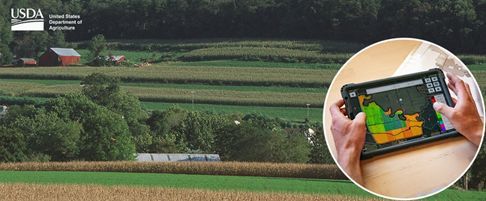 The U.S. Department of Agriculture (USDA) welcomed the passage of the Inflation Reduction Act, which will deliver $19.5 billion in new conservation funding to support climate-smart agriculture. This historic funding will bolster the new steps for USDA’s Natural Resources Conservation Service (NRCS) to improve opportunities for nutrient management. NRCS will target funding, increasing program flexibilities, launch a new outreach campaign to promote nutrient management’s economic benefits, in addition to expanding partnerships to develop nutrient management plans. This is part of USDA’s broader effort to address future fertilizer availability and cost challenges for U.S. producers.
In this Ask the Expert, Jack Carlile, Farm Loan Manager for the USDA Farm Service Agency (FSA), answers questions about farm operating loans and when producers should apply in order to secure funds for the current crop year.
As the Farm Loan Manager for the Cherokee County Service Center, Jack is responsible for managing the loan making and loan servicing activities for five counties in northeast Oklahoma. His office provides services for over 650 farm loan customers. Jack was raised on a cross bred cow/calf operation that his grandparents started. Over the years, each generation has added to the operation by purchasing additional pasture. The operation also grows and bales their own hay. Jack’s agriculture background and degree in agriculture economics from Oklahoma State University help him better understand the financing needs of his producers.
Who can apply for FSA Farm Loans?
Anyone can apply for FSA’s loan programs. Applications will be considered on basic eligibility requirements. To apply for a loan, you must meet the following general eligibility requirements including:
- Be a U.S. citizen or qualified alien.
- Operator of a family farm or ranch.
- Have a satisfactory credit history.
- Unable to obtain credit elsewhere at reasonable rates and terms to meet actual needs.
- Not be delinquent on any federal debts.
What can I purchase with operating loans?
Farm Operating Loans are traditionally used for purchasing capital items such as farm machinery, equipment, or livestock. Loan funds can also be used to help pay typical operating expenses for farming and ranching operations. For example, a rancher may use an operating loan to purchase forage for his cattle to feed them through the winter or a row crop producer may use an operating loan for paying for inputs like seed or fertilizer.
What is the maximum loan amount and terms?
The maximum loan amount for a Direct Farm Operating Loan is $400,000. Direct loans are made and serviced by FSA.
Producers can also apply for Guaranteed Operating Loans that are made by your commercial lender, and guaranteed against loss by FSA. The maximum loan amount for a Guaranteed Farm Operating Loan is $1,825,000. Loan terms for operating loans range from one to seven years.
How do I apply?
If you’re interested in applying for a farm loan, you can pick up an application by visiting your local FSA office. Visit farmers.gov to find the USDA Service Center nearest you.
When applying for a loan, you will need a business plan, which must include:
- Your mission, vision, and goals for your farm or ranch.
- Your current assets and liabilities.
- Marketing Plan (what your operation will produce and where you will market and sell your products.)
- Whether the amount of income your operation generates will be enough to pay your business and family living expenses.
When should I apply for an operating loan?
I would recommend beginning the application process a few months in advance of needing the funds to allow time for the request to be processed, and for any necessary security checks and searches to be completed. That allows time for the funds to be available for your use when most needed.
Where can I find more information?
To learn more about FSA loans visit farmers.gov/loans or fsa.usda.gov/farmloans. Fact sheets and application packages are also available at your USDA Service Center. To learn more about other types of FSA loans or to find the right loan for your operation, use the Farm Loan Discovery Tool by visiting farmers.gov/loans/farm-loan-discovery-tool.
USDA will invest $15 million this year for the Conservation Innovation Grants (CIG) Classic program. Through CIG, grantees work to address our nation's water quality, water quantity, air quality, soil health, and wildlife habitat challenges, all while supporting agricultural production. This year’s funding priorities are climate-smart agriculture, addressing invasive species, and conservation in urban agricultural systems.
|
USDA is expanding our online communications platform that the Farm Service Agency (FSA) has used for years to now include local information from the Natural Resources Conservation Service (NRCS), Risk Management Agency (RMA), and other USDA agencies.
Subscribers will now receive important information on FSA, NRCS and RMA programs, eligibility requirements, deadlines, and more.
You’re currently subscribed to the Hawaii and Pacific Basin USDA Service Center newsletter and updates list. News will continue to be sent via e-mail right to your home or farm office, or to your smartphone – allowing you to receive immediate notification of USDA news that applies to your agricultural operation.
You can also subscribe to text alerts from your USDA Service Center by texting the Service Center Keyword below to 372-669. Standard text messaging rates apply. Contact your wireless carrier for details associated with your particular data plan. Participants may unsubscribe at any time.
Service Center Keywords (text only the bolded text to 372-669)
Hawaii County - HPBHawaii
Honolulu County - HPBHonolulu
Kauai County - HPBKauai
Maui County - HPBMaui
For more information visit farmers.gov/working-with-us/stay-connected or for subscription assistance contact the local County USDA Farm Service Agency at the numbers below.
American Samoa Field Office 684-633-1031 ext 2
Guam County Office 671-472-7490 ext 2
Hawaii County Office 808-933-8381 ext 2
Honolulu County Office 808-861-8538
Kauai County Office 808-245-9014 ext 2
Maui County Office 808-871-5500 ext 2
The Honolulu County Farm Service Agency (FSA) office in Honolulu is hiring a full time, temporary Program Technician (PT) not to exceed September 20, 2023. The deadline to apply is September 30, 2022.
Duties include general office activities supporting FSA programs administered at the field level. Successful applicants must be reliable, have a professional attitude and enjoy working with the public.
If you are interested or know of someone who might be interested, please share this information with them. Here is the direct link to the position with information on how to apply: Program Technician Job Announcement.
Applications must be received no later than close of business September 30, 2022.
Farm Operating- Direct 4.125%
Farm Operating - Microloan 4.125%
Farm Ownership - Direct 4.375%
Farm Ownership - Microloan 4.375%
Farm Ownership - Direct, Joint Financing 2.500%
Farm Ownership - Down Payment 1.500%
Emergency Loan - Amount of Actual Loss 3.750%
September 30, 2022 - Deadline for Floriculture, Aquaculture & Christmas Tree producers to apply for the 2023 Non-Insured Crop Disaster Assistance Program (NAP)
October 31, 2022 - Deadline to apply for the 2022 Organic and Transitional Education Certification Program (OTECP) and 2022 Organic Certification Coast Share Program (OCCSP)
November 1, 2022 - Deadline to submit eligible expense documentation for the 2022 Reimbursement Transportation Cost Payment Program (RTCP)
January 30, 2023 - Deadline to apply for the 2022 Disaster Assistance for Livestock Forage Program (LFP)
|