In This Issue:
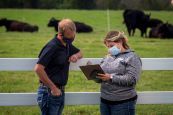
At USDA, we are committed to helping farmers complete loan applications, environmental reviews, and other paperwork free of charge. One-on-one support is available at more than 2,300 USDA Service Centers nationwide. USDA’s Farm Service Agency and Natural Resources Conservation Service staff are usually co-located at these Service Centers and can help guide farmers to the best USDA assistance based on their unique goals, whether it is loans, conservation programs, or insurance.
Service Center staff can guide farmers through the process of preparing and submitting required paperwork on their own, with no need to hire a paid preparer. Language translation service is available in all USDA Service Centers, so one-on-one assistance with a Service Center employee can be translated in real time for farmers requiring it. And while some program and loan applications do have an administrative fee for filing, there is never a charge for preparation services provided by USDA staff.
Farmers who work with the USDA Service Center can:
- Establish their farm by registering for a farm number, which is required for USDA programs and assistance.
- Learn how to meet conservation compliance provisions.
- Verify eligibility for USDA programs.
- Discuss their business and conservation goals.
- Create a conservation plan.
- Fill out and file loan and program applications.
We are committed to delivering USDA programs and services to America’s farmers and ranchers while taking safety measures in response to COVID-19. We encourage you to check the status of your local USDA Service Center and make an appointment to discuss your business needs.
|

The U.S. Department of Agriculture (USDA) is increasing the amount of funding available for the Spot Market Hog Pandemic Program (SMHPP) and expects to issue approximately $62.8 million in pandemic assistance payments to hog producers starting this week. SMHPP assists eligible producers who sold hogs through a spot market sale from April 16, 2020, through Sept. 1, 2020. USDA’s Farm Service Agency (FSA) accepted SMHPP applications through April 29, 2022.
SMHPP Payments
SMHPP payments will be calculated by multiplying the number of head of eligible hogs, not to exceed 10,000 head, by the payment rate of $54 per head.
FSA originally planned to apply a payment factor if calculated payments exceeded the allocated $50 million in pandemic assistance funds for SMHPP. Payments are not expected to be factored due to Agriculture Secretary Tom Vilsack’s decision to increase funding enabling producers to receive 100% of the calculated SMHPP payment.
There is no per person or legal entity payment limitation on SMHPP payments.
SMHPP Background
USDA offered SMHPP in response to a reduction in packer production due to the COVID-19 pandemic, which resulted in fewer negotiated hogs being procured and subsequent lower market prices. The program is part of USDA’s broader Pandemic Assistance for Producers initiative and addresses gaps in previous assistance for hog producers.
|
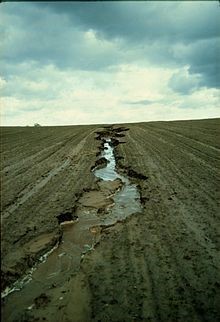
Severe weather events create significant challenges and often result in catastrophic loss for agricultural producers. Despite every attempt to mitigate risk, your operation may suffer losses. USDA offers several programs to help with recovery.
Risk Management
For producers who have risk protection through Federal Crop Insurance or the Noninsured Crop Disaster Assistance Program (NAP), we want to remind you to report crop damage to your crop insurance agent or the local Farm Service Agency (FSA) office.
If you have crop insurance, contact your agency within 72 hours of discovering damage and be sure to follow up in writing within 15 days. If you have NAP coverage, file a Notice of Loss (also called Form CCC-576) within 15 days of loss becoming apparent, except for hand-harvested crops, which should be reported within 72 hours.
Disaster Assistance
USDA also offers disaster assistance programs, which is especially important to livestock, fruit and vegetable, specialty and perennial crop producers who have fewer risk management options.
First, the Livestock Indemnity Program (LIP) and Emergency Assistance for Livestock, Honeybee and Farm-raised Fish Program (ELAP) reimburses producers for a portion of the value of livestock, poultry and other animals that died as a result of a qualifying natural disaster event or for loss of grazing acres, feed and forage. And, the Livestock Forage Disaster Program (LFP) provides assistance to producers of grazed forage crop acres that have suffered crop loss due to a qualifying drought. Livestock producers suffering the impacts of drought can also request Emergency Haying and Grazing on Conservation Reserve Program (CRP) acres.
Next, the Tree Assistance Program (TAP) provides cost share assistance to rehabilitate and replant tree, vines or shrubs loss experienced by orchards and nurseries. This complements NAP or crop insurance coverage, which cover the crop but not the plants or trees in all cases.
For LIP and ELAP, you will need to file a Notice of Loss for livestock and grazing or feed losses within 30 days and honeybee losses within 15 days. For TAP, you will need to file a program application within 90 days.
Documentation
It’s critical to keep accurate records to document all losses following this devastating cold weather event. Livestock producers are advised to document beginning livestock numbers by taking time and date-stamped video or pictures prior to after the loss.
Other common documentation options include:
- Purchase records
- Production records
- Vaccination records
- Bank or other loan documents
- Third-party certification
Other Programs
The Emergency Conservation Program and Emergency Forest Restoration Program can assist landowners and forest stewards with financial and technical assistance to restore damaged farmland or forests.
Additionally, FSA offers a variety of loans available including emergency loans that are triggered by disaster declarations and operating loans that can assist producers with credit needs. You can use these loans to replace essential property, purchase inputs like livestock, equipment, feed and seed, or refinance farm-related debts, and other needs.
Meanwhile, USDA’s Natural Resources Conservation Service (NRCS) provides financial resources through its Environmental Quality Incentives Program to help with immediate needs and long-term support to help recover from natural disasters and conserve water resources. Assistance may also be available for emergency animal mortality disposal from natural disasters and other causes.
Additional Resources
Additional details – including payment calculations – can be found on our NAP, ELAP, LIP, and TAP fact sheets. On farmers.gov, the Disaster Assistance Discovery Tool, Disaster-at-a-Glance fact sheet, and Farm Loan Discovery Tool can help you determine program or loan options.
While we never want to have to implement disaster programs, we are here to help. To file a Notice of Loss or to ask questions about available programs, contact your local USDA Service Center. All USDA Service Centers are open for business, including those that restrict in-person visits or require appointments because of the pandemic.
|

Are you a military veteran interested in farming? USDA offers resources to help you:
-
Fund Your Operation: USDA’s Farm Service Agency offers a variety of funding opportunities to help agricultural producers finance their businesses. Certain funds are targeted for veterans and beginning farmers and ranchers.
-
Conserve Natural Resources: USDA’s Natural Resources Conservation Service offers conservation programs and expert one-on-one technical assistance to strengthen agricultural operations now and into the future. Veterans may be eligible for a cost share of up to 90 percent and advance payments of up to 50 percent to cover certain conservation practices.
-
Manage Risks: USDA is here to help you prepare for and recover from the unexpected. Veterans who are beginning farmers may be eligible for reduced premiums, application fee waivers, increased insurance coverage, and other incentives for multiple USDA programs that support risk management.
USDA wants to ensure that veterans transitioning to agriculture have the resources needed to succeed. While USDA offices are currently closed to visitors because of the pandemic, Service Center staff continue to work with agricultural producers via phone, email, and other digital tools. To conduct business, please contact your local USDA Service Center. Additionally, more information related to USDA’s response and relief for producers can be found at farmers.gov/coronavirus. If you’re a new farmer, you can also reach out to your state Beginning Farmer and Rancher Coordinator.
|
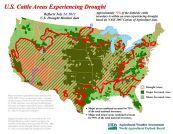
This is likely no surprise to you, but drought persists across the western U.S. and is intensifying in some areas. No geographic area is immune to the potential of drought at any given time. The U.S. Drought Monitor provides a weekly drought assessment, and it plays an important role in USDA programs that help farmers and ranchers recover from drought.
Fact #1 - Numerous agencies use the Drought Monitor to inform drought-related decisions.
The map identifies areas of drought and labels them by intensity on a weekly basis. It categorizes the entire country as being in one of six levels of drought. The first two, None and Abnormally Dry (D0), are not considered to be drought. The next four describe increasing levels of drought: Moderate (D1), Severe (D2), Extreme (D3) and Exceptional (D4).
While many entities consult the Drought Monitor for drought information, drought declarations are made by federal, state and local agencies that may or may not use the Drought Monitor to inform their decisions. Some of the ways USDA uses it to determine a producer’s eligibility for certain drought assistance programs, like the Livestock Forage Disaster Program and Emergency Haying or Grazing on Conservation Reserve Program acres and to “fast-track” Secretarial drought disaster designations.
Fact #2 - U.S. Drought Monitor is made with more than precipitation data.
When you think about drought, you probably think about water, or the lack of it. Precipitation plays a major role in the creation of the Drought Monitor, but the map’s author considers numerous indicators, including drought impacts and local insight from over 450 expert observers around the country. Authors use several dozen indicators to assess drought, including precipitation, streamflow, reservoir levels, temperature and evaporative demand, soil moisture and vegetation health. Because the drought monitor depicts both short and long‐term drought conditions, the authors must look at data for multiple timeframes. The final map produced each week represents a summary of the story being told by all the pieces of data. To help tell that story, authors don’t just look at data. They converse over the course of the map-making week with experts across the country and draw information about drought impacts from media reports and private citizens
.Fact #3 - A real person, using real data, updates the map.
Each week’s map author, not a computer, processes and analyzes data to update the drought monitor. The map authors are trained climatologists or meteorologists from the National Drought Mitigation Center at the University of Nebraska-Lincoln (the academic partner and website host of the Drought Monitor), the National Oceanic and Atmospheric Administration and USDA. The author’s job is to do what a computer can’t – use their expertise to reconcile the sometimes-conflicting stories told by each stream of data into a single assessment.
Fact #4 - The Drought Monitor provides a current snapshot, not a forecast.
The Drought Monitor is a “snapshot” of conditions observed during the most recent week and builds off the previous week’s map. The map is released on Thursdays and depicts conditions based on data for the week that ended the preceding Tuesday. Rain that falls on the Wednesday just before the USDM’s release won’t be reflected until the next map is published. This provides a consistent, week‐to‐week product and gives the author a window to assess the data and come up with a final map.
Fact #5 – Your input can be part of the drought-monitoring process.
State climatologists and other trained observers in the drought monitoring network relay on-the-ground information from numerous sources to the US Drought monitor author each week. That can include information that you contribute.
The Drought Monitor serves as a trigger for multiple forms of federal disaster relief for agricultural producers, and sometimes producers contact the author to suggest that drought conditions in their area are worse than what the latest drought monitor shows. When the author gets a call like that, it prompts them to look closely at all available data for that area, to see whether measurements of precipitation, temperature, soil moisture and other indicators corroborate producer-submitted reports. This is the process that authors follow whether they receive one report or one hundred reports, although reports from more points may help state officials and others know where to look for impacts.
There are multiple ways to contribute your observations:
-
Talk to your state climatologist - Find the current list at the American Association of State Climatologists website.
-
Email - Emails sent to droughtmonitor@unl.edu inform the USDM authors.
-
Become a CoCoRaHS observer - Submit drought reports along with daily precipitation observations to the Community Collaborative Rain, Hail & Snow Network.
-
Submit Condition Monitoring Observer Reports (CMOR) - go.unl.edu/CMOR.
For more information, read our Ask the Expert blog with a NDMC climatologist or visit farmers.gov/protection-recovery.
|

USDA is expanding our online communications platform that the Farm Service Agency (FSA) has used for years to now include local information from the Natural Resources Conservation Service (NRCS), Risk Management Agency (RMA), and other USDA agencies.
Subscribers will now receive important information on FSA, NRCS and RMA programs, eligibility requirements, deadlines, and more.
You’re currently subscribed to the local county USDA Service Center newsletter and updates. News will continue to be sent via e-mail right to your home or farm office, or to your smartphone – allowing you to receive immediate notification of USDA news that applies to your agricultural operation.
You can also subscribe to text alerts from the local county USDA Service Center by texting Service Center Keyword to 372-669. Standard text messaging rates apply. Contact your wireless carrier for details associated with your particular data plan. Participants may unsubscribe at any time.
For more information visit farmers.gov/working-with-us/stay-connected or for subscription assistance contact the local county USDA Service Center.
|

The Conservation Practice Adoption Motivations Survey is now underway. This survey is a joint project between USDA’s National Agricultural Statistics Service (NASS) and Natural Resources Conservation Service (NRCS) aimed at assessing the adoption rates of different conservation practices. Survey data will be used to guide the implementation of NRCS programs in the future. The data collection period runs from May 30 to August 19.
There are four different conservation categories which are surveyed: crop practices, grazing practices, confined livestock practices, and forestry practices. Each category will have a questionnaire that has been designed to gather information specific to the practices involved in each category.
NASS is sending questionnaires for crop practices and confined livestock practices in 2022. Questionnaires for grazing practices and forestry practices will be sent in 2024.
If you received a survey, please respond securely online at agcounts.usda.gov, using the 12-digit survey code mailed with the survey. Producers responding online will now use NASS’s new Respondent Portal. On the portal, producers can complete their surveys, access data visualizations and reports of interest, link to other USDA agencies, get a local weather update and more. Completed questionnaires may also be mailed back in the prepaid envelope provided.
Results from both versions of the survey will be available Sept. 15, 2022, at nass.usda.gov and in NASS’s Quick Stats database at quickstats.nass.usda.gov. Learn more.
|
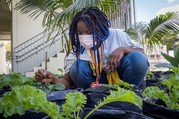
USDA announced significant investments to support urban agriculture, including $43.1 million for grants and cooperative agreements as well as six new urban county committees to help deliver key USDA programs to urban producers. These actions support USDA’s efforts to strengthen the food supply chain and transform the food system to be fairer, more competitive, and more resilient.
Specifically, USDA is investing $10.2 million in new cooperative agreements to expand compost and food waste reduction efforts and $14.2 million in new grants to support the development of urban agriculture and innovative production projects. Additionally, $18.7 million will fund 75 worthy grant proposals from the 2021 application cycle, which was oversubscribed.
These investments build on USDA’s Food Systems Transformation Framework unveiled earlier. The goals of USDA’s Food System Transformation Framework include:
- Building a more resilient food supply chain that provides more and better market options for consumers and producers while reducing carbon pollution.
- Creating a fairer food system that combats market dominance and helps producers and consumers gain more power in the marketplace by creating new, more and better local market options.
- Making nutritious food more accessible and affordable for consumers.
- Emphasizing equity by creating wealth that stays in small towns and underserved communities.
USDA’s Farm Service Agency (FSA) is also standing up six more urban county committees, which help deliver farm loans, disaster assistance, safety net and conservation programs.
Composting and Food Waste Reduction Cooperative Agreements
This is the third year of USDA’s Composting and Food Waste Reduction (CFWR) cooperative agreements, and so far, USDA has invested $3 million in community composting in urban areas across the country. The $10.2 million to be awarded in 2022 will fund pilot projects that develop and implement strategies for municipal compost plans and food waste reduction plans.
Local governments may submit projects that do one or more of the following:
- generate compost;
- provide access to compost to farmers;
- reduce fertilizer use;
- improve soil quality;
- encourage waste management and permaculture business development;
- increase rainwater absorption; reduce municipal food waste; and/or
- divert food waste from landfills.
Priority will be given to projects that anticipate or demonstrate economic benefits, incorporate plans to make compost easily accessible to farmers, including community gardeners, integrate other food waste strategies, including food recovery efforts and collaborate with multiple partners. Projects should span two years.
Office of Urban Agriculture and Innovative Production (OUAIP) Grants
This is also the third year of OUAIP grants, which have already provided more than $7.5 million focused on food access, education, business and start-up costs for new farmers, and development of policies related to zoning and other needs. The $14.2 million to be awarded in 2022 will support the development of urban agriculture and innovative production projects through:
-
Planning Projects that initiate or expand efforts of urban and suburban farmers, gardeners, citizens, government officials, schools and other stakeholders to target areas of food access, education, business and start-up costs for new farmers, urban forestry, and policies related to zoning and other needs of urban production.
-
Implementation Projects that accelerate urban, indoor and other agricultural practices that serve multiple farmers and improve local food access. They may support infrastructure needs, emerging technologies, education and urban farming policy implementation.
How to Apply for Grants and Cooperative Agreements
Submit applications via grants.gov for Composting and Food Waste Reduction Cooperative Agreements and UAIP Grants. Pre-recorded webinars on the purpose, project types, eligibility and basic requirements for submitting applications will be posted at usda.gov/urban. Email UrbanAgriculture@usda.gov with any questions.
|
USDA will invest $25 million this year for the Conservation Innovation Grants (CIG) On-Farm Conservation Innovation Trials program. Applications for On-Farm Trials are being accepted now through September 22, 2022. Private entities whose primary business is related to agriculture, nongovernmental organizations with experience working with agricultural producers, and non-federal government agencies are eligible to apply.
Through CIG, partners work to address our nation's water quality, water quantity, air quality, soil health and wildlife habitat challenges, all while improving agricultural operations. The On-Farm Trials component of CIG supports widespread adoption and evaluation of innovative conservation approaches in partnership with agricultural producers. This year’s funding priorities are climate-smart agricultural solutions, irrigation water management, nutrient management, and soil health.
For FY 2022, to ensure that equity is incorporated in the planning and delivery of On-Farm Trials, at least 10% of the total funds available for On-Farm Trials are set aside for proposals that entirely benefit historically underserved (HU) producers. Additionally, applicants competing for the HU set-aside can waive non-federal match requirements.
Private entities whose primary business is related to agriculture, nongovernmental organizations with experience working with agricultural producers, and non-federal government agencies are eligible to apply. For more information and to apply, visit grants.gov.
|
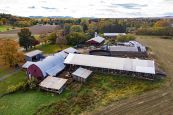
Farm loan borrowers who have pledged real estate as security for their Farm Service Agency (FSA) direct or guaranteed loans are responsible for maintaining loan collateral. Borrowers must obtain prior consent or approval from FSA or the guaranteed lender for any transaction that affects real estate security. These transactions include, but are not limited to:
- Leases of any kind
- Easements of any kind
- Subordinations
- Partial releases
- Sales
Failure to meet or follow the requirements in the loan agreement, promissory note, and other security instruments could lead to nonmonetary default which could jeopardize your current and future loans.
It is critical that borrowers keep an open line of communication with their FSA loan staff or guaranteed lender when it comes to changes in their operation. For more information on borrower responsibilities, read Your FSA Farm Loan Compass.
|
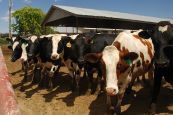
SA offers direct farm ownership and direct farm operating loans to producers who want to establish, maintain, or strengthen their farm or ranch. Direct loans are processed, approved and serviced by FSA loan officers.
Direct farm operating loans can be used to purchase livestock and feed, farm equipment, fuel, farm chemicals, insurance, and other costs including family living expenses. Operating loans can also be used to finance minor improvements or repairs to buildings and to refinance some farm-related debts, excluding real estate.
Direct farm ownership loans can be used to purchase farmland, enlarge an existing farm, construct and repair buildings, and to make farm improvements.
The maximum loan amount for direct farm ownership loans is $600,000 and the maximum loan amount for direct operating loans is $400,000 and a down payment is not required. Repayment terms vary depending on the type of loan, collateral and the producer's ability to repay the loan. Operating loans are normally repaid within seven years and farm ownership loans are not to exceed 40 years.
Please contact your local FSA office for more information or to apply for a direct farm ownership or operating loan.
|
July 15 - Acreage Reporting Sugar Cane
Oct 31 - Organic and Transitional Education and Certification Program (OTECP)
Oct 31 - Organic Certification Cost Share Program (OCCSP)
Dec 31 - A Second Disaster Set-Aside for Farm Loans
| Farm Operating - Direct |
4.000% |
| Farm Operating - Microloan |
4.000% |
| Farm Ownership - Direct |
4.250% |
| Farm Ownership - Microloan |
4.250% |
| Farm Ownership - Direct, Joint Financing |
2.500% |
| Farm Ownership - Down Payment |
1.500% |
| Emergency Loan - Amount of Actual Loss |
3.750% |
|