
Working Together!
By the year 2050, the world population is expected to swell to 9.8 billion people, a 1.8 billion increase from today. The United Nations’ Food and Agriculture Organization predicts that in that time global food production will need to increase by 60 percent to prevent massive famine. Simultaneously, you, as producers, must learn to cope with changes in weather, the economic fluctuations of agriculture, and the continued general consumer’s misunderstanding of farming. Meeting the upcoming demand for food will mean addressing these large challenges head on. I want to reassure you, that we can collectively embrace these challenges by having our USDA Indiana Farm Service Agency (FSA) employees work alongside you.
With approximately 50 FSA voluntary programs, FSA stands ready to assist you. Our workforce stands ready to answer your questions and to acquaint you with the resources you need for your operation to meet future expectations.
As the ebb and flow of the farm economy takes place over the next few years, know that FSA is just a quick phone call, office visit or email away. Stop in or call and make an appointment to talk about programs that you think may be a good fit for your farming operation. We are ready to serve you in any way we can.
Now is also a good time to thank you for the work you each do every day all year long to bring food to our kitchen counters and dining room tables. The Indiana State Fair kicked off earlier this month and is the best time to educate the public about agriculture by showcasing the past, present and future of American agriculture during the 18-day public event. The Indiana State Fair runs through August 21 and information about the fair can be found at www.indianastatefair.com.
Proudly Working Alongside Each of You to Serve Agriculture,
|
 State Executive Director
The United States Department of Agriculture (USDA) announced the appointees who will serve on the Indiana USDA Farm Service Agency (FSA) state committee.
Members of the FSA state committee are appointed by Secretary of Agriculture Tom Vilsack and are responsible for the oversight of farm programs and county committee operations, resolving program delivery appeals from the agriculture community, maintaining cooperative relations with industry stakeholders, keeping producers informed about FSA programs and operating in a manner consistent with USDA equal opportunity and civil rights policies.
Each FSA state committee is comprised of three to five members including a designated chairperson. The individual appointed to serve on this committee for Indiana are:
- Committee Chair Travis Nolcox - Princeton
- Amanda Berenda - Earl Park
- Emily Dougherty - Greenwood
- Joe Pearson - Marion
- Beth Tharp - Coatsville
FSA state committees play an integral role in the continuity of operations, equitable and inclusive program administration and ensure the overall integrity of services to the nation's agricultural producers. The Indiana appointees have proven themselves to be leaders, early adopters and key influencers in the agriculture industry in Indiana. These are qualities that will serve them well in their leadership positions.
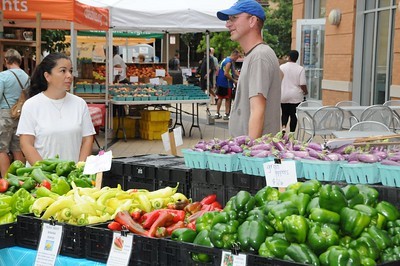
What comes to mind when you think of “farmers markets?” Ripe seasonal produce, colorful flowers, freshly baked bread, and music? While local farmers markets can have a direct positive impact on your weekend morning, they also make a huge impact on our broader community and local food system.
Through the uncertainty and isolation of the last few years, farmers markets have served as a vital source of community connection and stability, offering fresh food and outdoor spaces to gather when many stores’ shelves were bare.
Due to the Farmers Markets’ role in building healthy communities and prosperity for farmers and small businesses, USDA has proclaimed the first week of August as National Farmers Market Week!
Join in the celebration of National Farmers Market week, August 7-13th by visiting your local farmers market.
|
On the Farmers.gov Blog, you will find hundreds of stories from our Fridays on the Farm Series and Ask the Expert Series. The Fridays on the Farm Series features success stories from real farmers, just like you, stories on how they utilized USDA resources, made advancements on their farms, converted to organic operations, and more. The Ask the Expert Series provides advice and Q & A's on numerous topics from loans, the climate hub, avian influenza and more.
If you want to hear from farmers who have served on the FSA County Committees check out the Lead Your FSA Series.
There are several filter options available such as Loans and Grants, Disaster Planning and Assistance, Conservation, Ag Business and Farm Life. You can then narrow it even more by state, commodity or producer type. Learn more at farmers.gov/blog.

Are you a military veteran interested in farming? USDA offers resources to help you:
-
Fund Your Operation: USDA’s Farm Service Agency offers a variety of funding opportunities to help agricultural producers finance their businesses. Certain funds are targeted for veterans and beginning farmers.
-
Conserve Natural Resources: USDA’s Natural Resources Conservation Service offers conservation programs and expert one-on-one technical assistance to strengthen agricultural operations now and into the future. Veterans may be eligible for a cost share of up to 90 percent and advance payments of up to 50 percent to cover certain conservation practices.
-
Manage Risks: USDA is here to help you prepare for and recover from the unexpected. Veterans who are beginning farmers may be eligible for reduced premiums, application fee waivers, increased insurance coverage, and other incentives for multiple USDA programs that support risk management.
USDA wants to ensure that veterans transitioning to agriculture have the resources needed to succeed. To conduct business, please contact your local USDA Service Center. If you’re a new farmer, you can also reach out to your state Beginning Farmer Coordinator.
|
CRP contract holders are encouraged to transition their Conservation Reserve Program (CRP) acres to beginning, veteran or socially disadvantaged farmers through the Transition Incentives Program (TIP). TIP provides annual rental payments to the landowner or operator for up to two additional years after the CRP contract expires.
CRP contract holders no longer need to be a retired or retiring owner or operator to transition their land. TIP participants must agree to sell, have a contract to sell, or agree to lease long term (at least five years) land enrolled in an expiring CRP contract to a beginning, veteran, or socially disadvantaged farmer who is not a family member.
Beginning, veteran or social disadvantaged farmers and CRP participants may enroll in TIP beginning two years before the expiration date of the CRP contract. The TIP application must be submitted prior to completing the lease or sale of the affected lands. New landowners or renters that return the land to production must use sustainable grazing or farming methods.
For more information, contact your local USDA Service Center or visit fsa.usda.gov.
The term “sodbusting” is used to identify the conversion of land from native vegetation to commodity crop production after December 23, 1985. As part of the conservation provisions of the Food Security Act of 1985, if you’re proposing to produce agricultural commodities (crops that require annual tillage including one pass planting operations and sugar cane) on land that has been determined highly erodible and that has no crop history prior to December 23, 1985, that land must be farmed in accordance with a conservation plan or system that ensures no substantial increase in soil erosion.
Eligibility for many USDA programs requires compliance with a conservation plan or system on highly erodible land (HEL) used for the production of agricultural commodities. This includes Farm Service Agency (FSA) loan, disaster assistance, safety net, price support, and conservation programs; Natural Resources Conservation Service (NRCS) conservation programs; and Risk Management Agency (RMA) Federal crop insurance.
Before you clear or prepare areas not presently under production for crops that require annual tillage, you are required to file Form AD-1026 “Highly Erodible Land Conservation and Wetland Conservation Certification,” with FSA indicating the area to be brought into production. The notification will be referred to NRCS to determine if the field is considered highly erodible land. If the field is considered HEL, you are required to implement a conservation plan or system that limits the erosion to the tolerable soil loss (T) for the predominant HEL soil on those fields.
In addition, prior to removing trees or conducting any other land manipulations that may affect wetlands, remember to update form AD-1026, to ensure you remain in compliance with the wetland conservation provisions.
Prior to purchasing or renting new cropland acres, it is recommended that you check with your local USDA Service Center to ensure your activities will be in compliance with the highly erodible land and wetland conservation provisions.
For additional information on highly erodible land conservation and wetland conservation compliance, contact your local USDA Service Center.
The U.S. Department of Agriculture (USDA) is investing $10 million in an initiative to sample, measure, and monitor soil carbon on Conservation Reserve Program (CRP) acres to better quantify the climate outcomes of the program. CRP is an important tool in the Nation’s fight to reduce the worst impacts of climate change facing our farmers and foresters. This initiative began implementation in fall 2021 with three partners. This is part of a broader, long-term soil carbon monitoring effort across agricultural lands that supports USDA’s commitment to deliver climate solutions to agricultural producers and rural America through voluntary, incentive-based solutions.
These models include the Daily Century Model, or DayCent, which simulates the movement of carbon and nitrogen through agricultural systems and informs the National Greenhouse Gas Inventory. Data will also be used to strengthen the COMET-Farm and COMET-Planner tools, which enable producers to evaluate potential carbon sequestration and greenhouse gas emission reductions based on specific management scenarios.
USDA partners will conduct soil carbon sampling on three categories of CRP practice types: perennial grass, trees, and wetlands.
Perennial grasses: In consultation with USDA, Michigan State University will sample and measure soil carbon and bulk density of CRP grasslands (including native grass plantings, rangelands, and pollinator habitat plantings) at an estimated 600 sites across the U.S. with a focus in the central states during this five-year project. This information will be used to model and compare the climate benefits of CRP. Partners include the University of Wisconsin-Madison, the University of Arkansas at Pine Bluff, Deveron, an agriculture technology company, and Woods End Laboratories.
Trees: Mississippi State University will partner with Alabama A&M University to collect above and below ground data at 162 sites across seven states documenting CRP-related benefits to soil and atmospheric carbon levels. Information will help further calibrate the DayCent model. This five-year project will focus within the Mississippi Delta and Southeast states.
Wetlands: Ducks Unlimited and its partners will collect data on carbon stocks in wetland soils as well as vegetation carbon levels at 250 wetland sites across a 15-state area in the central U.S. Data will support the DayCent and additional modeling. Partners for this five-year project include: Migratory Bird Joint Venture, Intertribal Research and Resource Center at United Tribes Technical College, Clemson University, Kenyon College, Lincoln University, Pennsylvania State University, the University of Missouri, and the University of Texas at Austin.
CRP Monitoring, Assessment, and Evaluation Projects
These three Climate Change Mitigation Assessment Initiative projects are funded through FSA’s program to work with partners to identify Monitoring, Assessment and Evaluation (MAE) projects to quantify CRP environmental benefits to water quality and quantity, wildlife and rural economies.
Applications for projects were welcomed from all organizations, including public, private, nonprofit institutions, and educational institutions including historically Black colleges and universities, Tribal colleges and universities and Hispanic-serving institutions or organizations.
For more details on the all the awarded MAE projects, visit the FSA Monitoring Assessment & Evaluation webpage.
About the Conservation Reserve Program
CRP is one of the world’s largest voluntary conservation programs, with an established track record of preserving topsoil, sequestering carbon, reducing nitrogen runoff and providing healthy habitat for wildlife.
In exchange for a yearly rental payment, agricultural producers enrolled in the program agree to remove environmentally sensitive land from production and plant species that will improve environmental health and quality. In general, land is enrolled in CRP for 10 to 15 years, with the option of re-enrollment. FSA offers multiple CRP signups, including the general signup and continuous signup, as well as Grassland CRP and pilot programs focused on soil health and clean water. In 2021, producers and landowners enrolled more than 5.3 million acres in CRP signups, surpassing USDA’s 4-million-acre goal.
In 2021, USDA announced updates to CRP including higher payment rates, new incentives for environmental practices, and a more targeted focus on the program’s role in climate change mitigation. This included a new Climate-Smart Practice Incentive for CRP general and continuous signups that aims to increase carbon sequestration and reduce greenhouse gas emissions. Climate-Smart CRP practices include establishment of trees and permanent grasses, development of wildlife habitat, and wetland restoration. Download the “What’s New” fact sheet to learn more about CRP updates.
Accessing capital to begin, extend or support an agriculture operation can be especially challenging to new producers. Farm Service Agency’s “Beginning Farmer” direct and guaranteed loan programs provide an opportunity for qualified applicants to secure loans from funding set aside for producers who meet the following conditions:
- Has operated a farm for not more than 10 years
- Will materially and substantially participate in the operation of the farm
- Agrees to participate in a loan assessment, borrower training and financial management program sponsored by FSA
- Does not own a farm in excess of 30 percent of the county’s average size farm.
For more information contact, contact your local USDA Service Center or visit fsa.usda.gov.
|
There are options for Farm Service Agency (FSA) loan customers during financial stress. If you are a borrower who is unable to make payments on a loan, contact your local FSA Farm Loan Manager to learn about your options.
Expands Insurance Coverage for Double Cropping for 2023
to Support Food Production, Lower Costs for American Families
The Biden Administration recently announced additional steps it’s taking to support U.S. farmers in their work to stabilize food prices and feed Americans and the world amidst continuing challenges such as the COVID-19 pandemic, supply chain disruptions, and the invasion of Ukraine by Russia. The U.S. Department of Agriculture is reducing the economic risk of raising two crops on the same land in one year, making it easier for U.S. farmers to grow food in America, increase food supply, and lower food costs for American families. This action is part of a broader-set of commitments made earlier this year by President Biden and Agriculture Secretary Tom Vilsack to increase domestic food production amid potential global food shortages related to the invasion of Ukraine.
To reduce the risk of raising two crops on the same land in one year – a practice known as double cropping - USDA’s Risk Management Agency (RMA) is expanding double crop insurance opportunities in nearly 1,500 counties where double cropping is viable.
See maps for where expanded opportunities for soybeans and sorghum are located.
Improvements include:
- For soybeans, double crop coverage will be expanded to or streamlined in at least 681 counties, including all of those that were initially targeted for review. While some additional counties were permanently added to be double crop counties, the majority of expansion removed barriers such as requiring production records and streamlined the process to get personalized coverage through a written agreement.
- For grain sorghum, double crop coverage will be expanded to or streamlined in at least 870 counties that were initially targeted for review. Similar to soybeans, most of these changes included streamlining the administrative burden and requirements to obtain written agreements. Written agreements provide the producer with the maximum flexibility by allowing them to obtain crop insurance coverage, but not requiring the coverage of both the spring and winter crops as in permanent double crop counties.
- RMA will also work with the crop insurance industry and farm organizations to highlight the availability and improvements in written agreements as an option for any farmer that grows a crop outside the area where a policy is automatically offered.
This expansion of coverage was guided by extensive outreach to nearly 70 grower groups covering 28 states. This includes a wide array of stakeholders such as producers, agents, university extension and other agricultural experts, commodity associations, state departments of agriculture and insurance companies. USDA may add additional counties as it explores these options with farmers this summer, with the final rules being locked in by the fall. Since farmers need to plan ahead for adding a winter crop to a rotation, USDA wanted to make sure they had time to consider this option and consult with local extension and agriculture experts and their crop insurance agent.
Additional resources released by USDA include frequently asked questions as well as the Helping Farmers Address Global Food Insecurity webpage on farmers.gov.
Crop insurance is sold and delivered solely through private crop insurance agents. A list of crop insurance agents is available at all USDA Service Centers and online at the RMA Agent Locator. Producers can learn more about crop insurance and the modern farm safety net at rma.usda.gov.
How These Law Changes Could Impact Your Farm Business
Created by the Indiana General Assembly in 1975, the Indiana Grain Buyers and Warehouse Licensing Agency (IGBWLA) administers the Indiana Grain Buyers and Warehouse Licensing and Bonding Law (IC § 26-3-7). IGBWLA’s responsibilities include the licensing and compliance of commercial operations who purchase grain from producers in Indiana. Today, the agency operates as a regulatory division of the Indiana State Department of Agriculture with more than 200 licenses issued to grain elevators, warehouses, feed mills, ethanol plants, soybean processors, and food grade facilities. Collectively, these licensees operate over 325 grain facilities across Indiana and can store more than 630 million bushels of grain at a time.
April 2021, Governor Eric J. Holcomb signed into law House Enrolled Act 1483. The new law amends certain grain marketing practices that are important for both grain producers and grain operations to be aware of. To better understand these changes, visit ISDA: Grain Producers webpage.
CROP YEAR - The new law adopted and implemented USDA’s definition of a “crop year”. Under the definition, the term “crop year” is the period from one year’s harvest to the next year for a specified field crop. Visit the ISDA: Grain Producers webpage for the full list
DEFERRED PRICING (DP) AGREEMENTS - AFTER July 1, 2022, this new definition will affect how producers are able to market their grain delivered to a licensee on a deferred pricing agreement.
The law adds an entire section regarding new and existing deferred pricing agreements to the statute. People may also refer to deferred pricing as “delayed price” or simply as “DP.”
What does the law say about NEW deferred pricing agreements? Visit the ISDA: Grain Producers webpage.
CONTRACT LANGUAGE UPDATE - The law added new language to the risk notice that licensees are required to have in certain contracts when purchasing grain from producers. This new language addresses grain that is delivered on a deferred pricing agreement AFTER July 1, 2022, and stipulates that producers must price their grain within the new definition of the term “crop year.”
The updated risk notice should be found immediately above the place on the contract where the seller of the grain must sign. New language can be found on the ISDA: Grain Producers webpage.
For questions regarding these law changes, or other grain related matters, please contact the agency’s main office by phone at (317) 232-1360 or at ingrainbuyers@isda.in.gov.
Looking to learn more? Visit our ISDA Grain Producers website or click here for more information and frequently asked questions.
USDA announced loan interest rates for August 2022, which are effective August 1, 2022. USDA’s FSA loans provide important access to capital to help agricultural producers start or expand their farming operation, purchase equipment and storage structures, or meet cash flow needs.
Operating and Ownership Loans
FSA also offers guaranteed loans through commercial lenders at rates set by those lenders. You can find out which of these loans may be right for you by using our Farm Loan Discovery Tool.
Commodity and Farm Storage Facility Loans
Producers can explore available options on all FSA loan options at fsa.usda.gov or by contacting your local USDA Service Center.
August 15 –Final Acreage Reporting Date for Cucumbers (Planted 6/16-8/5) Fulton, LaPorte, Porter and St. Joseph Counties
September 1 – NAP Sales Closing Date for Value Loss Crops for the Following Year (Flowers for Fresh Cut, Onion Sets, Turfgrass Sod, Christmas Trees, Aquaculture, Ginseng, Mushrooms, Etc.)
September 5 – Offices Closed in Observance of Labor Day
September 15 – Final Acreage Reporting Date for Cucumbers (Planted 6/1-8/15) Knox County
September 30 – Final Acreage Reporting Date for Value Loss & Controlled Environment Crops for the 2023 Crop Year)
September 30 – NAP Sales Closing Date for Garlic, Wheat, Barley, Rye and Mint for the 2023 Crop Year
September 30 – Final Date to Submit Receipts for 2022 Conservation Reserve Program Mid-Contract Management
October 10 – Offices Closed in Observance of Columbus Day
October 31 –Signup Deadline for Organic Certification Cost Share Program and the Organic and Transitional Education and Certification Program
Ongoing - Signup for Continuous CRP
Ongoing – Submit an Application for a Farm Storage Facility Loan
Continuous - Submit an Application for a FSA Farm Loan
Continuous - Signup for Local County Office FSA Text Alerts
Continuous – Sign up for GovDelivery Newsletters, Bulletins and Indiana Press Releases (Subscribe to USDA Emails for Farmers | Farmers.gov)
|







