
We are almost to the end of July and deep into the heart of the growing season. Most livestock farmers will have taken off their second cut by now and are assessing where they stand for the rest of the year and whether they going to have enough feed to get through the winter. I live in Cornwall, Addison County. Generally, I think the farmers’ corn is looking good. We are on the dry side which means that second cut was a bit thinner than farmers would like. I gather that in the south and east of us, it has been even drier, and yet up north—Orleans County, it has been quite wet.
Other crops, vegetables, etc. are doing quite well, based on what I’ve seen in some of the farmers’ markets. My neighbor who plants about 5 acres of hemp has a good crop started and transplanted to the field. He has good drip irrigation, and the crop is growing well.
Crop reporting, which is always a busy time of the year for us, has drawn to a close. We are now taking final applications for the ERP Phase 1 program which provides relief for farmers with crop losses caused by drought, excessive heat, wildfires etc. It is a complex program which requires farmers to be able to verify the circumstances that caused their loss.
We have hired a number of new staff and are continuing to do so to fill job vacancies. Hiring means training, as all new FSA employees require a substantial amount of training to become knowledgeable on FSA procedures and policies. If you see a new face in your local office, please introduce yourself!
In Vermont, fair season is just starting and will continue into August. There are many county fairs that take place, and it is a great way to get out and enjoy, learn, and meet the people that care for their farms, fields, and livestock to produce food for our tables. I hope you get a chance to enjoy what Vermont has to offer.
|

The Franklin/Grand Isle and Windsor/Orange County Farm Service Agency (FSA) are accepting applications to fill separate Temporary Program Technician positions. The state is also hiring a County Executive Director Trainee; duty stationed will be determined upon selection.
All candidates must be U.S. Citizens, high school graduates or the equivalent. The individual selected will be responsible for carrying out general office activities, and technical functions pertaining to FSA administered programs. Applicants should possess excellent human relations skills as well as strong clerical and computer skills. A general knowledge of agricultural practices would also be beneficial. The selected applicant must undergo a background investigation. To view the full vacancy announcements and apply, please use the following links to USAJOBS:
County Executive Director Trainee https://www.usajobs.gov/job/665970400
Windsor/Orange County Program Technician https://www.usajobs.gov/job/665973800
Franklin/Grand Isle County Program Technician https://www.usajobs.gov/job/666618700
The closing dates for these announcements are 08/01/22, 08/02/22, and 08/05/22. For additional information, please contact Lana Walden, Administrative Officer at (802) 658-2803.
|
The U.S. Department of Agriculture (USDA) Farm Service Agency (FSA) is now accepting nominations for county committee members. Elections will occur in certain Local Administrative Areas (LAA) for members. LAAs are elective areas for FSA committees in a single county or multi-county jurisdiction. This may include LAAs that are focused on an urban or suburban area.
County committee members make important decisions about how Federal farm programs are administered locally. All nomination forms for the 2022 election must be postmarked or received in the local FSA office by Aug. 1, 2022.
“It is a priority for USDA to integrate equity into its decision-making and policymaking, and that starts with our local FSA county committees,” said John Roberts, State Executive Director for FSA in Vermont. “We need enthusiastic, diverse leaders to serve other agricultural producers on these committees as we work to build equitable systems and programming inclusive of all employees and all of our customers. I ask that you consider making a difference in your community by nominating yourself, or another agricultural producer, to serve on your local FSA county committee.”
SED Roberts said agricultural producers who participate or cooperate in a USDA program and reside in the LAA that is up for election this year, may be nominated for candidacy for the county committee. A cooperating producer is someone who has provided information about their farming or ranching operation to FSA, even if they have not applied or received program benefits. Individuals may nominate themselves or others and qualifying organizations may also nominate candidates. USDA encourages minority producers, women, and beginning farmers or ranchers to nominate, vote and hold office.
Nationwide, more than 7,700 dedicated members of the agricultural community serve on FSA county committees. The committees are made up of three to 11 members who serve three-year terms. Producers serving on FSA county committees play a critical role in the day-to-day operations of the agency. Committee members are vital to how FSA carries out disaster programs, as well as conservation, commodity and price support programs, county office employment and other agricultural issues.
More Information
Producers should contact their local FSA office today to register and find out how to get involved in their county’s election, including if their LAA is up for election this year. To be considered, a producer must be registered and sign an FSA-669A nomination form. The form and other information about FSA county committee elections are available at fsa.usda.gov/elections.
Election ballots will be mailed to eligible voters beginning Nov. 7, 2022. Producers can find their local USDA Service Center at farmers.gov/service-locator.
USDA touches the lives of all Americans each day in so many positive ways. In the Biden-Harris administration, USDA is transforming America’s food system with a greater focus on more resilient local and regional food production, fairer markets for all producers, ensuring access to safe, healthy and nutritious food in all communities, building new markets and streams of income for farmers and producers using climate smart food and forestry practices, making historic investments in infrastructure and clean energy capabilities in rural America, and committing to equity across the Department by removing systemic barriers and building a workforce more representative of America. To learn more, visit www.usda.gov.
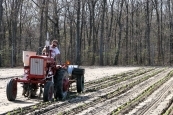
The Noninsured Crop Disaster Assistance Program (NAP) provides financial assistance to you for crops that aren’t eligible for crop insurance to protect against lower yields or crops unable to be planted due to natural disasters including freeze, hail, excessive moisture, excessive wind or hurricanes, flood, excessive heat and qualifying drought (includes native grass for grazing), among others.
In order to participate, you must obtain NAP coverage for the crop year by the applicable deadline using form CCC-471 “Application for Coverage” and pay the service fee. Application closing dates vary by crop. Producers are also required to submit an acceptable crop acreage report. Additionally, NAP participants must provide:
- The quantity of all harvested production of the crop in which the producer held an interest during the crop year
- The disposition of the harvested crop, such as whether it is marketable, unmarketable, salvaged or used differently than intended
- Acceptable crop production records (when requested by FSA)
Producers who fail to report acreage and production information for NAP-covered crops could see reduced or zero NAP assistance. These reports are used to calculate the approved yield.
If your NAP-covered crops are affected by a natural disaster, notify your FSA office by completing Part B of form CCC-576 “Notice of Loss and Application for Payment.” This must be completed within 15 calendar days of the occurrence of the disaster or when losses become apparent or 15 days of the final harvest date. For hand-harvested crops and certain perishable crops, you must notify FSA within 72 hours of when a loss becomes apparent.
To receive benefits, you must also complete Parts D, E, F and G of the CCC-576 “Notice of Loss and Application for Payment” within 60 days of the last day of coverage for the crop year for any NAP covered crops. The CCC-576 requires acceptable appraisal information. Producers must provide evidence of production and note whether the crop was marketable, unmarketable, salvaged or used differently than intended.
Eligible crops must be commercially produced agricultural commodities for which crop insurance is not available, including perennial grass forage and grazing crops, fruits, vegetables, mushrooms, floriculture, ornamental nursery, aquaculture, turf grass, ginseng, honey, syrup, bioenergy, and industrial crops.
For more information on NAP, contact your local USDA Service Center or visit fsa.usda.gov/nap.
|
The U.S. Department of Agriculture (USDA) is updating its farm loan programs to better support current borrowers, including historically underserved producers. These improvements are part of USDA’s commitment to increase equity in all programs, including farm loans that provide important access to capital for covering operating expenses and purchasing land and equipment.
The 2018 Farm Bill authorized FSA to provide equitable relief to certain direct loan borrowers, who are non-compliant with program requirements due to good faith reliance on a material action of, advice of, or non-action from an FSA official. Previously, borrowers may have been required to immediately repay the loan or convert it to a non-program loan with higher interest rates, less favorable terms, and limited loan servicing.
Now, FSA has additional flexibilities to assist borrowers in such situations. If the agency provided incorrect guidance to an existing direct loan borrower, the agency may provide equitable relief to that borrower. FSA may assist the borrower by allowing the borrower to keep their loans at current rates or other terms received in association with the loan which was determined to be noncompliant or the borrower may receive other equitable relief for the loan as the Agency determines to be appropriate.
USDA encourages producers to reach out to their local loan officials to ensure they fully understand the wide range of loan and servicing options available that can assist them in starting, expanding or maintaining their operation.
Additional Updates
Equitable relief is one of several changes authorized by the 2018 Farm Bill that USDA has made to the direct and guaranteed loan programs. Other changes that were previously implemented include:
- Modifying the existing three-year farming experience requirement for Direct Farm Ownership loans to include additional items as acceptable experience.
- Allowing socially disadvantaged and beginning farmer applicants to receive a guarantee equal to 95%, rather than the otherwise applicable 90% guarantee.
- Expanding the definition of and providing additional benefits to veteran farmers.
- Allowing borrowers who received restructuring with a write down to maintain eligibility for an Emergency loan.
- Expanding the scope of eligible issues and persons covered under the agricultural Certified Mediation Program.
Additional information on these changes is available in the March 8, 2022 rule on the Federal Register.
More Background
FSA has taken other recent steps to increase equity in its programs. Last summer, USDA announced it was providing $67 million in competitive loans through its new Heirs’ Property Relending Program to help agricultural producers and landowners resolve heirs’ land ownership and succession issues. FSA also invested $4.7 million to establish partnerships with organizations to provide outreach and technical assistance to historically underserved farmers and ranchers, which contributed to a fourfold increase in participation by historically underserved producers in the Coronavirus Food Assistance Program 2 (CFAP 2), a key pandemic assistance program, since April 2021.
Additionally, in January 2021, Secretary Vilsack announced a temporary suspension of past-due debt collection and foreclosures for distressed direct loan borrowers due to the economic hardship imposed by the COVID-19 pandemic.
Producers can explore available loan options using the Farm Loan Discover Tool on farmers.gov (also available in Spanish) or by contacting their local USDA Service Center. Service Center staff continue to work with agricultural producers via phone, email, and other digital tools. Due to the pandemic, some USDA Service Centers are open to limited visitors. Producers can contact their local Service Center to set up an in-person or phone appointment to discuss loan options.
|

Farmers, ranchers, and other producers and growers now have a one-stop shop to help ensure they are treated fairly. The new farmerfairness.gov portal developed jointly by the U.S. Department of Agriculture (USDA) and Department of Justice (DOJ) allows you to report potential violations of livestock and poultry antitrust laws, including the Packers and Stockyards Act.
Agriculture Secretary Tom Vilsack recently expressed concern that producers across the country have for too long faced a marketplace that benefits a few large companies over the farmers and ranchers who grow and raise our food.
For example, ranchers received more than 60 cents of every dollar a consumer spent on beef 50 years ago, compared to approximately 39 cents today. Hog farmers fared worse over the past 50 years, as their share of the consumer dollar fell from between 40 to 60 cents 50 years ago to approximately 19 cents today.
In order to assure economic opportunity and fairness for all, this portal makes it easy for farmers and ranchers to register a complaint or tip and provide details that would aid an investigation.
Who may submit a complaint or tip?
Anyone who suspects a violation of Federal law governing fair and competitive marketing and contract growing of livestock and poultry, including the Packers and Stockyards Act.
What information should I provide?
Those reporting potential violations of the Packers and Stockyards Act and other competition laws via the online portal are asked to submit the following information:
- The names of companies, individuals, or organizations that are involved,
- A description of any possible violations of the Packers and Stockyards Act or other federal antitrust laws,
- Examples of the conduct that may violate one or more of these laws,
- Any other relevant details about the violation, and
- The names of companies, individuals, or organizations that may be harmed by the alleged violation and how they are harmed.
What is the process following submission of a complaint or tip?
Complaints and tips will go through a preliminary review by USDA Packers and Stockyards Division staff and Department of Justice staff. If a complaint raises sufficient concern under the Packers and Stockyards Act or antitrust laws, it will be selected for further investigation by the appropriate agency. This action may lead to the opening of a formal investigation.
USDA or DOJ staff will only contact complainants if additional information is needed.
Will my confidentiality be protected?
Both USDA and DOJ will protect the confidentiality of the complainants to the fullest extent possible under the law. For any information provided, DOJ and USDA will follow their respective Privacy and Confidentiality Policies found at: DOJ Confidentiality and USDA Privacy. Packers and Stockyards regulations regarding confidentiality also apply: PSD Confidentiality. DOJ and USDA commit to supporting relevant whistleblower protections, including newly applicable protections for criminal antitrust complainants against unlawful retaliation.
To submit an anonymous complaint or tip, complainants or tippers should provide appropriate details but not enter their names or contact information. Neither USDA nor DOJ will be able to contact anonymous complainants or tips to obtain additional information that might be needed to evaluate your complaint tip, or to engage in future correspondence regarding your complaint or tip.
Farmers, ranchers, and other producers and growers deserve the benefits of fair and competitive markets for their products and services. This portal is an additional tool to support and protect these individuals who are vital to agriculture and our food supply.
|
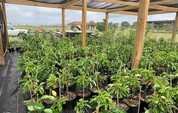
Does your operation include specialty crops? Whether you grow fruits, vegetables, tree nuts, dried fruits, horticulture, or nursery crops - USDA is here for you.
Over the past year, USDA has stepped up our support of specialty crop producers and local and regional food systems. USDA believes specialty crop producers are integral to the food system of the future, and we are working to improve available options for specialty crop producers as well as ensure equity in program delivery.
What’s New?
The Risk Management Agency (RMA) rolled out a new insurance option for small-scale producers who sell locally, which is named Micro Farm. This new insurance coverage option simplifies record keeping and covers post-production costs, such as washing and value-added products. It is available now, and you can learn more from an Approved Insurance Provider or your RMA specialty crop liaison.
In addition to Micro Farm, RMA rolled out other new insurance options in the past year, including: California Citrus Trees, Florida Citrus, Production and Revenue History option for Florida strawberries, and Hurricane Insurance Protection-Wind Index (HIP-WI). These new options either fill gaps in coverage or offer advantages over other policies. Since 2020, producers weathered several major hurricanes. The new HIP-WI played a crucial role in recovery with more than $250 million in indemnities paid so far with most payments issued in a matter of weeks following a hurricane.
Interest in growing and insuring specialty crops has grown significantly with $1 billion in liabilities for 1990 to $22 billion in liabilities for 2021. (For more details, check out reports on our Specialty Crops webpage.)
The Farm Service Agency (FSA) also offered pandemic assistance for organic producers. The new Organic and Transitional Education and Certification Program (OTECP) provided assistance to help cover loss of markets, increased costs, labor shortages and expenses related to obtaining or renewing their organic certification.
What’s Improved?
In the past year, RMA made improvements to existing policies -- including Whole-Farm Revenue Protection, a key insurance option for specialty crop producers. Beginning in the 2021 crop year, direct market producers could report two or more commodities using a new combined direct marketing code.
This reduced a tremendous burden for diversified producers and allowed them to receive a premium rate discount for diversification. For 2022, RMA increased coverage for organic and aquaculture producers and enabled organic producers to report certified organic acreage as long as the request for certification had been made by the reporting date, which provides additional flexibility to producers.
Want to Learn More?
These new and improved options for specialty crop producers are but a few of USDA’s strides over the past year to build a fairer, more transparent food system rooted in local and regional production. To learn more, please read USDA’s January 19, 2022, news release.
For crop insurance, visit RMA’s Specialty Crops webpage or contact your specialty crop liaison.
Also, if there is not a standard offer for the crop you would like insured, you may still be able to get a written agreement for coverage. RMA Regional Offices review these requests to help provide coverage. These requests also provide Regional Offices the opportunity to review the possible expansion of the policy to your county.
Lastly, you can read our Specialty Crops webpage on farmers.gov and question-and-answer with two specialty crop liaisons, Adrienne Steinacher and Matt Wilkin.
|
|